
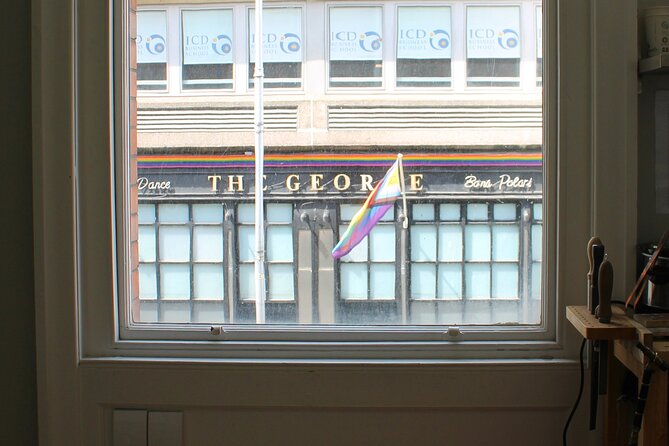
REVIEW · IRELAND
Dublin Jewellery Forge a Hammered Silver ring:Georges Street
Dublin turns crafts into souvenirs, fast. In about 2 hours, you shape sterling silver from scratch, then hammer it for your own look in a small studio on George’s Street. I like that the workshop is structured like a real craft class, not a show, and you get clear steps the whole way through.
I especially like the hands-on guidance. You can adjust your ring curve, pick textures, and choose your polish, so it feels personal instead of one-size-fits-all. My other big plus is the soldering demo, explained in plain language while the teacher works right in front of you. One thing to keep in mind: the studio is in old period buildings with plenty of stairs and no lift, so it is not wheelchair accessible.
In This Review
- Key takeaways
- George’s Street Ring-Making, in a Real Workshop Setting
- What You Actually Make: A Hammered Sterling Silver Ring
- Price and Value: What You Get for $103.79
- Step by Step: From Marking Silver to Shaping the Band
- The Soldering Demo: Why Watching Matters
- Filing, Curve Control, and Making It Feel Yours
- Texture Choices and the Hammering Step
- Polish Options: Rustic Inside-Only Versus Full Sparkle
- The Workshop Atmosphere: Tools, Coffee, and a Small-Group Feel
- Who This Ring Workshop Is Best For
- Should You Book Silver Works Hammered Silver Ring Making?
- FAQ
- FAQ
- Where is the meeting point for the workshop?
- How long does the hammered silver ring workshop take?
- How much does it cost per person?
- Is the workshop offered in English?
- What is included in the price?
- Can I customize the ring, or is it a set design?
- What should I expect to do during the workshop?
- Is it suitable for children?
- Is the studio wheelchair accessible?
- What happens if I’m late or if I bring luggage?
Key takeaways
- Small group setting with lots of time for questions
- Soldering and shaping shown in front of you, step by step
- Pick your curve, texture, and polish for a truly individual ring
- Coffee, tea, and lots of chocolate keep the mood warm on a rainy Dublin day
- You leave with your own handmade silver ring, ready to wear or gift
Not settled on one yet? These Dublin trips earn the warmest write-ups from our reviewers.
- Dublin to Cliffs of Moher, including Wild Atlantic Way and Galway★ 5.0 · 23,331 reviews
- From Dublin: Cliffs of Moher, Burren & Galway City Day Tour★ 4.8 · 18,888 reviews
- Dublin: Guinness Storehouse Entry Ticket★ 4.6 · 16,863 reviews
- Dublin to Cliffs of Moher, Burren, Wild Atlantic Way, Galway Tour★ 5.0 · 12,924 reviews
George’s Street Ring-Making, in a Real Workshop Setting
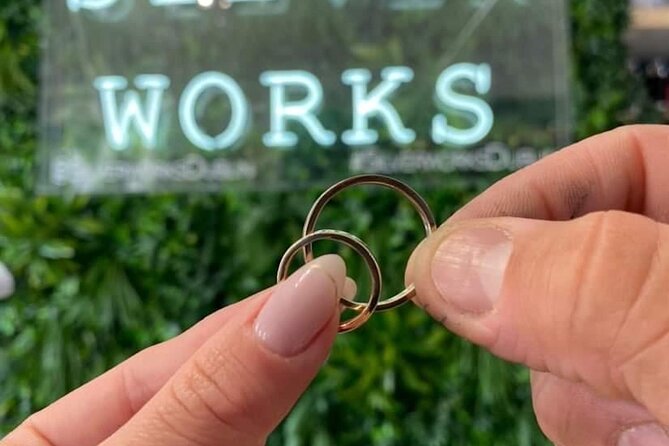
Dublin has no shortage of things to buy. This is different. You leave with a ring you made yourself, and that changes how the whole trip feels. The session is built around simple, repeatable skills: measure, cut, shape, solder, file, texture, and finish. You might not be a craft person now, but the class is set up so you can get there within the time.
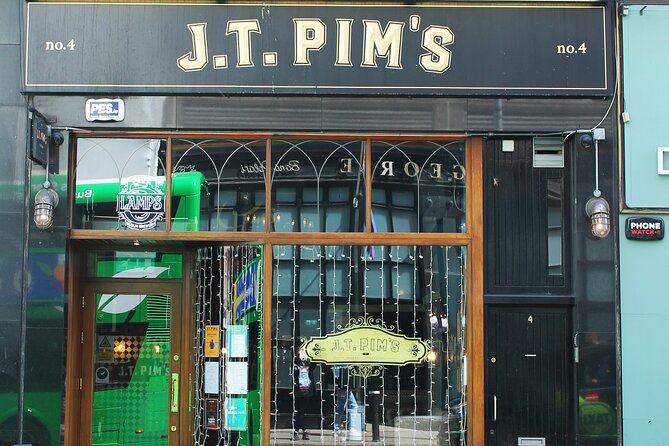
The location is also part of the fun. You meet at Silver Works, 4 South Great George’s Street, Dublin 2. It is a compact space in old buildings, so you will get that up-close studio vibe instead of a big impersonal room. The group size is capped at 12, which is a big deal for attention. It is easier to ask questions when the room is not packed.
The pace is casual but focused. You will do the key steps with tools in hand, and you will watch key moments, like soldering, happen right in front of you. That mix is the best recipe for first-time success. It keeps you moving, but you are not guessing.
And yes, you do get the Irish workshop comforts. Coffee or tea shows up during the class, plus lots of chocolate. It sounds like a small detail. In practice, it helps you stay relaxed while you are learning new motions with your hands.
What You Actually Make: A Hammered Sterling Silver Ring
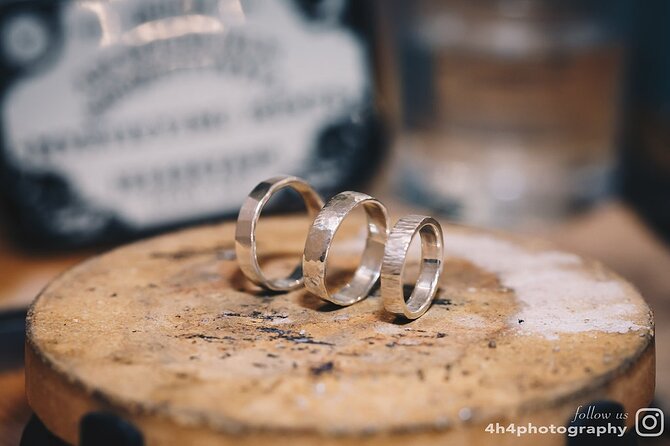
This is a hammered sterling silver ring workshop, which means your finished piece is not just smooth and shiny. You will end up choosing a texture that shows up in the metal once it has been hammered and shaped. That texture choice matters because it is the part you see every time you look at your hand.
You start by deciding which finger you want the ring for. Then you mark the silver to the right length and cut it to size with a handsaw. After that, you form the ring to a mandrel, and you will use a mallet to shape the band into the correct curve.
Then comes the moment that makes the ring hold together properly: soldering. You watch the soldering step performed by an expert tutor, and she explains what she is doing. It is one of those things that would be scary in a movie, but here it is calm and instructional. You are not just watching. You are learning the logic behind each step.
Next, you file the ring using different hand files. Filing is where you can start to take control. You get to decide how much curve you want in the final ring, and that small choice changes the feel of the piece.
Finally, you pick from three distinct texture options and use a planishing hammer to create your hammered look. You finish by choosing polish style: either polished only on the inside for an artistic, rustic look, or a fully polished ring for more of that bright sparkle.
Price and Value: What You Get for $103.79
At $103.79 per person, this is not the cheapest Dublin activity. But it is also not just a ticket for a passive experience. You are paying for materials, tools, instruction, and the time it takes to produce a wearable keepsake.
Most importantly, the value is in the personalization. You choose your finger, your curve, your texture, and your polish finish. If you are the kind of traveler who gets tired of the usual souvenirs, this is the more satisfying option. You will still wear the ring back home, which is something a photo or magnet simply cannot do.
The other part of value is the teacher-to-student feel. The workshop is kept to a maximum of 12 travelers, and the reviews back up the idea that the instruction is patient and easy to follow. Several people highlight that first-timers do fine, including one person who mentioned chronically shaky hands and still managed the tasks with help.
You also get coffee or tea and lots of chocolate included. It is not a deal-breaker by itself, but it makes the experience feel like a friendly studio class rather than a rushed production line.
If you are weighing this against a dinner out, think about what you want the memory to be. This is a story you can wear. That is the value.
Step by Step: From Marking Silver to Shaping the Band
The workshop starts with measurement and choice. You pick which finger you want the ring for, then mark the silver to the required length. That is a smart way to begin because it turns a vague idea into something real immediately.
From there, you cut the silver to size using a handsaw. Cutting metal sounds intimidating. In this setup, you are doing it with guidance and an orderly process, so it feels manageable. You are also not doing everything blind. The class is organized so you understand what each motion is for.
Next, you form the ring. You use a mallet to shape the silver to a ring mandrel. This is where the band takes on its basic curve and becomes recognizably a ring. For first-timers, this step is often the turning point, when your brain switches from learning to creating.
You will also see how the class balances doing and watching. You do the hands-on part, but you also watch the key joining moment, soldering, performed by the tutor with explanations. That combination helps you keep moving without feeling lost.





The Soldering Demo: Why Watching Matters
One of the most highly praised parts is the soldering demonstration. This is the step that makes the ring become one piece rather than a strip you shaped. It is also the step that most beginners worry about, because heat and joining can sound risky.
Here, the tutor performs the soldering in front of you and explains what she is doing as she goes. That matters for two reasons. First, you learn the sequence of actions, not just the finished result. Second, you understand what to watch for, so you can connect the theory to the physical steps.
In practical terms, soldering is where craft classes either feel intimidating or they feel clear. This one leans toward clear. Even people who were worried at the start describe instruction as easy to follow and teachers as patient. If you want to learn something real, not just get a product, this is the part that earns it.
Filing, Curve Control, and Making It Feel Yours
After the metal is shaped and joined, you move into filing. Filing might not sound glamorous, but it is a big deal. It is how you refine edges, smooth surfaces, and make the ring comfortable.
You use different hand files, and the class guides you through the process. Then comes a fun part: you individualize the ring by choosing the curve you want it to have. That choice changes the way the ring sits on the finger and the way it catches light.
This is where a workshop like this beats a typical souvenir shop. In a shop, the ring is already decided. In your hands, you are making decisions that affect the final feel.
If you are thinking, I do not know what I want, you are not alone. The key is that the instructor process helps you understand the effect of your choices, so you can pick confidently. And if you are the type who loves small details, filing and curve control will feel surprisingly satisfying.
Texture Choices and the Hammering Step

Now for the part people get excited about. You choose from three very different textures, then create your hammered look using a planishing hammer. This is where your ring takes on a visible personality.
Texture is not just decoration. It changes how the light plays across the metal. A hammered surface can look softer and more organic, even when the ring is polished. It also hides minor differences better than a perfectly smooth finish, which is helpful when you are learning.
The planishing hammer step also teaches you something useful about craft work. Small changes in pressure and angle can change the pattern you see. You are not just repeating motions. You are shaping the look.
Most people remember this as the highlight because you get to see your creativity become an actual surface on a real object. It is tangible, not theoretical.
Polish Options: Rustic Inside-Only Versus Full Sparkle
When it is time to polish, you get two finish paths. You can polish only on the inside, which creates a more artistic, rustic look. Or you can go for a fully polished ring with a more glittery sparkle.
This choice is a great example of why the workshop feels more customized than typical classes. Inside-only polishing is subtle. It gives you a piece that feels handmade in the best way, with the outer texture still doing the talking. Full polish, on the other hand, is for maximum shine and a more classic look.
If you are not sure which way to go, think about how you want the ring to feel in everyday wear. A hammered texture with partial polish can look more laid-back and artsy. Full polish reads as dressier, and it shows off the silver brightness.
Either option is part of the charm. You are making a conscious decision, not following a default.
The Workshop Atmosphere: Tools, Coffee, and a Small-Group Feel
A few small things make a big difference in a class like this. First, the studio is small, and the tools and workstations feel close to your body, not far away like a classroom. That is good for focus.
Second, there is coffee or tea and lots of chocolate. It keeps things friendly during a hands-on session, especially if you arrive cold and damp. Dublin weather has a way of testing your optimism. A warm drink and chocolate help.
Third, the group size cap of 12 keeps the experience personal. Multiple people mention that small group sizes are perfect, because you can watch, ask questions, and get help when needed. Even when a tutor steps in for a quick fix during the process, you still get your own time with the tools.
One practical note: the buildings have plenty of stairs and no lift, and the studio does not offer luggage storage. So if you are carrying a backpack, plan to travel light. You also need to keep an eye on timing, since if you arrive more than 10 minutes late, you will not be permitted entry and there is no refund or reschedule.
Who This Ring Workshop Is Best For
This is one of those activities that fits a wide range of travelers, as long as you are ready to use your hands. It is hands-on and active, but the process is designed so you do not need prior experience.
It works especially well for:
- Couples or friends who want a shared project and matching stories
- Solo travelers who want an activity with real interaction
- People who want a souvenir that is wearable and meaningful
- Families, with the note that children must be 10 or older (and kids under 16 need a paying adult)
I would also recommend it if you are planning a cold-weather day. People often book it for rainy afternoons because the workshop format stays cozy.
If you are traveling with lots of luggage or you need step-free access, this might be a bad match. The location is in old period buildings with stairs and no lift, and it is not wheelchair accessible.
Should You Book Silver Works Hammered Silver Ring Making?
Yes, you should book if you want a Dublin souvenir that feels earned, not bought. This workshop is built around a clear process, close-up instruction, and hands-on crafting that ends with a ring you wear immediately. The combination of soldering explained in front of you and the chance to choose your curve, textures, and polish is what makes it a standout choice.
Book it if you are even mildly curious about metalwork. The class is set up so first-timers can succeed, and the small-group setting helps you get support. If you want to spend your time in Dublin making something rather than shopping for it, this is a very good use of your time.
Skip it only if stairs and carrying your own day bag are an issue, or if you are looking for a passive tour. This is not a sit-and-watch museum experience. You will be doing the work, and that is the whole point.
FAQ
FAQ
Where is the meeting point for the workshop?
You start at Silver Works, 4 South Great George’s Street, Dublin 2, D02 NR59, Ireland.
How long does the hammered silver ring workshop take?
The experience runs for about 2 hours.
How much does it cost per person?
The price is $103.79 per person.
Is the workshop offered in English?
Yes, it is offered in English.
What is included in the price?
The workshop includes sterling silver for your ring, plus coffee and/or tea and lots of chocolate.
Can I customize the ring, or is it a set design?
You can customize the ring by choosing the finger size you mark to, shaping the curve, selecting one of three texture options, and choosing between inside-only polishing or full polishing.
What should I expect to do during the workshop?
You will mark and cut the silver to size, shape it on a mandrel, watch soldering with explanations, file the ring, choose and create a texture with a planishing hammer, and finish with your chosen polish.
Is it suitable for children?
No children under 10 are allowed. Children under 16 need to be accompanied by a paying adult.
Is the studio wheelchair accessible?
No. The buildings have plenty of stairs and there is no lift, so it is not wheelchair accessible.
What happens if I’m late or if I bring luggage?
If you arrive more than 10 minutes late, you will not be permitted entry to the workshop and are not entitled to a refund or reschedule. The studio is small and does not offer luggage storage.
Elsewhere on The Ireland Traveler
Lately added to the Dublin pile
- Waterford Crystal and Kilkenny Full-Day Rail Tour from Dublin
★ 5.0 · 3 reviews - Turtle Bunbury’s Dublin: A Self-Guided Audio Tour from a Celebrated Author
★ 5.0 · 3 reviews - Cliffs of Moher and The Burren Private Tour from Dublin
★ 5.0 · 3 reviews - Dublin Full-Day Tour through Boyne Valley
★ 5.0 · 3 reviews - Rock Of Cashel And Blarney Castle Private Chauffeur Full Day Sightseeing Tour
★ 4.5 · 3 reviews - Private Irish Fusion Meal in a Modern Home in Skerries, Dublin
★ 5.0 · 3 reviews