
REVIEW · DUBLIN
St Patrick’s Cathedral: Self-Guided Cathedral Admission
St Patrick’s Cathedral rewards slow steps. This self-guided visit to St Patrick’s Cathedral in Dublin mixes Gothic beauty with real Irish stories, from Jonathan Swift’s burial place to the Door of Reconciliation. I also like that you can shape the visit your way, using included audio guides and on-site Discovery Space touch tech rather than being herded from room to room.
The one catch is timing. Midday can feel busy in a way that makes you pause more than you’d like, so plan for a little crowd flow if you’re visiting peak hours.
In This Review
- Key Highlights at a Glance
- Enter St Patrick’s Cathedral Like a Local, On Your Own Time
- Start With Swift’s Tomb and Get the Dublin Connection Fast
- The Door of Reconciliation, and Why an Irish Saying Exists
- Read the Gothic Architecture Up Close, Then Let the Windows Speak
- The Discovery Space: Touch Tech, Choir Samples, and Brass Rubs
- Use the Audio Guides Wisely, Especially in a Crowded Cathedral
- When You Want a Live Human: Guided Tours at Set Times
- Plan Around Services and the Cathedral Atmosphere
- The Value Question: Is $12 Worth It?
- Practical Tips for a Smoother Visit (Without Killing the Mood)
- Should You Book This Self-Guided Admission?
- FAQ
- FAQ
- How much is St Patrick’s Cathedral self-guided admission?
- Is this admission self-guided?
- What duration is the ticket valid for?
- Does this include audio guides?
- What languages are the audio guides available in?
- Can I skip the ticket line?
- Where does the experience start and end?
- Is the cathedral wheelchair accessible?
- Do children and teens need an adult?
- Can I reserve now and pay later?
Key Highlights at a Glance
- Audio guides in 6 languages (English, French, German, Italian, Spanish, Irish) help you understand what you’re seeing
- Jonathan Swift burial site gives you a direct link to one of Dublin’s most famous residents
- Door of Reconciliation ties the building to an Irish expression, and you’ll know the meaning fast
- Discovery Space with touch screens and choir samples adds context without needing a guide
- Stained glass featuring Saint Patrick in 39 images turns a big window into a clear story
Enter St Patrick’s Cathedral Like a Local, On Your Own Time

St Patrick’s Cathedral is not a quick photo stop. It’s the kind of place where you’ll naturally slow down because there are details everywhere, and the building is built to make you look up, then look closer, then look again.
Your admission is self-guided, and you get audio guides with it. That matters because the cathedral holds several layers of meaning at once: Irish spiritual tradition, Church of Ireland history as a national cathedral, and Dublin’s wider cultural identity. Instead of taking one “headline” tour, you can spend more time where your curiosity pulls you, like the artifacts connected to Jonathan Swift or the stained glass that tells Saint Patrick’s life in a visual sequence.
One practical tip: if you like a controlled pace, aim to start early or late in the day. When the cathedral gets crowded, you can still enjoy it, but you’ll spend more energy working around people than studying stonework and windows.
Start With Swift’s Tomb and Get the Dublin Connection Fast
A smart first stop is the area connected to Jonathan Swift. He was not just the author of Gulliver’s Travels; he served as Dean of the cathedral from 1713 to 1745, and you can visit where he is buried. This is the shortcut into understanding why the cathedral feels woven into Dublin life, not stuck in the past.
If you’re new to Irish literary history, Swift is a strong entry point because he connects the building to a recognizable name. If you already know him, this is where the context lands, since the space turns his role in Dublin into something physical. You’re no longer reading about a dean, you’re standing in his home church.
Also, don’t rush the surrounding displays. The cathedral features a selection of artifacts relating to Swift and his time. Even if you only read the key interpretive sections, it helps you recognize that the cathedral is both a place of worship and a public memory of Irish culture.
The Door of Reconciliation, and Why an Irish Saying Exists
One of the most memorable stops is the Door of Reconciliation. This door is tied to an Irish expression, to chance your arm. The value here is simple: you’re seeing how language grows out of real, local customs and public meaning.
When you understand where a saying comes from, it stops being a random phrase you hear once. It becomes a little time machine. You can look at the doorway and think about what reconciliation meant in everyday life, especially in a place that has been central to Irish identity for centuries.
This is a great moment to pause. If the cathedral is busy, move just enough to keep your personal space, then take the door in. The story behind it is what makes it worth your attention.
Read the Gothic Architecture Up Close, Then Let the Windows Speak

Saint Patrick’s Cathedral is a big, imposing building, and it can be tempting to treat it like a single impressive room. The better way is to treat it like a chain of visuals and symbols.
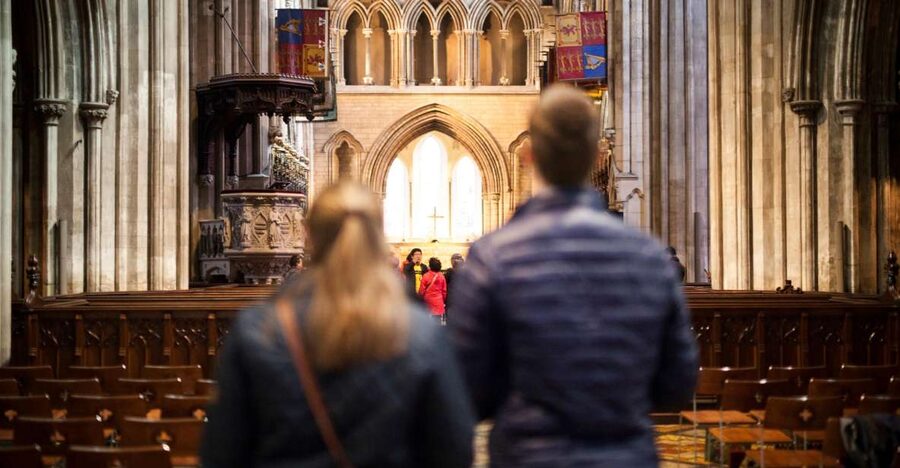
You’ll notice the Gothic architecture right away, but the real wow factor comes from the stained glass. The cathedral’s windows are not just decorative. They act like teaching tools, especially one major window that shows the life of Saint Patrick in 39 images.
If stained glass feels overwhelming to you in general, this one is easier because it breaks a long story into a sequence. You don’t have to catch every tiny scene at once. Instead, you can follow the narrative step by step and let the audio guide help you connect the dots.
Do make time for it. People sometimes spend their energy on one area and miss the rest of the window experience. Here, the trick is patience: stand back for overall composition, then step in for detail only when you’re ready to focus.
One small consideration I’d plan for: you may not find printed explanations that match the level of detail the audio delivers. So if you love reading, expect to rely on the audio guide for some of the finer points.
The Discovery Space: Touch Tech, Choir Samples, and Brass Rubs

The cathedral has a newer Discovery Space designed to make the history easier to grasp without turning your visit into a classroom.
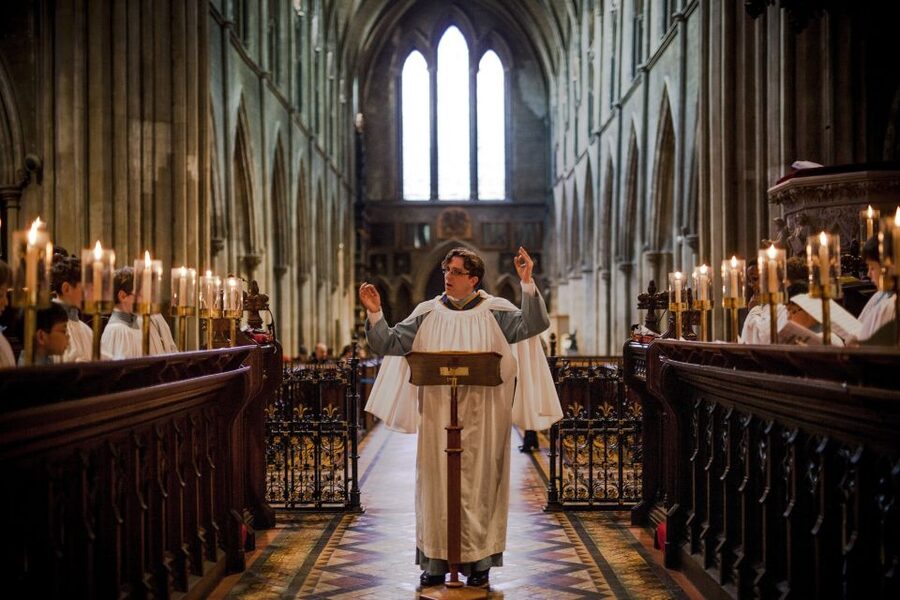
This area uses interactive touch screen technology and iPads, including samples of the cathedral choir. That can be surprisingly helpful even if you’re not a music person. Choir samples give your brain a sound-world to go with the visuals. When you later see the cathedral’s spiritual purpose and the role of worship, it feels more complete.
There’s also a brass rubbing option in the Discovery Space. If you’ve never done a brass rubbing before, it’s a hands-on way to connect with cathedral art and symbolism. It turns the experience from purely visual to tactile, and that can be a big mood change when you want something memorable rather than just educational.
The tech part is worth your attention, not because you need apps, but because it gives you context for why the cathedral looks the way it does. When you understand the building’s timeline, you read details differently. Stone marks feel more intentional. Decorative elements feel less random.
Use the Audio Guides Wisely, Especially in a Crowded Cathedral
The audio guides are included, and they work in multiple languages: English, French, German, Italian, Spanish, and Irish. You’ll get a structured walk through key points, so you’re not stuck guessing what matters most.
If you want the best experience, use the audio in short bursts rather than trying to listen nonstop. In a working cathedral, you may also want quiet time to simply look, especially when the space gets solemn. Short audio moments help you keep control of your attention.
A practical tip from what I’ve seen others do well: many people prefer using their own headphones or connecting through a phone to listen. That can make the sound clearer and more comfortable, especially if you’re sensitive to audio volume in indoor spaces.
Also, don’t feel locked into the audio order. Treat it like a menu. If you hit a moment you care about, stay there and let the guide catch up with you.
When You Want a Live Human: Guided Tours at Set Times
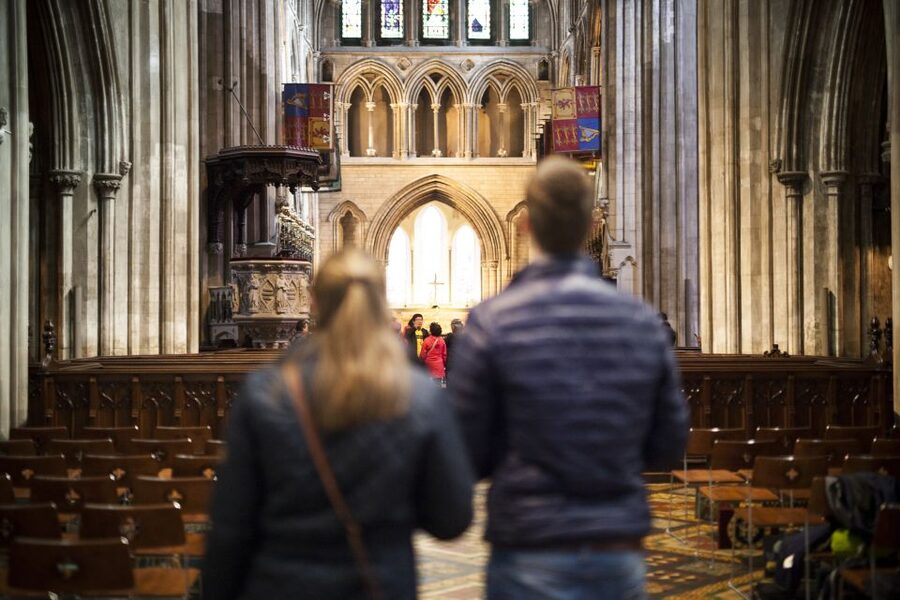
Even though this is self-guided admission, there are guided tours on-site at specific times. Some tours run frequently, and joining one can be useful when you want a real person to explain the meaning behind symbols, architecture, and artifacts.
If you enjoy interaction, this is where a guided session shines. You can ask questions, get clarification, and adjust your focus on the fly. A couple of names show up in the experience of different visitors, like guides David and Anna. If you see a tour starting soon that matches what you care about, it can be an easy add-on to your self-guided plan.
What I like about this setup is flexibility. You’re not required to be on a tour schedule. You can pick guided moments when you want them, and keep full autonomy the rest of the time.
Plan Around Services and the Cathedral Atmosphere
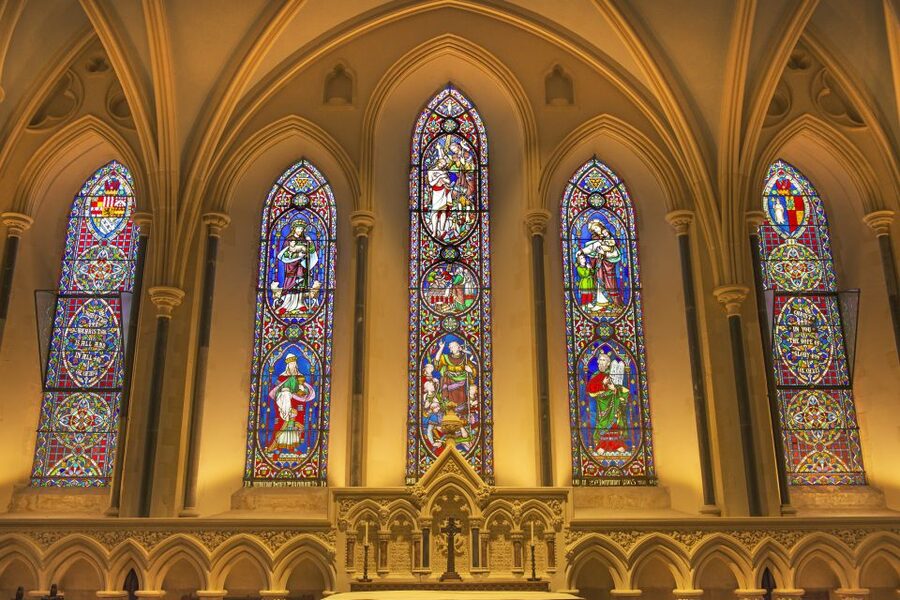
Saint Patrick’s Cathedral hosts sung services twice daily, Sunday through Friday. That fact alone changes the experience. It’s not only a museum space. It’s a living church, and that brings a different energy than pure sightseeing.
If you’re there during service times, you’ll likely notice people behaving differently, with more quiet attention. That’s not a problem. It’s part of the cathedral’s character. Just keep in mind that audio listening and walking pace may need to be gentler to respect the moment.
Also, pay attention to what’s happening in the space beyond your planned stops. Sometimes you might see music activity, and you may even spot filming in nearby outdoor areas. That doesn’t take away from the visit, it can make the cathedral feel current and not just historical.
The Value Question: Is $12 Worth It?
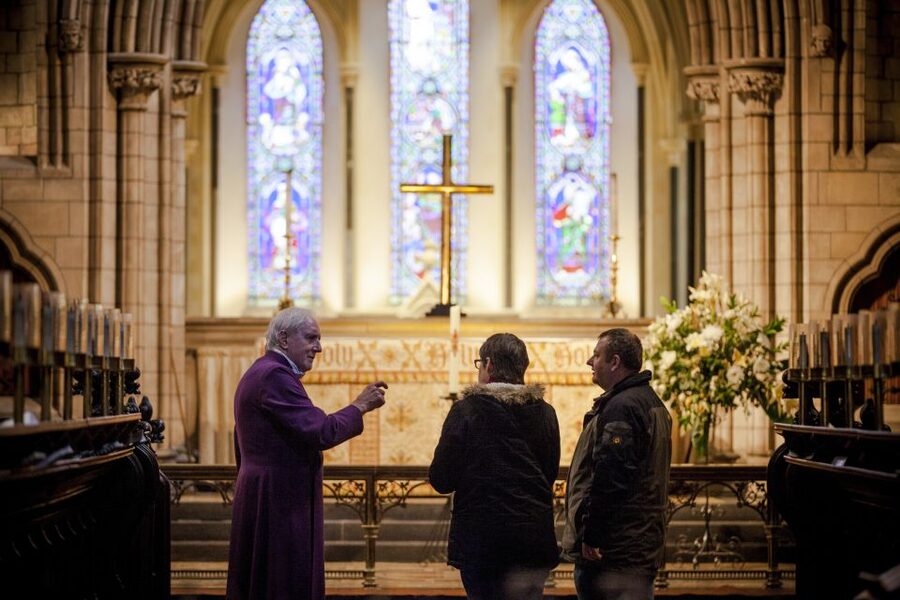
At about $12 per person, this visit is priced like a straightforward cathedral ticket, but the value comes from what you actually get: skip-the-line entry, included audio guides, and a Discovery Space built for interpretation.
To me, the best value sign is that you can do the experience in layers. You can:
- Move through the cathedral at your pace
- Use the audio for context on Swift, the Door of Reconciliation, stained glass, and key history
- Add the tech-based Discovery Space for extra background
- Stay longer when something catches your attention
If you only do the obvious interior viewing and ignore the audio and Discovery Space, then it becomes more expensive per minute. But if you use the audio as intended, and you spend time on the stained glass and Swift-related areas, it becomes a solid cultural spend.
It’s also a good choice when you’re in Dublin and want a high-impact stop without committing to a full guided tour.
Practical Tips for a Smoother Visit (Without Killing the Mood)
Here’s how I’d make the visit feel calm and satisfying.
First, give yourself enough time. This is not a 10-minute “in and out” stop. You’ll want time for Swift’s area, the Door of Reconciliation, the stained glass, and the Discovery Space.
Second, plan for crowds at popular hours. The cathedral may run busy around peak times, and crowd flow can affect where you stand and how long you can pause. If you’re sensitive to tight spaces, start earlier or later.
Third, use the on-site helpers where you can. Even when you’re self-guiding, there are tours at set times, and staff guidance can help you find the best viewing angles for windows.
Fourth, don’t forget the end of the visit. There’s a shop, and it’s a natural place to decompress before you head back out. Outdoors, the area around the cathedral, including the park, can add a breather after the interior. Some people even mention spotting a film crew at outdoor locations, so you might see something lively if your timing lines up.
Should You Book This Self-Guided Admission?
Book it if you want a cathedral visit that gives you structure without trapping you in a fixed itinerary. This works especially well if you like history tied to names you recognize, like Jonathan Swift, and you want your time focused through an included multi-language audio guide.
I’d skip it or add a guided option if you hate audio in general or if you’re only looking for a quick exterior-and-interior glance. The cathedral rewards attention, and the audio is where a lot of the meaning lives.
FAQ
FAQ
How much is St Patrick’s Cathedral self-guided admission?
It costs $12 per person.
Is this admission self-guided?
Yes, it’s self-guided cathedral admission.
What duration is the ticket valid for?
The ticket is valid for 1 day. You’ll need to check availability to see starting times.
Does this include audio guides?
Yes, audio guides are included.
What languages are the audio guides available in?
The audio guides are available in English, French, German, Italian, Spanish, and Irish.
Can I skip the ticket line?
Yes, this option includes skipping the ticket line.
Where does the experience start and end?
It starts at St Patrick’s Cathedral and ends back at the meeting point.
Is the cathedral wheelchair accessible?
Yes, wheelchair accessibility is provided.
Do children and teens need an adult?
Under 18s must be accompanied by a parent or guardian.
Can I reserve now and pay later?
Yes, reserve now and pay later is available.
More Irish Cathedrals and Churches, side by side.
 ★ 4.5St Patrick’s Cathedral, Book of Kells and Dublin Castle TourFrom $143882 reviews
 ★ 4.6Christ Church Cathedral Entrance Ticket & Self-Guided TourFrom $14773 reviews
 ★ 4.5Saint Patrick’s Cathedral Dublin Entry TicketFrom $13548 reviews
 ★ 4.9Dublin: Book of Kells, Dublin Castle and Christ Church TourFrom $77379 reviews
 ★ 4.5Dublin Christ Church Cathedral Admission TicketFrom $14341 reviews
 ★ 4.8Dublin: St Patrick’s, Book of Kells, and Dublin Castle TourFrom $101164 reviews
 ★ 4.5Book of Kells, Dublin Castle, Christ Church Cathedral TourFrom $85145 reviews
 ★ 4.6Kilkenny: St Canice’s Cathedral and Round Tower ClimbFrom $1117 reviews
Other lists this one is on