
REVIEW · IRELAND
Trek the Tombs and Trails in the Dublin Mountains
Two tombs, one big view. This guided trek through the Dublin Mountains pairs megalithic burial sites with wide-open scenery over Dublin and the bay, so you get more than just a walk. I particularly like that the group stays small, so Ben can slow down when questions pop up, and you get time to actually look at what you’re standing beside.
Two things I also really like: the chance to learn the stories tied to the tombs, and the built-in breaks for viewpoints and (when in season) picking wild berries. One drawback to plan for is that you’re outdoors most of the day on a hike that’s described as moderate, so you’ll want decent shoes and a weather check before you commit.
If you want a hike that mixes real sites with honest effort, this one is hard to beat. Expect two ancient tombs, a ridge walk with panoramic views, and an end stop for lunch or a pub pint. The only “gotcha” is that poor weather can change plans, so bring flexible energy and don’t assume you’ll be hiking no matter what.
In This Review
- Key highlights to look forward to
- A Dublin Mountains hike that actually teaches what you’re seeing
- Starting at Dundrum, then through Dublin foothills by bus
- Glencullen to the Wicklow Mountains National Park edge
- The wedge tomb stop: walking to a second-millennium B.C. burial site
- The Dublin Mountains Way: cairn tomb, triangulation pillar, and big sky views
- Wild berries when in season
- Tibradden ridgeline and the stone circle burial
- Down through an evergreen forest to the end of the hike
- Hazel House finish: lunch with local produce or a country pub pint
- Pace, physical effort, and what to bring for a 7-hour day
- Price and value: is $180.44 worth it?
- Who should book this and who might prefer something else
- Should you book Trek the Tombs and Trails in the Dublin Mountains?
- FAQ
- How long is the Dublin Mountains hike?
- Where does the tour start and end?
- Is lunch included?
- Do I need to pay for drinks at the pub?
- What fitness level is needed?
- How big is the group?
- What happens if the weather is bad?
Key highlights to look forward to
- Small group size (max 8) for more attention and time to ask questions
- Two megalithic tombs plus a cairn and stone circle stop on the same day
- Dublin Bay and Dublin views from a mountain-top vantage point
- Wild berry picking when in season, with ideas for eating or using later
- Dublin Mountains Way walking routes through ridge and forest sections
- Optional lunch or a pint at the end of the hike, with local food choices
Longer legs, more Dublin walking days
- Dublin Coastal Hike, Pints & Puppies Adventure★ 5.0 · 647 reviews
- Dublin Coastal Hike with Howth Adventures★ 5.0 · 289 reviews
- Howth Safari Hiking Tour★ 5.0 · 279 reviews
- Dublin: Howth Coastal Hiking Tour★ 4.9 · 116 reviews
A Dublin Mountains hike that actually teaches what you’re seeing
What makes this experience feel worth the time is the pairing of effort and context. You’re not just trudging uphill for photos, you’re walking between sites that connect to Ireland’s ancient past. The route includes a meandering path to a burial “wedge” tomb, then continues along the Dublin Mountains Way to more sites, including an unexcavated cairn and a triangulation pillar. Add panoramic stops over Dublin and the bay, and it turns into a day with both wonder and footing.
And yes, you’ll be outside. If you like being on the move, you’ll enjoy how the day flows from bus ride to path to ridgeline viewpoints, then down through an evergreen forest and back out via country roads. If you prefer long museum-style stops and minimal walking, you might find it a bit much. But for a moderate day hike, it’s a solid mix.
Starting at Dundrum, then through Dublin foothills by bus
The day starts where it’s easy to reach: Dundrum, outside the Luas station. That matters, because you can plan around public transport without having to guess how you’ll get to some far-flung trailhead. A mobile ticket is included, and you also get a bus pass for the ride to the start and the return.
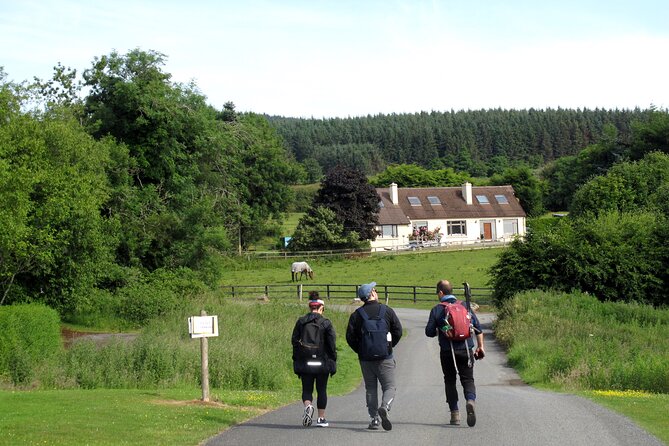
From the meeting point, you take a local bus through backroads in the Dublin foothills to a remote mountain village. This is more than just transit. It gives you a transition from city mode into countryside rhythm. You’re not immediately dumped onto a steep climb; instead, you settle into the day with the scenery changing outside the window.
Glencullen to the Wicklow Mountains National Park edge
The first major stop is Glencullen, followed by time in and around Wicklow Mountains National Park. This is where the hike begins to feel like it belongs to the wider Dublin Mountains region rather than being a single-trail out-and-back.
At this stage, you’ll get the guide’s framing for what you’ll see next. Since the focus includes ancient burial sites, a little explanation early helps you notice details later. Even if you’re not a full-on archaeology nerd, it’s a lot easier to appreciate the places when someone helps you understand what you’re looking at and why it mattered.
The wedge tomb stop: walking to a second-millennium B.C. burial site
One of the highlights is the visit to an ancient burial “wedge” tomb dated to the second millennium B.C. You’ll reach it by following a mountain path that meanders, which is nice because you’re building up gradually rather than sprinting straight uphill.
A wedge tomb is one of those ancient forms that instantly looks intentional. Standing near it, you get the sense that people chose the location carefully, then built a burial space that lasted far beyond their lifetime. The guide’s role here is key: you want context on how such sites fit into the broader prehistoric world of Ireland, and how to read features in the structure rather than treating it like a random pile of stones.
Practical note: since this is outdoors and you’re moving between sites, you’ll want to keep your water and snacks handy until the end. The day includes breaks, but it’s not framed like a series of indoor stops.



The Dublin Mountains Way: cairn tomb, triangulation pillar, and big sky views
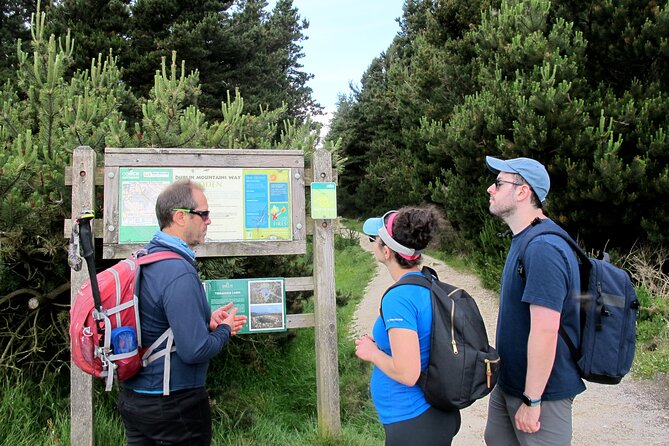
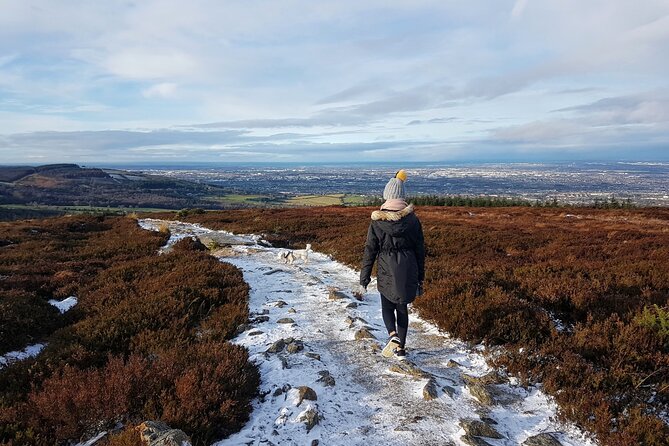
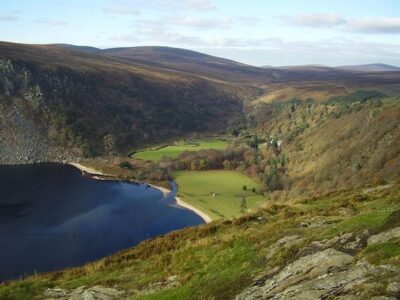
From the wedge tomb, you continue along the Dublin Mountains Way to a popular vantage point. This part is where the hike earns its reputation for scenery. You’re perched on a mountain-top rock with panoramic views over Dublin and the bay area, and on a clear day the view does the heavy lifting for your camera, your imagination, or both.
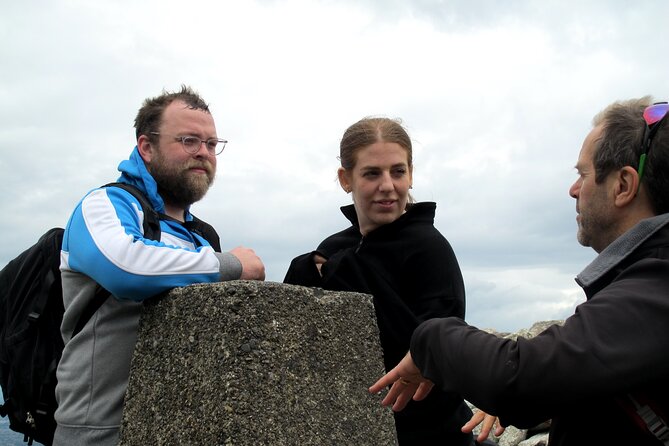
At this viewpoint area, you see the never excavated cairn tomb and also a triangulation pillar. That pairing is interesting because it mixes two time periods. The cairn is prehistoric and tied to burial tradition, while the triangulation pillar speaks to later surveying and mapping. It’s a reminder that the same high ground drew attention for different reasons, generation after generation.
This section also gives you a good sense of how the day’s physical effort connects to the payoff. You’ll walk to earn the view, then spend time looking at the stones and the surroundings in front of you. If you rush here, you’ll miss the value.
Wild berries when in season
Depending on the season, you may pause to pick wild berries. The idea is that you can enjoy them right away, or take the concept home to make something later, like jam or a tart.
Even if you don’t plan on making anything, it’s a nice way to bring Ireland’s countryside into the day in a practical, hands-on way. Just keep expectations realistic: you’re not dining like a chef on a scripted cooking show. You’re adding a local, seasonal flavor to a hike.
Tibradden ridgeline and the stone circle burial
After the first big viewpoint area, you continue along a ridge with views of Dublin to the north and Wicklow to the south. Eventually, you reach a second burial site featuring an ancient stone circle and a burial place for the man for whom the mountain top is named.
This stop tends to feel different from the wedge tomb. A stone circle has a wider, open feel, and because it’s arranged rather than simply built as a passage-like structure, your sense of space changes. You’re not only looking at a constructed burial, you’re looking at a place people likely visited, marked, and understood as meaningful.
This is also a moment where a good guide earns their pay. Ben’s style, from what I’ve seen described, is to bring Irish history to the stones in plain terms. You want that for this specific stop because otherwise it can feel like a bunch of archaeological terms without a human story.
Down through an evergreen forest to the end of the hike
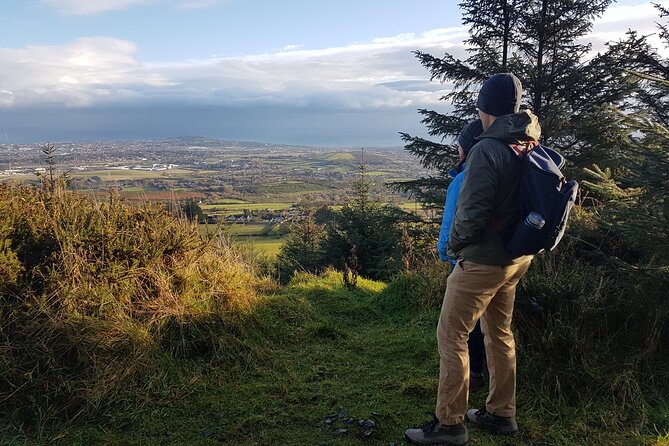
After the second burial site, the route shifts gears. You’ll take a leisurely wander down a meandering path through an evergreen forest, followed by a rural back-road.
This is a smart design for a hike day. Your legs get a break from the steepest feeling sections, and the forest gives a quieter, cooler mood before you reach the finish. It also changes the way you experience the day. You go from wide panoramas to close-up walking, then you transition back toward civilization.
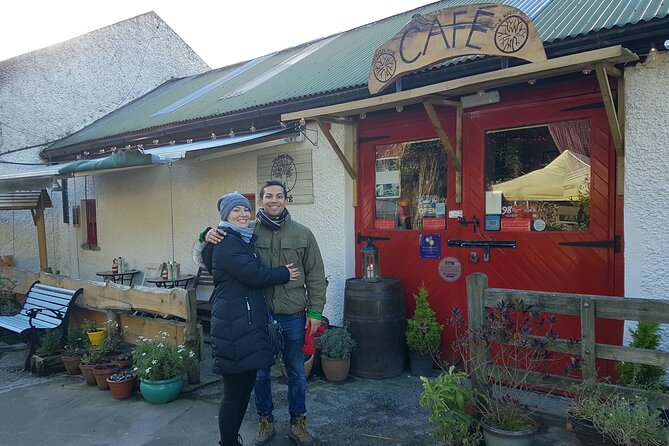
Eventually you arrive at a rustic cafe and restaurant, which is the day’s low-stress finish. This is where you have options.
Hazel House finish: lunch with local produce or a country pub pint
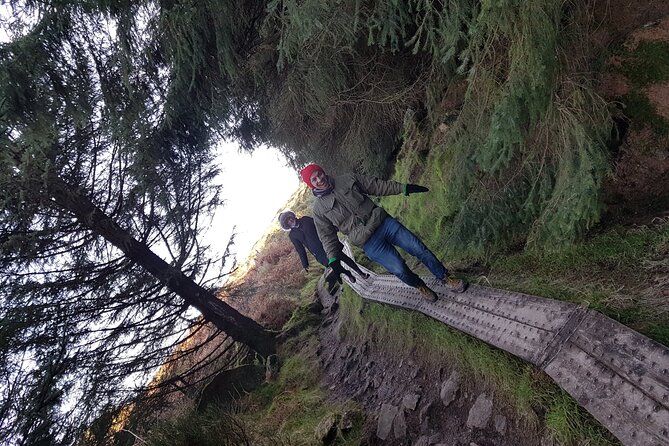
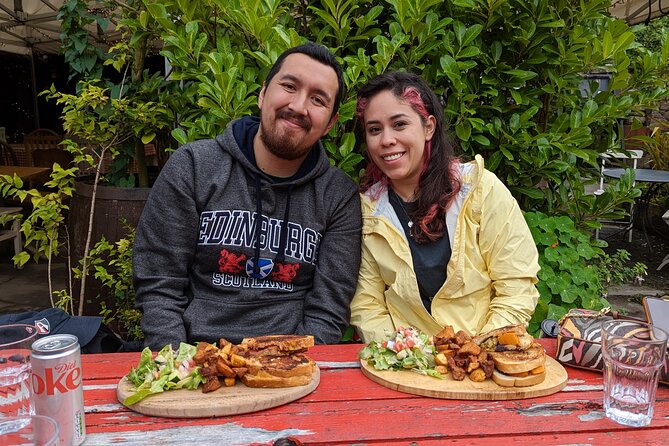
The end stop includes time at a quaint, rustic cafe and restaurant. You can choose a lunch made of local produce and cuisine, or you can go for a well-earned pint at a country pub. Alcoholic drinks are not included, so you’ll pay for those if you choose them.
I like this flexible finish because it respects different travel styles. If you want to refuel properly, you can sit down with food. If you want the classic Ireland experience of a pub after a walk, you can keep it simple with a pint and a relaxed chat.
Also, the tour ends back at the meeting point near Luas in Dundrum. An alternative return bus route is used, so you’re not trapped staring at the same scenery on the way back.
Pace, physical effort, and what to bring for a 7-hour day
This is listed for travelers with moderate physical fitness, and the duration is about 7 hours. That tells me the hike is not a casual stroll, but it’s also not described as extreme. The “moderate” label usually means uneven ground, some uphill effort, and time spent walking between stops.
To make it comfortable, I’d plan like this:
- Comfortable walking shoes with grip, especially if the weather turns wet
- A rain layer, since the experience is described as requiring good weather
- Water, plus a small snack if you tend to get hungry on long outings
- A hat or sunscreen for ridge viewpoints, where you can get exposed
One more thing: the tour is English-speaking and capped at 8 travelers, which is great for interaction. It also means you’ll want to pay attention to the guide’s cues, because small groups move as a unit.
Price and value: is $180.44 worth it?
At $180.44 per person, this isn’t a bargain-basement outing. So I think the right question is value, not just cost.
Here’s where the price starts to make sense:
- You get a guided experience focused on two major megalithic sites and multiple points of interest
- Transport is included via a bus pass to the start and back
- The group size is small, max 8, which you feel when you’re asking questions and getting explanations at actual sites
- You also get an end opportunity for lunch or a pub, which you can treat as part of your travel day planning
You’ll also want to consider what you would do instead on a free day. If you’d otherwise be driving or taking multiple buses to reach remote trailheads, the built-in transport alone can feel like a win. If you love history but also love views, the combination of megalithic stops plus Dublin Bay panorama is the best argument for the price.
Who should book this and who might prefer something else
This hike fits best if you want:
- A guided day hike with context, not just walking
- Stunning views over Dublin and the bay
- Meantime, megalithic sites you can understand with a guide like Ben
- A small-group pace that allows questions
It may not be the right match if you’re:
- Looking for minimal walking or fully flat terrain
- Traveling only in bad-weather conditions (the experience requires good weather)
- Wanting a day that is mostly indoor time
The experience also notes that service animals are allowed, and it’s near public transportation, which helps a lot for practical planning.
Should you book Trek the Tombs and Trails in the Dublin Mountains?
If you’re choosing between a generic hike and one with a purpose, I’d pick this style. The best reason is the balance: you walk a real trail, you see major prehistoric burial structures, and you get big views that feel earned. Add the small group size and a guide who connects the stones to Irish history, and it becomes more than a physical workout.
Book it if you’ll enjoy mixing scenery and meaning, and if you’re ready for a moderate 7-hour day outdoors. Skip it if you hate walking for long stretches or if your plans are so fixed that you can’t handle a weather day switch.
FAQ
How long is the Dublin Mountains hike?
It runs for about 7 hours.
Where does the tour start and end?
It starts at Dundrum, outside the Luas station, and ends back at the same meeting point.
Is lunch included?
Lunch is not included, but there’s an option to have lunch at a rustic cafe and restaurant at the end of the hike.
Do I need to pay for drinks at the pub?
Alcoholic beverages are not included. There’s an option to visit a local pub after the hike, but you pay for drinks there.
What fitness level is needed?
The tour is for travelers with a moderate physical fitness level.
How big is the group?
The experience has a maximum of 8 travelers.
What happens if the weather is bad?
The experience requires good weather. If it’s canceled due to poor weather, you’ll be offered a different date or a full refund.
Longer Legs Around Dublin
Elsewhere on The Ireland Traveler
Lately added to the Dublin pile
- Waterford Crystal and Kilkenny Full-Day Rail Tour from Dublin
★ 5.0 · 3 reviews - Turtle Bunbury’s Dublin: A Self-Guided Audio Tour from a Celebrated Author
★ 5.0 · 3 reviews - Cliffs of Moher and The Burren Private Tour from Dublin
★ 5.0 · 3 reviews - Dublin Full-Day Tour through Boyne Valley
★ 5.0 · 3 reviews - Rock Of Cashel And Blarney Castle Private Chauffeur Full Day Sightseeing Tour
★ 4.5 · 3 reviews - Private Irish Fusion Meal in a Modern Home in Skerries, Dublin
★ 5.0 · 3 reviews
More Hiking & Trekking, side by side.
 ★ 5.0Dublin Coastal Hike, Pints & Puppies AdventureFrom $56647 reviews
 ★ 5.0Cliffs Of Moher Hiking Tour from Doolin – Small GroupFrom $41324 reviews
 ★ 5.0Dublin Coastal Hike with Howth AdventuresFrom $47289 reviews
 ★ 5.0Howth Safari Hiking TourFrom $71279 reviews
 ★ 5.0Wicklow Mountains Horse TrekkingFrom $90118 reviews
 ★ 4.9Dublin: Howth Coastal Hiking TourFrom $44116 reviews
 ★ 5.0Howth Hiking Trail from Dublin: Mythology and LegendFrom $4677 reviews
 ★ 5.0Cliffs of Moher Hiking Tour from Galway – Small GroupFrom $10774 reviews
Other lists this one is on