
REVIEW · CLARE
Craggaunowen Admission Ticket
Bronze Age Ireland can feel close up. With a Craggaunowen admission ticket, you can wander through the crannóg and the ring fort at an easy walking pace, taking in prehistoric life, reenactor areas, and outdoor exhibits around a lake. I love how the site mixes practical artifacts with real terrain, so the stories make sense even when you are reading solo.
One thing to consider: this is primarily self-guided. If you prefer a live guide to explain every detail, you may want to slow down and read the signs closely, because the experience leans on your own curiosity.
In This Review
- Key highlights at a glance
- Why Craggaunowen feels practical, not just museum-y
- Price and how far your ticket money goes
- Entering Crannóg country: the artificial island and hidden defenses
- Ring Fort daily life: fires, querns, bread, and pottery
- Brendan Boat and the legend of early Atlantic journeys
- Craggaunowen Castle on the crag: views you can plan around
- Togher road from 148 BC: ancient infrastructure you can walk toward
- Souterrain escape spaces: storage that becomes shelter
- Lake walks and the farmhouse tea-room reset
- Timing, walking style, and what to wear
- Who this Craggaunowen ticket is best for
- Should you book Craggaunowen admission?
- FAQ
- How long does Craggaunowen admission take?
- Is this ticket self-guided?
- What language is the experience offered in?
- What is included with the admission ticket?
- Is food included in the ticket price?
- What time is Craggaunowen open?
- Can I get a refund if I cancel?
Key highlights at a glance
- Crannóg on a manmade island with a defended feel and a hidden water approach
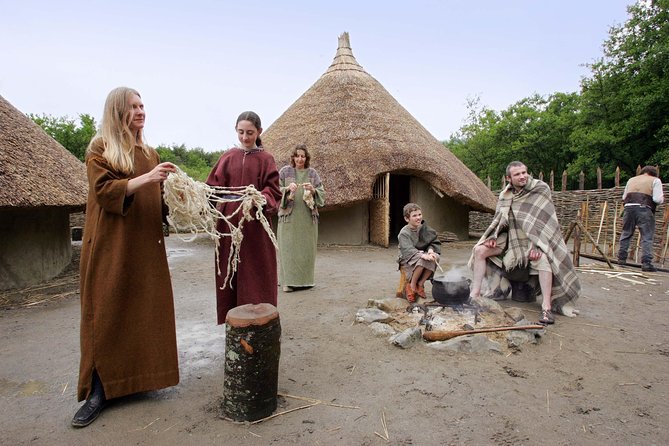
- Ring Fort daily life examples like open fires, pits, querns for grain, and making pottery
- Brendan Boat connection to early Christian legends reenacted by Tim Severin
- Castle views from a crag plus exhibits in a restored 16th-century setting
- Togher road and Souterrain for a look at ancient infrastructure and survival spaces
- Lake walks and a farmhouse tea-room for a low-key rural break
Not settled on one yet? These Shannon trips earn the warmest write-ups from our reviewers.
- Shannon Airport to Galway City, Private Chauffeur Service★ 5.0 · 21 reviews
- Celtic Dance Party★ 5.0 · 15 reviews
- Shannon Airport to Cork, Private Chauffeur Service★ 5.0 · 9 reviews
- Shannon Airport to Galway Transfer★ 5.0 · 6 reviews
Why Craggaunowen feels practical, not just museum-y
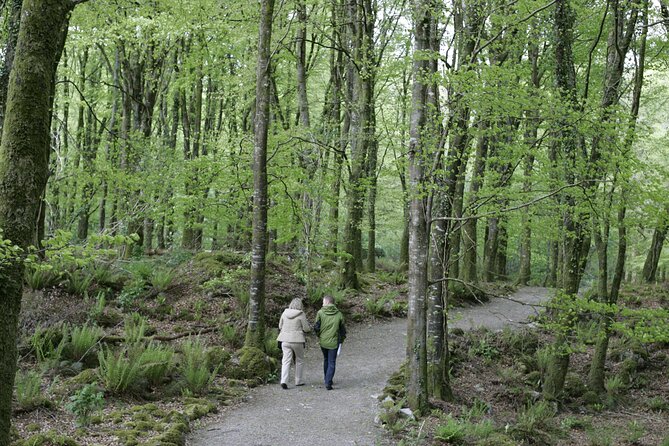
Craggaunowen is one of those places where you can see how people actually lived, not just what they owned. The grounds are built for walking, with structures and reconstructions that map onto the landscape you are standing in.
I like that the site is designed so you can make it your pace. You can spend 90 minutes if you are moving briskly, or stretch it toward two hours if you like to linger at exhibits and viewpoints.
The other big plus is variety. You are not only looking at buildings. You are also looking at how food was cooked, how tools were used, and how people moved through their world, including defensive features and storage spaces.
Price and how far your ticket money goes
At about $15.38 per person, this admission ticket is a straightforward way to get a lot of site access in a short window. You are paying for entry to the exhibits, displays, and the walking circuit, and you are not on the hook for extra activities to fill the time.
This is also a good value if you are already in the Shannon area and want an Ireland-focused stop that does not feel like a detour. The duration is listed as 1 to 2 hours, which means you can usually work it into a day without sacrificing your whole schedule.
Two small practical points: food and drinks are not included, and the tea-room is a separate comfort stop rather than part of the ticket. If you want lunch, plan on buying it on site or eating before or after.
Entering Crannóg country: the artificial island and hidden defenses
Your first major draw is the Crannóg, an artificial island dwelling. The idea is simple and clever: place the home in water, then build defense into the approach. You will also see the concept of a hidden pathway in the water, which is one reason this stop clicks quickly.
What I like here is that it helps you picture daily life in defensive terms. You are not just looking at an island shape. You are trying to understand how people protected themselves and how they planned for regular work and visits even with the water in between.
The exhibit also highlights hunting and food preparation. You will find details about skilled hunters going deep into forest missions and using sophisticated cooking techniques, including a cooking setup described with a large pit and rope. Even if you read only some of the explanations, the setup makes it easier to imagine practical meals, not fantasy feasts.
Ring Fort daily life: fires, querns, bread, and pottery
Next up is the Ring Fort experience, which shifts the mood from defense to routines. This is where the site tries to make the everyday visible, including cooking over open fires or in pits and grain processing for bread or porridge.
The hand-powered querns are a key detail. Grain grinding can sound abstract until you see the context of what it would take to turn raw corn into something you can feed a group with. It is one of the stops where you feel the work behind the meal.
You will also see examples related to making pottery and wooden items like bowls, goblets, and platters. I find that helpful because it moves the conversation beyond shelter. It points to tools and materials, the stuff that had to be made again and again.
One practical tip: bring your slow-walking mindset. This part of the site works best if you pause and look at how the activities fit into the space around you.
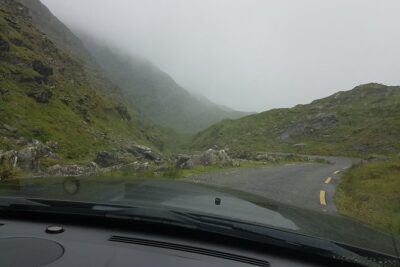
Brendan Boat and the legend of early Atlantic journeys
A standout stop for many visitors is the Brendan Boat. This is tied to the legend of St. Brendan and early Christian monks, and it is reenacted with a leather-hulled boat built by Tim Severin who sailed across the mid-Atlantic.
This section is a nice reminder that Craggaunowen is not only about one straight line of time. You get the prehistoric focus, then the site also invites you to consider earlier sea legends and how people imagined far-off crossings.
If you like connection points between stories and evidence, you will probably enjoy this. It is also a good mental breather between the Bronze Age reconstructions and the later defensive and roadway elements.
Craggaunowen Castle on the crag: views you can plan around
You will then reach Craggaunowen Castle, described as a restored 16th-century medieval castle dating to 1550, perched on a crag overlooking the lake. The real payoff is the view, because you get to see how the settlement sits in its larger setting.
This is a great place to take a pause. Even if you skip some reading, the sightlines make you think about why people built where they did: visibility, movement, and a sense of scale.
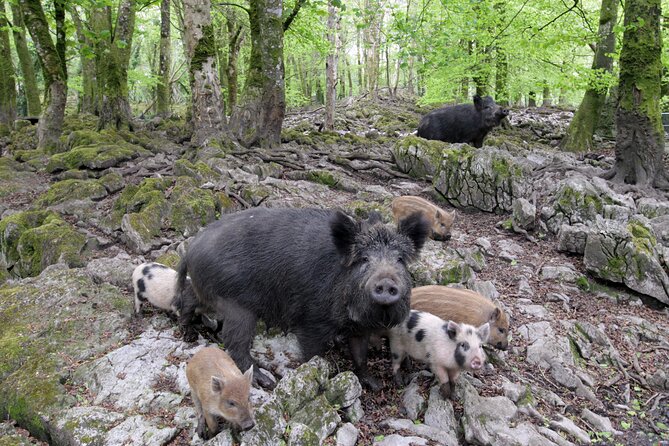
The castle area also includes exhibits tied to animal breeds, including wild boar and soay sheep. I like that this is not only human-made structures. It adds a living background to the landscape, so the prehistoric setting feels less like empty scenery.
Togher road from 148 BC: ancient infrastructure you can walk toward
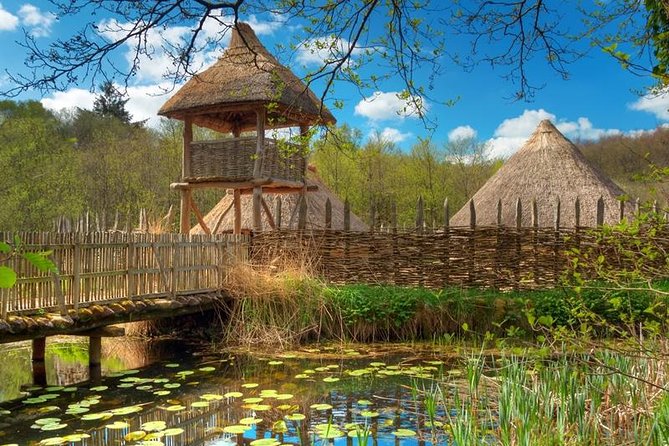
One of the most specific and memorable stops is the togher, an early roadway described as dating to 148 BC. You are not just being told that roads existed. You are directed toward a surviving concept of engineering for wet ground, which is part of why the stop feels unusually concrete.
This is also one of the places where a self-guided visit can work in your favor. If you like standing still and focusing on one thing, you can treat the togher as a focal point for how people traveled and managed land.
If you are traveling with kids, this area is designed to feel playful as well as educational. The souterrain section later mentions a hide and seek angle, and that same family-friendly energy seems to match how people tend to explore the grounds.
Souterrain escape spaces: storage that becomes shelter
Next is the Souterrain, described as an underground space used to store food, and also serving as an escape route during attacks. This is one of the stops that makes prehistoric life feel sharply human, because the function is simple: people planned for risk and protected supplies.
I especially like the way this fits into a larger theme at the site. Earlier you are learning about defense at the crannóg. Then you see daily work at the ring fort. Here, you get the middle ground, the in-between where families needed a practical way to survive if things turned dangerous.
And yes, it is designed with exploration in mind, with a note that it can be a fun hide and seek spot. That matters because it encourages you to pay attention to the layout rather than treating it like a dark tunnel you rush past.
Lake walks and the farmhouse tea-room reset
After the exhibits, you get fresh air with lake walks in a rural setting. This is not a separate tour segment, it is part of how the site gives you a break from reading and looking.
If you have a tight schedule, use this time strategically. Take your photo break here. Let your legs stretch. Then head back to the areas you most want to revisit.
When you feel ready to slow down again, there is a farmhouse tea-room with homemade fare. Food and drinks are not included with the ticket, so plan on spending a little extra if you want to sit down. I think this stop is worth it because it keeps the visit grounded in the countryside rather than turning it into a quick, stand-and-sprint museum loop.
Timing, walking style, and what to wear
A visit is listed as about 1 to 2 hours, so I would plan for a gentle circuit, not a marathon. Most of the experience is outdoor and walking-based, so your comfort matters more than your athletic ability.
Wear shoes you trust on uneven ground. You are moving between exhibits, plus you are doing lake walks. If weather is damp, take it slow around any areas that feel slippery, especially near water edges.
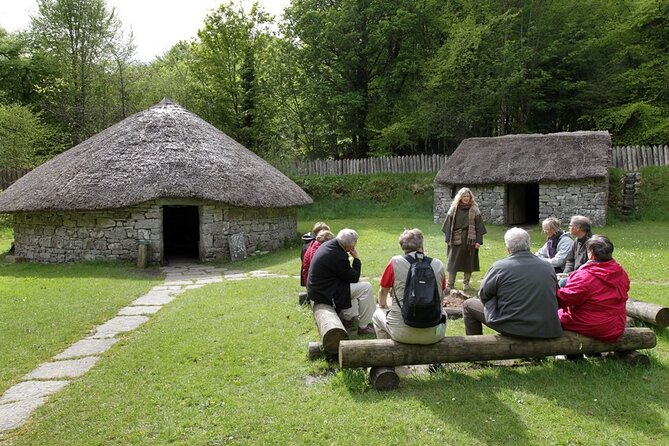
English is offered, and the experience is built for independent travelers. That means you can move straight from one stop to the next, or you can linger where you are most curious, without needing to match a group pace.
Who this Craggaunowen ticket is best for
This is a great fit if you want a prehistoric stop that still feels grounded and easy. You do not need specialist knowledge to enjoy it, because the grounds are built to help you visualize daily life step by step.
I think it is especially good for:
- Independent travelers who like self-guided pacing
- Families looking for a hands-on feeling, not just indoor displays
- Anyone pairing Ireland’s west-coast travel with a meaningful, short stop near Shannon
It is also worth considering if you enjoy a site where you can read a little, look a lot, and let the landscape do some of the explaining.
One more small detail from the general setup: service animals are allowed, and the site is near public transportation. That makes it easier to plan if you are not driving.
Should you book Craggaunowen admission?
Yes, if you want a short, high-value taste of Ireland’s early life that you can do at your own pace. For the price, you are getting entry to a full set of displays, multiple themed stops, and a walkable outdoor experience that typically lands around a couple of hours.
Book it when you have time to roam slowly, because the site rewards pausing. Also book it if you are the type who likes to connect everyday tasks, cooking methods, and defensive ideas into a bigger picture.
Skip it only if you need a fully guided program. Since this is self-guided, you will rely on the onsite information and your own reading more than a live talk.
FAQ
How long does Craggaunowen admission take?
The experience duration is listed as about 1 to 2 hours.
Is this ticket self-guided?
Yes. The self-guided tour format is described as a great option for independent travelers.
What language is the experience offered in?
It is offered in English.
What is included with the admission ticket?
The ticket includes admission to Craggaunowen and access to all displays and exhibits.
Is food included in the ticket price?
No. Food and drinks are not included, though there is a farmhouse tea-room on site.
What time is Craggaunowen open?
The listed opening hours are 10:00 AM to 5:00 PM, with the season dates shown as 05/05/2026 to 09/03/2026.
Can I get a refund if I cancel?
Yes, you can cancel for free up to 24 hours in advance for a full refund.
Elsewhere on The Ireland Traveler
Lately added to the Shannon pile
- Shannon Airport to Killarney , Private Chauffeur Service
★ 5.0 · 5 reviews - Shannon Airport to Galway Transfer
★ 5.0 · 6 reviews - Craggaunowen Admission Ticket
★ 5.0 · 6 reviews - Shannon Airport to Cork, Private Chauffeur Service
★ 5.0 · 9 reviews - Celtic Dance Party
★ 5.0 · 15 reviews - Shannon Airport to Galway City, Private Chauffeur Service
★ 5.0 · 21 reviews
More The Burren and County Clare, side by side.
 ★ 5.0Galway to Cliffs of Moher, Aillwee Cave & Dunguaire Castle TourFrom $603,058 reviews
 ★ 4.5Dublin: Cliffs of Moher, Doolin, Burren, and Galway Day TripFrom $852,851 reviews
 ★ 4.8From Galway: Full-Day Cliffs of Moher & Burren Guided TourFrom $572,815 reviews
 ★ 4.5Cliffs of Moher, Burren and Galway Day Tour from DublinFrom $962,755 reviews
 ★ 5.0Cliffs of Moher & the Burren Tour from GalwayFrom $661,913 reviews
 ★ 4.7From Galway: Cliffs of Moher and The Burren Guided Day TripFrom $621,770 reviews
 ★ 5.0Galway to Aran Islands Inisheer, Doolin, Cliffs of Moher Day TourFrom $961,672 reviews
 ★ 4.5Dublin to Bunratty Castle, Cliffs of Moher, Burren Galway by RailFrom $1951,202 reviews
Other lists this one is on