
REVIEW · DUBLIN
Dark Dublin: Torture, Murder & Mystery
Murder has a way of sticking to old stones. This 2 hour, on foot Dark Dublin walk pairs famous sights with the city’s grim side, from grave robbing to torture and cannibalism. I love the storytelling energy I’ve seen from guides like Cillian and Killian, and I love that you get out of the usual tourist loop into places such as Smithfield. One drawback to consider is that the tour keeps a steady walking pace and does not take you inside Dublin Castle or the cathedrals.
You’ll start at Barnardo Square at 5:30 pm with guides holding purple umbrellas, then finish in Smithfield Square. It is aimed at most travelers, capped at 30 people, with a mobile ticket and English narration.
In This Review
- Key things to know before you go
- Why this dark walking tour works in Dublin
- Price and logistics, what you really get for $23.22
- The route is famous sights plus “other” Dublin
- No church entry: what that means for your experience
- Stop by stop: where the stories land
- Barnardo Square, where the tour starts with the purple umbrella cue
- Dublin Castle courtyards, torture and the Devil’s Half Acre
- The 40 Steps, where cannibalism gets specific
- St Patrick’s Cathedral grounds and Jonathan Swift’s shadow
- Christ Church Cathedral, hidden history behind a famous façade
- St Audoen’s Church, grave robbing and the Black Pig
- St Michan’s Church, Billy in the Bowl and later dark events
- Smithfield Square, the finish with a local murderer
- What the best guides do, based on what you’ll notice on the walk
- A balanced caution: pace and story expectations
- Who should book Dark Dublin Torture, Murder & Mystery
- Who might want to skip it
- Practical tips so you enjoy the walk
- Should you book this tour?
- FAQ
- How long is the Dark Dublin: Torture, Murder & Mystery tour?
- What time does the tour start, and where do I meet?
- Where does the tour finish?
- Does the tour go inside Dublin Castle or the cathedrals?
- Is The 40 Steps stop included with admission?
- What language is the tour offered in, and is there a mobile ticket?
- What is the cancellation policy?
Key things to know before you go
- Purple umbrella meeting point: easy to spot at Barnardo Square, by City Hall and near the Olympia Theatre.
- Guided from the outside: Dublin Castle and the big churches are viewed in courtyards and grounds, not entered.
- Real “under-the-street” lore: the route hits lesser visited corners tied to murder, grave robbing, and notorious figures.
- A true night-walk feel: the tour starts in the late afternoon, which makes the macabre theme land better.
- Only one paid stop called out: The 40 Steps has admission included, while other stops are mainly outside viewing.
- Guides bring humor: multiple guides (including Kim and Michael) balance gruesome topics with light moments.
Ghost stories out of Dublin, continued
- Dark Dublin: Torture, Murder & Mystery★ 5.0 · 2,231 reviews
- Dublin Ghost Bus Tour with Professional Actors★ 4.5 · 949 reviews
- The Dublin Ghostbus Tour★ 4.6 · 634 reviews
- Haunted Dublin Walking Tour★ 5.0 · 550 reviews
Why this dark walking tour works in Dublin
Dublin has a friendly, storybook front. This tour shows you the other side. You walk past landmark façades people recognize right away, but your guide connects them to the darker stuff that shaped the city over centuries.
What makes it work is the format. It is built as a guided walk with short stops, around 15 minutes each, so you do not get stuck in one spot too long. And because the time block is tight, you see a lot without feeling like you are sprinting through town for the sake of photos.
Price and logistics, what you really get for $23.22
At about $23.22 per person for an approx 2 hour tour, the value comes from what is included, not what you pay extra for. You get an in person guide and a small group experience (up to 30), plus an eco-friendly approach. You also get a mobile ticket, which is a small thing, but it saves you from fussing with paper receipts.
A few practical points help you plan:
- Start time is 5:30 pm, so you are walking through Dublin as the evening kicks in.
- You do not need private transport. The route is designed for pedestrians, and it is near public transportation.
- If you are the type who hates waiting around, you’ll appreciate the clear start and finish, Barnardo Square to Smithfield Square.
The route is famous sights plus “other” Dublin
This tour is not trying to beat a top sights checklist. Instead, it mixes Dublin’s recognizable landmarks with streets and structures that are easier to miss on your own.
You’ll get key stops south of the city center. The cathedrals and castle show up in the route, but your guide focuses on their darker associations rather than plain guidebook facts. You also end in Smithfield Square, which is a nice capstone because the stories land with a “local” feeling.
If you were hoping for nonstop time in the most central north-side tourist lanes, temper expectations. The tradeoff is that you spend more time where the “weird backstory” lives, not just where the crowds gather.
No church entry: what that means for your experience
One clear expectation: the tour does not enter Dublin Castle, St Patrick’s Cathedral, or Christ Church. You will spend time in courtyards and grounds while your guide tells the stories.
That matters for three reasons:
- You still get the atmosphere of these huge sites without queue stress.
- Your time stays predictable, which is important in a 2 hour tour.
- You should bring a mindset for listening and looking, not touring interiors.
For the stops where admission is mentioned, the schedule keeps things simple. The 40 Steps has admission included, so you do not have to sort out that one extra detail on the fly.




Stop by stop: where the stories land
Barnardo Square, where the tour starts with the purple umbrella cue
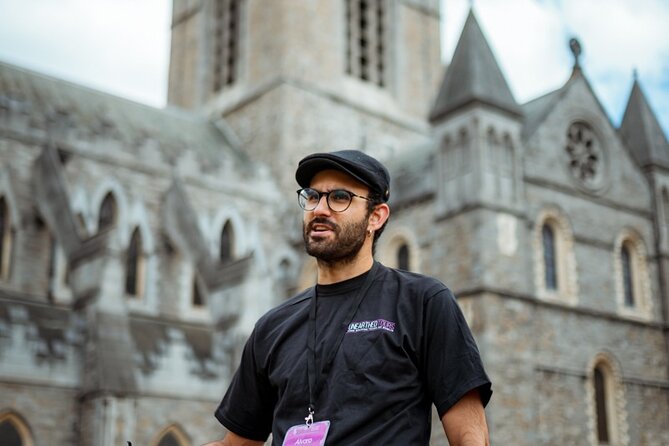
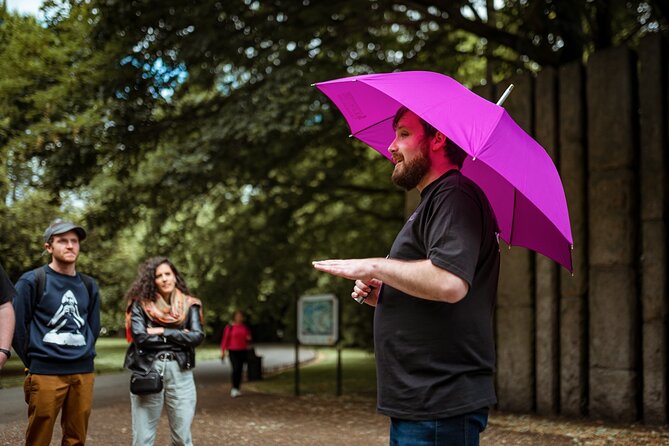
You meet at Barnardo Square on Dame Street, Dublin 8, near City Hall opposite the Olympia Theatre. Guides are visible with purple umbrellas, so you can find them fast.
This first moment matters more than people think. It sets the tone. You’ll get the early context and your guide’s style, whether it is more playful like some guides have shown, or more serious with a steady narration. Either way, it helps you settle into the theme before you move.
Dublin Castle courtyards, torture and the Devil’s Half Acre
Next up is Dublin Castle, but not an inside visit. You’ll spend time in the Lower Courtyard, then the guide moves you toward the Upper Courtyard to talk about the Devil’s Half Acre.
Even without entering, Dublin Castle is a strong anchor. The stone and the layout help your brain “see” how people moved and where power played out. It also frames the night. You start with institutions, then you move into the more personal side of crime and punishment.
The only thing to be aware of is timing. Expect about 15 minutes here, and use the outdoor time to ask questions if you’re curious about something the guide mentions. With a group, the guide can only go so far at each stop.
The 40 Steps, where cannibalism gets specific
Then you hit The 40 Steps. This stop is clearly framed around stories that include cannibalism, and the admission is marked as included.
This is the kind of moment where your guide’s delivery style matters a lot. In the best versions of this tour, the guide keeps the narration clear and organized so you can follow the logic of what happened and why it became legend. In the weaker versions, it can feel like shock value. The good news is that many guides on this experience have a reputation for holding focus the whole way.
It’s also a shorter stop, about 15 minutes, so it plays like a punchy chapter rather than an all-night lecture.
St Patrick’s Cathedral grounds and Jonathan Swift’s shadow
At St Patrick’s Cathedral, the tour takes place in the grounds, and it does not enter the church. Expect about 15 minutes, with the guide covering the history tied to Jonathan Swift.
Even if you know Swift from literature, hearing a guide connect him to the darker side of Dublin changes how you look at the building. It turns a well known name into a “placed in time” person with local context.
If you prefer quieter storytelling, you might find this one steadier than the most gruesome stops. But it still fits the tour theme: famous people and famous places with uncomfortable backstories.
Christ Church Cathedral, hidden history behind a famous façade
Next comes Christ Church Cathedral. Again, you do not enter, but you do get a guide driven explanation of hidden history connected to the cathedral.
Christ Church is one of those places where most people stop for a quick look. This tour slows you down just enough to see how the building’s reputation links back to events people usually do not connect to architecture.
It’s another 15 minute stop, so let your guide do the talking. If you want to remember details, take a quick note on your phone about the specific figures or incidents the guide repeats. The route moves fast enough that it is easy to mix stories together later.
St Audoen’s Church, grave robbing and the Black Pig
At St Audoen’s Church, the guide unearths stories of grave robbings and attacks from The Black Pig. The tour does not enter the church, and the marked admission is free for this stop.
This is one of those locations that feels better with a guide because it is not usually top of mind when people plan Dublin. Your guide gives the “why this matters” piece, so you stop treating it like a random stop and start treating it like a clue.
If your walking group is moving at a quicker pace, this can be a moment where you stand your ground and listen anyway. The guide usually keeps the flow going and you do not have to run to catch up.
St Michan’s Church, Billy in the Bowl and later dark events
Then you come to St Michan’s Church, another stop without entry. The guide covers the brutal history of Billy in the Bowl and also more recent dark events.
This one tends to stick because it has a name people remember. Billy in the Bowl is exactly the kind of story that makes you look at a city like it has a memory. And because you are not inside, you experience it like you are learning a rumor that the buildings have been carrying around for centuries.
It’s also another 15 minute block, which keeps the pacing tight and keeps the group from melting down during the night.
Smithfield Square, the finish with a local murderer
Your tour ends at Smithfield Square after finishing in the public area around 7 Smithfield. The guide wraps things up with an incredible closing story of a local murderer.
Ending here is a smart choice. It feels connected to the daily life side of Dublin, not just its monuments. And Smithfield Square is a simple place to orient yourself afterward, whether you are heading to dinner nearby or walking back to your lodging.
Many people like tours that end with a final “last chapter” moment. This one is built to do that.
What the best guides do, based on what you’ll notice on the walk
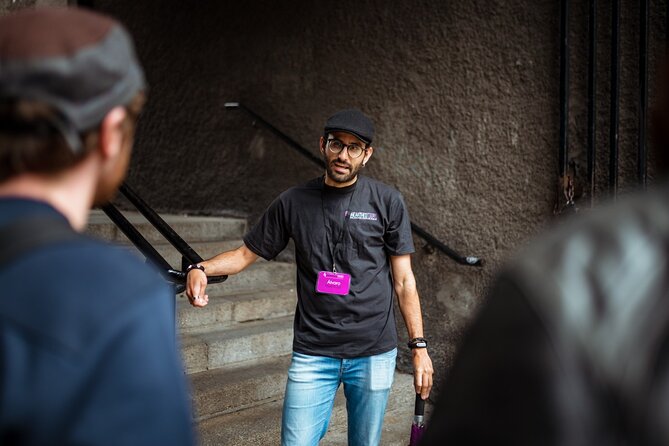
The standout in the reviews is not just that the stories are dark. It is the way the guides deliver them. Guides like Cillian, Killian, Kim, Michael, and Mikayla are praised for combining information with personality, and a few guides have been noted for adding humor so the grim topics do not swallow the whole night.
Here is what to look for when you start:
- Your guide should keep stories tied to the locations, so you understand why this spot matters.
- The pace should feel like chapters, not a blur. If your group is fast, you may still be okay, but it helps to stay attentive.
- Your guide should invite questions. Several guides have been described as open to questions, which can turn a good walk into a tailored one.
A balanced caution: pace and story expectations
Two real-world considerations show up in the experience feedback.
First, the pacing can feel quick if your group moves slower than average. Some people found the walk easy but fast at times, especially where a few group members did not walk as quickly.
Second, you are signing up for a dark theme, not mainstream tourism. If you expected a longer tour in the most touristed areas, you might feel you see less of the city center than you hoped. The counterpoint is that you do get access to the “less obvious” Dublin that most people walk past without a second thought.
If you like your history with plot twists and a little shock, you are likely to love this. If you want mostly bright, straightforward sightseeing, this might feel like too much too soon.
Who should book Dark Dublin Torture, Murder & Mystery
I think it is a great fit for:
- True crime fans and people who like “how did this become a legend” stories.
- Travelers in Dublin during October or near Halloween, when a spooky theme just fits the mood.
- Visitors who want a different side of Dublin and do not mind that the tour is mostly outside viewing.
It’s also good if you want a single tour that covers famous landmarks without turning into a checklist. The guides put the stories where the buildings are, and that makes it easier to remember.
Who might want to skip it
You might want to skip if:
- You do not want graphic or grim subject matter.
- You need plenty of time inside big sites, because this experience is mostly courtyards and grounds, not interiors.
- You prefer long, slow sightseeing with lots of standing around. This is built for movement.
Practical tips so you enjoy the walk
- Wear comfortable shoes. You are walking around multiple stops in about 2 hours.
- Arrive a little early at Barnardo Square so you can start on time and avoid stress finding the purple umbrella guides.
- Bring a layer. Even if the weather is fine, it is an evening start at 5:30 pm.
- If you care about getting specific details right, have a notes app ready. The tour is story heavy and short, so quick notes help later.
Should you book this tour?
If you want a Dublin night with real atmosphere, this is an easy yes. The price is reasonable for a guided 2 hour walk, the group size stays manageable, and the ending at Smithfield Square gives the stories a strong final beat.
Book it if you like guided storytelling and you enjoy learning the city’s uncomfortable chapters alongside famous buildings. Skip it if you want daytime, inside-the-church sightseeing or a gentler theme.
FAQ
How long is the Dark Dublin: Torture, Murder & Mystery tour?
It runs for about 2 hours.
What time does the tour start, and where do I meet?
The start time is 5:30 pm. You meet at Barnardo Square in Dublin 8, next to City Hall opposite the Olympia Theatre, with guides visible by purple umbrellas.
Where does the tour finish?
The tour finishes in Smithfield Square, at 7 Smithfield.
Does the tour go inside Dublin Castle or the cathedrals?
No. The tour does not enter Dublin Castle, St Patrick’s Cathedral, or Christ Church Cathedral. It focuses on courtyards and cathedral grounds.
Is The 40 Steps stop included with admission?
Yes. The 40 Steps stop lists admission as included.
What language is the tour offered in, and is there a mobile ticket?
The tour is offered in English, and you’ll have a mobile ticket.
What is the cancellation policy?
You can cancel for free up to 24 hours in advance for a full refund. If you cancel less than 24 hours before the start time, you do not get a refund.
When Dublin Goes Quiet
Elsewhere on The Ireland Traveler
Lately added to the Dublin pile
- Waterford Crystal and Kilkenny Full-Day Rail Tour from Dublin
★ 5.0 · 3 reviews - Turtle Bunbury’s Dublin: A Self-Guided Audio Tour from a Celebrated Author
★ 5.0 · 3 reviews - Cliffs of Moher and The Burren Private Tour from Dublin
★ 5.0 · 3 reviews - Dublin Full-Day Tour through Boyne Valley
★ 5.0 · 3 reviews - Rock Of Cashel And Blarney Castle Private Chauffeur Full Day Sightseeing Tour
★ 4.5 · 3 reviews - Private Irish Fusion Meal in a Modern Home in Skerries, Dublin
★ 5.0 · 3 reviews
More Ghost Tours and Dark History, side by side.
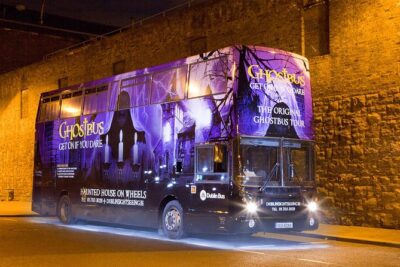 ★ 4.5Dublin Ghost Bus Tour with Professional ActorsFrom $42949 reviews
 ★ 4.6The Dublin Ghostbus TourFrom $40634 reviews
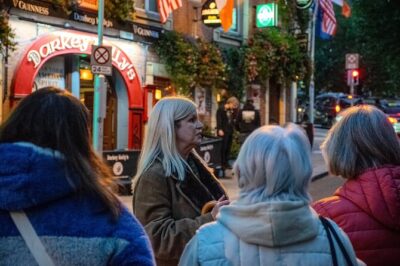 ★ 5.0Haunted Dublin Walking TourFrom $29550 reviews
 ★ 4.4From Dublin: Gravedigger Ghost Bus TourFrom $34546 reviews
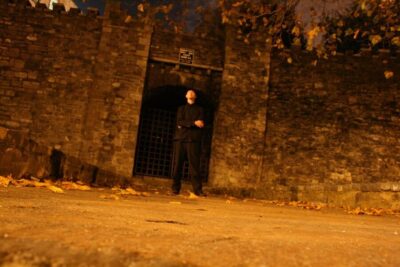 ★ 4.3Dublin’s Haunted History Walking TourFrom $31345 reviews
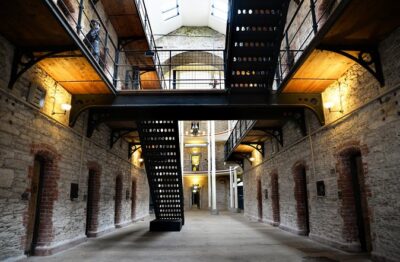 ★ 4.5Cork City Gaol Admission Ticket with GUIDEBOOKFrom $16247 reviews
 ★ 4.8Galway: Dark History Guided City Walking TourFrom $23236 reviews
 ★ 4.5Kilkenny Haunted Dark ToursFrom $22221 reviews
Other lists this one is on