
REVIEW · IRELAND
Dublin Mythology and Folklore Tour with Irish Stories and Legends
Irish myths feel close when you hear them on the street. This is a 2-hour group walk that uses Dublin landmarks to explain stories like fairies, invasions, and folklore, then ties them to Irish identity. I especially love how the route moves with purpose, and how the guide turns street corners into meaning with mythology and history braided together. One thing to consider is that it is mostly outdoors and timed in short blocks, so wind, rain, and hearing can be a factor.
Two more things I like: the meeting point is easy to reach because it is near public transport, and the pace is usually manageable since you get frequent stops (and you can plan for about 2 hours overall). The tour is also wheelchair and stroller accessible, which is a big plus for a city-center walking experience. Just keep in mind the group size tops out at 25, so if you prefer a quieter, more intimate setting, you may want to pick a calmer time slot.
In This Review
- Quick hit highlights you will actually use
- Why Dublin mythology on a city-center walk works
- Price and time: getting value from about $29
- Where you meet near Temple Bar (and how to plan your arrival)
- Stop 1: Temple Bar, where the stories start
- Stop 2: The River Liffey, north and south connections
- Stop 3: Grattan Bridge and the seahorse lamps
- Stop 4: St. Michan’s Church, crypt tales and the edges of justice
- Stop 5: GPO Museum exterior, myth shaping modern Ireland
- Stop 6: Parnell Square and the Children Of Sir finish
- What you will learn, beyond memorizing legends
- The guide style: when humor and answers matter
- How much walking is really involved
- Who should book this Dublin mythology and folklore tour
- Practical tips for a smoother evening
- Should you book this Dublin mythology and folklore tour?
- FAQ
- How long is the Dublin Mythology and Folklore Tour?
- Where does the tour start and where does it end?
- Is this tour wheelchair and stroller accessible?
- How big is the group?
- Is the tour offered in English?
- Can I cancel for a full refund?
Quick hit highlights you will actually use

- A tight, 2-hour route with about 10 minutes at each main stop, built for first-time context.
- Temple Bar to Parnell Square without you needing a map, since the route connects the city center in sequence.
- Free stops at major landmarks (you are stopping outside specific sites, not paying entry at each one).
- Wheelchair and stroller accessible and finished in a well-known city square area.
- Small enough to ask questions with a max of 25, and stories guided by people like Deidre, Helena, Dave, Emily, Ross, Lee, and Alan.
Not settled on one yet? These Dublin trips earn the warmest write-ups from our reviewers.
- Dublin to Cliffs of Moher, including Wild Atlantic Way and Galway★ 5.0 · 23,331 reviews
- From Dublin: Cliffs of Moher, Burren & Galway City Day Tour★ 4.8 · 18,888 reviews
- Dublin: Guinness Storehouse Entry Ticket★ 4.6 · 16,863 reviews
- Dublin to Cliffs of Moher, Burren, Wild Atlantic Way, Galway Tour★ 5.0 · 12,924 reviews
Why Dublin mythology on a city-center walk works
Dublin is one of the best cities for folklore walks because the places are not just pretty backdrops. They are markers of who lived here, what mattered, and what people feared or hoped for, long before we had museums and modern history books.
What I like about this format is that you get a fast orientation. You start in the Temple Bar area, follow the River Liffey, then work your way through major civic and cultural landmarks. By the end, you have a cleaner mental map of Dublin, and you understand why certain myths keep showing up in Irish storytelling.
Price and time: getting value from about $29
At about $29.02 per person for roughly 2 hours, this is priced like an affordable evening activity, not a big-ticket attraction. The value comes from two things: you are learning through multiple meaningful stops instead of one site, and you are not paying separate admissions at each stop since the listed stops are free.
Also, the tour is offered in English and uses a mobile ticket. That makes it simpler if you want a low-friction add-on to a day of museums, pub visits, or general sightseeing.
The only cost to think about is your energy. This is a walking tour, and even with pauses, you should plan on being on your feet for the full 2 hours. If you know you get tired fast, wear shoes you trust.
Where you meet near Temple Bar (and how to plan your arrival)
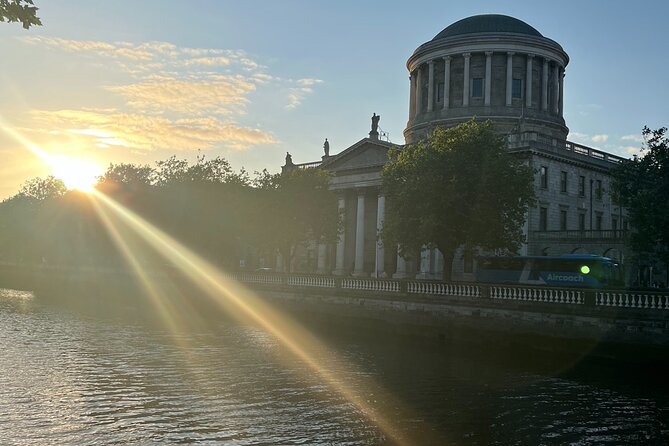
Your start is at 3 Crown Alley, Temple Bar, Dublin, D02 CX67. You finish in The Garden of Remembrance in Parnell Square at the foot of Oisin Kelly’s Children Of Sir statue, D01 A0F8.
Because the meeting point is near public transportation, you can connect easily if you are coming from a hotel outside the center. I recommend arriving a few minutes early and double-checking that you are at the exact start spot, since missing a guide or group start time can ruin the evening fast.
Stop 1: Temple Bar, where the stories start
You begin in the heart of Temple Bar, near your meeting point in Crown Alley. From there, the group heads through most of the Temple Bar area toward Grattan Bridge, with a short introduction to what you will be hearing on the walk.
This first stretch matters because Temple Bar is where many first-time visitors feel the energy of Dublin, but it can also blur together. With a mythology and folklore angle, the guide helps you notice details you might otherwise skip, like the “why” behind place names and the way stories cling to streets.
If you came to Dublin for atmosphere and you want your evening to feel like a guided storybook, this is a strong opener.




Stop 2: The River Liffey, north and south connections
Next up is the River Liffey. The tour explores sites both north and south of the waterway, which is a smart move because it teaches you how Dublin’s story is split and stitched together across the river.
Even if you do not memorize street names, you will walk away with a better sense of how the city grew and what people associated with different sides. In folklore terms, rivers are more than geography. They are edges, crossings, and places where old tales like to live.
This stop is also a reminder that you are not just hearing legends in a vacuum. The guide’s job is to connect myth to the city you are standing in.
Stop 3: Grattan Bridge and the seahorse lamps
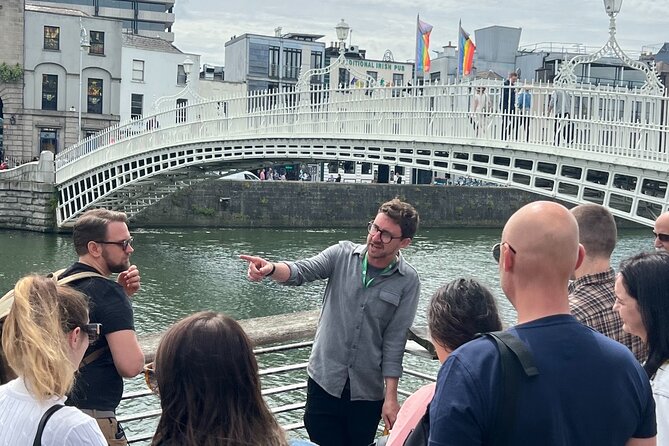
Then you reach Grattan Bridge, a fan favorite bridge that links Parliament Street to Capel Street. The detail that gets your attention here is the ornate lamp design, including seahorse-adorned lamps.
This is the kind of stop that can make or break a folklore walk. If the guide only repeats famous legends, you tune out. But when they point at an actual feature on the bridge and explain how people interpret, mythologize, and remember through design, it clicks.
Practically, this is also a natural pause to look around. If you are taking photos, this is one of the easiest places to frame city views while the story stays in your head.
Stop 4: St. Michan’s Church, crypt tales and the edges of justice
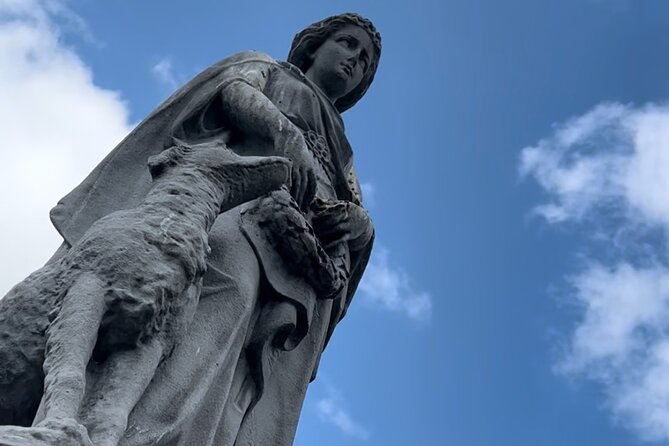
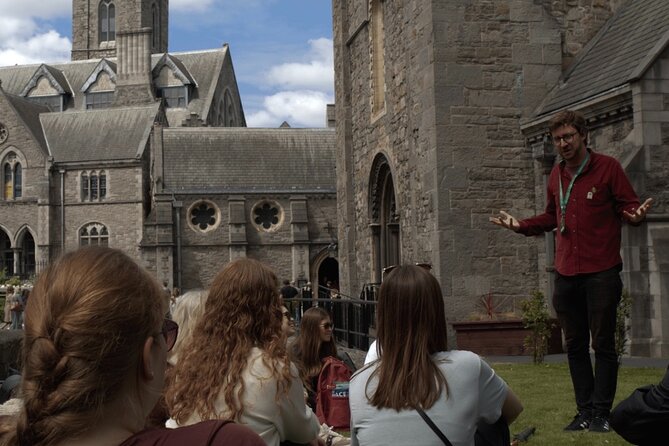
St. Michan’s Church is an outside stop where the conversation turns darker and more secretive. You talk about the role it has played in shaping Dublin’s secret tales, and you also hear about the bodies held in its crypt.
From there, the tour includes a look at the grounds of the older Newgate Prison and the Green Street Courthouse nearby, a corner of Dublin tied to Irish history but often overlooked in casual sightseeing.
Why this stop is worth it: folklore is not always whimsical. A lot of Irish storytelling carries warnings, fear, and moral lessons, and the history around sites of confinement and records helps you understand why. It gives gravity to the legends, and it makes the myths feel like they grew out of real life, not just imagination.
The downside here is purely practical. Some people prefer more time at darker, more indoor-feeling places, but this stop is still an outside walking segment. If the subject matter pulls you in, you might want to add extra time later on your own.
Stop 5: GPO Museum exterior, myth shaping modern Ireland
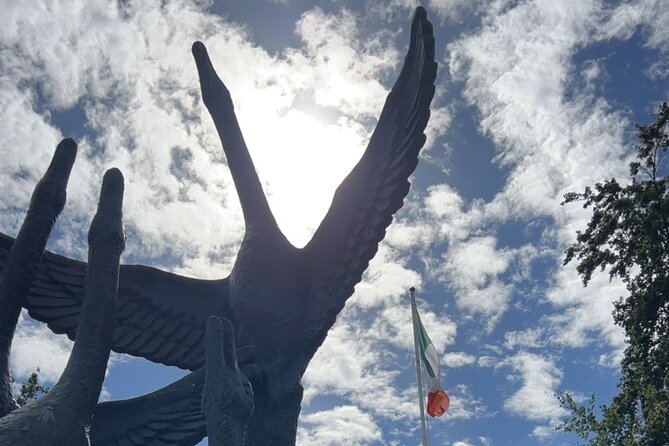
The route continues to the GPO Museum area. You stop outside, and the guide focuses on the building’s importance, including its impressive facade, and explores the role Irish mythology plays in shaping modern Irish history.
This stop is a good reminder of something I look for in mythology tours: how far the stories reach. You are not just hearing ancient tales. You are seeing how symbolism, identity, and storytelling habits persist into the present.
Even if you do not go inside the museum during this walk, the guided framing helps you understand why this building matters. It can make a later museum visit feel more connected.
Stop 6: Parnell Square and the Children Of Sir finish
Your tour ends at Parnell Square, at the foot of Oisin Kelly’s statue Children Of Sir in the Garden of Remembrance. Finishing here is a strong choice, because it shifts the mood from street-level lore to a public space built for memory.
This ending matters. Folklore is often treated as entertainment, but Irish stories frequently hold grief, survival, and resilience. Ending in a place designed for remembrance gives that theme a real-world weight.
If you still have energy after the tour, you are also in an easy central zone to continue exploring. You can grab food, browse nearby streets, or head to another landmark without needing to re-plan transport.
What you will learn, beyond memorizing legends
The best part of a mythology and folklore walk is not collecting facts. It is learning how the stories work, and why they show up in daily life.
On this tour, the guide uses the city as a kind of lesson plan. You link what you see, like a bridge detail or a church area, to what people said about the world around them. Then you bring that forward to modern Irish identity, so the myths feel less like leftovers and more like living language.
From the strong reviews, a clear theme pops up: the guides tell stories with energy and humor, and they answer questions rather than rushing past them. You are likely to hear famous folklore themes plus newer or lesser-known angles, the kind that make Dublin feel like it has a brain behind the buildings.
The guide style: when humor and answers matter
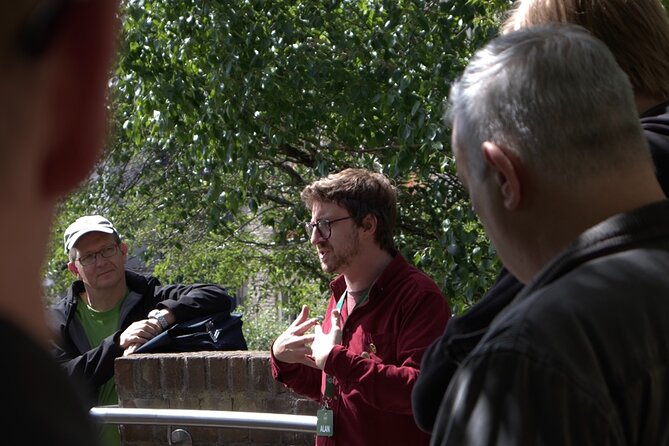
You might meet guides such as Deidre, Helena, Dave, Emily, Ross, Lee, or Alan. The consistent praise is about storytelling that stays fun while still being meaningful, with guides who can handle group questions and keep the pace moving.
That matters because mythology is easy to turn into a lecture. Here, the tone is built for conversation in motion. You get short stops, a clear route, and explanations that fit the place you are standing in.
Two practical notes: one, some guides may walk with a brisk rhythm, so comfortable shoes help. Two, if you end up in a spot where the group is spread out, hearing can vary. If you care about sound, try to position yourself closer to the guide when possible.
How much walking is really involved
The tour says around 2 hours, and the stop timing suggests about 10 minutes at each key point, with travel between locations. That usually means a steady walking rhythm, not a slow stroll with long photo breaks.
This is fine for most people if you plan your day with it in mind. I would not schedule a tour back-to-back immediately afterward, especially if you are coming in from the airport or already doing a lot of sightseeing.
If you are traveling with kids in a stroller, the fact that the tour is wheelchair and stroller accessible is reassuring. Still, curb cuts and pedestrian crossing time can affect your pacing, so build a little buffer for getting across streets.
Who should book this Dublin mythology and folklore tour
I think this is a great fit if you want:
- A first-timer-friendly Dublin intro that gives you context fast
- A fun evening with stories tied to real landmarks
- A walking format that is short enough to feel doable but structured enough to feel worthwhile
It is also a good choice if you like learning in a social way, since it is a group tour with a max of 25 and you can ask questions. If you are the type who wants to understand why a bridge lamp or a church area matters, you will enjoy this.
You might reconsider if you:
- Need lots of indoor time or quiet
- Struggle with hearing outdoors in wind or crowds
- Prefer very slow, minimal-walking sightseeing
Practical tips for a smoother evening
A few habits will make this tour more enjoyable:
- Bring layers, since you are outdoors for much of the walk. Rain or wind can change how you feel, fast.
- Wear shoes made for city sidewalks, because you will be moving between stops.
- If you want to ask questions, keep an eye on where the group forms, so you can speak up.
- If you are checking in from a tram, bus, or walking route, aim to arrive early at the exact start location on Crown Alley.
Also, because it is a mobile ticket experience, have your ticket ready on your phone before you arrive. It is one less thing to worry about when you are trying to meet a group.
Should you book this Dublin mythology and folklore tour?
Book it if you want a fun, structured way to understand how Irish folklore connects to the places you see in Dublin. For around $29 and about 2 hours, you get multiple stops, a guided storyline, and an end point in Parnell Square that sets you up for the rest of your evening.
Skip it or choose carefully if you are very sensitive to outdoor sound, tired easily on city walks, or you prefer longer stays inside major attractions. This tour is short blocks with steady movement, not a slow, sit-down show.
If you like stories with humor and context, and you want Dublin to make more sense than just street scenes, this is an easy yes for your itinerary.
FAQ
How long is the Dublin Mythology and Folklore Tour?
The tour runs for about 2 hours.
Where does the tour start and where does it end?
It starts at 3 Crown Alley, Temple Bar, Dublin (D02 CX67). It ends in The Garden of Remembrance in Parnell Square at the foot of Oisin Kelly’s Children Of Sir statue (D01 A0F8).
Is this tour wheelchair and stroller accessible?
Yes, the tour is listed as wheelchair and stroller accessible. Service animals are allowed too.
How big is the group?
This is a group tour with a maximum of 25 travelers.
Is the tour offered in English?
Yes, it is offered in English.
Can I cancel for a full refund?
You can cancel for a full refund if you cancel at least 24 hours before the experience starts.
The Wider Dublin Pile
Elsewhere on The Ireland Traveler
Lately added to the Dublin pile
- Waterford Crystal and Kilkenny Full-Day Rail Tour from Dublin
★ 5.0 · 3 reviews - Turtle Bunbury’s Dublin: A Self-Guided Audio Tour from a Celebrated Author
★ 5.0 · 3 reviews - Cliffs of Moher and The Burren Private Tour from Dublin
★ 5.0 · 3 reviews - Dublin Full-Day Tour through Boyne Valley
★ 5.0 · 3 reviews - Rock Of Cashel And Blarney Castle Private Chauffeur Full Day Sightseeing Tour
★ 4.5 · 3 reviews - Private Irish Fusion Meal in a Modern Home in Skerries, Dublin
★ 5.0 · 3 reviews
More Tours, side by side.
 ★ 5.0Kilkenny, Wicklow Mountains & Glendalough Day Tour from DublinFrom $487,897 reviews
 ★ 4.8From Dublin: Wicklow Mountains, Glendalough & Kilkenny TourFrom $456,235 reviews
 ★ 5.0Dublin Highlights and Hidden Gems Guided Walking TourFrom $296,020 reviews
 ★ 5.0Dublin to Glendalough, Wicklow and Kilkenny Full Day Guided TourFrom $484,895 reviews
 ★ 4.7Dublin: Jameson Whiskey Distillery Tour with TastingsFrom $354,859 reviews
 ★ 4.5Dublin Book of Kells, Castle and Molly Malone Statue Guided TourFrom $953,825 reviews
 ★ 5.0The Original Award Winning Wild Wicklow Tour incl. GlendaloughFrom $663,446 reviews
 ★ 5.0Galway to Cliffs of Moher, Aillwee Cave & Dunguaire Castle TourFrom $603,058 reviews