
REVIEW · IRELAND
Dublin Highlights and Hidden Gems Guided Walking Tour
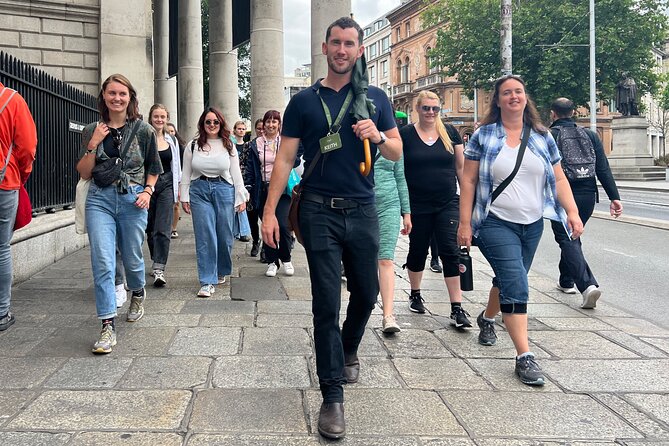
Dublin’s big stories hit fast. This 2-hour walking tour strings together Temple Bar, Dublin Castle, and Trinity College with guide-led stops you can tackle on a first visit.
I like the way it balances famous sights with smaller details, like specific names tied to Christ Church Cathedral and the lore you hear around the River Liffey bridges. I also like the quick pace, since you cover a lot of ground without feeling rushed, and the tour keeps its group tight (up to 30 people). One possible drawback to plan around: during busy holiday periods, some major stops may be closed, so you might not see everything listed.
In This Review
- Key Highlights You’ll Actually Feel on the Walk
- Why This 2-Hour Dublin Walk Works on a First Day
- Route Reality Check: What You’ll Cover (and What You Might Skip)
- Starting in Temple Bar: Culture, Alleyways, and That First Snapshot
- Dublin Castle Grounds: From Power to Independence
- Christ Church Cathedral: Strongbow, Lorcan O’Toole, and the Cat & The Rat
- Smock Alley Theatre (1662): Ireland’s Oldest Stage
- The Temple Bar Pub Walk-By: Famous, But Used Well
- Ha’penny Bridge and O’Connell Bridge: River Stories With Real Texture
- College Green and Trinity College: Georgian Streets to the Book of Kells
- Price and Value: Why $29.02 Can Be a Good Deal
- What the Guides Really Do That Makes the Difference
- Small Details to Plan For (So You Enjoy It More)
- Who Should Book This Walking Tour?
- Should You Book This Tour? My Straight Answer
- FAQ
- How long is the Dublin highlights and lesser-known corners walking tour?
- Where does the tour start and end?
- Which major stops are included on the walk?
- Is admission included for the stops?
- What language is the tour offered in, and is there a group limit?
- What if weather is bad?
Key Highlights You’ll Actually Feel on the Walk
- A tight route of top Dublin icons in about 2 hours, from Temple Bar to Trinity College
- Stories that connect time periods from Viking-era origins through medieval Dublin to Georgian details
- Christ Church Cathedral stop with specific legends, including Strongbow, Lorcan O’Toole, and the Cat & The Rat
- Ha’penny Bridge lore tied to real-world culture, including the battle of Waterloo and fender guitars
- Smaller-group energy, with a confirmed max of 30 and reports of much smaller groups
- Guides with personality, like Helena, Karl, Keith, Dan, Dave, Barry, and Deirdre, who bring the city to life
Other Dublin walks with the wind behind you
- Dublin Highlights and Hidden Gems Guided Walking Tour★ 5.0 · 6,020 reviews
- Dublin: Highlights and Hidden Gems Walking Tour★ 4.9 · 2,140 reviews
- 1916 Rebellion Walking Tour★ 5.0 · 1,605 reviews
- 90 Minute Dublin Walking tour and Sightseeing tips★ 5.0 · 916 reviews
Why This 2-Hour Dublin Walk Works on a First Day
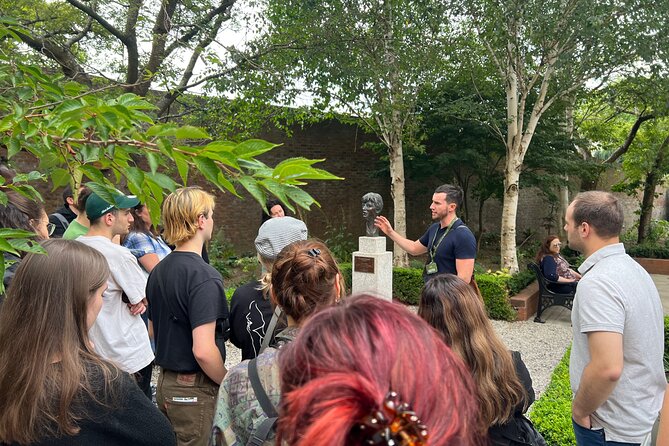
If you only have a short window in Dublin, this is the kind of tour that gives you traction right away. You start in Temple Bar, then swing through major historic sites and end at Trinity College, so the city feels less like a map and more like a story you can follow.
I also like the practical focus. It is not just stop-and-look, it is stop-and-understand, with guide talk that links each place to what came before and what came next. That matters in Dublin, where the same streets hold Viking origins, medieval power, and modern culture all in one compact area.
One more reason it works: the route is designed for walking comfort at a human pace. In the reviews, guides like Karl, Keith, and Dave are praised for keeping things lively without turning it into a sprint.
Route Reality Check: What You’ll Cover (and What You Might Skip)
The big sell is distance plus density. In around 2 hours, you move from Temple Bar into the core of the old city, then toward Trinity College. Along the way, you hit landmarks tied to Ireland’s political shifts and cultural landmarks tied to how people actually lived day to day.
Many stops are marked as free admission ticket in the tour details, which is a real value perk when you are comparing tours. You are not paying extra on the spot just to step into the most famous parts of the story.
Also, keep expectations flexible. The itinerary lists places like Dublin Castle, Christ Church Cathedral, and Trinity College, but like any city, holiday schedules can change. If you travel late in the year, it is smart to mentally plan for the possibility that one or more sites may be closed, even if the guide still gives you plenty of context on what you cannot access.
Starting in Temple Bar: Culture, Alleyways, and That First Snapshot
Temple Bar is the doorway to Dublin’s public imagination, and the tour begins in the center of it. You get orientation quickly, then you circle back later, which helps the neighborhood stick in your head instead of slipping away after one quick photo.
What I like most here is that the guide does not treat Temple Bar like a souvenir stop. Instead, you get history about why this area became one of Dublin’s cultural centres, plus suggestions for how to spend your time beyond the tour route. That kind of direction can save you money and time later.
You will also walk past Dublin’s most famous pub, the one everyone photographs. The goal is not to force you inside. It is to show you why it is famous and point you toward options, so you still leave with a plan for a real pint later on.
Dublin Castle Grounds: From Power to Independence
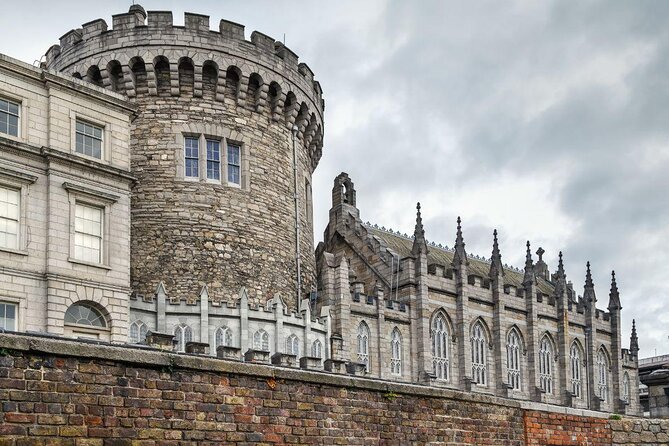
Next up is Dublin Castle, and the framing matters. The tour connects its origins to a Viking past, then moves through conquest and occupation, and finally lands on Ireland’s struggle for independence. That is a lot to cover, but because you are on the grounds, the guide can point out how the place kept serving as a symbol of control.
You do not just get a general lecture. You explore the grounds and hear how the castle has stayed close to the centre of events for centuries. The tour also promises attention to lesser-spotted curiosities, which is the difference between visiting and really understanding.
If you care about Irish history beyond a textbook, this is usually where the tour clicks. Guides like Barry and Karl are repeatedly praised for storytelling and humor, and this stop is a natural place for that style to land well.
Other guides we rate around Dublin


Christ Church Cathedral: Strongbow, Lorcan O’Toole, and the Cat & The Rat
Christ Church Cathedral is the heart of Dublin for about 1,000 years, and this stop is built around that idea: you are standing in a place that has been meaningful long before modern Dublin had its current shape.
The tour highlights several specifics that make the visit more memorable:
- the tomb of Strongbow
- the heart of Lorcan O’Toole
- the Cat & The Rat
Those details matter because they turn the cathedral from a pretty building into a place with human stories. Even if you are not a church-history person, you usually walk away with something concrete you can tell someone later.
There is also a practical payoff. This stop anchors you in the medieval layer of the city, so when you later see bridges and Georgian streets, you start recognizing how the city evolved instead of treating it like separate worlds.
Smock Alley Theatre (1662): Ireland’s Oldest Stage
Smock Alley Theatre is a quick stop, but it brings a satisfying surprise. The tour notes that it has been standing in Temple Bar since 1662, and that it has lived multiple lives, going from Theatre Royal to a Catholic church, then back again to theatre.
This is one of those places where Dublin’s cultural resilience shows up in architecture. You are not just hearing dates. You are learning how the city’s creative scene survived pressure and change, and how patronage shaped writers, directors, and actors.
If you like cultural history, you will appreciate the way the guide connects the building to Ireland’s arts community, including mentions that guides themselves have been part of the creative world. Even if you do not know Irish theatre already, this stop gives you a reason to care.
The Temple Bar Pub Walk-By: Famous, But Used Well
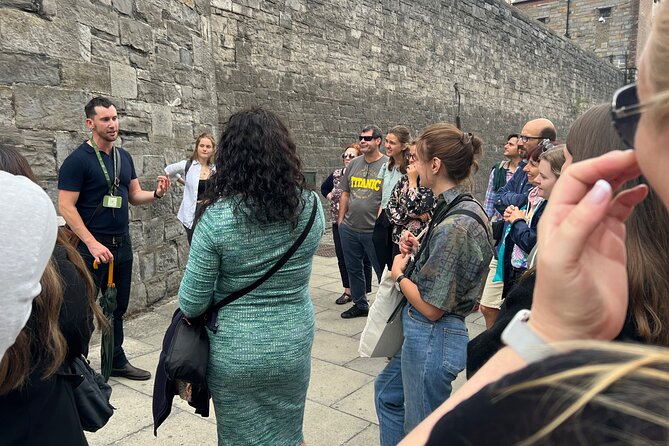
The pub portion is short, but do not treat it like filler. The tour walks you past Ireland’s most famous and photographed pub and keeps the focus on what to do next. In Dublin, that is often the hardest part for first-timers: deciding what to try after the highlights.
The guide usually offers other suggestions while you are in the area, so you can turn the tour into a full day plan. If you want a low-effort way to figure out where to go for food or drinks without guessing, this built-in guidance is a plus.
Ha’penny Bridge and O’Connell Bridge: River Stories With Real Texture
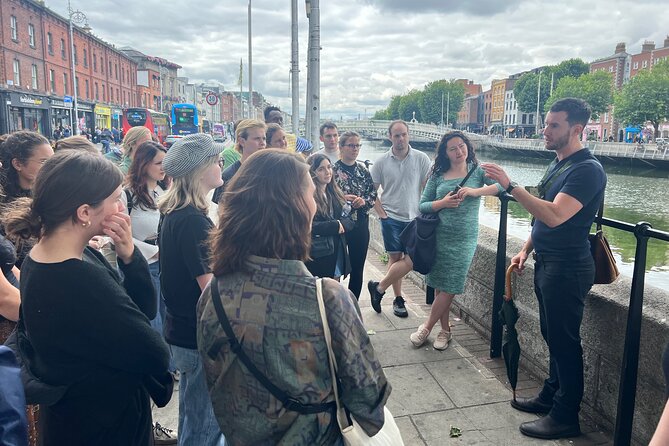
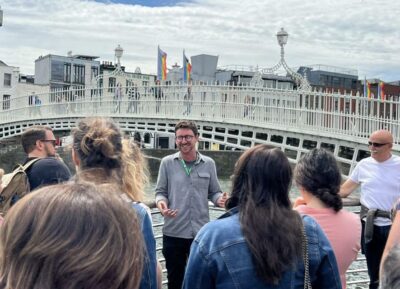
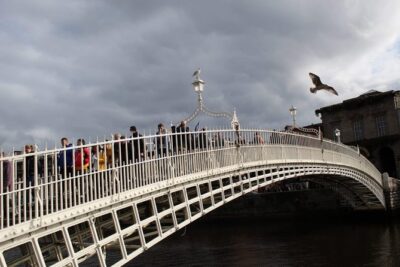
Now you get what you came for visually: the River Liffey and its bridges. Ha’penny Bridge is described as the star of countless postcards, and it is also presented as a Georgian gem of a footbridge that has straddled the river since 1816.
But the tour makes it more than scenery. You hear its history tied to the battle of Waterloo, and even fun cultural connections like the mention of fender guitars. That sort of link is exactly why guided walking works. It takes a famous view and gives it a reason to stick.
Then comes O’Connell Bridge, described as a bridge wider than it is long. You get historic things it bore witness to, and you get that sense that key national events happen close by. The bridge becomes a checkpoint where you understand how the river area connects to major civic life.
If you are the type who likes to photograph, this is prime time. If you are the type who hates photographing, you still benefit, because the bridge stops give you breathing space while keeping the story moving.
College Green and Trinity College: Georgian Streets to the Book of Kells
College Green is where Georgian Dublin shows up in a clean, readable form. The tour frames it as the old centre of Georgian Dublin, and you get help spotting oddities that most people miss when they move too fast.
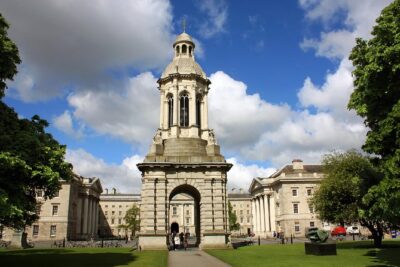
That sets you up perfectly for Trinity College. The tour ends directly outside the front gate, so you get a powerful finish without needing to wait in long lines or deal with time pressure. Trinity is described as Ireland’s oldest and most famous college, and the guide points out the big draw: the library that houses the Book of Kells and the Brian Boru Harp.
Even if you do not go inside during the walking portion, you leave with a clear reason to return. This is the kind of ending that turns into a checklist for the rest of your trip, not a stop that fades as soon as you walk away.
Price and Value: Why $29.02 Can Be a Good Deal
At about $29.02 per person for roughly 2 hours, this tour is priced like a practical sampler, not like a deep, multi-hour museum day. That can be smart if you are trying to balance costs with time.
The value angle comes from two things:
- The route covers a dense cluster of major landmarks.
- Several stops are marked with free admission ticket access, which can reduce surprise spending.
Add in the fact that it is often booked about 30 days in advance, and you get an extra clue. People want a quick, reliable orientation walk that includes big names. When a tour consistently gets high ratings (4.9), it usually means the guide style and route flow are doing their job.
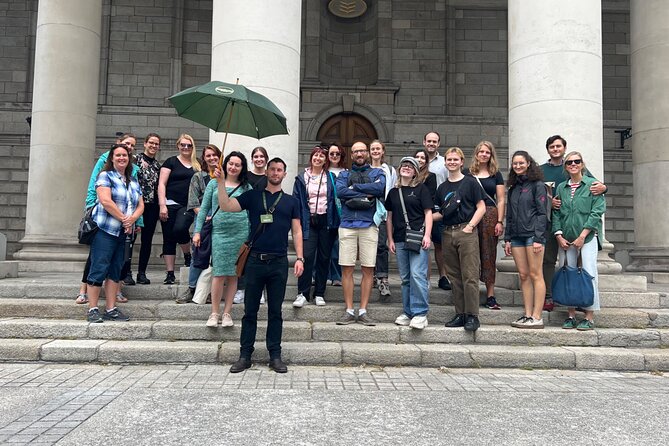
One more value detail: the max group size is 30, and multiple guides have been praised for handling different group needs, like pacing for people who prefer not to rush. If you are worried about walking with crowds, this is a reasonable size.
What the Guides Really Do That Makes the Difference
This tour lives or dies on the guide. The strongest praise in the feedback is about personality plus storycraft, and that shows in the names repeatedly mentioned: Helena, Karl, Keith, Dan (also seen as Dan in one guide mention), Dave, Barry, and Deirdre.
What you should look for, based on how people describe the experience, is:
- humor that keeps history from feeling like homework
- clear explanations that connect past to present
- practical tips, especially for where to go next in Dublin
Some specific examples from guide styles in the feedback include one guide building in stops when it was very cold, and another offering advice about the National Archaeology Museum in Kildare Street as worth visiting. Even if you are not copying every suggestion, it tells you you will likely come away with a stronger plan than you had when you started.
Small Details to Plan For (So You Enjoy It More)
This is a walking tour, so treat it like one. Wear shoes that handle city pavement and cobblestones, and bring layers, because Dublin weather can shift fast.
The tour also requires good weather, meaning the operator may cancel if conditions are poor, with an offer of another date or a full refund. If your schedule is tight, that is still manageable, but it is wise to keep one flexible block in your plan.
Finally, if you are traveling around late December, remember that some listed major locations may have limited opening hours. You still should expect plenty of context on the route, but it is smart to avoid assuming every site will be accessible inside.
Who Should Book This Walking Tour?
Book this if you want:
- a fast, structured introduction to Dublin’s core
- a mix of political history and cultural storytelling
- a route that ends at Trinity College so you can keep exploring
It is also a good fit if it is your first time in Ireland and you want someone to help you place the city. If you already know Dublin really well and you are chasing deep-only museum content, you might find it better to pair this with a separate museum visit or a longer, more specific history tour.
The sweet spot is the first day, or the first half of your trip, when you are still learning the layout. One review calls it a perfect first-day kick off, and that matches how the itinerary flows.
Should You Book This Tour? My Straight Answer
Yes, if you want a smart overview that covers Dublin’s most recognizable landmarks without turning your day into a checklist sprint. The guided storytelling approach is the real value, because you get names, time periods, and connections you will not pick up from walking alone.
I’d particularly recommend it if you:
- want a compact route from Temple Bar to Trinity College
- like history that ties to real places you can stand in
- appreciate guide humor and practical suggestions for what to do next
The main reason to pause is timing. If you travel during a holiday stretch when closures are more likely, consider building flexibility into your expectations.
If you want the easiest way to orient yourself in Dublin, this is a strong choice. Do it early, then let the rest of your trip grow from the route you just walked.
FAQ
How long is the Dublin highlights and lesser-known corners walking tour?
It runs for approximately 2 hours.
Where does the tour start and end?
It starts at The Old Storehouse Bar and Restaurant at 3 Crown Alley, Temple Bar, Dublin, and ends at 27 College Green, finishing directly outside the front gate of Trinity College.
Which major stops are included on the walk?
The tour includes Temple Bar, Dublin Castle, Christ Church Cathedral, Smock Alley Theatre, the Ha’penny Bridge, O’Connell Bridge, College Green, and Trinity College.
Is admission included for the stops?
Admission tickets are listed as free for the included stops in the tour details.
What language is the tour offered in, and is there a group limit?
The tour is offered in English and has a maximum of 30 travelers.
What if weather is bad?
The experience requires good weather. If it is canceled due to poor weather, you will be offered a different date or a full refund.
More of Dublin Underfoot
The Wider Dublin Pile
- From Dublin: Cliffs of Moher, Burren & Galway City Day Tour
- Dublin to Cliffs of Moher, Burren, Wild Atlantic Way, Galway Tour
- Kilkenny, Wicklow Mountains & Glendalough Day Tour from Dublin
- From Dublin: Wicklow Mountains, Glendalough & Kilkenny Tour
- Dublin to Glendalough, Wicklow and Kilkenny Full Day Guided Tour
Elsewhere on The Ireland Traveler
Lately added to the Dublin pile
- Waterford Crystal and Kilkenny Full-Day Rail Tour from Dublin
★ 5.0 · 3 reviews - Turtle Bunbury’s Dublin: A Self-Guided Audio Tour from a Celebrated Author
★ 5.0 · 3 reviews - Cliffs of Moher and The Burren Private Tour from Dublin
★ 5.0 · 3 reviews - Dublin Full-Day Tour through Boyne Valley
★ 5.0 · 3 reviews - Rock Of Cashel And Blarney Castle Private Chauffeur Full Day Sightseeing Tour
★ 4.5 · 3 reviews - Private Irish Fusion Meal in a Modern Home in Skerries, Dublin
★ 5.0 · 3 reviews
More Walking Tours, side by side.
 ★ 4.9Dublin: Highlights and Hidden Gems Walking TourFrom $272,140 reviews
 ★ 5.01916 Rebellion Walking TourFrom $271,605 reviews
 ★ 5.090 Minute Dublin Walking tour and Sightseeing tipsFrom $21916 reviews
 ★ 5.02-Hour Historical Walking Tour from DublinFrom $22875 reviews
 ★ 4.7Historical 2-Hour Guided Walking Tour of DublinFrom $22865 reviews
 ★ 5.0Dublin Traditional Irish 3 Course Meal Walking Tour with LocalFrom $107755 reviews
 ★ 4.9Dublin: Mythology, Folklore and Legends Walking TourFrom $27703 reviews
 ★ 5.0The Dublin Private Walking TourFrom $163701 reviews
Other lists this one is on