
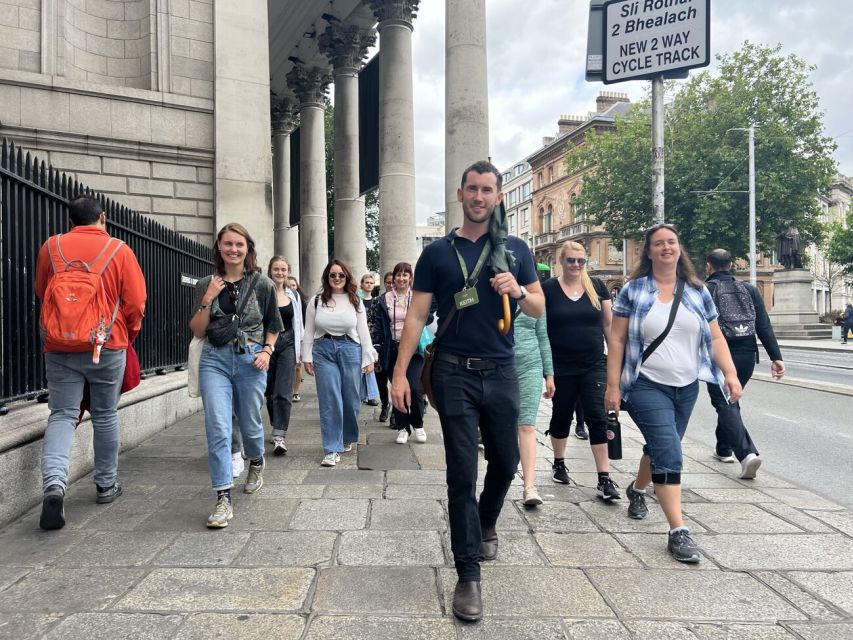
REVIEW · IRELAND
Dublin: Highlights and Hidden Gems Walking Tour
Dublin feels like a storybook you can walk. This 2-hour city-centre tour stitches together Dublin’s biggest landmarks and some lesser-seen corners, from Viking beginnings through medieval streets and onward to Georgian and Victorian eras. You’ll hear how writers, rebels, rock stars, and rogues shaped the city, whether you’re into history or just into getting oriented fast.
I love how the tour turns famous sights into something you can actually picture, with stop-by-stop stories that give each place a clear role in Dublin’s timeline. I also like that you get practical local recommendations for where to eat, drink, catch live music, and shop for souvenirs, so the tour doesn’t end and leave you stranded.
One drawback to plan for: a few reviews note the walk can run closer to 3 hours, and there may not be a built-in break for snacks or restrooms.
In This Review
- Key highlights at a glance
- Entering Dublin’s Timeline From Viking Roots to the GPO
- Meeting at The Old Storehouse and Knowing What to Bring
- What the Accredited Guide Actually Adds (Ian, Keith, Alan, Dave, and More)
- Temple Bar and the Start of the Story: Energy, Then Context
- Dublin Castle and Christchurch Cathedral: Power and Persistence
- Trinity College: When Dublin’s Past Meets Its Future
- Viking Dublin and Medieval Dublin: Making the Old Streets Legible
- Smock Alley Theatre: Dublin’s Creative Side, Not Just Its Monuments
- The River Liffey and Bridges: The Best Photo Stops With Real Meaning
- The GPO and O’Connell Area: When Dublin Turns Toward the Modern Era
- Pacing, Breaks, and What to Expect When It Runs Longer
- Value for Money: Why $27 for a Two-Hour City Narrative Makes Sense
- Who Should Book This Walking Tour of Dublin
- Should You Book This Dublin Highlights and Hidden Corners Tour?
- FAQ
- How long is the Dublin highlights and hidden corners walking tour?
- How much does the tour cost?
- Where do I meet the guide?
- Which sights are included during the walk?
- What’s included and what’s not included?
- Is there free cancellation?
- Is the tour wheelchair accessible, and is the guide English-speaking?
Key highlights at a glance
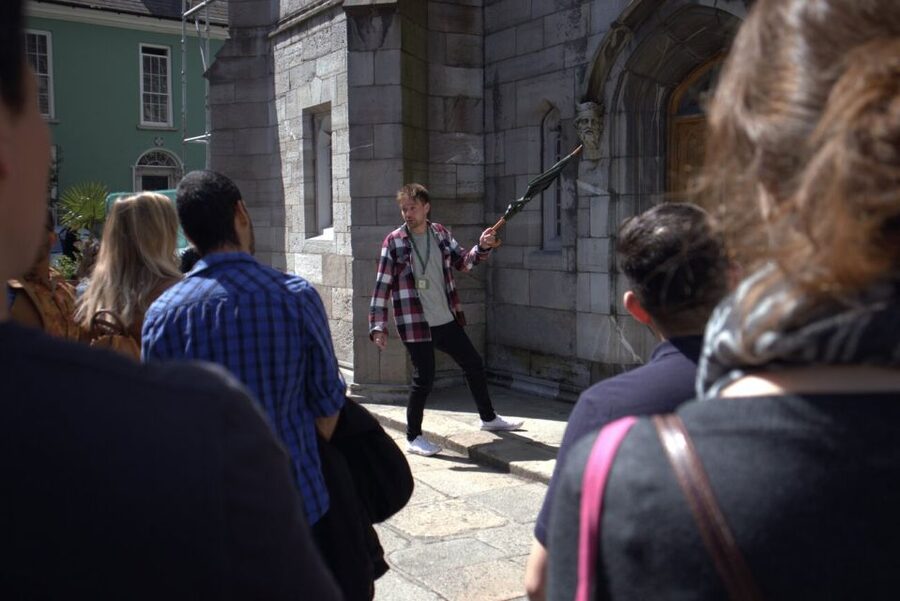
- Accredited, English-speaking guides who bring the city to life with humor and crisp context
- A 1,000+ year storyline on foot, from Viking Dublin to later Georgian and Victorian chapters
- Classic Dublin landmarks you can’t miss, including Dublin Castle, Christchurch Cathedral, and Trinity College
- River and bridge moments, with the River Liffey plus Ha’penny Bridge and O’Connell Bridge
- Extra character stops, such as Temple Bar, Smock Alley Theatre, and the GPO
- Tough-love pacing, fun and fast, but you may want to be ready for limited or no formal breaks
Other Dublin walks with the wind behind you
- Dublin Highlights and Hidden Gems Guided Walking Tour★ 5.0 · 6,020 reviews
- Dublin: Highlights and Hidden Gems Walking Tour★ 4.9 · 2,140 reviews
- 1916 Rebellion Walking Tour★ 5.0 · 1,605 reviews
- 90 Minute Dublin Walking tour and Sightseeing tips★ 5.0 · 916 reviews
Entering Dublin’s Timeline From Viking Roots to the GPO
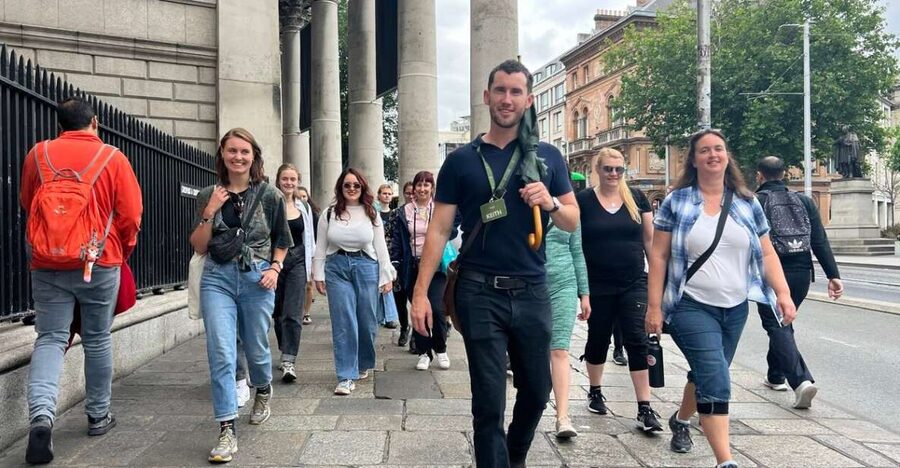
Dublin is small, but the history stacks up fast. This tour works because it gives you an organized way to read the city while you’re walking. You’re not just ticking off buildings. You’re seeing how Dublin changed shape across more than 1,000 years, starting with Viking Dublin, then moving into medieval lanes, and later landing on Georgian boulevards and even Victorian slums.
That time jump matters for your trip. Without some structure, Dublin can feel like a set of separate photo stops. With this tour, the guide ties the places together into a cause-and-effect story, including the city’s rise, fall, and then the comeback that helped shape modern Dublin.
It’s also a good reality check. If you only have a short window in town, two hours is enough time to get your bearings and learn what to prioritize later. If you have more days, this tour still helps because it gives you a mental map for everything you’ll do next, from choosing neighborhoods to understanding what you’re seeing in museums and on the street.
Meeting at The Old Storehouse and Knowing What to Bring
The tour starts outside The Old Storehouse pub, and you’re told to look for the green umbrella. Arrive no later than 10 minutes before start time. That buffer is smart, because Dublin streets can be busy and you want to get a good spot with the group before the guide launches into the first story.
What should you bring? At minimum, wear shoes that handle city walking. This is a city-centre walk, and you’ll be on your feet for the full session. Also, keep a water bottle handy. Food and drinks aren’t included, and while the guide will share recommendations, you’ll still want to handle your own breaks.
If you’re using a wheelchair, the tour is listed as wheelchair accessible. Still, it’s worth keeping your expectations practical. Streets in old city centres can be uneven, so plan ahead and communicate your needs before you go.
What the Accredited Guide Actually Adds (Ian, Keith, Alan, Dave, and More)
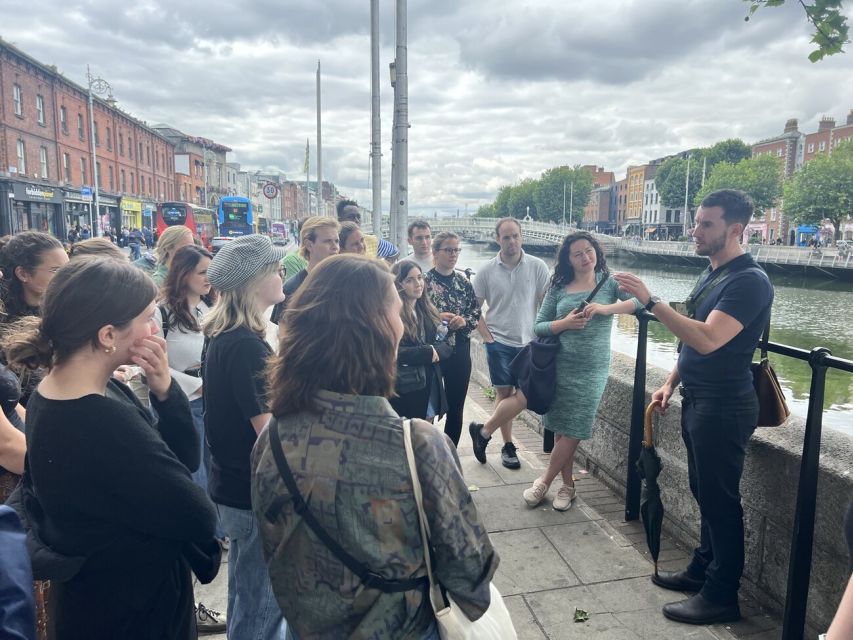
The biggest difference on a guided tour is how the guide turns facts into something you can remember. Here, the guides get consistent praise for being funny, engaging, and sharp on city history.
Names show up again and again in the reviews, like Ian, Keith, Alan, Dave, Kieran, Helena, James, Gemma, Karl, Emily, and Chris. The common thread is storytelling with rhythm. One guide is described as witty and humorous, another as personable and proud of Dublin, and another as organized with a mix of facts and jokes.
That matters because Dublin’s history can sound heavy on paper. On foot, it becomes human. You hear about characters, turning points, and why certain places look the way they do today. And when the guide is quick with details, you start spotting patterns on your own after the tour ends.
You’ll also get a stream of practical tips, not just history. The reviews mention that guides went above and beyond with recommendations, including what to eat, drink, where to find live music, and which tourist traps to avoid. Even if you’re a confident planner, that kind of local guidance can save you time and money.
Temple Bar and the Start of the Story: Energy, Then Context
Temple Bar is one of Dublin’s most recognizable zones. On this tour, it’s not treated like a postcard only. You’ll still get the chance to see it, but the guide uses stops like this to introduce how Dublin’s reputation developed over time, including the city’s love of music, performance, and late-night street life.
This is a good place to start if you want to understand Dublin’s modern identity right away. You can stand in the middle of the energy, then listen to the guide explain how the area fits into the larger story of the city.
A practical angle: if you’re planning dinner later, being near Temple Bar early helps you judge what’s close and what’s a longer walk. The tour doesn’t include food, but it can point you toward smart choices while you’re still fresh from the walking route.




Dublin Castle and Christchurch Cathedral: Power and Persistence
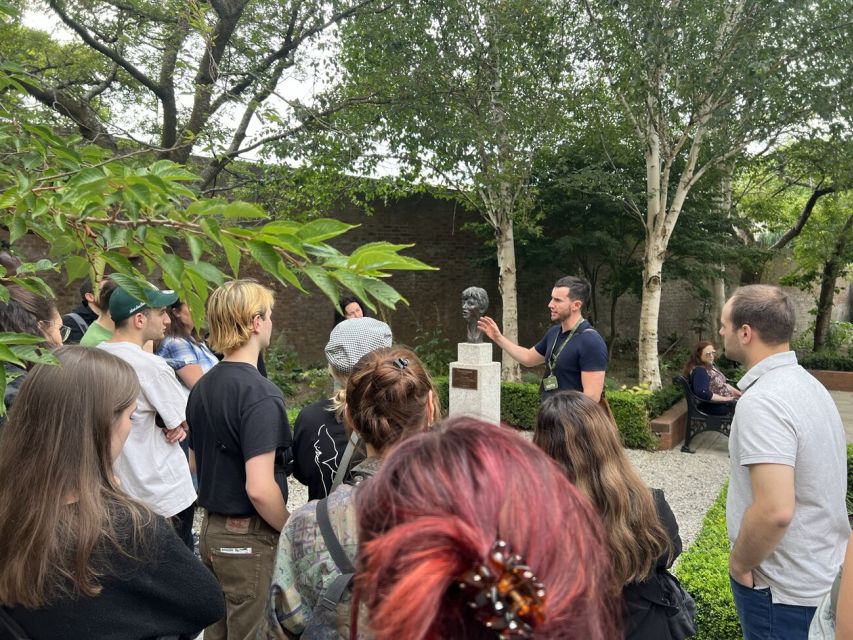
Dublin Castle is one of those locations that feels important the second you see it. The tour uses it to talk about authority and how institutions shaped Dublin. It’s a strong anchor stop because it gives you a sense of what kind of city Dublin was building, not just how it looked.
Then you move into the world of Christchurch Cathedral. With a cathedral on the route, the guide can connect architecture with centuries of change. You’re seeing a city where religious and civic life have overlapped for a long time, and where old walls keep witnessing new chapters.
What I like about these stops is how they teach your eyes. After listening, you start noticing details instead of just taking photos. You also learn what to pay attention to later when you explore other historic buildings on your own.
Trinity College: When Dublin’s Past Meets Its Future
Trinity College is one of the big-name stops for any Dublin itinerary, but the value here is the way it gets folded into the larger sweep of Irish and Dublin history. You’re not only looking at a campus. You’re being shown how the city’s intellectual life fits into Dublin’s long arc.
This helps if you’re the kind of person who hates feeling like your trip is just random monuments. You’ll leave with more context, which makes the college grounds feel less like a picture background and more like a living part of Dublin.
If you’re short on time, Trinity College is also useful because it’s a natural waypoint for planning your next moves. You’ll likely return to this area later for a slower wander, and knowing what you heard on the tour makes your second walk richer.
Viking Dublin and Medieval Dublin: Making the Old Streets Legible
The tour doesn’t treat the Viking and medieval eras like far-away trivia. You’ll get Viking Dublin and Medieval Dublin as part of the route theme, which is the right way to do it in a city with layered streets.
Why this is worth your time: on your own, it’s easy to miss what’s actually medieval or Viking in feel. With the guide explaining what you’re looking at, the street scale becomes clearer. You stop seeing the city as a modern layout with old buildings stuck on top, and start seeing it as a living archive.
This part is especially helpful for first-timers. If you’re new to Dublin, you’ll likely feel like the city is confusing at first glance. The tour gives you a set of handles to grab, so later when you see older street patterns, you know what they’re connected to.
Smock Alley Theatre: Dublin’s Creative Side, Not Just Its Monuments
Smock Alley Theatre is included, and that’s a smart choice because it broadens the story beyond power and religion. Dublin’s identity is also built through performance and creativity, and this stop gives you a different angle on how city life evolves.
I like adding theatre stops to historic walks because it reminds you that history isn’t only dates and rulers. It’s also art, public talk, and cultural change.
If you’re a music and show person, the tour’s later recommendations for live music and what to see next can flow naturally from this kind of stop. You’re already thinking about entertainment when the guide points you toward it.
The River Liffey and Bridges: The Best Photo Stops With Real Meaning
If Dublin has a walkable spine, it’s the River Liffey. Seeing the river during a narrative tour works because the guide can frame why the city grew where it did. Even if you don’t care about urban planning, you’ll understand the practical logic of the city’s layout.
You’ll also see Ha’penny Bridge and O’Connell Bridge. Bridges are perfect for a tour because they’re visual and connected. You get to look across the water, then listen while the guide connects what you’re seeing to Dublin’s change over time.
Drawback to keep in mind: bridges and river areas can be busy. If your group is moving quickly, you might not linger for long photos unless you’re ready to do quick snaps and move with the flow. That’s not a dealbreaker, but it helps to know what the pacing feels like.
The GPO and O’Connell Area: When Dublin Turns Toward the Modern Era
The tour includes the GPO, and it also references the modern chapters of Dublin’s story. This stop is valuable if you want a sense of Dublin beyond the medieval and Georgian look.
The tour frames the city’s rise and fall and rise again, and the GPO area helps you connect the dots to modern Dublin’s identity. It’s a good stop for anyone who plans to spend time reading plaques and exploring political and cultural spaces later in the trip.
In practical terms, this is also a convenient area to come back to after the tour. If you’re deciding where to wander next, you’ve already passed through a landmark zone with lots of options for food and transit.
Pacing, Breaks, and What to Expect When It Runs Longer
The tour is listed as 2 hours, but one review notes it ran nearly 3 hours without a snack or loo stop. That doesn’t mean it will happen to you, but it’s an important consideration if you have tight timing for other plans.
Here’s how I’d handle it:
- If you have a later reservation, give it a little buffer.
- Bring a quick option for yourself if you think you might need one.
- Consider doing a restroom stop before you meet at The Old Storehouse pub.
Also, this is a walking tour, so expect consistent movement. Even when the guide stops for stories, you’re still walking between them. If you want a slower, sit-down experience with lots of museum time, you might pair this with a separate self-guided activity rather than rely on this alone.
Value for Money: Why $27 for a Two-Hour City Narrative Makes Sense
At $27 per person for a two-hour walk, this is priced like a solid entry-level guided experience. You’re paying for an accredited guide, a tight route through Dublin’s core sights, and the added value of tips for food, drinks, live music, and souvenirs.
Is it a bargain? It can feel like one, because the guide does more than point at buildings. You’re getting a framework that makes future independent exploring easier. If you’re new to Dublin, that framework can save time, reduce aimless wandering, and help you spend your next hours in places that actually match your interests.
If you’re already a Dublin expert, you might feel you know many of the landmarks. Still, even then, the tour’s strength is the way it connects eras and characters, plus the local recommendations that help with evening plans.
Who Should Book This Walking Tour of Dublin
This tour is a great fit if you:
- Want a first-pass orientation to Dublin in a short amount of time
- Like your history told with humor and character, not just dates
- Prefer walking and learning over sitting in a bus
- Appreciate practical local tips for where to eat, drink, and find live music
It may be less ideal if you:
- Need strict timing with zero flexibility, since some groups report it can run longer than the listed duration
- Really need scheduled breaks for snacks or restrooms as part of the experience
- Want a deep museum-style visit rather than city-centre walking
Should You Book This Dublin Highlights and Hidden Corners Tour?
I’d book it if you’re in Dublin for the first time and want a fun, story-driven way to understand what you’re seeing. The combination of major landmarks like Dublin Castle, Christchurch Cathedral, and Trinity College, plus narrative stops like Viking Dublin, Medieval Dublin, and the GPO, gives you a strong mental map.
Just go in with realistic expectations about walking time and bring your own sense of timing for breaks. If you do, this tour can turn your first day into a guide-powered shortcut to Dublin’s real character.
FAQ
How long is the Dublin highlights and hidden corners walking tour?
The tour duration is 2 hours. Starting times vary, so you should check availability for the options.
How much does the tour cost?
It’s priced at $27 per person.
Where do I meet the guide?
Meet outside The Old Storehouse pub and look for the green umbrella. Arrive no later than 10 minutes before the tour starts.
Which sights are included during the walk?
You’ll pass by or visit major landmarks including Dublin Castle, Christchurch Cathedral, Temple Bar, Trinity College, the GPO, and sites/themes such as Viking Dublin and Medieval Dublin. The route also includes the River Liffey, Ha’penny Bridge, O’Connell Bridge, and Smock Alley Theatre.
What’s included and what’s not included?
Included: a local guide, a walking tour of Dublin city centre, exploration of history and culture, and tips and recommendations. Not included: hotel pickup and drop-off, and food and drinks.
Is there free cancellation?
Yes. Free cancellation is available up to 24 hours in advance for a full refund.
Is the tour wheelchair accessible, and is the guide English-speaking?
Yes, the tour is listed as wheelchair accessible, and the live guide speaks English.
More of Dublin Underfoot
The Wider Dublin Pile
Elsewhere on The Ireland Traveler
Lately added to the Dublin pile
- Waterford Crystal and Kilkenny Full-Day Rail Tour from Dublin
★ 5.0 · 3 reviews - Turtle Bunbury’s Dublin: A Self-Guided Audio Tour from a Celebrated Author
★ 5.0 · 3 reviews - Cliffs of Moher and The Burren Private Tour from Dublin
★ 5.0 · 3 reviews - Dublin Full-Day Tour through Boyne Valley
★ 5.0 · 3 reviews - Rock Of Cashel And Blarney Castle Private Chauffeur Full Day Sightseeing Tour
★ 4.5 · 3 reviews - Private Irish Fusion Meal in a Modern Home in Skerries, Dublin
★ 5.0 · 3 reviews
More Walking Tours, side by side.
 ★ 5.0Dublin Highlights and Hidden Gems Guided Walking TourFrom $296,020 reviews
 ★ 5.01916 Rebellion Walking TourFrom $271,605 reviews
 ★ 5.090 Minute Dublin Walking tour and Sightseeing tipsFrom $21916 reviews
 ★ 5.02-Hour Historical Walking Tour from DublinFrom $22875 reviews
 ★ 4.7Historical 2-Hour Guided Walking Tour of DublinFrom $22865 reviews
 ★ 5.0Dublin Traditional Irish 3 Course Meal Walking Tour with LocalFrom $107755 reviews
 ★ 4.9Dublin: Mythology, Folklore and Legends Walking TourFrom $27703 reviews
 ★ 5.0The Dublin Private Walking TourFrom $163701 reviews
Other lists this one is on