
REVIEW · IRELAND
Dublin: Mythology, Folklore and Legends Walking Tour
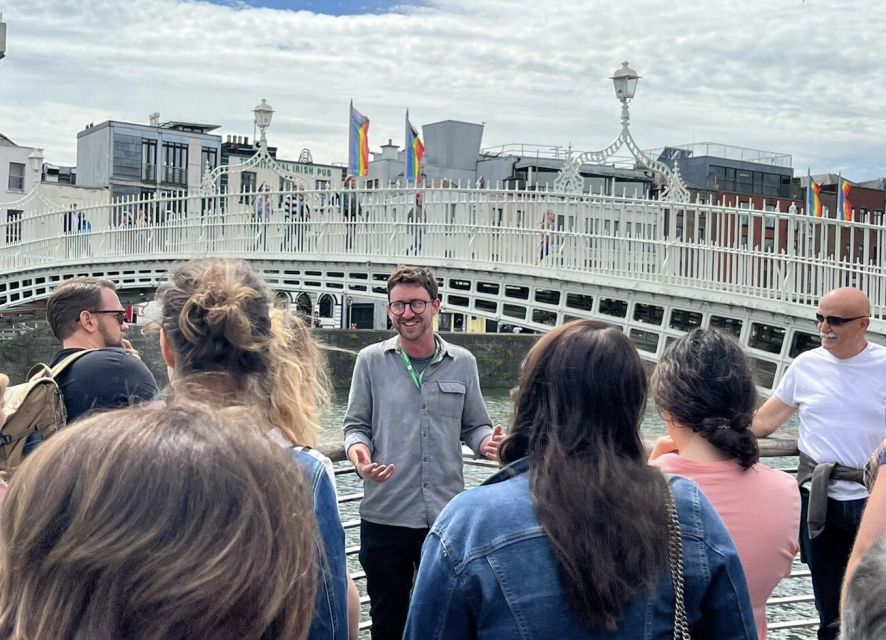
Mythology in Dublin feels like a street-level superpower. This walking tour threads Irish folklore through real neighborhoods, starting at Temple Bar and ending near O’Connell Street, so you start seeing the city as a story machine. I love how the guides treat myths as part of everyday Irish identity, and I also like the mix of famous sights with lesser-known corners that most standard tours skip.
The one thing to think about is the tone. You’ll hear plenty of eerie material, including the Georgian Quarter’s darker side and the Abbey Theatre’s tragic history, so it’s not all sunshine. Still, the route is paced with multiple story breaks, so the two hours usually feels manageable if you wear decent walking shoes.
In This Review
- Key highlights worth prioritizing
- Temple Bar turns into a legend starter kit
- Your folklore expert: what makes the storytelling work
- Fairies, banshees, and the púca: the creature list you’ll actually remember
- Going off the main route into the Georgian Quarter’s darker script
- The Abbey Theatre’s tragic history, explained as cultural turning points
- O’Connell Street: the Gaelic revival and modern street characters
- How long it takes, and how much walking you should expect
- Price and value: why $27 can be a smart use of time
- Who should book this tour, and who might want a different one
- Quick practical checklist before you go
- Should you book Dublin: Mythology, Folklore and Legends Walking Tour?
- FAQ
- How much does the Dublin mythology and folklore walking tour cost?
- Where do I meet for the tour, and where does it end?
- How long is the tour?
- Is hotel pickup or drop-off included?
- Is the tour wheelchair accessible?
- What is the cancellation policy?
Key highlights worth prioritizing
- Temple Bar as a myths portal: the tour kicks off where Celtic beliefs and mythical origins are tied to the street scene
- Creature spotting, Irish-style: banshee and púca are explained as living folklore characters, not just trivia
- Georgian Quarter on the darker side: rebellions, grave robbing, and revolutions show up as part of the city’s storytelling
- Abbey Theatre tragedy, put in context: you learn why the arts mattered, and how loss shaped Irish cultural identity
- O’Connell Street and Gaelic revival: you finish with the language and culture revival, plus modern Dublin street characters
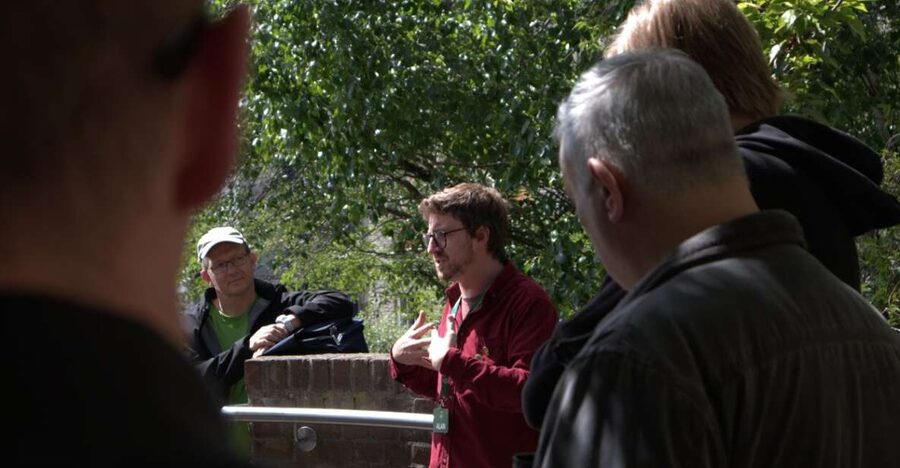
- Friendly, humorous local guides: names you might see leading the tour include Helena, Lee, Emily, and Dave, all noted for keeping the stories fun
Other Dublin walks with the wind behind you
- Dublin Highlights and Hidden Gems Guided Walking Tour★ 5.0 · 6,020 reviews
- Dublin: Highlights and Hidden Gems Walking Tour★ 4.9 · 2,140 reviews
- 1916 Rebellion Walking Tour★ 5.0 · 1,605 reviews
- 90 Minute Dublin Walking tour and Sightseeing tips★ 5.0 · 916 reviews
Temple Bar turns into a legend starter kit
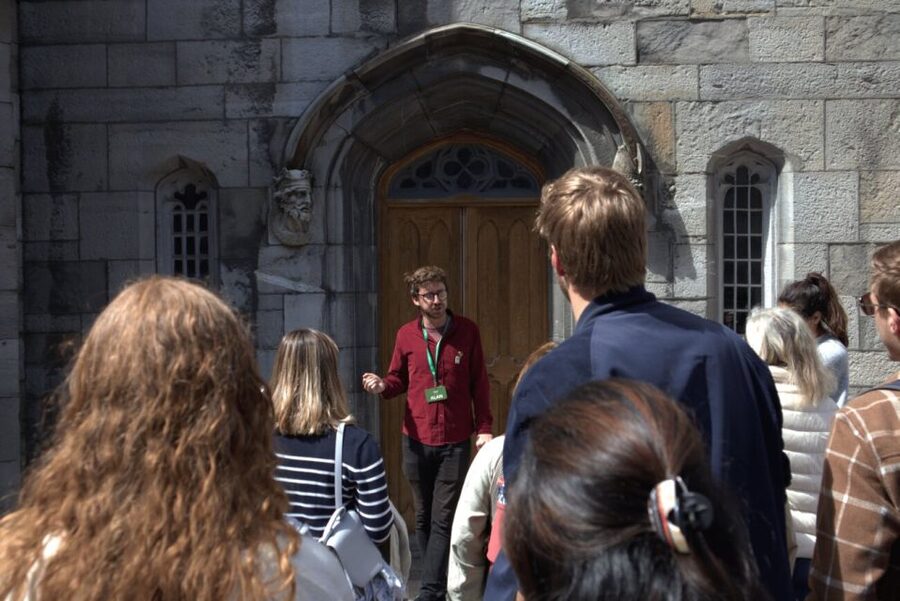
I like starting a walking tour in the middle of a real Dublin scene. This one begins at Temple Bar, with you meeting outside The Old Storehouse pub and looking for the green umbrella. That matters because Temple Bar can be loud, crowded, and a bit touristy, but it’s also a perfect place to talk about where stories take root.
Once you’re gathered, the guide frames Dublin myths as something older than pubs and posters. You start with mythical origins and Celtic traditions, and the tour slowly builds toward the creatures and characters that still show up in Irish storytelling. The big win here is how the guide makes the myths feel usable, like you’ll recognize them when you walk around later.
If you enjoy cultural context more than photo stops, this tour clicks fast. The pace is built for listening, and the guide keeps the tone lively, with humor that shows up again and again in the way different guides run the show (Helena, Lee, Emily, and Dave are all mentioned as standout storytellers). Expect to walk, pause, and listen in a way that feels like a conversation, not a lecture.
Your folklore expert: what makes the storytelling work
This tour is led by a local folklore expert who tells the stories in live English, and that is the whole point. “Folklore” can sometimes mean vague ghost tales. Here, you’re getting a structured narrative that connects mythic creatures, Irish identity, and historical shifts.
One reason this tour earns such high marks is delivery. Guides are praised for being charismatic, funny, and genuinely engaging, and that shows up in practical ways: they answer questions, keep an eye on group energy, and shift the pace when people need a break. If you’re traveling with kids or you just don’t want a marathon of standing around, that pacing is a real comfort.
Here’s a practical note: since this is a walking tour, you’ll want to dress for street conditions. Dublin weather can be unpredictable, and you’ll still be outside. Wear layers, bring a light rain option if you have one, and plan on enjoying the walk even if the sky changes its mind.
Fairies, banshees, and the púca: the creature list you’ll actually remember
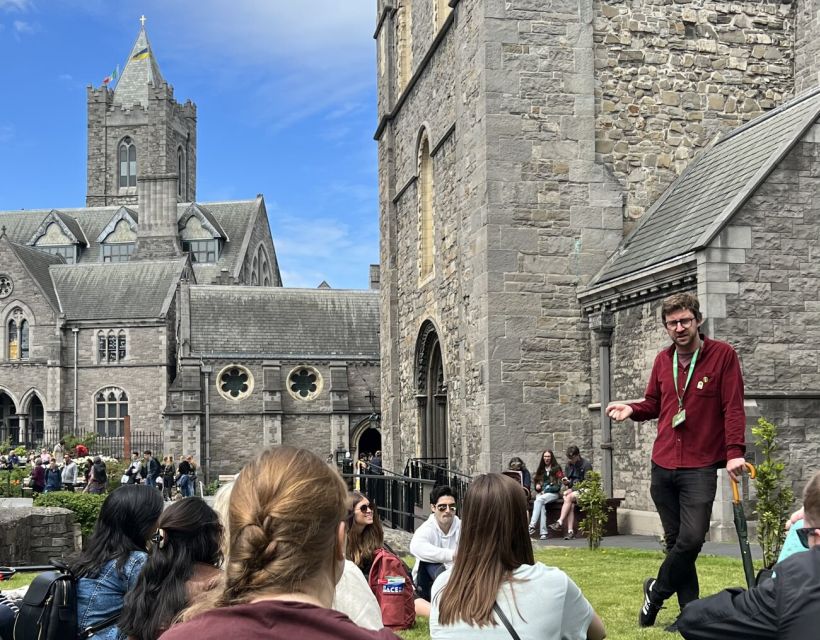
The tour spends real time on mythical creatures from Irish folklore. This is not just a name-check. You’ll learn what these beings represent in the stories, and how people used those characters to explain fear, luck, and the unknown.
You’ll hear about the banshee, the púca, and the leprechaun, but the tour’s strength is how it connects them back to Irish beliefs and cultural memory. The banshee, for example, isn’t presented as a random horror character. It’s part of a larger way of thinking about warning signs and fate. The púca gets handled in a similar spirit: not as a cartoon monster, but as a folkloric force tied to unpredictability.
And yes, you’ll hear about fairies in Irish folklore too, with enough context that they stop sounding like generic “fae stuff” and start sounding like part of a long cultural vocabulary. By the end, you’ll be able to look at Dublin streets and think, “Okay, this is why stories like these stick.”
A nice bonus: this tour also includes the idea of ancient warriors and how older narratives shaped how people understood identity and conflict. It’s not textbook-only history. It’s mythology with historical grounding, so it feels connected to the city you’re standing in.
Going off the main route into the Georgian Quarter’s darker script
After Temple Bar, you shift into the Georgian Quarter’s macabre side. This is where the tour earns its reputation for being more than the standard highlight loop.
You’ll hear stories tied to rebellions, grave robbing, and revolutions. These aren’t presented as “and then this happened” facts only. They’re framed as part of why Dublin became the way it did, and why the city carries certain themes in its cultural storytelling. If you like your history with atmosphere, you’ll appreciate how the guide uses the street setting to add weight to what could otherwise feel like distant events.
There’s also a subtle value here for practical travelers. When you get off the usual tourist route, you see how Dublin neighborhoods actually look and feel. You notice doorways, street turns, and the general rhythm of the blocks. That makes it easier to explore later on your own because you have a mental map of place, not just a list of attractions.
Potential drawback: the tone turns darker. If you’re not into grim themes, you might want to mentally prep for it. If you are into spooky and serious together, this is often the most memorable stretch because it changes the emotional color of the city.





The Abbey Theatre’s tragic history, explained as cultural turning points
One of the stops focuses on the Abbey Theatre’s tragic history. It’s a reminder that in Ireland, the arts and the national story have often been tied together.
The tour doesn’t treat the Abbey Theatre like a name you pass by. It connects the tragedy to why storytelling mattered in the first place. That’s especially important on a legends-focused walk, because it shows the bridge between older mythic traditions and modern Irish cultural expression.
I like this part because it gives you a “why” behind the legends. You get the sense that stories were never just entertainment. They were tools for identity, memory, and sometimes survival. When you hear about the theatre through this lens, the whole tour starts to feel cohesive.
O’Connell Street: the Gaelic revival and modern street characters
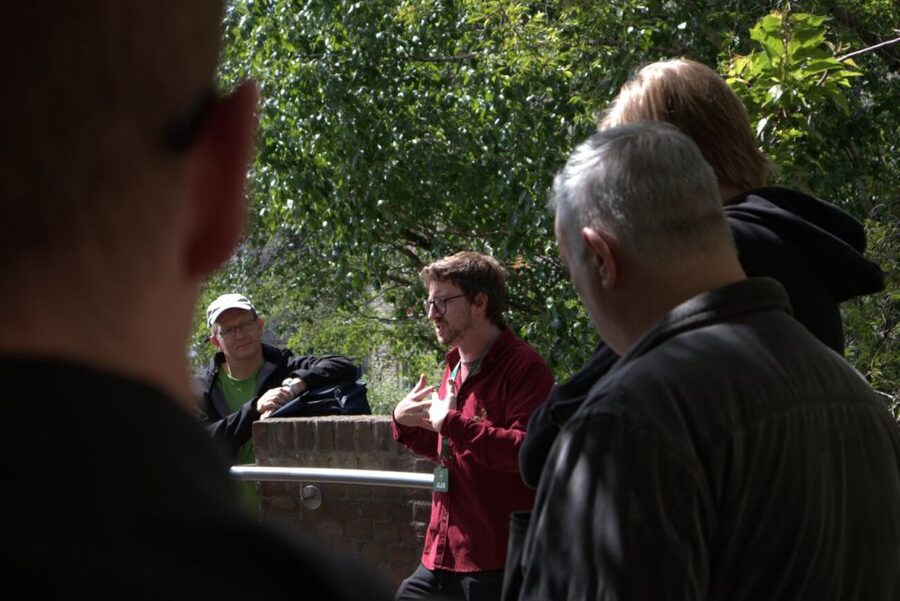
At the end, you finish back near O’Connell Street. This is a clever choice because it’s a busy, central area where the past and present can sit side by side.
The guide uses the finish to introduce the revival of the Gaelic language and culture in Ireland. That matters because it turns the tour from “old stories only” into “stories that still shape daily life.” You’ll also meet some of Dublin’s contemporary street characters, which keeps the tone from ending on something heavy.
This final section is also useful if you’re trying to plan the rest of your trip. The Gaelic revival context helps you understand why certain cultural conversations show up around Dublin, not just in museums. And the modern street energy gives you a sense of where the myths end and where the living culture begins.
For me, the best ending points are the ones that make you feel grounded. Ending on O’Connell Street does that fast because you’re back in a place where you can easily continue exploring on your own after the tour.
How long it takes, and how much walking you should expect
The tour runs for about 2 hours. It’s a walking tour, so you should expect steady movement, but it’s not a nonstop march.
The pacing is part of why people rate it so high. There are multiple stops along the way, and those pauses give your legs a break while you listen. You’ll still want comfortable shoes, but the structure makes it doable even if you come from a long day of sightseeing.
Group size can also affect how tiring a walking tour feels. Guides are praised for managing the group smoothly, keeping it entertaining without turning it into a crowded, hard-to-hear shuffle. If you want a tour that works for different ages, this is the kind of format that can be friendlier than a fast, point-to-point route.
Price and value: why $27 can be a smart use of time
At $27 per person for a two-hour walking tour, the value is mostly about what you get for the cost. You’re paying for a live local guide who focuses on folklore and mythology, plus the convenience of having a curated route through meaningful neighborhoods.
This isn’t just a history walk where you trade your time for dates. It’s a story-led experience that helps you see Dublin with better context. When you understand myths like the banshee and púca as cultural symbols, you’ll carry that knowledge while you explore museums, pubs, and street corners later. That “second use” of the experience is where the real value sits.
Another value point is variety. You get famous-area context at the start, then you move into lesser-known streets with darker storytelling, and you end with the Gaelic revival. For $27, that mix is a lot of interpretation packed into a short window.
If you’re on a tight schedule, this also works well as an orientation tour. It helps you understand Dublin’s identity beyond the usual postcard loop.
Who should book this tour, and who might want a different one
This tour is a great match if you enjoy folklore, storytelling, and cultural context. It’s also perfect if you like walking tours but hate the kind that rush through stops without connecting ideas.
It’s especially good if:
- You want to understand Irish mythology as part of national identity, not just legends on a plaque
- You enjoy darker historical themes in a guided, story-driven way
- You want a guide who keeps the mood fun, not stiff
- You’re traveling with kids or anyone who needs a paced route with breaks
It might be less ideal if:
- You prefer upbeat, light sightseeing only
- You want strictly factual history with no supernatural element
- You struggle with uneven sidewalks or longer outdoor time in changing weather
Quick practical checklist before you go
- Meet outside The Old Storehouse pub, look for the green umbrella
- Wear comfortable shoes, since you’re walking for about 2 hours
- Bring an easy layer for Dublin weather
- Plan to finish back at the meeting point, so you can decide what to do next on your own
Should you book Dublin: Mythology, Folklore and Legends Walking Tour?
If you want Dublin to feel like more than a list of attractions, book it. The strongest reason is the way the guide turns mythology into something you can carry around the city. You’ll learn mythical creatures like the banshee and púca, you’ll get the Georgian Quarter’s darker stories, and you’ll end with modern cultural context through the Gaelic revival.
It’s also a smart “first or early” tour. Even if you do other standard walks later, this one gives you a different filter. You start seeing the city as a place where stories helped people make sense of fear, change, and identity.
Go in expecting listening time, a few heavier stories, and an expert guide who brings humor and energy. If that sounds like your kind of travel, this is an easy yes.
FAQ
How much does the Dublin mythology and folklore walking tour cost?
It costs $27 per person.
Where do I meet for the tour, and where does it end?
You meet outside The Old Storehouse pub, looking for the green umbrella. The tour ends back at the meeting point.
How long is the tour?
The tour lasts about 2 hours, and you can check availability to see starting times.
Is hotel pickup or drop-off included?
No. Hotel pickup and drop-off are not included.
Is the tour wheelchair accessible?
Yes, it is wheelchair accessible.
What is the cancellation policy?
You can cancel up to 24 hours in advance for a full refund.
More of Dublin Underfoot
The Wider Dublin Pile
Elsewhere on The Ireland Traveler
Lately added to the Dublin pile
- Waterford Crystal and Kilkenny Full-Day Rail Tour from Dublin
★ 5.0 · 3 reviews - Turtle Bunbury’s Dublin: A Self-Guided Audio Tour from a Celebrated Author
★ 5.0 · 3 reviews - Cliffs of Moher and The Burren Private Tour from Dublin
★ 5.0 · 3 reviews - Dublin Full-Day Tour through Boyne Valley
★ 5.0 · 3 reviews - Rock Of Cashel And Blarney Castle Private Chauffeur Full Day Sightseeing Tour
★ 4.5 · 3 reviews - Private Irish Fusion Meal in a Modern Home in Skerries, Dublin
★ 5.0 · 3 reviews
More Walking Tours, side by side.
 ★ 5.0Dublin Highlights and Hidden Gems Guided Walking TourFrom $296,020 reviews
 ★ 4.9Dublin: Highlights and Hidden Gems Walking TourFrom $272,140 reviews
 ★ 5.01916 Rebellion Walking TourFrom $271,605 reviews
 ★ 5.090 Minute Dublin Walking tour and Sightseeing tipsFrom $21916 reviews
 ★ 5.02-Hour Historical Walking Tour from DublinFrom $22875 reviews
 ★ 4.7Historical 2-Hour Guided Walking Tour of DublinFrom $22865 reviews
 ★ 5.0Dublin Traditional Irish 3 Course Meal Walking Tour with LocalFrom $107755 reviews
 ★ 5.0The Dublin Private Walking TourFrom $163701 reviews
Other lists this one is on