
REVIEW · DUBLIN
1916 Rebellion Walking Tour
Bullet holes, big ideas, and street-level history.
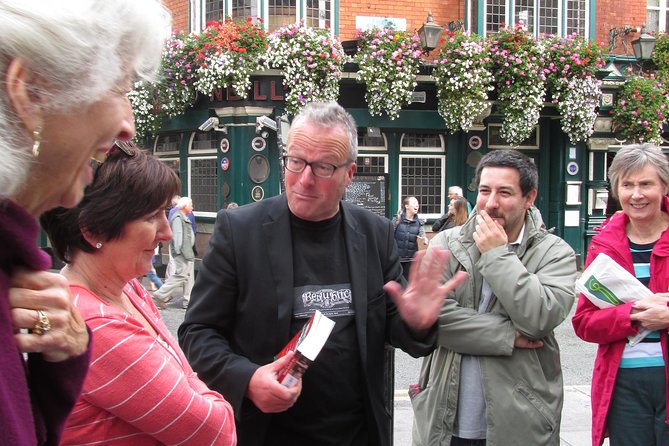
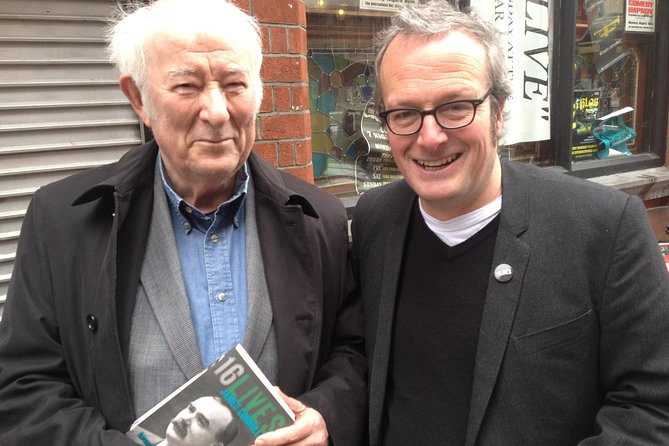
This tour is built for anyone who wants a real sense of why the 1916 Rising happened, not just a list of dates. It starts at the International Bar, where Lorcan Collins has run the 1916 tour since 1996, and it walks you through the road from the Irish Famine era toward Easter Week 1916. I especially like how the guide keeps it conversational, with time to ask questions as the story builds, and I also like that you see key sites close up, including places marked by bullets and the spots tied directly to the Proclamation.
One thing to keep in mind: the walking pace can stretch the experience closer to 2.5 to 3 hours, and the group can be up to 30 people. If you hate crowds or need a very strict time window, plan to stay flexible.
In This Review
- Key Highlights You’ll Actually Feel on the Streets
- Why This 1916 Walking Tour Works for First Timers
- Starting at the International Bar on Wicklow Street
- From Great Hunger to Easter Week, How the Story Gets Its Spine
- City Hall Occupation: The Irish Citizen Army Angle
- Dublin Castle: British Administration, British Leverage
- Four Courts From the Bridge: Seeing It Without the Detour
- O’Connell Monument Bullet Holes and the Message in Stone
- Jim Larkin Statue: Labor, Solidarity, and a Broader Revolt
- The GPO, Proclamation Energy, and Why This Stop Feels Central
- Moore Street: Where the GPO Garrison’s Last Stand Shows Up
- Bank of Ireland and the Old Parliament Idea
- What Makes the Guide Style Worth Your Time
- The Timing Reality: Approx. 2 Hours, But Build in Buffer
- Price and Value: Why $27.81 Can Be a Bargain
- Who This Tour Is Best For (and Who Might Skip It)
- Should You Book the 1916 Rebellion Walking Tour?
- FAQ
- Where does the tour start?
- How long is the walking tour?
- Is the tour offered in English?
- What is included in the price?
- Are alcoholic drinks included?
- Is the route the same every day?
- How big is the group?
- Does the tour require good weather?
- What are the cancellation rules?
Key Highlights You’ll Actually Feel on the Streets

- International Bar kickoff with story-first context, plus reading material before the walk starts
- Easter Week sites at walking distance, including Dublin Castle, the GPO, and the Four Courts area
- Bullet-hole and monument stops that make the Rising feel real, not textbook-only
- City Hall and administrative power points, showing how control shifted during Easter Week
- Songs and light humor mixed into serious history, so it stays memorable
- Route varies day to day, so you are not stuck with a scripted loop of the same photos
More Irish history taken at walking pace
- Dublin EPIC Museum Admission Ticket★ 4.5 · 1,729 reviews
- Dublin Literary Pub Crawl★ 4.5 · 1,607 reviews
- 1916 Rebellion Walking Tour★ 5.0 · 1,605 reviews
- Dublin: EPIC Museum Entrance Ticket★ 4.6 · 816 reviews
Why This 1916 Walking Tour Works for First Timers
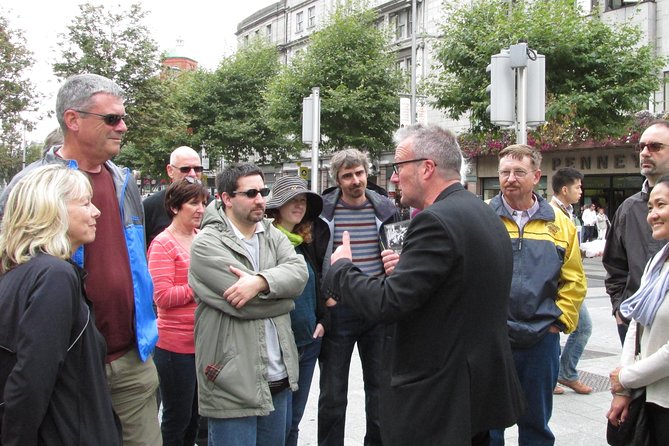
If you think history tours are either dry or overly detailed, this one is a good match. The tour threads events together from the 1840s famine era toward the Rising, so you understand the logic behind the rebellion instead of memorizing names like homework.
The other big plus is that the guide treats the walk like a conversation. You will hear clear explanations, you get chances for questions, and you are not just marching from one plaque to the next. The result is that you leave with a mental map of Dublin in your head, not just a few random stops.
Starting at the International Bar on Wicklow Street
The meeting point is 23 Wicklow St, at the International Bar. This is not just a convenient start. It sets the tone right away, because you can arrive a bit early, grab a drink if you want, and skim the intro literature the guide provides.
This is also where you get the foundation. The walk begins with the build up to the revolutionary period, starting with the Great Hunger, and moving forward step by step until Easter Week 1916. I like this approach because it helps you place the Rising in a bigger Irish story. If you are new to Irish history, this part gives you enough footing to follow the rest without feeling lost.
You should also know the tour is English-language. And it runs with a mobile ticket, so you are not stuck hunting for paper.
From Great Hunger to Easter Week, How the Story Gets Its Spine

That opening segment matters more than it sounds. When the guide connects the famine period to later political frustration, the Rising stops feeling like a sudden plot twist and starts feeling like a chain reaction.
Guides on this tour are known for strong delivery and a big voice, which helps in a city where street noise can swallow small talk. You also get that extra layer of human detail, since several guides bring songs into the mix and use humor in the right places. That combo can make hard subjects easier to process without turning them into a joke.
City Hall Occupation: The Irish Citizen Army Angle
One of the first major landmarks you hit is City Hall. The key idea here is that during Easter Week, the building was occupied by the Irish Citizen Army. So instead of talking about the rebellion only at headquarters and battle sites, the guide anchors the story in how groups took and used institutions.
This stop is short, around 15 minutes, but it earns its place. It helps you understand the Rising as something organized and contested, not just an uprising in one location. If you like politics and power, you will probably enjoy how the guide frames who controlled what, and when.
Other Dublin walks with the wind behind you
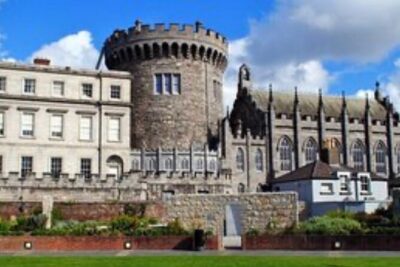
Dublin Castle: British Administration, British Leverage
Next comes Dublin Castle, the seat of British administration and a central symbol of control. This is where the guide explains its role during the 1916 Rising and the later War of Independence.
If you have seen Michael Collins, Dublin Castle might ring a bell. Even if you have not, this is the kind of stop that makes the rebellion’s stakes clearer. You can feel how the physical presence of administration shaped daily life and how that mattered when resistance escalated.
Four Courts From the Bridge: Seeing It Without the Detour
At Four Courts, the tour focuses on occupation during 1916 and again around the build up to the Civil War in 1922. Here the tour takes a practical approach. You do not go right up to the building. Instead, you see it from a bridge over the River Liffey, which keeps the flow moving and gives you a good overview from street level.
The guide then explains the role Four Courts played across these different conflicts, including how the later Civil War gets explained in terms you can actually follow. The timing here is about 15 minutes. It is enough to connect cause and consequence without turning the walk into an architecture lecture.
O’Connell Monument Bullet Holes and the Message in Stone
The tour includes a stop at the O’Connell Monument, and it is one of those moments you will remember. The guide points out bullet holes still visible from the Rising and connects that to positions held by the British and Irish sides in 1916.
This is exactly why walking tours beat museum-only visits. You are not just hearing about violence. You are standing where it left a trace. Even if you are the type who hates heavy scenes, this kind of detail makes the story hit in a grounded, human way.
Jim Larkin Statue: Labor, Solidarity, and a Broader Revolt
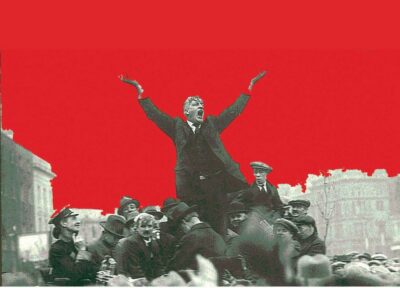
Then you shift from monuments of national symbolism to a figure tied to working-class momentum: the Jim Larkin statue. The guide explains Jim Larkin’s role as a union organizer and his connection to James Connolly, including his friendship with Dublin’s working class.
Why it matters: Easter Week did not come out of nowhere. You get a sense of how labor and political organizing fed into the broader revolutionary period. This stop keeps the tour from becoming only about leaders in offices and gives you a wider social lens.
The GPO, Proclamation Energy, and Why This Stop Feels Central
The most important single stop is the An Post General Post Office (GPO). This is described as the HQ for the revolutionaries in Dublin, and it is one of the most historic buildings in the city.
Plan for about 30 minutes here. The guide explains how Easter 1916 unfolded from this location and includes the moment where P. H. Pearse read the Proclamation. Even if you already know the basics, standing in the GPO area helps you grasp why it became such a core part of Irish national memory.
The GPO is also where many guides let the story get a little more emotional without going overboard. You might hear poetry or a song element, and you will likely feel how the guide tries to connect 1916 to later national identity.
Moore Street: Where the GPO Garrison’s Last Stand Shows Up
Depending on time, the tour may include Moore Street to point out where the GPO garrison made their last stand in Easter Week. This is another place where street geography matters. Even short stops help because you can visualize the movement and the setbacks.
If you are walking and learning like a normal human, the stop-by-stop pace stays manageable. You are not pushed into long lectures at each corner. It stays readable and moving.
Bank of Ireland and the Old Parliament Idea
The tour may also stop at the Bank of Ireland, which is often called the Old Parliament. Here the guide can connect the building to Irish history and talk about its neighbor, Trinity College, depending on the day’s route.
This is a useful capstone. The rebellion is not only about what happened in 1916. It is also about where Irish politics went next, and how older institutions and new forces collided in the years that followed.
Also, the route is not 100 percent fixed. The tour notes that the guide varies the walk so it does not become stale. That is good news if you are visiting more than one history site in Dublin. You get overlap in themes, but not a carbon copy of what you already saw.
What Makes the Guide Style Worth Your Time
A big reason this tour earns such strong marks is the way guides teach. Names you might hear include Lorcan Collins, and guides like Liz and Phelan have been highlighted for making the walk feel lively.
Here is what that tends to look like on the street:
- Clear, loud explanation that stays easy to follow.
- Stories that link sites together so the city feels connected.
- Room for questions, so you can get answers to the things you actually wonder.
- Songs or old rebel tunes sometimes used to illustrate points, not to entertain at random.
I like tours best when they respect both sides of the job. Serious history should stay serious. But you also want a human voice, not a robot script. This tour often hits that balance.
The Timing Reality: Approx. 2 Hours, But Build in Buffer
The tour is listed as about 2 hours. Still, one caution from real-world timing is that it can run closer to 3 hours when the group has lots of questions or when pacing needs adjustment with a crowd of up to 30.
So my practical advice is simple. If you have a hard reservation right after, give yourself buffer time. If you are flexible, you get the best experience because you can actually enjoy the Q&A moments.
Also, the walk starts and ends back at the meeting point, so you do not have to think about transport at the end.
Price and Value: Why $27.81 Can Be a Bargain
At $27.81 per person, this tour can be great value if you want more than surface-level sightseeing. You are paying for a professional guide, plus the time savings of having a structured route that connects the city’s key “Easter Week and after” locations.
You also get practical benefits built in:
- The walk covers major sites at walking distance.
- You get context that helps you connect them to Irish politics.
- The tour language is English, which matters when you are traveling and not feeling like translating everything in your head.
Alcohol is not included, but drinks are available for purchase. That means you can keep it simple, or you can make the start feel like Dublin, with a pint at the International Bar before you hit the streets.
It also helps that the tour is often booked about 22 days in advance, which is a sign this is a popular “do it once” experience for many visitors. If your dates are fixed, book early so you are not stuck choosing a time that clashes with the rest of your plan.
Who This Tour Is Best For (and Who Might Skip It)
This walk is ideal if you:
- Like history with a narrative arc, not just facts in a checklist.
- Want a deeper education on Ireland without needing prior knowledge.
- Enjoy seeing landmarks close up, including visible reminders like bullet holes.
- Prefer a guide who can explain politics while keeping it human.
You might consider skipping or trying a different format if you:
- Have a strict time schedule and cannot handle a possible longer run.
- Dislike groups that can reach 30 people.
Still, the tour is designed so most people can participate. It is not built for high-intensity hiking. It is a city walk built around stops and explanations.
Should You Book the 1916 Rebellion Walking Tour?
Yes, if you want the most effective way to understand Easter Week 1916 while you are already in Dublin. This is one of those rare tours where the landmarks matter, the story connects, and the guide often adds a memorable human touch, including questions, humor, and sometimes songs.
Book it especially if you are planning a short trip and you want your history time to count. If you can give it a little extra time in your schedule, you will get a better experience out of it, because the Q&A and storytelling are the point.
FAQ
Where does the tour start?
The tour starts at 23 Wicklow St, Dublin, D02 VH59, Ireland. The tour ends back at the same meeting point.
How long is the walking tour?
It runs for about 2 hours (approx.).
Is the tour offered in English?
Yes. It is offered in English.
What is included in the price?
The price includes a professional guide.
Are alcoholic drinks included?
No. Alcoholic drinks are available to purchase, but they are not included.
Is the route the same every day?
The tour can vary the route so it does not become stale, though you can expect to visit the key Easter Week related sites.
How big is the group?
The tour has a maximum of 30 travelers.
Does the tour require good weather?
Yes. It requires good weather. If it is canceled due to poor weather, you will be offered a different date or a full refund.
What are the cancellation rules?
You can cancel for free up to 24 hours in advance for a full refund. If you cancel less than 24 hours before the start time, the amount paid will not be refunded.
The Wider Dublin Pile
The Story, Told on Foot
Elsewhere on The Ireland Traveler
Lately added to the Dublin pile
- Waterford Crystal and Kilkenny Full-Day Rail Tour from Dublin
★ 5.0 · 3 reviews - Turtle Bunbury’s Dublin: A Self-Guided Audio Tour from a Celebrated Author
★ 5.0 · 3 reviews - Cliffs of Moher and The Burren Private Tour from Dublin
★ 5.0 · 3 reviews - Dublin Full-Day Tour through Boyne Valley
★ 5.0 · 3 reviews - Rock Of Cashel And Blarney Castle Private Chauffeur Full Day Sightseeing Tour
★ 4.5 · 3 reviews - Private Irish Fusion Meal in a Modern Home in Skerries, Dublin
★ 5.0 · 3 reviews
More Irish History and Heritage Walks, side by side.
 ★ 4.5Dublin EPIC Museum Admission TicketFrom $251,729 reviews
 ★ 4.5Dublin Literary Pub CrawlFrom $271,607 reviews
 ★ 4.6Dublin: EPIC Museum Entrance TicketFrom $24816 reviews
 ★ 4.8Dublin: Jeanie Johnston Tall Ship Irish Famine History TourFrom $16431 reviews
 ★ 4.5Irish Famine Museum / Exhibition DublinFrom $18247 reviews
 ★ 4.5The Queenstown Story @ Cobh Heritage Centre , Great Stories of Emigration.From $18181 reviews
 ★ 5.0Walking Tour of Dublin’s Viking/Medieval Quarter with a VikingFrom $36171 reviews
 ★ 5.0The Medieval Mile Museum Guided TourFrom $13155 reviews
Other lists this one is on