
REVIEW · GALWAY
Galway History Walking tour with Local expert – Private Group
Galway rewards slow walking and sharp stories. On this private Galway History Walking tour, I like that the route mixes major sights with lesser-known corners, and that you get an included stop at St Nicholas Collegiate Church. I also love the way the guide connects places to people, from the Tribes of Galway to the Lynch family and the Joyce-Bloomsday link. One catch: it’s a good-weather walk, so bring a rain layer even if the day looks calm.
You’ll move at a human pace for about 1 hour 55 minutes, with a private-group feel and the option for the route to be adapted to your interests. It’s priced per group, up to 13, which can be a smart deal if you’re splitting it among friends or family.
The walk is timed to help you understand the city fast, without turning it into a race. You’ll start at Eyre Square, then work your way past Courthouse Square, views over the River Corrib toward Galway Cathedral, and on into spots like Lynch’s Castle, the Spanish Parade area, and An Taibhdhearc.
In This Review
- Key highlights worth planning around
- Why a private Galway history walk is such a good first move
- Starting at Eyre Square, meeting at the Hardiman Hotel
- Eyre Square to Williamsgate Street: Tribes symbols, Claddagh rings, and an Oscar Wilde surprise
- Friary, Courthouses, and the River Corrib pause toward Galway Cathedral
- Lynch’s Castle and Dead Man’s Lane: power, funerals, and the city remembering
- St Nicholas Collegiate Church: the included medieval anchor
- Bloomsday near Bowling Green and the Latin Quarter legends on High Street
- The Spanish Parade and Spanish Arch: trade routes you can spot on the ground
- Hall of the Red Earl, Druid Theatre, and An Taibhdhearc for modern culture
- Price and value: what $150.60 per group really means
- Who should book this Galway walking tour, and who might skip it
- Should you book it or not
- FAQ
- How long is the Galway History Walking tour?
- Where does the tour start and end?
- Is St Nicholas Church included?
- Is this tour private?
- How big is the group?
- Do I need good weather?
- Do I get a mobile ticket?
- What is the cancellation window?
Key highlights worth planning around
- Private-group attention for up to 13, with a professional local guide and time to ask questions
- St Nicholas Collegiate Church included, plus guidance on their regular guided-tour times
- Street-level storytelling in Galway’s key districts, from Tribes symbols to courthouse past and churchyards
- Big-photo stops that don’t feel touristy, like Lynch’s Castle and the River Corrib viewpoints
- Literary Galway moments, including the Nora Barnacle and Bloomsday connection near Bowling Green
- Culture stops beyond the obvious, including Druid Theatre and Ireland’s only Irish-language theatre, An Taibhdhearc
Keep wandering, more of Galway on foot
- The Welcome to Galway Walking Tour★ 5.0 · 427 reviews
- Aran Islands and Cliffs of Moher Day Cruise sailing from Galway City Docks★ 4.5 · 418 reviews
- Galway: Welcome to Galway Walking Tour★ 4.8 · 338 reviews
- Walking and Tasting Tour of Galway City★ 5.0 · 283 reviews
Why a private Galway history walk is such a good first move
If you like history but hate museum overload, this kind of walk is a sweet spot. You’re outside, close to the buildings, and the stories are tied to what you can see right now. Instead of memorizing dates, you learn why Galway looks the way it does, and how trade, faith, politics, and famous names shaped the streets.
This is also practical tourism. In under two hours, you get a sense of where things are, so your remaining time in Galway feels easier. Even if you already know a little, a local guide can point out details most people miss, like why certain buildings exist, or what a churchyard location meant when burials were handled right there in the city.
The vibe tends to be friendly and adjustable. If you’re traveling with kids or you want more time at one stop, the tour is set up to bend. And if you’re a single traveler, it’s still built for personal interaction, not a stiff script.
Starting at Eyre Square, meeting at the Hardiman Hotel
The tour begins at Eyre Square, meeting at the front entrance of the Hardiman Hotel. That’s a helpful start point because Eyre Square is easy to find, and you can line up your day around it.
From the beginning, you’re not just handed a map. You’re pointed toward the ideas behind the buildings. Around Eyre Square, you’ll hear how Galway grew, and you’ll get grounded in landmarks like the old Browne Doorway and the Tribes of Galway banners. There’s also a John F Kennedy memorial connection that can make the city feel surprising, even if you came for medieval architecture.
Here’s the key benefit: once you understand Eyre Square, the rest of the walk makes more sense. You’re not wandering. You’re following an explanation that keeps tightening the city puzzle.
Eyre Square to Williamsgate Street: Tribes symbols, Claddagh rings, and an Oscar Wilde surprise
After your Eyre Square overview, the walk heads toward Williamsgate Street. This stretch is perfect for learning how Galway mixes old meaning with everyday shopping streets.
You’ll pass architectural highlights including the Browne Thomas building, then move through storefront territory where you’ll see Galway’s famous Claddagh ring culture. If you’re hoping to buy something small and meaningful, this is a natural time to look around.
If you have even a mild interest in literature and odd historical gifts, you’ll like the Oscar Wilde statue stop when time allows. It’s described as an Estonia gift to Ireland in 2004, which is the kind of detail that makes the city feel connected to Europe beyond just Irish legends.
Potential downside to keep in mind: you’re walking through active streets. If it’s windy or noisy, you’ll want to pay attention in the guide moments when the story turns.
Friary, Courthouses, and the River Corrib pause toward Galway Cathedral
As the route shifts, you’ll pass a Franciscan Friary church on Eglinton Street. This spot matters because it includes a little graveyard at the rear, described as a prominent burial place in the mid-17th and early 18th centuries. It’s one of those places where the city’s past feels personal, not abstract.
Next is Courthouse Square. The story here is about how Galway organized justice in the city and county, and how one of the iconic courthouses remains while the other is gone. You’ll also notice the Town Hall Theatre opposite, which helps you understand how old civic space can evolve into cultural space.
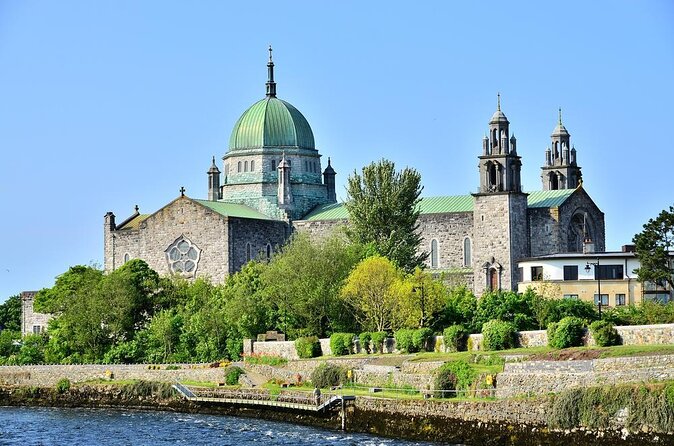
Then you hit a pause with views from the pedestrian bridge over the River Corrib. The guide stops so you can see Galway Cathedral and the Franciscan Chapel. The cathedral is described as Europe’s newest stone cathedral, so you get a mix of old religious influence and very current architectural ambition.
If you take photos, this is a good area to do it. You’ll be standing with a view line, not craning around corners.
Other Galway walks with the wind behind you

Lynch’s Castle and Dead Man’s Lane: power, funerals, and the city remembering
One of the most memorable parts of the tour is Lynch’s Castle. You arrive at the two-street intersection with the castle building visible as a strong landmark. It’s described as the finest surviving town-castle in Ireland, and the Lynch clan once owned it. The guide points out crests and roundels, so you’re not just looking at a pretty old façade. You’re reading symbolism that once signaled ownership and status.
From there, the route keeps moving via Galway’s River Walk to Market Street, with a stop through Church Lane, historically called Dead Man’s Lane. The story is blunt and direct: funerals passed along this route on their way into the old graveyard. That’s heavy subject matter, but the way it’s tied to the street layout makes it easier to understand than a standalone history lecture.
Near the next key church-related stops, you’ll learn about the St Nicholas churchyard area and how the burial landscape connected to the church’s role in city life.
This section is also where comfortable shoes matter most. The pace is thoughtful, but you’re still stacking multiple stops back-to-back.
St Nicholas Collegiate Church: the included medieval anchor
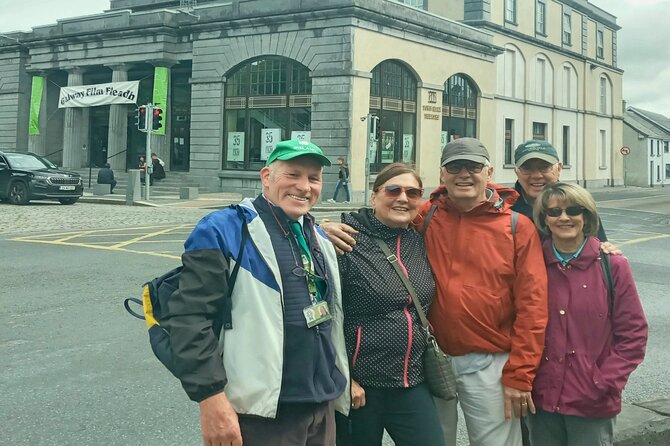
The tour’s main indoor anchor is St Nicholas Collegiate Church. You arrive with your guide and hear why it’s called the largest medieval church in continuous use in Ireland.
It started as a Catholic church, and today functions as a Protestant church. That change is part of Galway’s broader history, and the guide uses the building to explain what those shifts meant on the ground.
A standout detail is the Christopher Columbus story, said to have worshipped here in 1477 before his voyage of discovery. Whether you treat that as legend or as part of the church lore, it gives you a dramatic thread to connect Galway to the wider world of exploration.
Tickets are included for this stop, and you also get discounts toward guided tours run Mon-Fri. The stated times are 11am and 2pm, with Wednesdays at 12pm and 3pm. So if you like walking stories but want a slower indoor view afterward, this is your chance to extend the experience.
From a timing standpoint, this stop is a nice weather backup too. If conditions are unpleasant, you spend more time indoors than you would on a tour that skips church interiors.
Bloomsday near Bowling Green and the Latin Quarter legends on High Street
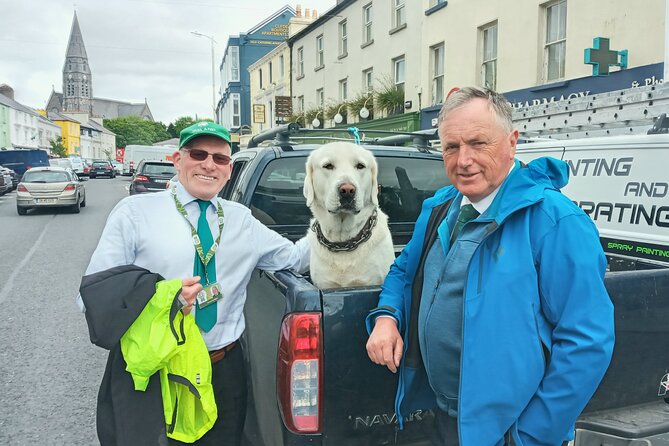
After St Nicholas, the walk shifts toward Galway’s Latin Quarter, including High Street. This is where you’ll feel how Galway sells both history and identity, but in a way that still makes sense.
You pass the iconic King’s Head Pub. The story given is that the site was gifted by Oliver Cromwell as payment to the executioner of King Charles I. Even if you’re not a political-history nerd, the point is clear: these legends show how power changed hands, and how surviving buildings can carry uncomfortable backstory.
You also pass Naughton House, once owned by an Irish MP in the British Parliament referred to as Humanity Dick Martyn. Again, it’s not just name-dropping. It helps explain the city’s personality, where a place can be both social and political, public and personal.
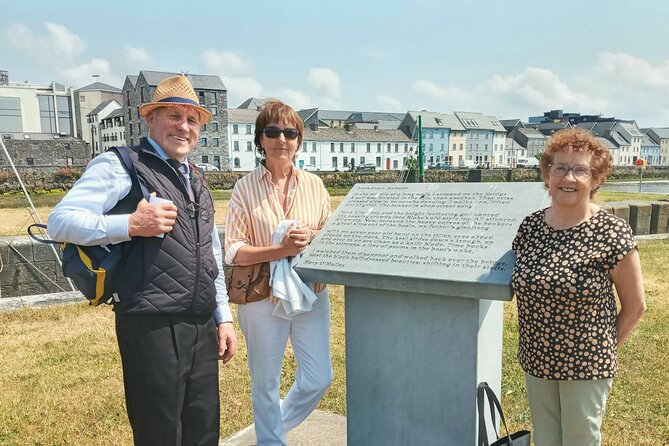
Close by, you’ll hear the Nora Barnacle connection near Bowling Green. She’s described as her family home in earlier years, and she famously dated Irish writer James Joyce on 16th June 1904, which is the origin of Bloomsday. If you’ve ever seen Galway referenced in connection with Bloomsday, this stop makes that reference feel real, not vague.
The Spanish Parade and Spanish Arch: trade routes you can spot on the ground
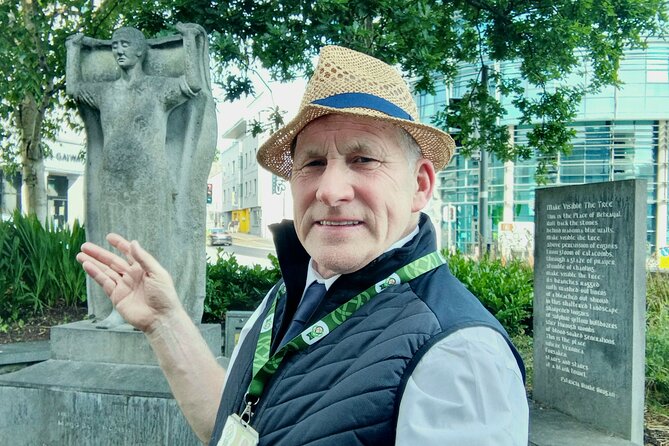
Next up is the Spanish Parade area, an open-space location tied to Galway’s older port life. You’re told it used to contain the old Galway port until 1840, and that old galley ships arrived from Spain with wines and spices for local merchant families.
This is a valuable lesson because Galway’s identity isn’t only medieval church stories. It’s also about commerce. Standing near the space where ships once came in, you get a clearer picture of why certain merchant neighborhoods and buildings took shape where they did.
The guide also explains the significance of the Spanish Arch adjacent to this area. The whole point here is to show you that the city’s stonework was part of an international system, not just decorative medieval charm.
If you want a quick way to understand Galway’s economic history without reading a book, this stop is one of the best on the walk.
Hall of the Red Earl, Druid Theatre, and An Taibhdhearc for modern culture
As the tour loops back, you reach the Hall of the Red Earl. The building is described as the castle residence of a Norman, Richard de Burgo. It was important until the late 16th century, and its ruins were lost for centuries before archaeologists discovered them in the late 1990s. That rediscovery detail matters. It turns the site into a living research story, not just a fixed “here are the ruins” moment.
Then it shifts from ruins to living theatre culture with Druid Theatre. The theatre company is described as founded by University graduates in 1975, with a strong relationship to writers Tom Murphy and Martin McDonough. The guide also notes that many Irish actors and directors have worked with the company over the years.
Finally comes An Taibhdhearc, described as Ireland’s only Irish-language theatre. It was established as a large-scale cultural project in the early 1920s, when Ireland became a Free State. The first director or manager was Micheal MacLiamor, working there from 1928.
If you’re wondering why a history tour includes theatre stops, this is the answer. Galway’s culture is not separate from its history. It’s one of the ways the city keeps rewriting what it means to belong.
Price and value: what $150.60 per group really means
The price is $150.60 per group, up to 13 people, for about 1 hour 55 minutes. That means the true cost per person depends on who’s in your group. With just a couple of you, it won’t feel like a budget deal. But if you’re traveling as a small group, it can work out like a private lesson you can actually ask questions during.
What makes it feel worth the money is that you’re not just getting access to sights. You’re paying for a local guide who connects multiple areas of Galway into one coherent narrative, from courthouses and churchyards to theatre and literary landmarks.
Also, the tour is described as easily adapted to guest wishes. That flexibility can save you from feeling stuck with a tour that doesn’t match your interests. The private format also usually makes it easier to stop, ask, and take in details without fighting crowds.
Who should book this Galway walking tour, and who might skip it
This tour is a great fit if you:
- Want a high-quality overview of Galway history in under two hours
- Like learning through streets and buildings, not just inside museums
- Enjoy a mix of topics, from medieval church sites to theatre and Joyce-related stops
- Travel with family members who want questions answered and a pace that can be adjusted
You might choose something else if you want:
- A mostly indoor experience (this is a good-weather walk)
- A pure food-and-drink crawl with minimal history focus
One practical note from real-world operation: on busy days or if staffing is unusual, you may find the group feels louder or slightly less controlled. If that matters to you, plan to arrive on time and lean in when the guide explains key points.
Should you book it or not
If you’re in Galway for a short stay, I’d book this. It gives you orientation plus story, and it hits major landmarks without only sticking to the obvious postcard stops. The included St Nicholas Church time is a strong anchor, and the extra stops around Lynch’s Castle, the Spanish Parade, and An Taibhdhearc add variety.
If you’re a history buff, you’ll enjoy how the guide ties meaning to real street corners. If you’re more casual about history, you’ll still get enough readable connections, like Bloomsday and the JFK memorial tie-in, to keep it fun.
FAQ
How long is the Galway History Walking tour?
It’s about 1 hour 55 minutes.
Where does the tour start and end?
It starts at the front entrance of the Hardiman Hotel in Eyre Square, Galway. The tour ends back at the meeting point.
Is St Nicholas Church included?
Yes, the tour includes an admission ticket for St Nicholas Collegiate Church. The experience also mentions a voucher toward a visit for 10am and 1pm tours only, and guided tours inside the church run on set days and times.
Is this tour private?
Yes. It’s a private tour, and only your group participates.
How big is the group?
The tour is priced per group and can include up to 13 people.
Do I need good weather?
Yes. The experience requires good weather. If it’s canceled due to poor weather, you’ll be offered a different date or a full refund.
Do I get a mobile ticket?
Yes, it uses a mobile ticket.
What is the cancellation window?
You can cancel for a full refund up to 24 hours in advance of the experience start time. If you cancel less than 24 hours before, the amount paid is not refunded.
The Wider Galway Pile
Galway on Foot
Elsewhere on The Ireland Traveler
Lately added to the Galway pile
- Galway’s Historical Gems: A Walk Through Time
★ 5.0 · 3 reviews - 2.5 Hour Guided Sea Kayaking in Roundstone Bay
★ 5.0 · 3 reviews - Galway Tasting and Walking Tour
★ 5.0 · 3 reviews - Ferry ticket – Day return ticket to Inishbofin Island from Cleggan. Self Guided.
★ 5.0 · 3 reviews - Sean’s Bar, Athlone Castle and Clonmacnoise Monastery
★ 4.5 · 3 reviews - Galway: Medieval Galway Tour
★ 4.7 · 3 reviews
More Galway City Tours, side by side.
 ★ 5.0The Welcome to Galway Walking TourFrom $18427 reviews
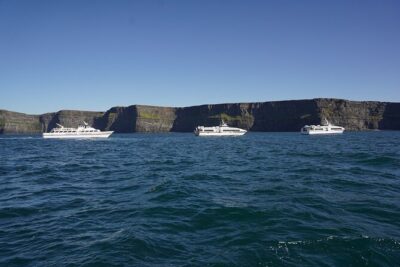 ★ 4.5Aran Islands and Cliffs of Moher Day Cruise sailing from Galway City DocksFrom $72418 reviews
 ★ 4.5Cliffs of Moher and Galway City Day Tour from DublinFrom $90351 reviews
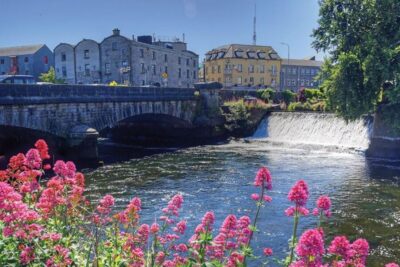 ★ 4.8Galway: Welcome to Galway Walking TourFrom $17338 reviews
 ★ 5.0Walking and Tasting Tour of Galway CityFrom $84283 reviews
 ★ 5.0The Legendary Walking Tour of GalwayFrom $17230 reviews
 ★ 5.0Electric Bike Tour of Galway City with Expert Local GuideFrom $102195 reviews
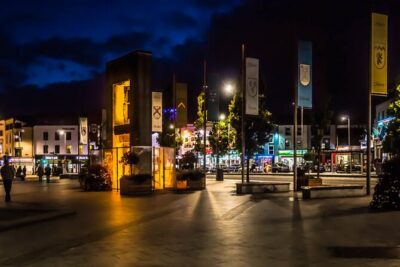 ★ 5.0The Dark History Tour of Galway CityFrom $23146 reviews
Other lists this one is on