
REVIEW · DUBLIN
Galway: Medieval Galway Tour
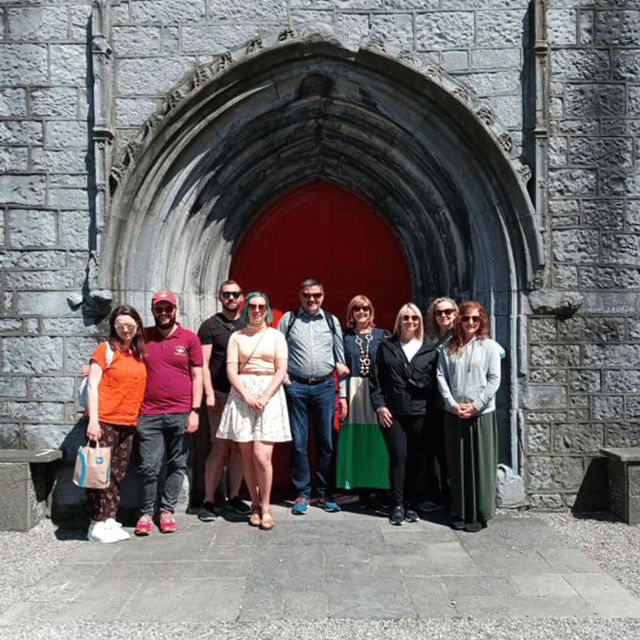
Medieval Galway lives in plain sight. This guided walk threads together key sights, old legends, and real stone remains, so you feel the city’s past as you move through it. I especially love how Marteen Lane brings the stories to life, with careful attention to the legends tied to each stop.
You’ll also like the practical way the route shows what’s still here, especially the city walls you can actually spot inside Eyre Square Shopping Centre. One thing to consider: St. Nicholas’ Collegiate Church has an extra entrance fee for adults and concessions, so it can add cost if you want to go in.
In This Review
- Key highlights you should care about
- Why this Galway medieval walk is such a good use of time
- Starting at the Browne Doorway in Eyre Square
- Eyre Square Shopping Centre: the city walls you can still see
- Lynch’s Castle: the power of the 14 Tribes, plus a shocking legend
- What to watch for
- St. Nicholas Collegiate Church: 700 years at the city’s heart
- Tip for your day
- The King’s Head Pub link to King Charles I
- Quay Street details: Thomas Dillon and the Claddagh ring
- Hall of the Red Earl: archaeology you can walk into
- Kirwan’s Lane: one of Galway’s five surviving lanes
- Blake’s Castle and the jail story
- Spanish Arch finish: the iconic view and the tsunami connection
- Price, time, and what you’ll get for $23
- Practical tips so you enjoy it in real life
- Who this Galway Medieval Tour suits best
- Should you book?
- FAQ
- Where does the tour meet?
- How long is the Galway medieval walking tour?
- Is entrance to St. Nicholas’ Collegiate Church included?
- What language is the tour guide?
- Is the tour wheelchair accessible?
- Does the tour run in bad weather?
- What should I bring?
- Is audio recording allowed?
Key highlights you should care about
- Meet at Eyre Square’s Browne Doorway, easy to find, right where the walking starts
- City walls hidden inside Eyre Square Shopping Centre, not just a theory on a sign
- Lynch’s Castle and the Lynch family of the 14 Tribes, with a legend that’s hard to forget
- St. Nicholas Collegiate Church stories, including Cromwell’s soldiers using the church as a stable
- Hall of the Red Earl archaeology, with remains you can get up close to
- Finish at the Spanish Arch, plus the tsunami connection and the Claddagh across the river
More Irish history taken at walking pace
- Galway: Connemara, Sheepdog Show and Medieval Castle Tour★ 5.0 · 24 reviews
Why this Galway medieval walk is such a good use of time
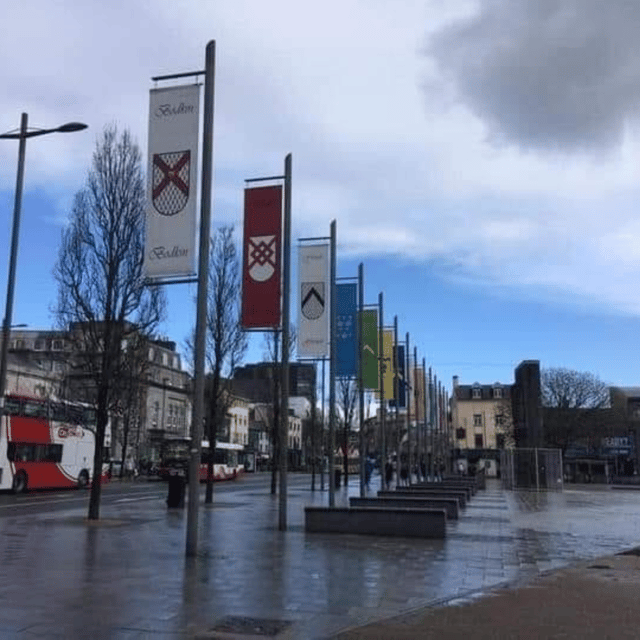
A 1.5-hour tour sounds short, but that’s the point. This is a focused, walkable hit list of medieval Galway, with just enough stop-and-tell story time to help you connect the dots. You get the city’s layout, the power families, and a few dark, human moments that make the past feel real rather than museum-dull.
I like that it leans on a regional guide with a heritage background. Marteen Lane is a Fáilte Ireland Regional Guide with over 11 years guiding experience and a BA (Hons) in Heritage Studies. That mix matters because the tour stays grounded in the buildings you see, not just sweeping claims. And since the guide is an Approved Tourist Guides of Ireland member, you can expect a polished, credible style.
If you hate slow tours, this one fits. If you love facts with story, it fits even better. The only real downside is that you’re outside most of the time, and the tour runs in all weather, so you need to dress for it.
Starting at the Browne Doorway in Eyre Square
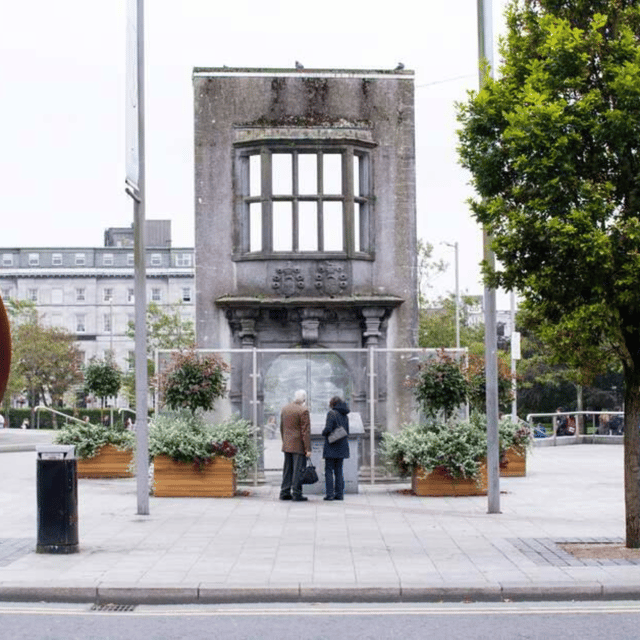
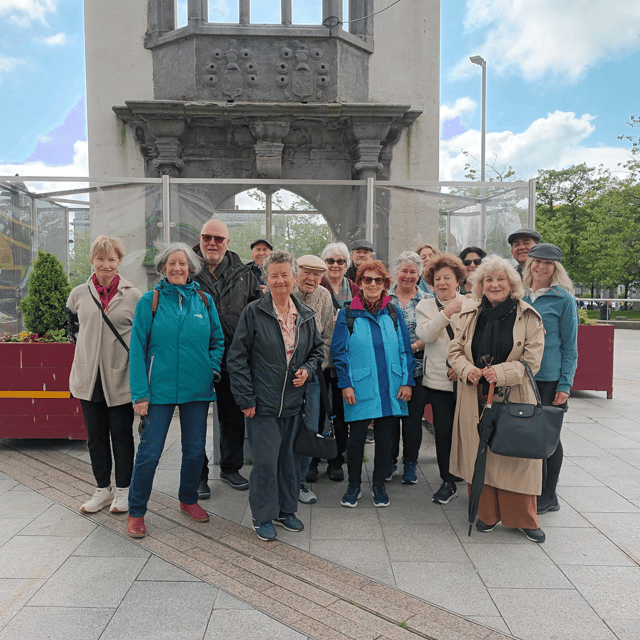
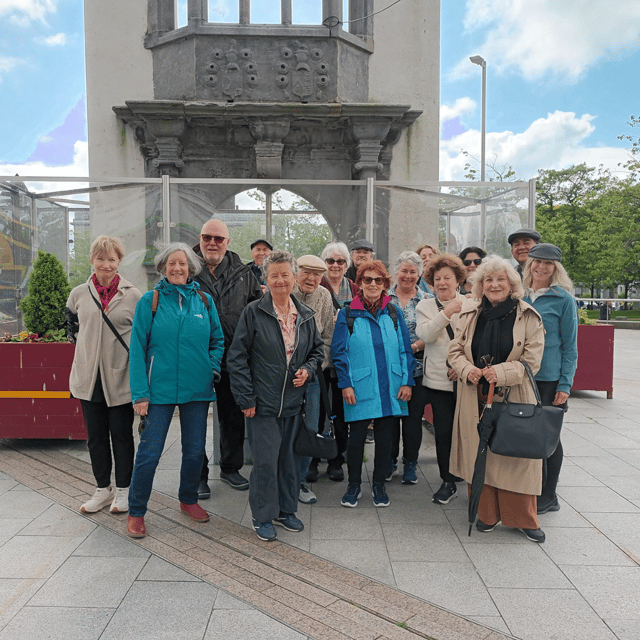
You’ll meet your guide at the Browne Doorway in Eyre Square. The meeting point is a free-standing stone doorway with perspex glass around it on the north side of the square. Show up about 15 minutes early so you can start on time, grab your bearings fast, and avoid that end-of-trip rush.
This matters more than you think. Eyre Square is the kind of place where you can lose 10 minutes just turning the wrong way. Starting from a precise landmark keeps the tour moving and helps you enjoy it, instead of doing mental map work under time pressure.
Once you’re together, the guide sets the tone: you’re not just looking at buildings, you’re learning how Galway worked, who had power, and why certain places became targets, symbols, or meeting points over the centuries.
Eyre Square Shopping Centre: the city walls you can still see
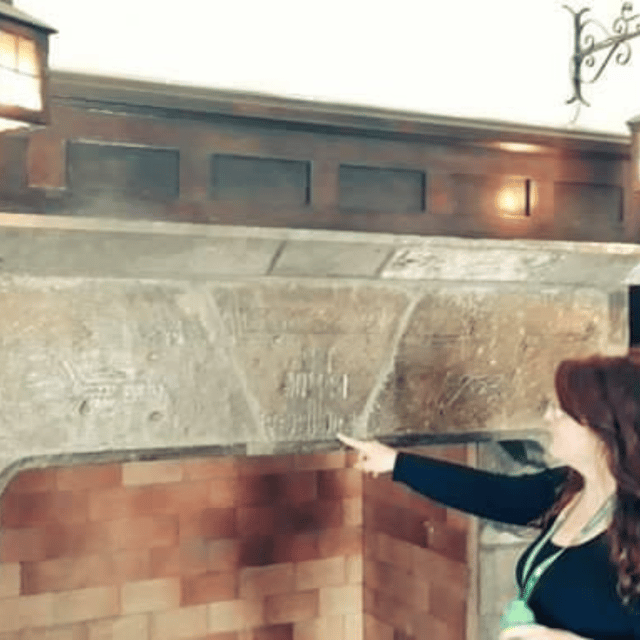
The tour’s first surprise is how medieval Galway is still hidden in plain sight. Your guide takes you to the remains of the city walls located within Eyre Square Shopping Centre. It’s a striking reminder that the medieval boundary of a city was not something far away and dramatic, it was built into daily life.
What I find satisfying here is the explanation of why walls mattered to the people of Galway. They were protection, yes, but also identity and control. When you see the physical remnants while standing in a modern commercial space, it helps you understand the layered nature of Galway, where old stone and everyday streets share the same ground.
This stop is also a good moment to slow your pace. Spend a minute to look around, then listen to what the guide points out. If you do that, the rest of the tour clicks into place faster.
Lynch’s Castle: the power of the 14 Tribes, plus a shocking legend
Next comes Lynch’s Castle, tied to the Lynch family, one of the 14 Tribes of Galway. Your guide connects the family to the city’s social and political muscle, and you’ll see how a “family story” becomes a building story.
Today, Lynch’s Castle is used as an AIB bank, and it’s described as the oldest commercial building in Ireland. Even if you’re not a history buff, that detail helps you picture what kind of place it was: commerce, wealth, and long-term influence, all in one address.
Then you’ll hear a legend tied to the Lynch family: James Lynch Fitzstephen hanging his own son, Walter, in 1493. It’s one of those moments that makes you pause and think about justice, authority, and how families protected their position. Whether you treat it as fact, legend, or a mix, the point the guide makes is the same. Power came with consequences, and stories like this became part of Galway’s memory.



What to watch for
- Listen for how your guide connects the family name to other stops later on the walk.
- Look at the building features the guide calls out. Even small details matter in Irish town centres.
St. Nicholas Collegiate Church: 700 years at the city’s heart
St. Nicholas’ Collegiate Church is next, and it’s positioned as the heart of Galway city for over 700 years. That’s a long time for one site to stay relevant, which is exactly why this stop works.
You’ll hear about Jane Eyre and James Kearney, and then the tour gets darker: Cromwell’s soldiers used the church as a stable. That kind of reuse is brutal in its simplicity. It tells you how conflict changes culture, not just borders.
Important practical note: entrance to St. Nicholas’ Church is not included. Adults are €5 and concession is €4. If you want to go inside, factor that into your time and budget. If you’re short on time or prefer to keep the tour moving, you can still get a lot from the exterior and the story, but the entrance fee means you’re choosing how deep you go.
Tip for your day
If you plan to pay the entrance fee, have cash or a card ready, because you’ll be paying in-person on the spot.
The King’s Head Pub link to King Charles I
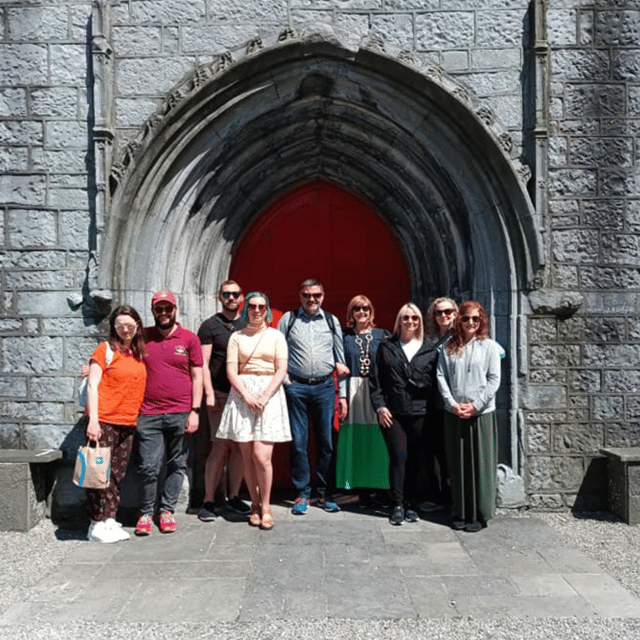
Along the route, you’ll encounter the building that’s now the King’s Head Pub, and your guide connects it to the beheading of King Charles I of England. This is one of those Galway moments where a tavern address becomes a historical reference point, not just a place for a drink.
The value of stops like this is that they help you read the city like a text. Galway’s old connections aren’t sealed away behind glass. They sit in street corners and shopfronts, and your guide helps you spot what those connections might be.
This also gives the tour variety. After serious story beats like Cromwell’s soldiers, it’s useful to have a stop that feels more everyday and approachable, even while the history stays heavy.
Quay Street details: Thomas Dillon and the Claddagh ring
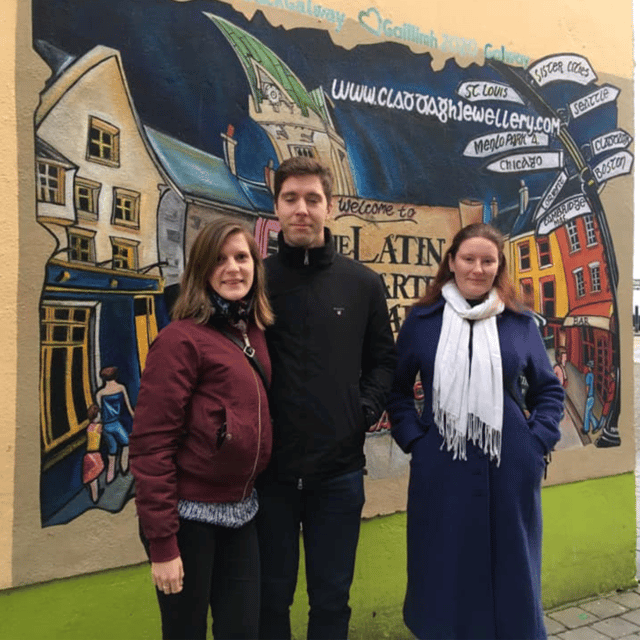
Quay Street is where the tour slows into craftsmanship and identity. You’ll visit Thomas Dillon’s Jewellers, and learn that they are the original makers of the famous Claddagh ring since 1750.
The Claddagh ring is one of those symbols that people recognize around the world, but it often gets treated like a souvenir only. Here, you’re given the maker connection and the timeline, which makes it feel tied to a community rather than mass production.
And because this tour moves through family names, lanes, castles, and church sites, the ring fits. It’s part of what people wore and offered, not just what rulers built and fought over.
If you like small, tangible takeaways, this is a great stop. Even if you don’t buy anything, the story gives the symbol weight.
Hall of the Red Earl: archaeology you can walk into
This is one of the tour’s most hands-on parts. The Hall of the Red Earl is a significant archaeological site run by Galway Civic Trust. Your guide points out remains of walls, columns, and buttresses, then you walk down into the site for a closer look.
I like this stop because it turns abstract medieval talk into something physical. A lot of walking tours show you buildings from the outside. This one gives you a chance to look at what’s left from a more direct angle, so you can picture the shape and structure of what once stood here.
It also adds contrast to the street-level stops. You’re moving from shopfronts, lanes, and churches into a space that feels more like layered time made visible. If you like archaeology, this is your moment. If you don’t, you’ll still appreciate how clearly the guide explains what you’re seeing.
Kirwan’s Lane: one of Galway’s five surviving lanes
Kirwan’s Lane is next, and it’s described as one of five lanes still in existence, named after the Kirwan family, one of the 14 Tribes. You’ll see remnants of medieval Galway here, including older building fabric that still shapes the lane’s feel.
This is where the tour turns from “big landmarks” into street texture. Lanes in old cities are often where daily life lived, not where official ceremonies happened. So walking Kirwan’s Lane helps you understand how medieval Galway flowed, not just how it was governed.
If you’ve only ever seen Galway through its main streets, this kind of lane stop can make the city feel more human and walkable, even if you’re only here for a short visit.
Blake’s Castle and the jail story
At the end of Quay Street, you’ll reach Blake’s Castle, owned by the Blake family, another one of the 14 Tribes. Your guide talks about what life was like for criminals in the jail, which adds a grim but useful layer to the story of power.
The castle fell into ruin, but it was restored around the 1980s. That restoration detail is useful because it shows how Galway decides what to preserve and why. Some medieval places survive intact, others survive as fragments, and some are brought back through careful work.
This stop also balances the earlier “prestige” stops like castles tied to family influence. It reminds you that the same walls and authorities that protected a city also controlled people, punished wrongdoing, and shaped lives in very real ways.
Spanish Arch finish: the iconic view and the tsunami connection
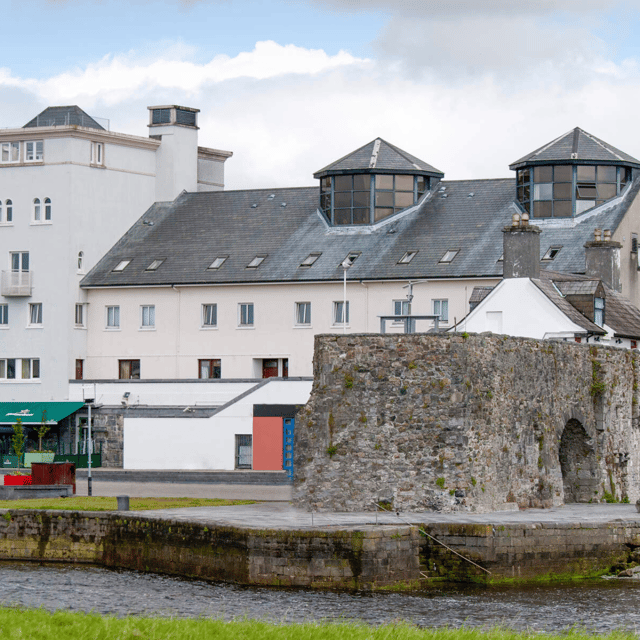
You end at the Spanish Arch, one of Galway’s most iconic attractions. This is the kind of place where your eyes naturally do what the tour has been training them to do: look for clues in stone.
Your guide also shares the Claddagh connection across the river and a tsunami story tied to the arches, noting that the tsunami destroyed two of the arches. That detail adds a global, human scale to an Irish waterfront landmark. It’s not just a pretty photo stop. It’s a reminder that the coast changes, and communities adapt.
This makes a strong finish. After castles, churches, lanes, and archaeology, you’re back to a landmark view. It’s a satisfying arc: you start with the idea of medieval boundaries and end with how the coast and sea history shaped the city.
Price, time, and what you’ll get for $23
At about $23 per person for roughly 1.5 hours, this tour is priced like a value-focused walking experience. What makes it feel worth it is the guide quality and the number of distinct stops packed into the time.
You also get more than “see a building.” You get a connected storyline across:
- city walls
- family power (Lynch and Blake)
- church and conflict (St. Nicholas, Cromwell, stable use)
- symbolism and craft (Claddagh ring by Thomas Dillon)
- archaeology with a guided site walk-down (Hall of the Red Earl)
- a waterfront finish with a major landmark (Spanish Arch)
If you plan to pay the St. Nicholas entrance fee separately, you’re adding a small amount to the base cost. But the tour still remains good value because the entrance isn’t required to understand the story beats the guide sets up.
Practical tips so you enjoy it in real life
This tour runs in all weather, and in case of severe weather warnings, it can be cancelled for safety with an alternative date or a full refund. That means you should plan like you’re walking in Irish weather, not a controlled indoor setting.
Bring:
- comfortable shoes (you’ll be walking and stopping often)
- an umbrella
- a camera
- water
- student card (handy since discounts are mentioned for the church entrance)
- cash and a credit card (useful for small purchases or the church fee)
Also note what’s not allowed: smoking, alcohol and drugs, and audio recording. The tour is led in English, and it’s wheelchair accessible.
One small but important thing: wear layers. Even in mild weather, you can feel chilly in open street areas, especially near the waterfront at the end.
Who this Galway Medieval Tour suits best
This tour is a great match if you want:
- medieval Galway in a short time window
- a guided story that connects multiple sites instead of random facts
- strong local legends and family histories
- a route that mixes landmarks with lanes and archaeology
It’s especially ideal for first-time visitors who plan to explore on their own afterward. When you finish at the Spanish Arch, you’ll have context for what you’re seeing across the river and why the city layout feels the way it does.
If you dislike walking tours or hate weather exposure, then you might find it tiring. Otherwise, the route is built for people who want history without a half-day commitment.
Should you book?
Yes, I think you should book this if you want an efficient, story-driven introduction to Galway’s medieval core. The biggest reason is the way Marteen Lane handles the details and legends, with the kind of care that makes the tour feel coherent rather than scattered.
The value is strong for the price, especially because you’re not just looking at one or two famous stops. You’re seeing city walls hidden in a shopping centre, walking into an archaeological site at the Hall of the Red Earl, and ending at the Spanish Arch with a wider coastal story.
If St. Nicholas’ Church entrance matters to you, budget the extra €5 or €4 concession. If not, you can still leave with a clear picture of how Galway’s medieval power, faith, and waterfront history fit together.
FAQ
Where does the tour meet?
It meets at the Browne Doorway in Eyre Square.
How long is the Galway medieval walking tour?
The duration is about 1.5 hours.
Is entrance to St. Nicholas’ Collegiate Church included?
No. Entrance is not included. Adults are €5 and concession is €4.
What language is the tour guide?
The tour guide provides live commentary in English.
Is the tour wheelchair accessible?
Yes, the tour is wheelchair accessible.
Does the tour run in bad weather?
The tour runs in all weather. In case of severe weather warning, the tour may be cancelled for safety, with an alternative date or a full refund.
What should I bring?
Bring comfortable shoes, an umbrella, a camera, credit card, water, student card, cash, and weather-appropriate clothing.
Is audio recording allowed?
No, audio recording is not allowed.
The Wider Galway Pile
The Story, Told on Foot
Elsewhere on The Ireland Traveler
Lately added to the Galway pile
- Galway’s Historical Gems: A Walk Through Time
★ 5.0 · 3 reviews - 2.5 Hour Guided Sea Kayaking in Roundstone Bay
★ 5.0 · 3 reviews - Galway Tasting and Walking Tour
★ 5.0 · 3 reviews - Ferry ticket – Day return ticket to Inishbofin Island from Cleggan. Self Guided.
★ 5.0 · 3 reviews - Sean’s Bar, Athlone Castle and Clonmacnoise Monastery
★ 4.5 · 3 reviews - Galway: Medieval Galway Tour
★ 4.7 · 3 reviews
More Irish History and Heritage Walks, side by side.
 ★ 4.5Dublin EPIC Museum Admission TicketFrom $251,729 reviews
 ★ 4.5Dublin Literary Pub CrawlFrom $271,607 reviews
 ★ 5.01916 Rebellion Walking TourFrom $271,605 reviews
 ★ 4.6Dublin: EPIC Museum Entrance TicketFrom $24816 reviews
 ★ 4.8Dublin: Jeanie Johnston Tall Ship Irish Famine History TourFrom $16431 reviews
 ★ 4.5Irish Famine Museum / Exhibition DublinFrom $18247 reviews
 ★ 4.5The Queenstown Story @ Cobh Heritage Centre , Great Stories of Emigration.From $18181 reviews
 ★ 5.0Walking Tour of Dublin’s Viking/Medieval Quarter with a VikingFrom $36171 reviews
Other lists this one is on