

REVIEW · KERRY
Guided Killarney National Park Walking Tour
Deer, legends, and a surprising walk from town. This guided walk plugs you into Killarney National Park fast, starting right by major sights and then turning into quiet trails. I especially like the chance at close-up deer viewing and the way local guides weave stories into the walk.
One big win is the history you pick up while you move. You’ll hear how St. Marys Cathedral was designed by Augustus Welby Pugin (construction began in 1842) and how, during the Great Famine, the unfinished building served as shelter for people coming in from the countryside. Another reason I like this tour is the access to calmer paths, with guides steering you away from the most crowded stretches and showing wildlife and landmarks you might miss on your own.
The main drawback to plan for is effort and weather. This is meant for a moderate physical fitness level, and you can end up on uneven ground. If it has rained, expect mud, so come ready with shoes you trust.
In This Review
- Key things I’d focus on before you go
- Meeting at St. Marys Cathedral, then stepping into the park
- St. Marys Cathedral and Augustus Pugin, a story with real weight
- Deenagh Lodge and summer tea rooms, plus the gate-lodge connection
- Queen Victoria arrived by train, and rail changed the era
- Deer are the headline: sika deer and the comeback of red deer
- Loch Léin and the quieter paths you might not find alone
- Charles De Gaulle, Ryans Daughter, and pop-culture sightings in the park
- Timing, pace, and how long 2 hours can really feel
- English, mobile tickets, and a small-group feel
- Price and value: what $19.36 buys you in Killarney time
- Who this walk suits best, and who might want another plan
- Should you book this Killarney National Park walking tour?
- FAQ
- How long is the guided Killarney National Park walking tour?
- Where do we meet for the tour?
- Is the tour offered in English?
- What should I wear or bring for the walk?
- How big is the group?
- Does the tour end where it starts?
- Can I get a refund if I cancel?
Key things I’d focus on before you go
- Starts at a landmark you can actually find, O’Sheas Funeral Home opposite St. Marys Cathedral, with a clear 11:00 am start
- Small group size (max 12) keeps the walk personal, not rushed or crowded
- Wildlife is part of the point, including sika deer (introduced in 1865) and the native red deer herd that rebounded after near extinction
- History isn’t a lecture, it’s tied to the route, from Pugin and famine-era shelter to Queen Victoria’s 1861 visit
- Flexible walk length, with the option to extend if you want more time in the park
- Bring proper footwear even if the tour says it is not required, because you may hit wet, muddy patches
More of the lakes and the old estate
- Guided Climb of Carrauntoohil with KerryClimbing.ie★ 5.0 · 1,114 reviews
- NO 1 Ring of Kerry Tour inc Killarney Lakes & National Park★ 4.5 · 620 reviews
- Killarney National Park Tour★ 5.0 · 503 reviews
- Best Ring of Kerry Tour ex Killarney inc Killarney National Park★ 4.5 · 463 reviews
Meeting at St. Marys Cathedral, then stepping into the park
Your morning starts at 11:00 am outside O’Sheas Funeral Home at Cathedral Place in Killarney, right across from St. Marys Cathedral. It is an easy setup for most people, and it helps you orient quickly because you are starting at a recognizable city landmark instead of some vague trailhead.
Once you’re with the guide, the vibe shifts fast. You go from town energy into park quiet in a short span of time. That shift matters, because Killarney is often busy, especially in peak season. This tour gives you a practical way to escape without committing to a full day of logistics.
The walk itself is designed to be manageable for most visitors with moderate fitness. Expect some minor hills and mostly walkable surfaces, with occasional stretches where you might go off the most obvious path when the guide thinks it improves the view or the wildlife chances.
St. Marys Cathedral and Augustus Pugin, a story with real weight
St. Marys Cathedral is more than a backdrop. The guide ties it to Augustus Welby Pugin, the designer who came over from London, and to the timeline of the building effort. Building commenced in 1842, and that date leads to one of the most sobering parts of the walk.
During the Great Famine, the unfinished cathedral was used as a shelter for starving people who arrived from the countryside. It is the kind of detail that changes how you see the stone and the shape of a place. You are not just looking at a church, you are absorbing why the area matters to Irish history.
This stop also works as a “warm-up” for the walk. Even if you only take a moment to look around before moving on, you get context before you enter the park trails.
Deenagh Lodge and summer tea rooms, plus the gate-lodge connection
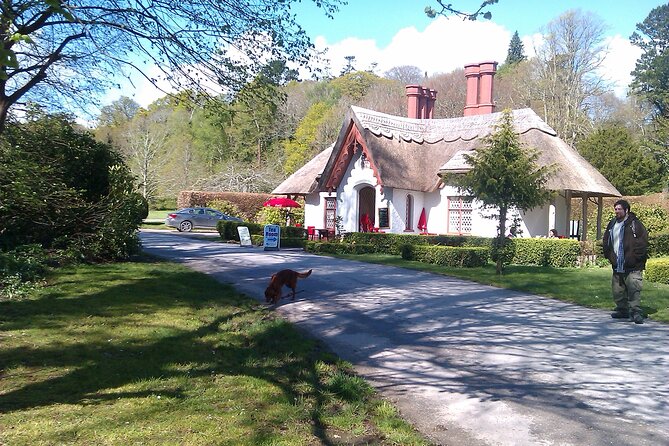
As you continue, you’ll hear about Deenagh Lodge, a thatched cottage that once served as a gate lodge. In the summer months it becomes a popular tea room, which helps explain why this area has long been both protected and visited.
What I like about hearing this detail while walking is that it makes the national park feel like something people shaped over time, not just a modern conservation idea. A lodge like this links the human edge of the landscape to the deeper wild spaces you will soon be walking through.
If you are visiting outside peak summer, you may not have the tea room open. Still, the story gives you a useful mental map of where “the park boundary” used to be, and where old routes likely guided visitors before today’s trails.
Queen Victoria arrived by train, and rail changed the era
One of the more interesting time markers you’ll hear is Queen Victoria’s visit in 1861. She came to Killarney by train, and the guide connects that to the railway opening in 1853.
That matters because it explains why Killarney became such a magnet for visitors. Rail access is what turns a scenic place into a destination people can reach easily. While you are walking, you’re basically seeing the same area that drew high-profile travelers long before modern road trips.
Even if you already know Killarney is scenic, this historical angle gives your trip a sense of flow, past to present. You start the walk with a famous architect story, then move into local park history that shows how travel patterns changed what people experienced here.
Other Killarney walks with the wind behind you

Deer are the headline: sika deer and the comeback of red deer
If wildlife is part of your plan, this tour is built for you. The area is known for sika deer, introduced from Wicklow in 1865, and the national park now has a solid number of them. You may also have a chance at seeing the native red deer, which have a more dramatic conservation story.
Native red deer came close to extinction, but there is now a good size herd in the national park. When guides talk about this, it often comes with practical context, like where deer tend to roam and what times of day can feel better for sightings (even if you cannot control weather, you can control how you move and where you stop).
Some guide moments can be very close. Several walkers describe deer approaching in a way that feels almost unreal if you are used to zoo viewing only. I would not count on a guaranteed “right next to you” moment, but I do think the structure of this walk improves your odds compared with aimlessly wandering.
Pack for wildlife viewing like you would for birding. Stay calm, pause when your guide signals, and give your eyes a few seconds to adjust. A lot of the best sightings are about patience, not speed.
Loch Léin and the quieter paths you might not find alone
A recurring theme of this tour is route choice. Guides often head for areas that feel calmer than what you get from a bus-style loop, including paths around Loch Léin where deer like to roam.
This is where “small group” turns into real value. With up to 12 people, you can actually hear the guide, ask a question, and still move at a natural walking pace. It also makes it easier for the guide to adjust on the fly if someone spots wildlife, or if the best route changes with the ground conditions.
One thing to know: you might encounter a mix of paved and less-paved surfaces, and the tour can include small detours. That is part of why it feels more personal than a typical tour. If you have walking boots, wear them. The tour notes that special footwear is not required, but the practical reality of mud and damp paths means boots are a smart call.
Charles De Gaulle, Ryans Daughter, and pop-culture sightings in the park
Killarney National Park does not just have nature stories. It has human stories that sound like they belong in a movie.
In 1969, Charles De Gaulle spent nearly two weeks in a cottage nearby, with a big security presence. The guide uses this to show that famous people have long been drawn to the same combination Killarney offers now: scenery, privacy, and the kind of “step away from the world” feeling that can be hard to get near cities.
Then there is the film connection. The film Ryans Daughter was filmed in Dingle, but the love scene was done in the national park. That detail is a fun way to connect what you see with a familiar cultural reference. If you recognize the mood of the scene from the film, your brain will start “reframing” the paths around you as cinematic spaces.
If you are a movie fan, you’ll likely enjoy how the guide ties the spot to what filmmakers needed, not just what looks pretty.
Timing, pace, and how long 2 hours can really feel
The tour is listed as about 2 hours, and it starts at 11:00 am. In practice, the route can run a bit longer if you want to extend the walk. That flexibility is handy because Killarney’s weather and daylight can shift your mood fast.
What you should expect from the pace is fairly steady, not a speed hike. It is set up for people with moderate fitness, with some minor hills and a mix of surfaces. Many people describe it as relaxing, and for good reason: the guide keeps you engaged with stories, history, and wildlife stops so you are not just “walking and waiting.”
Still, treat it as a real walk. If you hate getting your shoes muddy, keep that in mind. One of the most common practical trip notes for Killarney walks is weather, because rain in the area can make paths slick.
A good rule: layers beat heavy coats, because you might start cool and warm up once you’re moving. And for deer spotting, slower is better than rushing ahead.
English, mobile tickets, and a small-group feel
This experience is offered in English. Confirmation is sent at the time of booking, and you’ll have a mobile ticket. There is also mention that the start point is near public transportation, which is useful if you are not driving into town.
The tour can run as a maximum of 12 travelers. That cap is one of the smartest parts of the setup, because it keeps the walk interactive. You can hear the guide without shouting, and it feels like you are taking a local walk instead of sitting in a group line.
If you are traveling with kids, the small group format can work well. Several families describe the walk as a manageable way to experience the park without turning it into an all-day ordeal.
Price and value: what $19.36 buys you in Killarney time
At $19.36 per person for about a 2-hour guided walk, the value comes from three things:
First, you pay for a local guide who connects the dots. Instead of learning the history after the fact from a book, you get it in context while you stand in the right place. Hearing about Pugin and the famine shelter while standing near St. Marys Cathedral makes the story stick.
Second, you pay for smarter route choices. This walk can get you to quiet pockets around Loch Léin and into less obvious paths, where wildlife and scenery feel more intimate.
Third, you get small-group attention. Up to 12 people is not huge, especially when wildlife is involved and the guide needs to manage pauses and viewpoints.
Food and drinks are not included, so you’ll want to plan for a snack after, or carry water so you are comfortable during the walk. If you extend the walk, your need for water goes up.
Who this walk suits best, and who might want another plan
This tour is a strong match if you want:
- A quick, guided taste of Killarney National Park
- History tied to what you see, from cathedral beginnings to 19th-century travel and 20th-century famous visitors
- Wildlife chances with deer around Loch Léin
- A pace that does not require serious training
It might be less ideal if you:
- Want a fully paved, zero-mud experience no matter the weather
- Prefer to do everything at your own pace without planned stops or storytelling
It is also worth considering if you are chasing one specific major viewpoint. The walk can focus on smaller paths and wildlife areas rather than every big-name attraction. If you have a must-see, ask your guide on arrival what fits the route that day.
Should you book this Killarney National Park walking tour?
In my view, this is a book-it kind of tour for anyone who is even moderately interested in nature and local history. The price is low for what you get, and the timing makes it easy to fit into a day without burning the whole afternoon.
I would book if you like getting to the heart of a place with help, especially when deer are involved and you want the guide’s eye for where to go. I would also book if you enjoy stories, because the cathedral history, Victoria by rail, and the De Gaulle and film references give your walk depth without making it feel like a museum visit.
Use good shoes, expect some damp ground, and show up ready to walk. If you do, you’ll likely come away feeling like you saw Killarney’s “real” side, the quiet one that sits just beyond town noise.
FAQ
How long is the guided Killarney National Park walking tour?
The walk is about 2 hours, and it can be extended to a longer walk if you want.
Where do we meet for the tour?
Meet your guide at 11:00 am outside O’Sheas Funeral Home, opposite St. Marys Cathedral, Cathedral Place, Killarney.
Is the tour offered in English?
Yes, the tour is offered in English.
What should I wear or bring for the walk?
Special footwear is not required, but if you have walking boots, you are advised to wear them. Food and drinks are not included.
How big is the group?
The tour has a maximum of 12 travelers.
Does the tour end where it starts?
Yes, the activity ends back at the meeting point.
Can I get a refund if I cancel?
You can cancel up to 24 hours in advance for a full refund. If you cancel less than 24 hours before the experience start time, the amount you paid will not be refunded.
The Wider Killarney Pile
The Lakes, Revisited
Elsewhere on The Ireland Traveler
Lately added to the Killarney pile
- The Cliffs of Moher and Burren National Park Private Tour.
★ 5.0 · 3 reviews - Private Ring of Kerry Tour in Ireland
★ 5.0 · 3 reviews - Killarney: Private transfer to & from Dublin | Premium Cars
★ 5.0 · 3 reviews - Kayak to Innisfallen island. Killarney. Guided. 2½ hours.
★ 5.0 · 3 reviews - Private Dingle and Slea Head
★ 5.0 · 3 reviews - Killarney: Brewery Tour and Tasting
★ 5.0 · 3 reviews
More Killarney National Park Tours, side by side.
 ★ 5.0Guided Climb of Carrauntoohil with KerryClimbing.ieFrom $961,114 reviews
 ★ 4.7Lakes of Killarney: Boat CruiseFrom $18778 reviews
 ★ 4.5NO 1 Ring of Kerry Tour inc Killarney Lakes & National ParkFrom $72620 reviews
 ★ 5.0Killarney National Park TourFrom $60503 reviews
 ★ 4.5Best Ring of Kerry Tour ex Killarney inc Killarney National ParkFrom $72463 reviews
 ★ 4.9Kerry: Guided Horse Riding Tour in Killarney National ParkFrom $115226 reviews
 ★ 5.0Self-Guided Bike Tour of Killarney National Park, Muckross Gardens & WaterfallFrom $24223 reviews
 ★ 5.0Jaunting Car Tour in Killarney National ParkFrom $66153 reviews
Other lists this one is on