
REVIEW · WATERFORD
Guided Walking Tour in stunning county Waterford Ireland
Kilmacthomas tells its story one step at a time. I like the way this walk blends local storytelling with real-world history, then slows down for mindfulness stops along the Waterford Greenway. It is a smart, small-group way to see the town and its countryside without feeling like you are rushing between facts.
Two things I especially like: you get a tight loop built around major sites like the 1851 workhouse grounds and the curved railway viaduct, and you also get guided pauses to notice flora, fauna, and river sounds. One possible drawback to consider is the subject matter, the workhouse and pauper burial area are heavy, and one of the stops uses viewing from a gateway rather than full access because the land is privately owned.
You should come ready for a mixed bag, history plus nature, plus a storyteller who answers questions and keeps the group moving at an easy pace. The tour runs about 2 to 3 hours, starts at 10:00 am, and caps at 15 people, so you usually get room to ask what you want.
In This Review
- Key highlights you will actually feel
- Kilmacthomas and the Waterford Greenway, a loop you can do comfortably
- Your local guide, the Seanachaí style of storytelling
- Stop 1: the Kilmacthomas Workhouse grounds and what they reveal
- Stop 2: the Paupers mass grave viewing, gateway-only access
- Stop 3: New Bridge and the 4000 BC archaeological story
- Mindfulness Section 1 on the Greenway: flora, fauna, and slow attention
- Stop 4: the Railway Station and Signal House, how rail built local life
- Stop 5 and the village main street: characters who shaped Kilmacthomas
- Stop 6 to Stop 7: the viaduct viewpoints and Flahavan’s Mill
- Public park time at the viaduct: engineering plus moments in place
- Stop 8: the Woollen Mill and the era of local jobs
- Mindfulness Section 2 along the River Mahon: ducks, fish, and bird song
- Mindfulness Section 3 on a country lane: pastures, birds, and a last sensory reset
- The coachhouse and coffee origin story from the 16th century
- Price and value: why $21 makes sense for what you get
- Who this tour fits best
- Should you book this Kilmacthomas guided walk?
Key highlights you will actually feel
- Local storyteller energy in a small group: maximum 15 people, and the guide adjusts as the group needs.
- Workhouse to viaduct to mill: the itinerary links poverty, industry, and engineering in one loop.
- Three mindfulness moments: built-in stops for breath, senses, and wildlife sounds along the Greenway and River Mahon.
- Flip-card details at each stop: extra context without needing to read everything while you walk.
- Free admission at the stops: you still pay the tour fee, but many site visits are straightforward.
- Value for $21: you are buying guidance, pacing, and context, not just a route.
The Viking Triangle and the Greenway, continued
- Courtown Woodland Guided Tour★ 5.0 · 23 reviews
- Guided Walking Tour in stunning county Waterford Ireland★ 5.0 · 14 reviews
Kilmacthomas and the Waterford Greenway, a loop you can do comfortably
This tour is built around Kilmacthomas in County Waterford, with the Waterford Greenway acting like the spine of the walk. You start at the Greenway car park at the Workhouse, and you end back there, which makes the whole thing feel simple from the start.
The duration is about 2 to 3 hours, and it is described as a leisurely loop with short stops, not a grind. In practice, that means you can wear comfortable walking shoes and expect plenty of time to look closely at buildings, bridges, and the little nature details the guide points out.
Group size matters here. With a max of 15 travelers, you are more likely to hear every story clearly and ask questions without feeling like you are talking over everyone. If you are traveling as a pair or a solo traveler, this size is a sweet spot, social but not crowded.
Practical tip: bring a charged phone for the mobile ticket and a light layer even in mild weather. The tour requires good weather, so you do not want to be underdressed if the day turns damp or windy.
Your local guide, the Seanachaí style of storytelling
The tour includes a local guide, listed as a Seanachaí, which is the traditional Irish role of storyteller. That matters because the tour is not just about dates and names. The guide weaves the details into people, places, and everyday life, which is why the tone feels personal instead of lecture-like.
Guides named in experience notes include Stíofán and Stephen. What comes through clearly is that the guide is attentive to the group, takes questions, and does not push you past the good parts.
If you like your tours to feel human, this format helps. You are given time to stand, look, and absorb, then move on with a new thread of story. Even better, the route is designed so the guide can point out things you might otherwise miss, like small markers, viewpoints, and where older industry sat in the landscape.
Stop 1: the Kilmacthomas Workhouse grounds and what they reveal
The walk begins at the Kilmacthomas Workhouse story, with a focus on what it meant for the poor in the locality. The workhouse opened in 1851, and the tour frames it as a system built to cope during harsh times.
You will visit key areas across the grounds, including the Poorhouse buildings, an isolation house, and a mortuary. This is where the tour earns its weight. You are looking at architecture and site layout, but the guide keeps tying it back to lived reality, why people were there, and how the system controlled daily life.
After that, you walk toward the Paupers graveyard. The pace here stays calm, so you can take in the setting. Just plan your mindset. This part is not designed to be cheerful, and that is the point.
Stop 2: the Paupers mass grave viewing, gateway-only access
Next comes the Paupers Gravesite, presented as a stark reminder of difficult conditions faced by workhouse residents. You view the Paupers mass grave from a gateway, and there is also a card-based explanation using flip cards.
A key consideration: access is limited because the site is on privately owned land. So if you were hoping for a close-up walk into the burial area itself, you will not get that here. The guide handles it sensitively and keeps you oriented, but it is good to know upfront.
If you are the kind of person who needs context before you judge a place, this stop is useful. You get the why behind the visuals, rather than just being told to look and move on.

Stop 3: New Bridge and the 4000 BC archaeological story
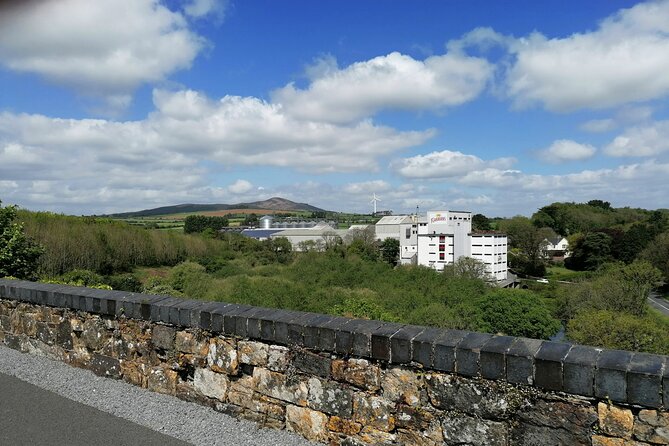
At the New Bridge stop, the tour shifts into a longer view of human presence. You will hear a story about archaeological digs suggesting the area of Kilmacthomas goes back to 4000 BC, older than the pyramids of Egypt, as the tour frames it.
The takeaway is not to treat this like a dry textbook. The guide uses flip cards to explain what archaeologists found recently, then connects it to what you can still see in the area today. If you enjoy “how do we know?” details, this is a nice moment because it brings science and storytelling together.
Possible drawback: if you only want fully confirmed, academic certainty, this may feel more like a guided explanation than a formal report. But for most visitors, it hits the sweet spot between wonder and grounded context.
Mindfulness Section 1 on the Greenway: flora, fauna, and slow attention
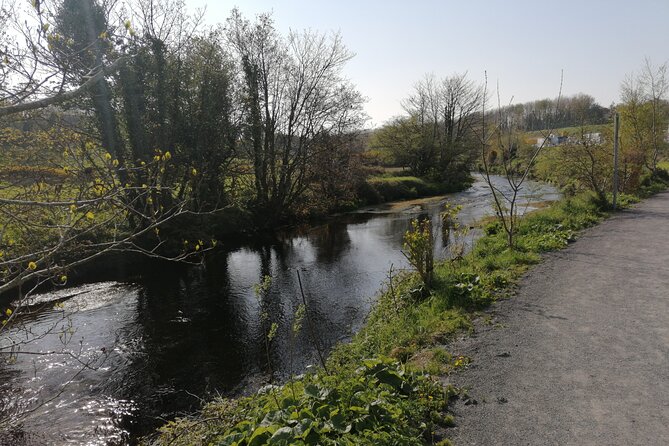
Then the tour gives you a breather with Mindfulness Section 1. The prompt is simple: take a breath, open your senses, and let the guide cue what to notice.
You also get a flip-card explanation of the type of flora and fauna you might experience on the Waterford Greenway as you walk toward the village railway station. It is a clever reset because it pulls you out of the heavy workhouse mood and into everyday nature.
What makes this section work is timing. You have learned about people and systems, then you step into a sensory walk where you can hear birds, see plant textures, and notice how the trail sits in the wider area. If you came on a holiday and your brain is tired from museums, this kind of pause is refreshing.
Stop 4: the Railway Station and Signal House, how rail built local life
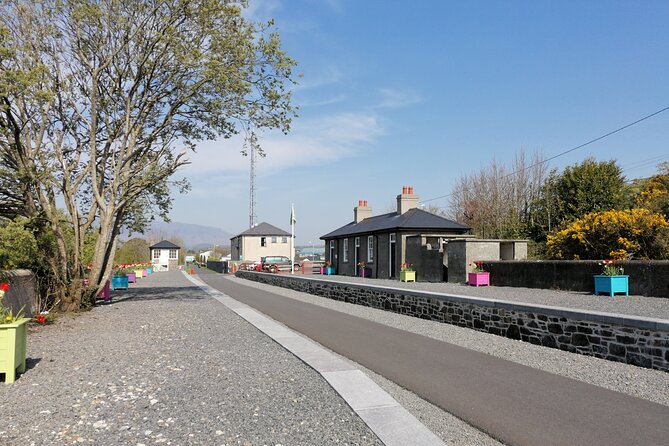
The Railway Station and Signal House stop focuses on the heyday of Ireland’s railway network. These structures are presented as vital to the local economy, and the guide explains how rail changed what could move, where jobs could exist, and how goods and people connected.
This is one of the best stops if you like architecture with function. You are not only admiring old stone and steel, you are being shown how the buildings fit into a working system.
Even if rail history is not your main interest, you will probably enjoy the way the guide links the station to the rest of the story in town, including mills and industry later shown on the viaduct and along the village loop.
Stop 5 and the village main street: characters who shaped Kilmacthomas
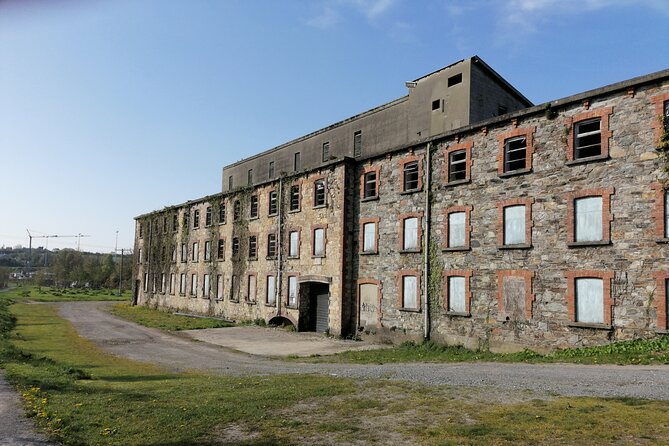
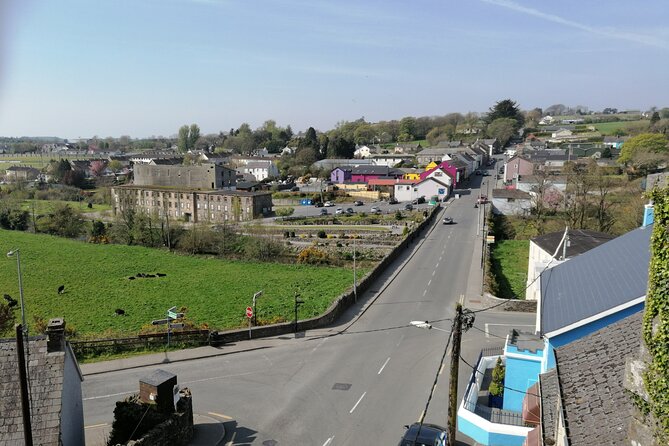
Back in the village, the tour highlights the main street and the famous and infamous characters connected with Kilmacthomas. You get flip-card descriptions of what people looked like and how they affected local history.
This is fun because it turns geography into story. A street becomes something more than a street when you understand who lived there, worked there, argued there, or built reputations there. The guide’s storytelling keeps it lively without turning it into gossip.
If you like tours that bring a place to life through people, not just buildings, you will likely find this stop one of the most satisfying. It also helps you connect the earlier heavy history to the everyday town narrative.
Stop 6 to Stop 7: the viaduct viewpoints and Flahavan’s Mill
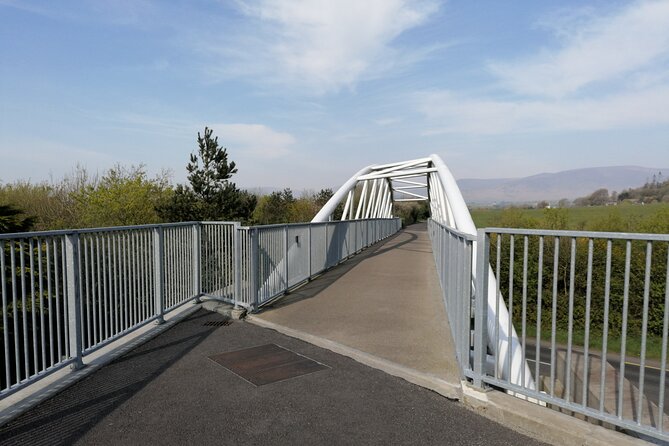
One of the most visually dramatic parts comes at the Kilmacthomas Railway Viaduct. From up on the curved viaduct bridge, you see the site of Flahavan’s Mills, described as producing high-quality oatmeal products since the 18th century.
Then you get a broader look at the curved viaduct bridge from multiple angles, plus time at the base footings. The tour frames the viaduct as a magnificent feat of engineering, and it shows you why that matters. You can literally see the scale of the work and understand it as human effort carved into the landscape.
This section is short, but it is packed. You are learning about mills, watching the bridge structure, and getting a sense of how rail and industry supported each other.
Public park time at the viaduct: engineering plus moments in place
Still near the viaduct, the public park area adds another layer. The guide talks about historic moments that happened in this location, using the surroundings to anchor those events.
This stop works well because it gives you a practical break in the middle of the walk. You are not walking nonstop, you can stand, take photos, and re-center before the tour moves into the mill and coachhouse endings.
Stop 8: the Woollen Mill and the era of local jobs
The next major industry stop is the Woollen Mill. The tour explains that it was once a major employer for locals during the 18th and 19th centuries.
Even if you know nothing about textile production, the guide’s explanation helps you picture why a mill mattered. It was work, it was trade, and it was a whole web of local livelihoods, from labor to supply to families tied to wages.
This is a good stop after the railway and viaduct moments, because the tour is effectively building a timeline. Rail helps goods and movement. Mills help employment and production. The village ties it together with people and character stories.
Mindfulness Section 2 along the River Mahon: ducks, fish, and bird song
Mindfulness Section 2 brings you to the banks of the River Mahon. Here the guide focuses on tranquility, with flip-card cues about wildlife and nature living in the area.
The guide also describes the soundscape, ducks, fish leaping, water flowing, pollinators, and bird song. This is the kind of moment that makes the word sightseeing feel too cold. You are being asked to listen and look with care.
Practical tip: if you have the option, step just a bit away from the busiest parts and let your eyes relax. The guide is setting you up to notice the small motion of wildlife, not just the broad view.
Mindfulness Section 3 on a country lane: pastures, birds, and a last sensory reset
Before the walk returns fully to the Greenway, there is Mindfulness Section 3 on a country lane. The theme stays the same, breath, senses, and a guided card explanation of the flora and fauna you might notice.
You also get views into open pastures and more bird song. This is a great final nature break because it helps you transition from buildings and industry back into walking mode, with your brain still switched on.
If your trip day feels packed, this ending pattern is worth appreciating. You do not just finish and walk away from the stories, you finish while still absorbing the environment around them.
The coachhouse and coffee origin story from the 16th century
The last stop is the coachhouse, connected to the workhouse grounds. You will hear stories about characters linked to the building on the grounds, and the guide shares a story about coffee and how it began in the 16th century.
Even if you think of coffee as a modern comfort, the tour’s angle is historical and cultural. It is another reminder that daily life and shared habits are part of history too, not only the big events.
This ending has a nice rhythm. You start with a system built for hardship, move through rail, mills, and town characters, and end with something that feels more personal and human. It gives the walk a rounded feel.
Price and value: why $21 makes sense for what you get
At $21 for a 2 to 3 hour guided walking tour, you are paying mostly for context and pacing, not for museum-style entry fees. Many of the stop visits are presented as free, and you are also getting admission free moments in the flow of the walk.
What makes it good value is the structure. You do not have to figure out what to look at first, and you do not have to guess what the buildings mean. The guide supplies that glue, plus the flip cards help you remember what you just learned.
What is not included is also clear. There are no snacks included after the tour, so plan to buy food and beverages around Kilmacthomas village. If you like, you can also bring water so you stay comfortable during the quieter mindfulness stretches.
Given the small group limit of 15, the storytelling style, and the mix of nature plus architecture, this is the kind of spend that feels like buying local time from someone who cares about the place.
Who this tour fits best
You will probably love this tour if you want a walk that feels like a story, not a checklist. It is especially good for people who like a blend of history plus ecology, and for anyone who appreciates guided pauses where you notice what is around you.
It also works well for first-time visitors to County Waterford because it gives you a focused slice of the region in one loop. You get the town, the Greenway trail context, and the industrial and transport heritage, without needing to drive between stops.
Should you book this Kilmacthomas guided walk?
I would book it if you want a small-group morning where the guide does the heavy lifting, connects the dots, and still gives you time to breathe. The combination of workhouse history, railway and mill architecture, and three mindfulness breaks is a rare mix at this price.
Skip it or go with extra care if you strongly dislike darker historical subjects, since the workhouse and pauper burial area are part of the route. Also note that at least one viewing point is gateway-only due to private land, so you should expect limited access there.
If you can handle heavy topics with respect, and you enjoy listening as much as looking, this is an easy yes for a Waterford morning.
The Wider South East Ireland Pile
The Ancient East, Continued
Elsewhere on The Ireland Traveler
Lately added to the South East Ireland pile
- Guided Walking Tour in stunning county Waterford Ireland
★ 5.0 · 14 reviews - Courtown Woodland Guided Tour
★ 5.0 · 23 reviews - Hurling Experience in Kavanaghs Bar, Freshford, Kilkenny
★ 5.0 · 31 reviews - Tickets to Explore Ireland’s Global Garden
★ 4.0 · 32 reviews
More Waterford and the Ancient East, side by side.
 ★ 4.5House of Waterford Crystal Guided Factory TourFrom $222,303 reviews
 ★ 5.0Skip the Line: Hook Lighthouse Entrance Ticket and Guided TourFrom $16470 reviews
 ★ 4.8Waterford: House of Waterford Factory TourFrom $20256 reviews
 ★ 4.5Dublin to Kilkenny Castle and House Of Waterford Crystal Day TourFrom $195177 reviews
 ★ 4.5Waterford Treasures: Epic Walking TourFrom $16152 reviews
 ★ 4.5Waterford Treasures: Medieval Museum Admission TicketFrom $16132 reviews
 ★ 4.5Waterford Treasures: Bishop’s PalaceFrom $1653 reviews
 ★ 4.7Waterford Treasures: Walking Tour of the Viking TriangleFrom $1543 reviews
Other lists this one is on