
REVIEW · IRELAND
Bike Tour Along The Historic Waterways Of Dublin
Dublin on two wheels feels like a cheat code. This guided ride strings together waterfront views and major landmarks with enough breaks to make it enjoyable, not exhausting. You start with the new cycle lane along Dublin Bay, then roll through parks, stadium energy, cemeteries, and the Kilmainham area.
What I like most is the way the route mixes famous stops with quieter corners, like Bull Island and Tolka Valley Park, without turning the day into a sprint. I also like that the tour is led in English by a guide such as Ben, who brings a careful, safety-first style and enough context to make each place click.
One thing to consider is the physical side: this is for people who can comfortably cycle in an urban environment for hours, and the bike quality can vary (a few past riders noted a less-than-perfect seat and gears).
In This Review
- Key highlights at a glance
- Dublin waterways on a guided bike route, without the traffic headache
- Where you start in North City, and how pickup actually works
- The new cycle lane along Dublin Bay: where the day really begins
- Bull Island and that 200-year-old sea wall cafe stop
- Guinness family parks, then Croke Park and the heartbeat of Irish sport
- Glasnevin Cemetery: quirky characters, public tour time, and a solemn tone
- John Kavanagh The Gravediggers: your lunch break that feels very Dublin
- Tolka Valley Park and the cycle-path feeling you want in a good city
- River Liffey and the Irish National War Memorial Gardens
- Brief outside Kilmainham Gaol, plus what makes Royal Hospital Kilmainham special
- Croppies Acre and the Collin Barracks plus Guinness Brewery backdrop
- Bikes, comfort, and fitness: what you need before you go
- Price and value: $198.25 for a full Dublin loop
- Who should book this Dublin bike tour
- Should you book this Bike Tour Along The Historic Waterways Of Dublin?
- FAQ
- How long is the Dublin bike tour?
- What does the tour cost?
- Where do I meet the guide?
- Do you offer pickup?
- What is included in the price?
- Is lunch included?
- Which stops are part of the itinerary?
- Are admission fees included for every stop?
- What should my fitness level be?
- What happens if the weather is bad?
Key highlights at a glance
- Dublin Bay cycle lane start with sea air and stories about transport infrastructure
- Bull Island sea wall cafe stop tied to Captain Bligh of Mutiny on the Bounty fame
- Big Dublin anchors, explained well including Croke Park and the GAA story
- Glasnevin Cemetery tour time with a mix of quirky characters and solemn moments
- Kilmainham area pairings with stops near Kilmainham Gaol and Royal Hospital Kilmainham
- River Liffey War Memorial Gardens with a focus on WW1 remembrance and symbolism
Other bikes worth an Irish afternoon
- Cycle Dublin – Bike & ebike Tours★ 5.0 · 748 reviews
- Dublin Panoramic e-Bike Tour with Howth Adventures★ 5.0 · 544 reviews
- Dublin: Bike & E-Bike Tour with a Local Guide★ 4.6 · 477 reviews
- E-Bike & Bike Tour with a Local Guide in Dublin★ 5.0 · 412 reviews
Dublin waterways on a guided bike route, without the traffic headache
This is the kind of Dublin outing that works because it keeps moving, but it also keeps you oriented. You are not stuck in buses, crawling with traffic, or fighting for tiny parking spots. Instead, you glide through the city along bike routes and paths, with regular stops so you can look around, stretch your legs, and enjoy the view.
The tour’s big strength is its mix of settings. You get proper “Dublin” scenery, like the River Liffey and Dublin Bay, plus parks that change the whole mood. Then it ramps up into sites tied to sport, national identity, and memory, including Glasnevin and the Kilmainham complex. If you want one day that covers a lot of ground and still feels personal, this route makes sense.
It also stays practical. You ride, you park the bikes when you need to, and you get just enough time at each stop to understand what you’re looking at. Many stops are free to view, which helps keep the day predictable.
Where you start in North City, and how pickup actually works
You meet at 37 Capel St, North City, Dublin (D01 X2E5), and the tour ends back at the same meeting point. If you are staying close, you can use the pickup option. The guide can meet you at your hotel or accommodation if you are within 1 km of the start, up to 20 minutes before the scheduled time, then walk with you to the tour start.
This matters because Capel Street is a logical place to base a day like this. It keeps you near central Dublin, and it reduces the friction of trying to navigate bike pickup on your own. Also, since the tour is private, you are just coordinating your group, not a crowd.
You’ll receive confirmation at booking, and you’ll be able to use a mobile ticket. The tour is offered in English, and it is near public transportation, which is useful if you want an easy way to get there and back.
The new cycle lane along Dublin Bay: where the day really begins
The first push is along the coast on a newly completed cycle lane. This is not just a scenic warm-up. The guide talks about the history of transport infrastructure in the area while you take in views of Dublin Bay and soak up the sea air.
Why I like this setup: it gets you comfortable early. You ease into the rhythm of cycling in a group while the surroundings do the heavy lifting. If you’ve ever ridden in a strange city and felt tense about where you’re going, this is a calmer way to start because your direction is clear and the scenery helps you keep your bearings.
Timing-wise, you should expect a start-to-finish day of about 5 to 8 hours depending on pace and time at stops. Some stops are short, like quick park breaks, and others are longer like Glasnevin and lunch time.
Bull Island and that 200-year-old sea wall cafe stop
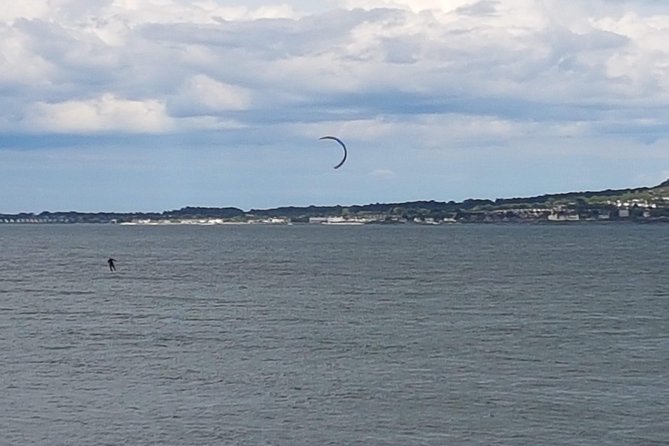
One of the best early moments is Bull Island. The tour builds in a pause for a cuppa and snack at a cafe perched upon a 200 year old sea wall linked to Captain Bligh from Mutiny on the Bounty. From there, you also learn how a major nature reserve in Dublin Bay was accidentally formed.
This stop is valuable for two reasons. First, it’s a real break that feels different from typical sightseeing pauses. Second, it connects human history, maritime stories, and nature in a way that’s easy to remember. You are not just looking at water, you’re learning why that coastline got shaped the way it did.
The scheduled time here is about 30 minutes, and admission is listed as free for this stop.
Other pieces of the past in Dublin


Guinness family parks, then Croke Park and the heartbeat of Irish sport
After Bull Island, you move into an elegant park area tied to the Guinness family, with tree-lined laneways that invite slow strolling. This section works as an emotional reset. You go from sea-air calm to shaded park lanes, with less “tour bus” energy and more local pace.
Then the route reaches Croke Park Stadium for a short stop, about 15 minutes. You’ll park and stand beneath the stadium, which holds about 83,000 and is described as the third largest in Europe. The guide shares the story of the GAA and why it matters to Irish communities. There’s also mention of a nearly forgotten man who helped kickstart and shape the organization, plus a tragic thread linked to that foundation story.
Short stop lengths can feel like a gamble, but here the plan is clear. You’re getting the emotional punch of the place plus the context that makes it meaningful, even if you are not spending hours inside.
Admission for this stadium stop is free, so the time is really about story and atmosphere.
Glasnevin Cemetery: quirky characters, public tour time, and a solemn tone
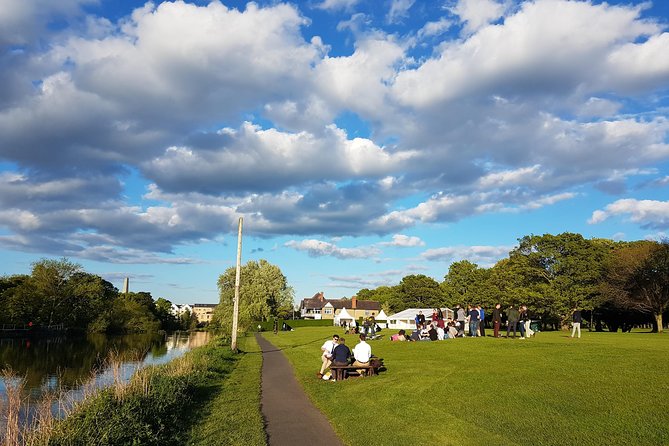
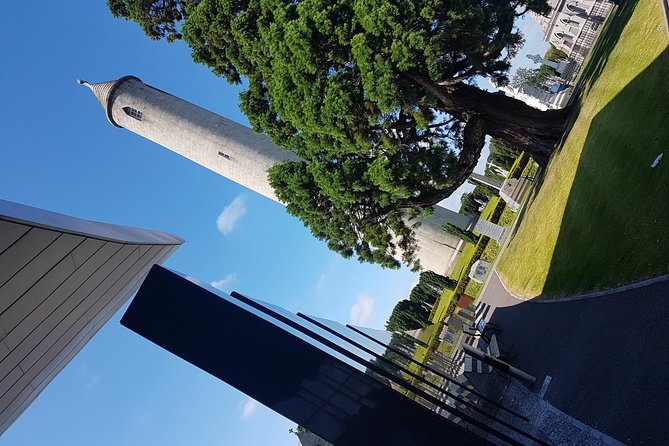
Next comes Glasnevin Cemetery, Ireland’s national cemetery. This is one of the stops where you should mentally switch gears, because the tone turns quieter and more reflective. You join a public tour and hear about notable people, plus quirky and lesser-known characters connected to the cemetery.
The scheduled time is about 1 hour 30 minutes, and admission is not included. That matters for budgeting, and it’s also a reminder that this portion is more like an organized visit than a photo stop.
Why I think this time block works on a bike day: it balances the “city mode” with a deeper pause. After the motion of parks and stadium scale, you get to slow down and absorb meaning. If your day tends to feel rushed, this stop is a built-in fix.
John Kavanagh The Gravediggers: your lunch break that feels very Dublin
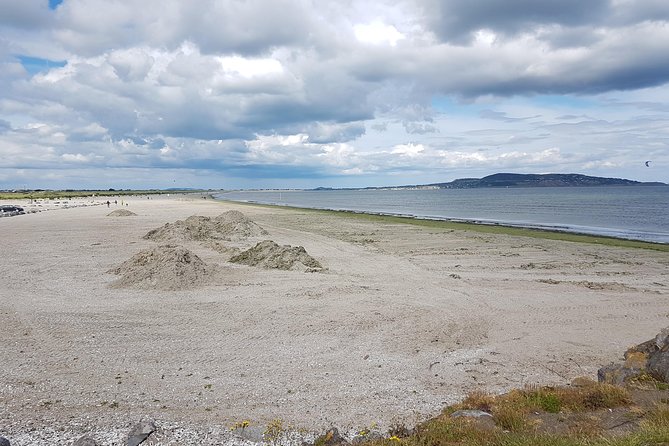
After Glasnevin, the tour heads to John Kavanagh The Gravediggers for a hearty lunch. The time scheduled is 45 minutes, and this stop is listed as free for admission, but lunch is not included in the tour price.
So treat this as your chance to fuel up properly. It’s not just about eating, it’s also about the pub’s personality. The name connects to the hard-working folks who have been frequenting the place since it opened in 1833.
If you skip lunch, you may feel it later, especially because the route includes long stretches and several park rides. If you do eat, you’ll be able to enjoy the rest of the day with less strain.
Tolka Valley Park and the cycle-path feeling you want in a good city
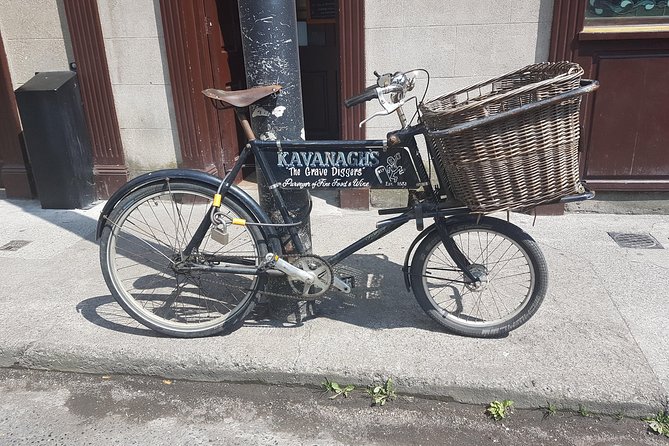
Later you pass through Tolka Valley Park, where the highlight is a cycle path recently constructed through lush green foliage. The scheduled stop time is 10 minutes, and admission is free.
This is the kind of stop that makes a bike tour feel like a bike tour. Instead of “look and move,” you get a short moment where the path itself is the attraction. It’s also a useful stretch break after earlier history-heavy stops.
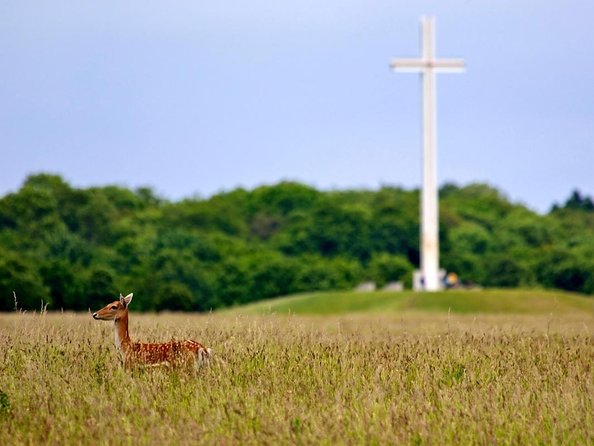
Then the route continues into a large enclosed park described as the largest enclosed park of any capital city in Europe, with a starting point in 1662 when the area began with red deer, which still roam there today. You’ll experience the park at a relaxed pace, and that matters because big parks can otherwise feel like walking chores.
River Liffey and the Irish National War Memorial Gardens
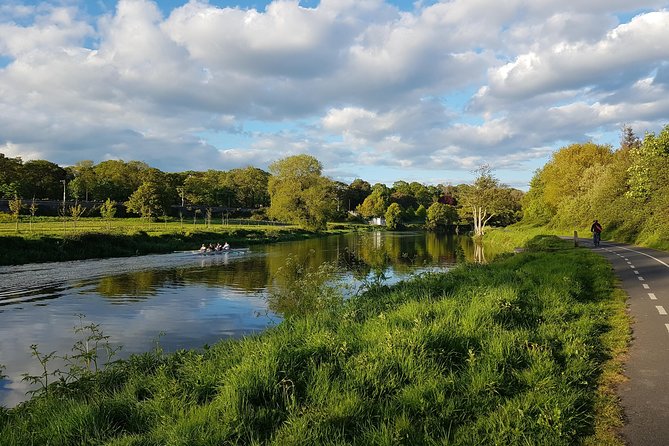
One of the most moving segments is the stop at Irish National War Memorial Gardens. You cycle along a path by the River Liffey, and you can watch rowers pull in the river, which adds a quietly modern Dublin scene to a memorial setting.
Then you stop by the memorial salute for 49,400 Irishmen who fought in World War 1, often forgotten in older times. You also hear a lesser known story about how an Irish Nationalist escaped certain execution through cunning and guile, plus the significance of two swans.
This is a stop where your time isn’t about checking off sights. It’s about understanding what you are looking at. If war memorials tend to feel flat for you, the swans and the story about escape are the kind of details that can make the message stick.
The scheduled time here is about 10 minutes, and admission is free.
Brief outside Kilmainham Gaol, plus what makes Royal Hospital Kilmainham special
Next is Kilmainham Gaol. The stop is brief, about 10 minutes, and admission is not included. You’ll stop outside the 18th-century prison, and the guide covers how it was used across eras, including public executions, the Great Famine, and the executions of leaders of the 1916 Rising.
Because the stop is outside, don’t expect a long, detailed walking tour of the building itself. The value is context: you see the place and understand why it matters before you move on.
Right after that comes Royal Hospital Kilmainham. You get a picturesque view over the public gardens, described as a replica of the original laid out in the 17th century. Beside it is what was built as a military hospital, and now it’s part of the Irish Museum of Modern Art.
This pairing is smart. Gaol gives you the hard edge. The hospital and gardens give you a calmer, architectural side of Kilmainham, so the day doesn’t feel emotionally one note.
Croppies Acre and the Collin Barracks plus Guinness Brewery backdrop
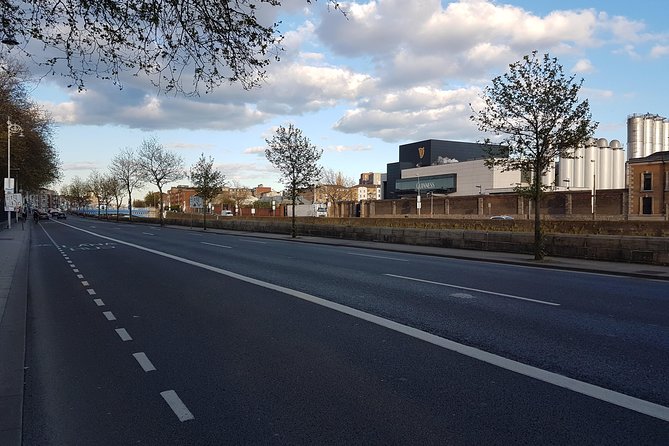
Your last stop is Croppies Acre Memorial Park, which sits behind Collins Barracks National Museum and in front of the Guinness Brewery backdrop. It’s tied to legend about a mass burial grave for victims of the 1798 Rebellion.
The scheduled time is about 5 minutes, and admission is free. Even with a short stop, this one lands because the setting does two things at once. You get remembrance, and you get the Dublin “real life” contrast of modern landmarks looming nearby.
If you want a final photo moment that isn’t just a generic city view, this is one.
Bikes, comfort, and fitness: what you need before you go
You get the practical items covered: use of bicycle, a safety helmet, and a high visibility vest. The tour is also private, so only your group participates, not random drop-ins.
Now the big reality check: you should have a reasonable level of fitness and be comfortable cycling a bike in an urban environment. The tour is listed as needing strong physical fitness. That doesn’t mean you need to be an athlete, but it does mean you should not plan this if you expect casual cruising the whole time.
Comfort is worth thinking about because a few riders have noted that one bike felt old, with gears that did not change well and limited seat padding. That’s not something you can fully control as a traveler, but it’s worth asking for the best available bike at check-in, and it’s smart to wear supportive clothing.
If you’re unsure, choose day-of comfort items like breathable layers and water. Also plan for weather, since the experience requires good weather and can be rescheduled or refunded if it’s canceled for poor conditions.
Price and value: $198.25 for a full Dublin loop
At $198.25 per person, this is not a budget “quick tour,” but it also isn’t just an expensive way to ride around. For that price, you’re getting:
- a guided ride with English commentary
- a private group setup
- a provided bicycle plus helmet and high visibility vest
- a route that mixes multiple major areas: Bay, parks, stadium, cemetery, Kilmainham, and memorial sites
Lunch is the one clear extra cost since it is not included. If you eat at the John Kavanagh The Gravediggers stop, plan for that as your main on-the-day expense.
In plain terms, this is good value if you want one day that covers a lot of Dublin with less stress than self-guided biking. It’s less good value if you only want a single neighborhood, since the day is built as a full loop.
Who should book this Dublin bike tour
This tour fits best if you:
- like history told in an on-the-road way, not just inside museums
- want to combine parks and waterways with key Dublin landmarks
- can cycle comfortably in cities and handle a longer half day
- want a guided experience with safety gear and a private group feel
It may be less ideal if you:
- dislike cycling or feel anxious on busy streets
- need frequent, long stops, because some locations are brief by design
- are looking for an easy family pace or a fully seated, museum-style day
Should you book this Bike Tour Along The Historic Waterways Of Dublin?
I’d book it if your goal is to see Dublin in a way that feels efficient and human at the same time. The route hits several “must understand” places, but it does it by bicycle, so you get movement and scenery, not just indoor time. If you enjoy learning the why behind landmarks, the guide-driven context, including the kinds of details tied to Bull Island, Croke Park, Glasnevin, and Kilmainham, is a big part of the appeal.
If you care a lot about bike comfort or you’re unsure about cycling for hours, you should check in about the bike selection and plan for comfort on the day. And if weather is unreliable when you travel, keep flexibility in mind since the experience requires good conditions.
FAQ
How long is the Dublin bike tour?
The tour runs about 5 to 8 hours (approx.), depending on the day and timing at stops.
What does the tour cost?
The price is $198.25 per person.
Where do I meet the guide?
The meeting point is 37 Capel St, North City, Dublin, D01 X2E5, Ireland.
Do you offer pickup?
Yes. If your hotel or accommodation is within 1 km of the start location, the guide can meet you up to 20 minutes prior to the scheduled start time and then walk with you to the start point.
What is included in the price?
Included are the use of a bicycle, a safety helmet, and a high visibility vest.
Is lunch included?
No. Lunch is not included in the tour price.
Which stops are part of the itinerary?
The route includes Bull Island, Croke Park Stadium, Glasnevin Cemetery, John Kavanagh The Gravediggers, Tolka Valley Park, a large enclosed park with red deer since 1662, Irish National War Memorial Gardens, a brief stop outside Kilmainham Gaol, Royal Hospital Kilmainham, and Croppies Acre Memorial Park.
Are admission fees included for every stop?
Not for every stop. Glasnevin Cemetery and Kilmainham Gaol are listed as admission not included, while many other stops list free admission.
What should my fitness level be?
You should have a strong physical fitness level and be comfortable cycling a bike in an urban environment.
What happens if the weather is bad?
The experience requires good weather. If it is canceled due to poor weather, you will be offered a different date or a full refund.
Two Wheels and a Headwind
The Wider Dublin Pile
Elsewhere on The Ireland Traveler
Lately added to the Dublin pile
- Waterford Crystal and Kilkenny Full-Day Rail Tour from Dublin
★ 5.0 · 3 reviews - Turtle Bunbury’s Dublin: A Self-Guided Audio Tour from a Celebrated Author
★ 5.0 · 3 reviews - Cliffs of Moher and The Burren Private Tour from Dublin
★ 5.0 · 3 reviews - Dublin Full-Day Tour through Boyne Valley
★ 5.0 · 3 reviews - Rock Of Cashel And Blarney Castle Private Chauffeur Full Day Sightseeing Tour
★ 4.5 · 3 reviews - Private Irish Fusion Meal in a Modern Home in Skerries, Dublin
★ 5.0 · 3 reviews
More Cycling Tours, side by side.
 ★ 5.0Cycle Dublin – Bike & ebike ToursFrom $42748 reviews
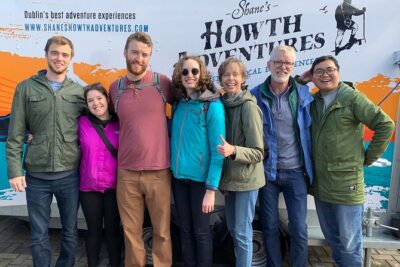 ★ 5.0Dublin Panoramic e-Bike Tour with Howth AdventuresFrom $83544 reviews
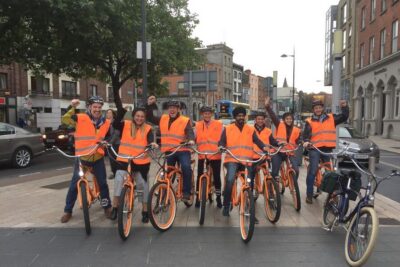 ★ 4.6Dublin: Bike & E-Bike Tour with a Local GuideFrom $32477 reviews
 ★ 5.0E-Bike & Bike Tour with a Local Guide in DublinFrom $42412 reviews
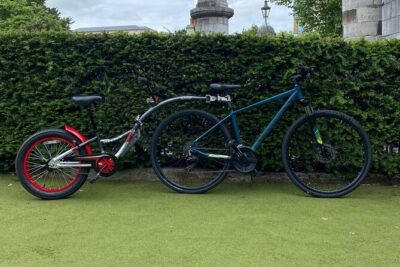 ★ 4.5Dublin Full Day Bike RentalFrom $48361 reviews
 ★ 4.7Dublin: Guided Bike & E-Bike TourFrom $40308 reviews
 ★ 5.0Self-Guided Bike Tour of Killarney National Park, Muckross Gardens & WaterfallFrom $24223 reviews
 ★ 5.0Aran Islands Bike Tour with Tea & Scones – Day Trip to Inisheer from DoolinFrom $151217 reviews
Other lists this one is on