
REVIEW · CLARE
Aran Knitting, History and Heritage in the Burren
Knitting by a fairy fort, in County Galway. This Aran Knitting workshop turns a family farm setting into a hands-on lesson in cable patterns, wool types, and the meaning behind traditional stitches, plus a proper sit-down break with Irish treats. You’ll start in Crannagh and spend about 2 hours learning how patterns work, not just copying them.
Two things I really like: Stephanie’s teaching is patient and practical, even for first-timers, and you knit along with a prepared cable pattern during the session. I also love the setting, because the studio sits beside a 1000 year old fairy fort behind a thatched cottage, so the heritage theme feels real, not tacked on.
One possible drawback: this is a focused workshop, not a long sightseeing day. If you’re hoping for a full, big Burren tour, you’ll want to pair it with other stops, since the main action happens around the farm studio.
In This Review
- Key highlights
- Faerie Fort Farm: where Burren heritage becomes practical
- What happens during the 2-hour Aran Knitting session
- Stephanie’s teaching style: patient, practical, and not rushed
- Learning cable and stitch patterns you can actually reuse
- Wool types and stitch meanings: why the “why” matters
- Knit your prepared cable pattern, then plan your own sweater
- The included Irish food: a warm break that feels like home
- Getting there in Crannagh, and fitting it into a Burren day
- Mobile ticket and private group feel: small scale, big comfort
- Price and value: why $78.27 can make sense
- Who should book this Aran Knitting heritage workshop
- Should you book Aran Knitting, History and Heritage in the Burren?
- FAQ
- How long is the Aran Knitting workshop?
- What is the price per person?
- Where does the workshop start and end?
- Is it a private tour?
- What food and drinks are included?
- Is the class suitable for beginners?
- Is there free cancellation?
Key highlights
- Faerie Fort farm setting by a 1000 year old fairy fort, right behind a thatched cottage
- Origins, wool choices, and stitch meanings explained in the same session as hands-on knitting
- Cable and stitch pattern examples, so you see how designs get built
- You knit a prepared cable pattern during the workshop
- Beginner-friendly, one on one support, with plenty of time and no rushing
- Homemade Irish food included, including smoked salmon on brown bread and porter cake
More days out across the limestone
- Galway to Cliffs of Moher, Aillwee Cave & Dunguaire Castle Tour★ 5.0 · 3,058 reviews
- From Galway: Full-Day Cliffs of Moher & Burren Guided Tour★ 4.8 · 2,815 reviews
- Cliffs of Moher & the Burren Tour from Galway★ 5.0 · 1,913 reviews
- From Galway: Cliffs of Moher and The Burren Guided Day Trip★ 4.7 · 1,770 reviews
Faerie Fort Farm: where Burren heritage becomes practical
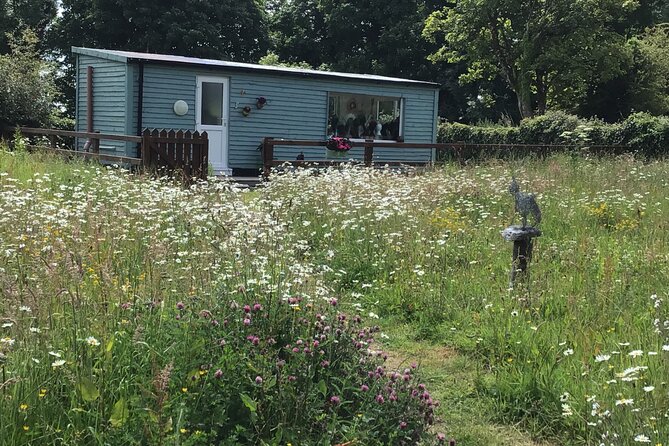
The workshop is based at Faerie Fort farm in Crannagh, County Galway. This matters because you are not learning in a generic studio. You’re learning on a 4th generation family farm, in a garden studio right next to a 1000 year old fairy fort behind their thatched cottage.
That background changes the vibe. The history part is not just “facts on a wall.” It flows into why Aran knitting matters in the first place and how traditional patterns get used. You’ll also feel the pace of farm life, which makes it easier to relax and focus on your hands as the session moves from explanation to knitting.
You’ll likely spend most of your time on site, since the class includes teaching, pattern design talk, and then knitting, followed by refreshments. If you like small, grounded experiences, this farm setting is a big part of why people rate it 5 stars.
What happens during the 2-hour Aran Knitting session
The session runs about 2 hours, and it follows a clear rhythm. First comes the “why” of the tradition, then you get the “how,” then you do a stitch-driven activity with guidance.
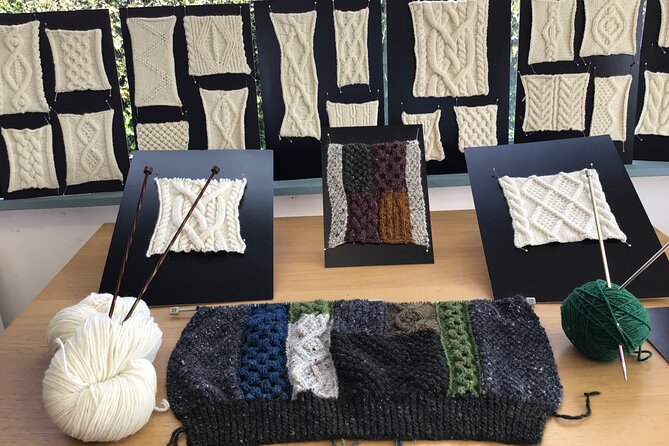
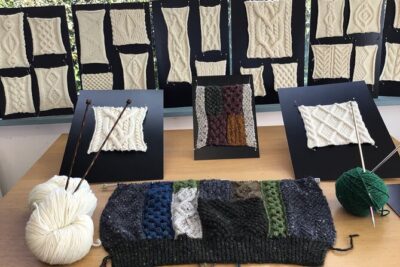
You’ll begin with a history overview of the area and then a look at the origins of Aran knitting. That’s followed by a tour of the kinds of wool available and how different choices can change your knitting experience. Next, you’ll cover the meanings of a variety of stitch patterns, which helps turn the designs from random texture into something you can follow with purpose.
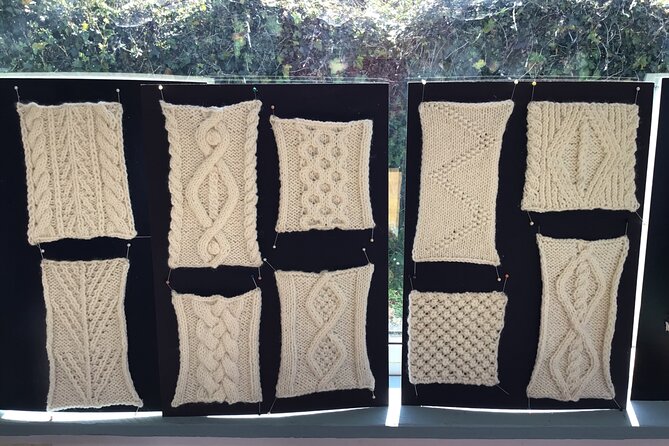
After that setup, you’ll see examples of cable and stitch patterns. This is where it clicks for many people, since cable knitting can look intimidating until you learn what to watch for and how patterns behave. You’ll also talk about how you can design your own sweater, so the lesson doesn’t end at a single motif.
Then it gets very hands-on. You knit a prepared cable pattern during the session. This is a smart approach for a short workshop. You still get real practice, without the pressure of figuring out everything from scratch.
Refreshments are part of the plan, served at your convenience. You’ll get time for tea, coffee, and herbal teas while you keep working or take a quick break. The goal is to keep you comfortable and learning, not to rush you out.
Stephanie’s teaching style: patient, practical, and not rushed
The biggest repeated theme is the way Stephanie teaches. The tone is welcoming, and the pace feels respectful. People love that they were not shoved into the deep end.
If you’ve never knit before, this is a good sign. The workshop is built for people who can participate, and the instruction includes support for beginners, not just experienced knitters. One on one help is available during the class, which matters because knitting is all about small adjustments you feel in your hands.
I like the way the lesson supports confidence. You’re not only shown how to do steps. You’re also told what you’re looking at in the pattern, which helps you keep going even when you lose your place.
Another practical point: the session is short, about 2 hours, so you benefit from clear steps and guidance. That also means you should show up ready to learn in that time window. Bring questions, and don’t worry about getting everything perfect in one go.
Learning cable and stitch patterns you can actually reuse
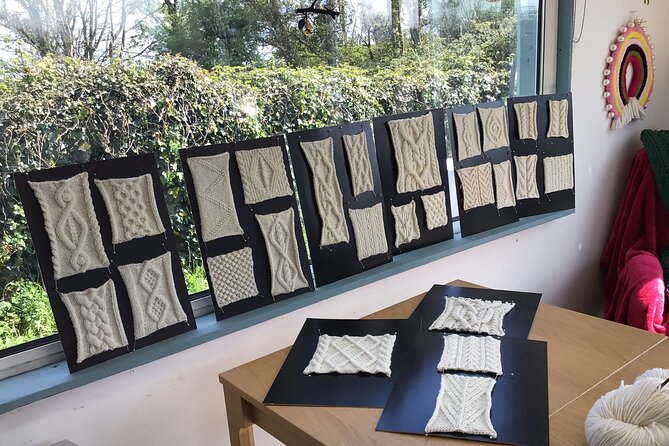
A lot of knitting classes focus on one finished result. This one teaches the logic behind patterns, including meanings of stitch patterns. Even if you don’t knit the exact same sweater again, you come away with better pattern-reading instincts.
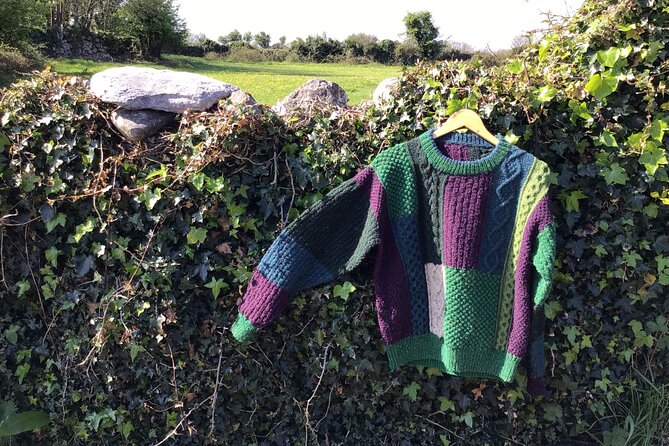
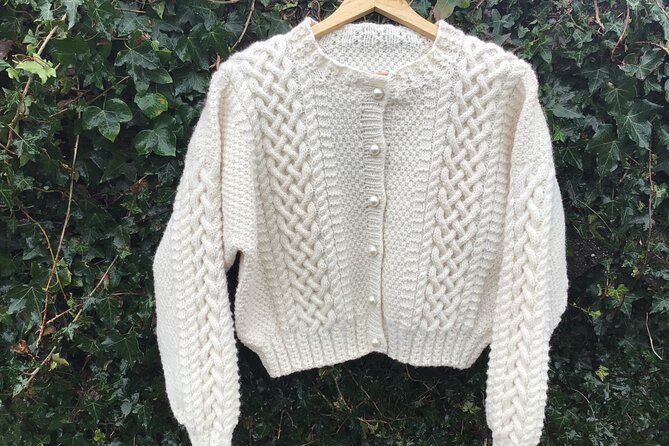
You’ll see examples of cable and stitch patterns and discuss how they work in a sweater design. You’ll also talk through how you can design your own sweater after learning the elements. That’s a huge value point because it turns the workshop into a skill you can reuse.
In plain terms, cable knitting is about controlled crossing and repeating structure. When you understand what the pattern is asking your stitches to do, the work stops feeling like magic. The class approach helps you get that understanding, especially through the mix of explanation and guided knitting.
Wool choices also play a role. The workshop covers different types of wool available, which is practical because yarn affects how stitches stand out and how cables show up. You’ll get ideas for picking yarn that matches the texture and definition you want.
Other pieces of the past in Galway



Wool types and stitch meanings: why the “why” matters
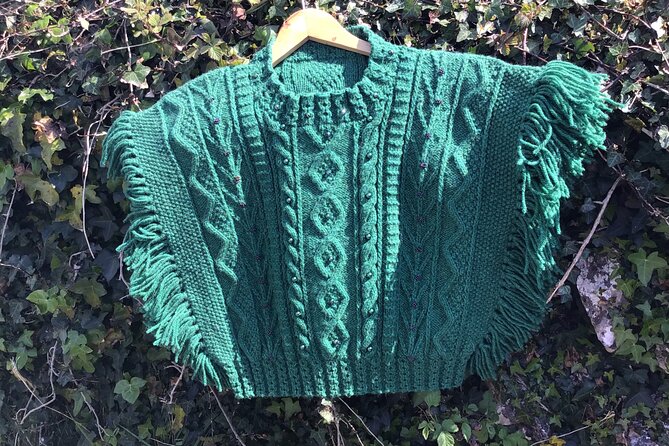
One of the more interesting parts of this experience is that it doesn’t treat stitch meanings as trivia. It includes meanings of stitch patterns as part of the instruction. That can help you memorize patterns better because you’re not only counting stitches.
It also adds texture to the experience when you’re learning something that is tied to heritage. If you understand that traditional patterns can carry meaning, then cables and textures feel intentional. That can make you more willing to experiment, since you’ll know what kind of effect you’re going for.
You’ll also hear the origins of Aran knitting, plus an overview of local heritage tied to the area. You don’t need to be a knitting superfan to appreciate this. It’s simply a better way to learn patterns, because you see them as part of a wider story.
If you like learning through context, this fits you well. If you only want to knit with zero talking, it may feel like there’s more explanation than you expected. But from the ratings, most people enjoy that balance.
Knit your prepared cable pattern, then plan your own sweater
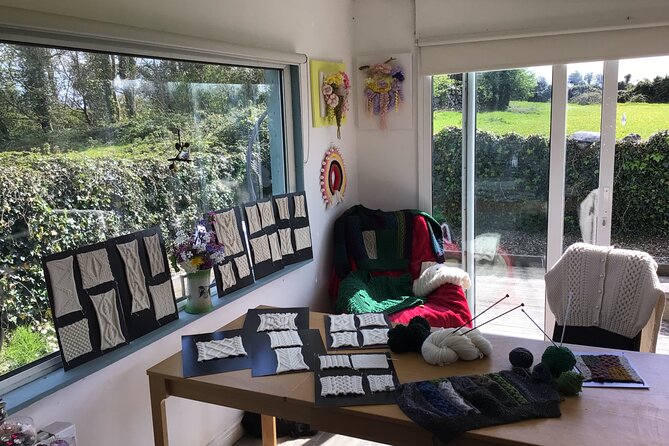
You’ll knit a prepared cable pattern during the workshop. That detail matters because it keeps the session doable in about two hours. You still do the real work, but the groundwork is already set so you can focus on what you’re learning.
As you knit, you’ll practice cable technique while also absorbing how stitch patterns connect into a sweater concept. The class includes discussion on how to design your own sweater, which is where you start thinking like a designer instead of only a copier.
For me, that design component is what lifts this above a standard “sit and watch” class. It gives you a way to carry the learning forward. Even if you don’t knit a full sweater soon, you can apply what you learned to hats, scarves, swatches, or pattern combos.
If you want a fast souvenir, you’ll still leave with something meaningful. But the real payoff is that you walk away with skills and pattern-thinking you can use on your next project.
The included Irish food: a warm break that feels like home
The workshop includes a meal experience at your convenience. You’ll be served smoked salmon on homemade brown bread, plus traditional Irish porter cake. You also get tea, coffee, and herbal teas.
This is not an afterthought. It’s part of the rhythm of the class. You can pause, eat something familiar and hearty, and then return to your knitting with a clear head. In winter months especially, warm drinks and cake are the kind of comfort that makes a short class feel like a visit, not a transaction.
People also highlight that the food is delicious. That lines up with the idea that a farm setting plus homemade baking is usually a good sign. It’s also good value, because the cost of a sit-down snack elsewhere can add up quickly.
If you have specific dietary needs, the tour data doesn’t spell out alternatives. If you’re someone who needs special accommodations, it’s smart to ask in advance.
Getting there in Crannagh, and fitting it into a Burren day
The meeting point is Crannagh, County Galway, H91 KVY6, Ireland. The session ends back at the meeting point. That simple “start and finish in one place” format is helpful because you don’t need to build a complicated schedule around it.
Practically, plan this as a main event during your Burren day. Since it’s about two hours and centered on one farm studio, you’ll want nearby activities that don’t depend on rushing. If you’re pairing it with a scenic drive or a nearby stop, schedule breathing room around it.
Also consider that you’re doing a hands-on craft. You don’t want to book it back-to-back with something that requires tight timing or lots of moving around. A calm plan makes the knitting part much more enjoyable.
Mobile ticket and private group feel: small scale, big comfort
You’ll receive a mobile ticket, and the tour is private. That means only your group participates. This matters because knitting is more fun when you can focus, ask questions, and get adjustments without feeling like you’re competing for attention.
Most travelers can participate, which suggests the class isn’t only for advanced knitters. If you’re worried about whether you’ll keep up, the private setting and the fact that there is one on one help for beginners are strong signals.
One more comfort factor: people mention they were not rushed. In a workshop, time pressure can ruin your focus. Here, the session is designed to let you learn in a manageable way within the two hours.
Price and value: why $78.27 can make sense
At $78.27 per person, you’re paying for more than a quick demo. You’re paying for a guided, private, two-hour Aran knitting lesson that includes teaching, hands-on work with a prepared cable pattern, and refreshments.
A class like this in a rural setting has costs built in: a teacher who can explain technique, time spent tailoring help, and the included food and drinks. The value jumps if you’re not already an experienced knitter, because the instruction time is what you’re really buying.
It also makes sense if you want something authentic and personal. A farm workshop by a fairy fort is hard to replicate on a standard city itinerary. If you enjoy craft travel and heritage experiences, the price feels more justified because the whole setting supports the lesson.
Who should book this Aran Knitting heritage workshop
This is a great fit if you want:
- A hands-on Aran knitting session with real instruction
- Cable and stitch pattern examples you can take home mentally
- A beginner-friendly class with patience and one on one help
- A heritage-centered experience in the Burren area that feels grounded
- Included Irish comfort food and warm drinks
It might be less ideal if you want a fast, casual photo stop. This experience is built for learning, knitting, and staying comfortable long enough to get results from a short time.
Should you book Aran Knitting, History and Heritage in the Burren?
I’d book it if you like small experiences that feel real, and if you want to leave with more than memories. The strongest reason to go is the teaching style: patient, welcoming, and supportive, including help for people who have never knit before. Add in the farm setting next to a fairy fort and the included homemade food, and you get a workshop that feels like a visit, not a performance.
I would hold off if you only want big sightseeing or a long itinerary. This is a focused two-hour class. You’ll enjoy it most if you plan the rest of your day around craft time, not around tight tours.
If you’re in the Burren or nearby Galway and you want an authentic Aran knitting experience, this is the kind of booking that turns into a skill you can use long after your trip.
FAQ
How long is the Aran Knitting workshop?
It lasts about 2 hours.
What is the price per person?
The price is $78.27 per person.
Where does the workshop start and end?
It starts and ends back at Crannagh, Co. Galway, H91 KVY6, Ireland.
Is it a private tour?
Yes. It is a private tour or activity, so only your group participates.
What food and drinks are included?
You’ll be served smoked salmon on homemade brown bread, traditional Irish porter cake, tea, coffee, and herbal teas.
Is the class suitable for beginners?
Most travelers can participate, and the experience includes instruction and support, including one on one help for someone who has never knit before.
Is there free cancellation?
Yes. You can cancel up to 24 hours in advance for a full refund.
Older Galway, Still Standing
Still in Clare? Keep Going
Elsewhere on The Ireland Traveler
Lately added to the Galway pile
- Galway’s Historical Gems: A Walk Through Time
★ 5.0 · 3 reviews - 2.5 Hour Guided Sea Kayaking in Roundstone Bay
★ 5.0 · 3 reviews - Galway Tasting and Walking Tour
★ 5.0 · 3 reviews - Ferry ticket – Day return ticket to Inishbofin Island from Cleggan. Self Guided.
★ 5.0 · 3 reviews - Sean’s Bar, Athlone Castle and Clonmacnoise Monastery
★ 4.5 · 3 reviews - Galway: Medieval Galway Tour
★ 4.7 · 3 reviews
More The Burren and County Clare, side by side.
 ★ 5.0Galway to Cliffs of Moher, Aillwee Cave & Dunguaire Castle TourFrom $603,058 reviews
 ★ 4.5Dublin: Cliffs of Moher, Doolin, Burren, and Galway Day TripFrom $852,851 reviews
 ★ 4.8From Galway: Full-Day Cliffs of Moher & Burren Guided TourFrom $572,815 reviews
 ★ 4.5Cliffs of Moher, Burren and Galway Day Tour from DublinFrom $962,755 reviews
 ★ 5.0Cliffs of Moher & the Burren Tour from GalwayFrom $661,913 reviews
 ★ 4.7From Galway: Cliffs of Moher and The Burren Guided Day TripFrom $621,770 reviews
 ★ 5.0Galway to Aran Islands Inisheer, Doolin, Cliffs of Moher Day TourFrom $961,672 reviews
 ★ 4.5Dublin to Bunratty Castle, Cliffs of Moher, Burren Galway by RailFrom $1951,202 reviews
Other lists this one is on