
REVIEW · IRELAND
Cork: Guided Historical Walking Tour
If you want the quick route to Cork’s character, walk it with a guide. This 75-minute historical stroll strings together monuments, architecture, and the city’s water-hidden past.
You’ll love the way the tour explains Cork’s maritime trade connections while you’re actually seeing the buildings that grew from that role.
I also like that the route hits both famous sights and smaller, story-rich stops like Carey’s Lane and the Hugenot cemetery. One thing to plan for: it runs rain or shine, so pack weather gear and expect wet ground in parts of the city.
In This Review
- Key highlights at a glance
- 75 Minutes to See Cork’s Real Story, Not Just Landmarks
- Starting at Cork Tourist Information Centre, Then Tracing Water Underfoot
- Shandon Church and the Opera House: The City’s Signature Shapes
- Carey’s Lane and the Hugenot Cemetery: A Human-Scale Detour
- Coal Quay, Cornmarket Street, and Grand Parade’s Big-City Markers
- Nano Nagle Footbridge to St Finbar’s Cathedral: Faith, Education, and City Identity
- South Gate Bridge and Elizabeth Fort: Seeing Defense and Power in the City Layout
- South Mall Boathouse Entrances and the Waterfront That Still Shows
- Finishing at Princes Street and the English Market Next Step
- The Best Part Is the Guide, Not the Script (Noel, Mary, Jarrod, Aiden)
- Who This Tour Fits Best
- Should You Book This Cork Historical Walking Tour?
- FAQ
- How long is the Cork guided historical walking tour?
- How much does the tour cost?
- Where do I meet for the tour?
- Where does the tour end?
- What is included in the price?
- What is not included?
- Will the tour run in bad weather?
- Is the tour wheelchair accessible?
- What language is the tour guide?
- What should I bring?
- Can I cancel or pay later?
Key highlights at a glance
- Follow the river under the streets, then watch the city’s shape make sense
- Shandon Church in red and white brick, with bell-tower details and clockfaces
- Carey’s Lane and the Hugenot cemetery, a quieter pause with bigger meaning
- Grand Parade landmarks like Bishop Lucy Park, the Berwick fountain, and a national memorial
- South Mall boathouse entrances, visible clues of Cork’s working waterfront
- End at the English Market, so you have a natural next step for food and browsing
Other Cork walks with the wind behind you
- Cork Instagram Photography Walking Tour★ 5.0 · 54 reviews
- Meet and Eat Dublin: Cork Food Walking Tour★ 5.0 · 25 reviews
- Cork Private Walking Tour With A Professional Guide★ 5.0 · 18 reviews
- Best of Cork: Private Walking Tour with a Local★ 3.3 · 6 reviews
75 Minutes to See Cork’s Real Story, Not Just Landmarks
This tour is built for people who want direction fast. You get a guided walk through Cork City Centre at a real walking pace for about an hour, plus a bit of buffer for the stops. It is short enough to fit into a busy day, but packed enough to help you understand how the city developed.
At $26 per person, it’s a smart value move if you’re trying to make your limited time count. You’re not just ticking boxes. You’re learning why Cork’s streets curve, why certain areas matter, and how the “old waterfront” story shows up even when you cannot see the sea from the pavement.
The biggest practical note: you should come ready for rain. The tour runs rain or shine, and you will be outside the whole time. If you’re the type who needs perfect weather to enjoy walking tours, plan to dress for it and keep moving anyway.
Starting at Cork Tourist Information Centre, Then Tracing Water Underfoot
You meet at the Cork Tourist Information Centre, and you’ll want to arrive about 10 minutes early. That early arrival matters here because the tour ends back at the meeting point, and the whole thing is timed tightly for a smooth route.
From the start, the walk has a neat trick: you follow the “curve” of the main street while learning how waterways run under the city. Cork has ancient waterways that meander under the streets, and the guide uses that fact to connect the dots between the city’s past and what you see today.
I like this approach because it changes your attention. Instead of staring only at facades, you start noticing alignments and street shapes. Suddenly, Cork feels less random. It feels planned by geography, trade, and water management.
Shandon Church and the Opera House: The City’s Signature Shapes
Next, the tour points you to two of Cork’s most visual landmarks: Cork Opera House and Shandon Church across the river.
Shandon Church is hard to miss once you see it the way the guide frames it. You’ll notice the distinctive red and white brick bell tower and the clockfaces, which give the building a strong identity even from a distance. It’s one of those sights that makes you pause, because the architecture looks almost designed for storytelling.
The other win is perspective. You’re not just looking at buildings. You’re learning how Cork’s maritime and transatlantic trading connections influenced the growth of key areas. The guide keeps bringing you back to that theme, so the “why” sticks.
Carey’s Lane and the Hugenot Cemetery: A Human-Scale Detour
After the busier central streets, you’ll walk down Carey’s Lane to visit the Hugenot cemetery. This stop shifts the mood in a good way. It’s not a giant monument scene. It’s a quieter location that helps you understand Cork through the people who ended up here.
One of the standout qualities from the tour experience is the balance of ancient and more recent material. You can expect the guide to weave stories through the facts, so even a smaller site like this doesn’t feel like a random side trip.
If you’re the kind of traveler who likes history that involves real lives, not just dates and rulers, this is a strong moment in the tour. Give yourself a few extra seconds at the cemetery to look before moving on.
Other guides we rate around Cork
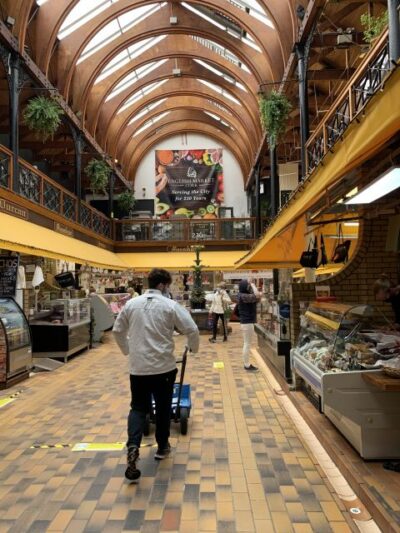
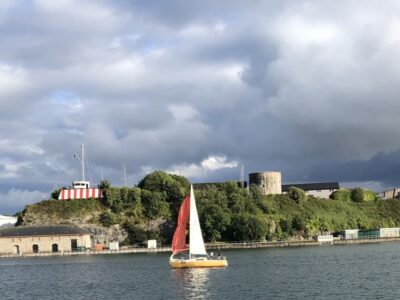
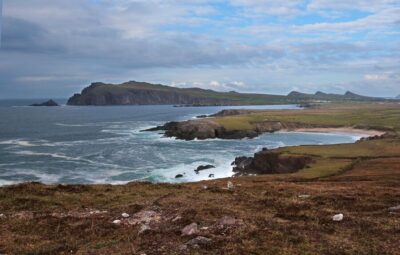
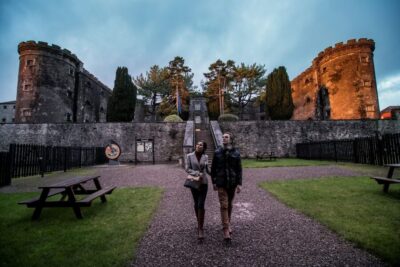
Coal Quay, Cornmarket Street, and Grand Parade’s Big-City Markers
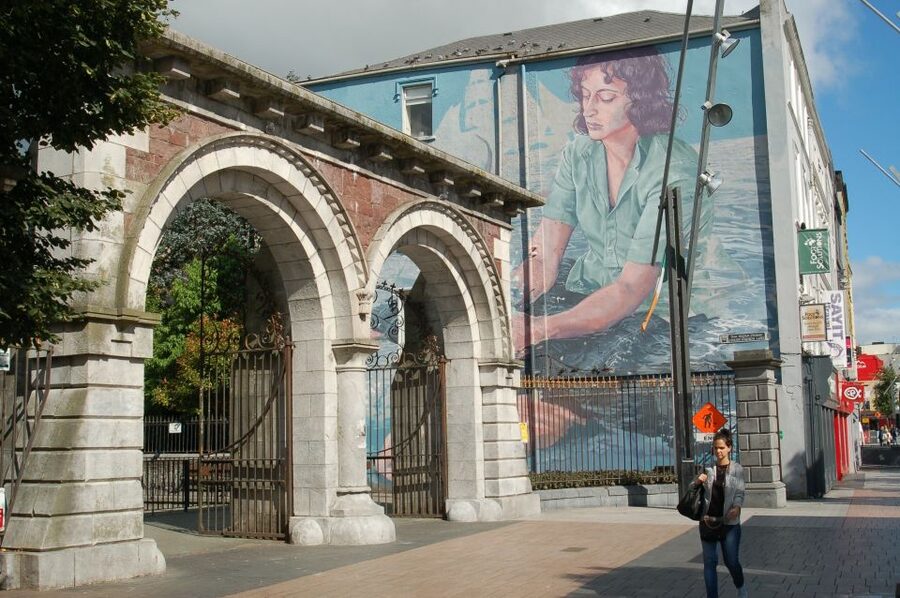
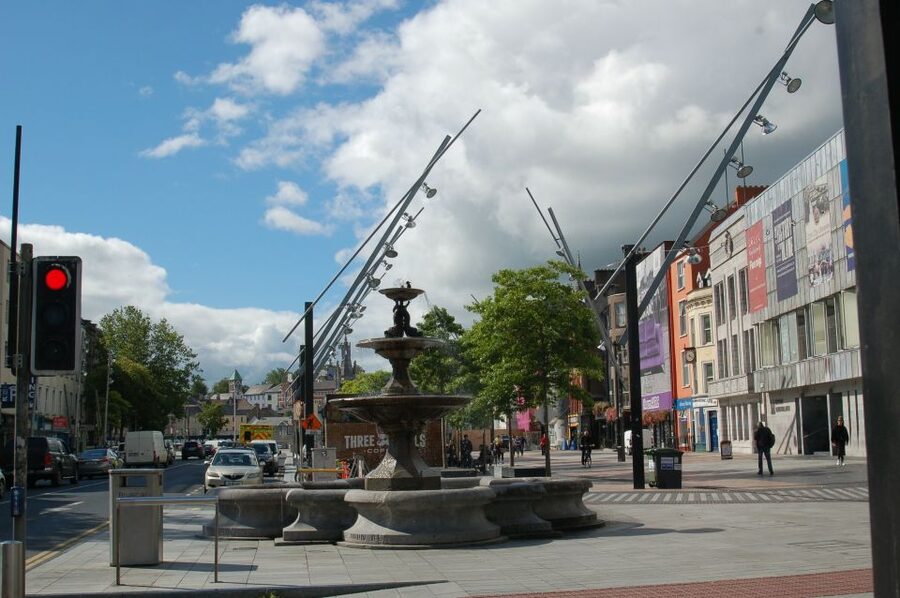
From Carey’s Lane, the route continues toward the areas tied to commerce, including the Coal Quay and Cornmarket Street. Then you head to Grand Parade, described as the widest street in Cork, where a cluster of landmarks gives you a “Cork at work” feeling.
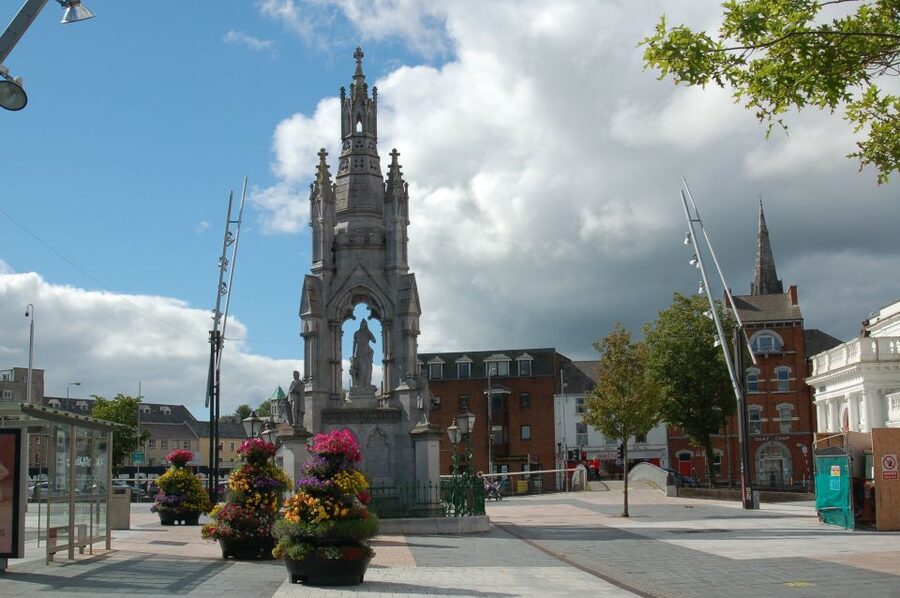
On Grand Parade, you’ll see:
- Bishop Lucy Park
- The Berwick fountain
- The National memorial
This is a good section for practical orientation. After this, you can usually point out where you are on a self-guided walk later. The guide also keeps the maritime theme active, explaining how Cork functioned as a European and transatlantic trading hub.
One minor consideration: this part can feel a bit busy on the street. If you’re sensitive to crowds or noise, it helps to listen while you walk, rather than trying to stand still too long. The payoff is that you come out with a clearer mental map.
Nano Nagle Footbridge to St Finbar’s Cathedral: Faith, Education, and City Identity
A memorable stop in the tour connects the city to Nano Nagle. The guide explains her humanitarian work, especially bringing education to the poorest classes, and you’ll pass a footbridge named in her honor.
This section works because it’s not just about one person. It’s about how Cork’s social story runs alongside its trade story. If you only focus on ports and commerce, you miss how cities like this survive and grow.
Then you move to St Finbar’s Cathedral, where the architecture gives you another anchor point. Cathedrals are often the “tallest memory” of a city, and here it helps connect the dots between Cork’s civic life and its long timeline.
South Gate Bridge and Elizabeth Fort: Seeing Defense and Power in the City Layout
Next come South Gate Bridge and Elizabeth Fort. These are the kinds of stops that make you think differently about the city. Instead of only seeing Cork as an urban center of today, you start seeing how it was shaped by protection, movement, and strategic placement.
You do not need military history to enjoy this part. The guide keeps it grounded by linking the structures to the city’s maritime connections and the way Cork’s waterfront shaped daily life.
If you’re a person who likes “how cities were built” stories, this section is a good one. It gives you context for why the streets feel the way they do around these points.
South Mall Boathouse Entrances and the Waterfront That Still Shows
The tour ends by bringing you to one of the most visual waterfront clues: boathouse entrances in the leading business quarter known as South Mall.
This is one of my favorite sections because it proves a point. Even when the working waterfront is not right in your face, physical traces can still show up. Those entrances are a way to see how the city used water for trade and storage, not just scenery.
One practical tip: keep an eye out for these exact details as you pass them. It’s easy to walk past small features when you assume the highlight will be a big building. Here, the “small remains” are the highlight.
Finishing at Princes Street and the English Market Next Step
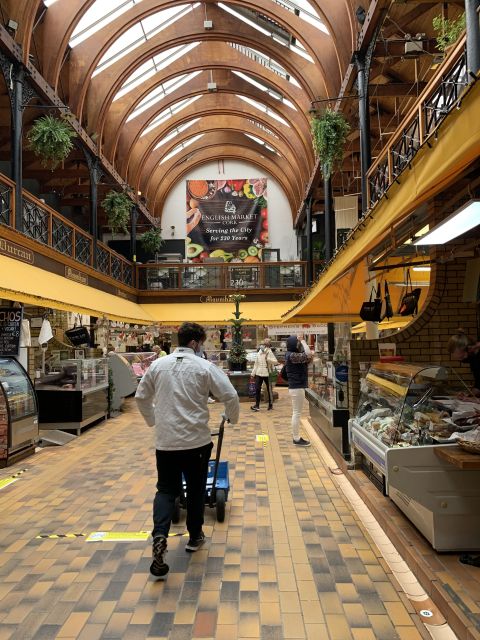
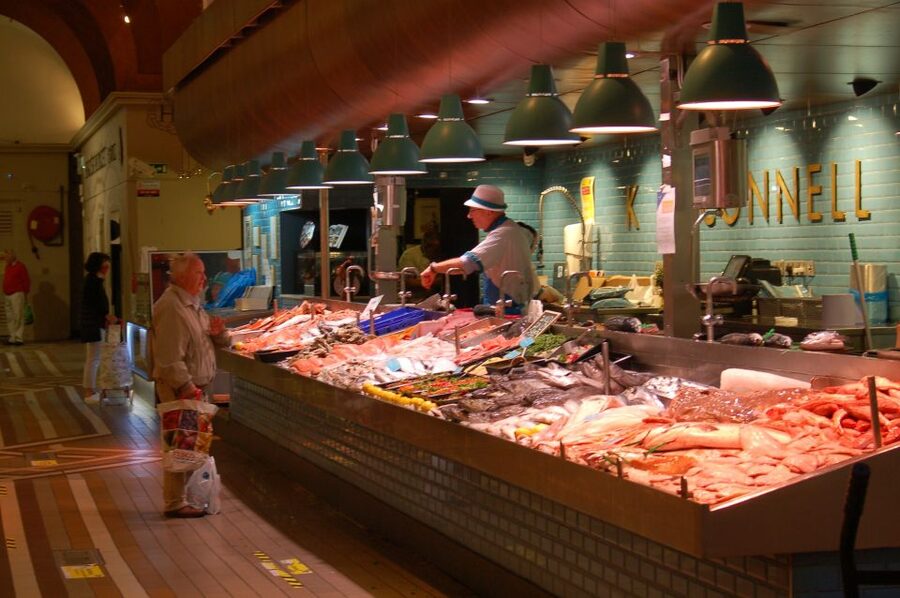
The tour finishes back at the meeting point, with the route ending at Princes Street, at the main entrance to the English Market. That is a smart finish. You walk out with context, then you can immediately turn that context into real enjoyment.
English Market is also an easy place to take a break. If your day includes more exploring, you can use the market as your reset point. If you still have energy, you can ask your guide how to continue walking from there.
Because the tour is only about 75 minutes, ending at a food spot makes sense. You are not stuck commuting before you can cool down and refuel.
The Best Part Is the Guide, Not the Script (Noel, Mary, Jarrod, Aiden)
The tour works because the guide brings Cork to life. In the experience I’m describing, names came up again and again, including Noel, Mary O’Sullivan, Jarrod, Aiden, Catherine, and Gerald. Different personalities, same idea: local stories plus historical facts.
Two practical perks show up in the feedback:
- Many guides use a headset microphone, which makes it easier to hear in busy street sections
- The stories are told with humor and personal connection, so you remember the points later
I especially like when the guide mixes “ancient stuff” with more recent characters, including refugees and other humanitarian figures. It keeps Cork from feeling like a museum. It feels like a living place shaped by choices people made.
If you have a question, the format seems to support it. A tour like this is at its best when you treat it like a conversation at walking speed.
Who This Tour Fits Best
This is a great choice if:
- you want a fast orientation to Cork City Centre
- you like history tied to what you can see right now
- you enjoy short guided walks that help you plan your next stops
It may not be ideal if:
- you dislike walking on city streets in light to moderate rain
- you want a long, slow experience with time to linger at every site
It’s also wheelchair accessible, which matters because it keeps the tour options open for more people. Still, you’ll be on outdoor routes, so bring weather-appropriate clothing and wear shoes that handle wet pavement.
Should You Book This Cork Historical Walking Tour?
Yes, if you want Cork in one focused shot. For $26 and about 75 minutes, you get a strong mix of big landmarks and smaller, story-driven stops, plus a clear theme connecting Cork’s waterways and maritime trade to the city you see today.
I’d book it early in your stay. The tour ends near a perfect next activity, and you’ll leave with a better sense of where things are. Bring your weather gear, arrive a bit early, and listen for the details like the river route under the streets and those boathouse entrances in South Mall. That is where the tour turns from sightseeing into real understanding.
FAQ
How long is the Cork guided historical walking tour?
The tour duration is 75 minutes.
How much does the tour cost?
The price listed is $26 per person.
Where do I meet for the tour?
Meet at the Cork Tourist Information Centre. Arrive about 10 minutes before the activity starts.
Where does the tour end?
The tour ends back at the meeting point, with the last stop near Princes Street at the main entrance to the English Market.
What is included in the price?
A city walking tour with a guide is included.
What is not included?
Hotel pickup and drop-off are not included, and food and drinks are not included.
Will the tour run in bad weather?
Yes. The tour takes place rain or shine.
Is the tour wheelchair accessible?
Yes, it is wheelchair accessible.
What language is the tour guide?
The tour guide is English.
What should I bring?
Bring weather-appropriate clothing.
Can I cancel or pay later?
You can reserve now & pay later. Free cancellation is listed up to 24 hours in advance for a full refund, though the activity information also notes it is non-refundable, so check the exact terms at booking.
More of Cork Underfoot
The Wider Cork Pile
Elsewhere on The Ireland Traveler
Lately added to the Cork pile
- Cork Chat and History Walking Tour
★ 5.0 · 3 reviews - Cork Private Transfer from Cork Airport to City centre
★ 5.0 · 3 reviews - Fastnet Rock Lighthouse direct boat tour-Baltimore.Guided.
★ 3.7 · 3 reviews - Cork Private Walking Tour
★ 5.0 · 3 reviews - Kinsale and West Cork Classic Private Tour in modern a/c minibus
★ 5.0 · 4 reviews - Explore Cork City and Cork Harbour Greenway by Bike
★ 5.0 · 5 reviews
More Historical Tours, side by side.
 ★ 5.0Dublin Historical Centre Food Tour with 8 Food Tastings & DrinksFrom $1251,718 reviews
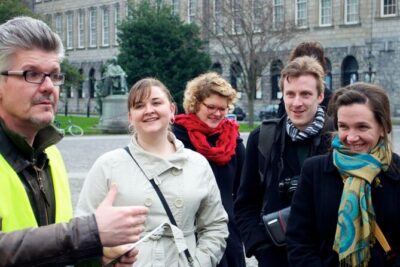 ★ 5.02-Hour Historical Walking Tour from DublinFrom $22875 reviews
 ★ 4.7Historical 2-Hour Guided Walking Tour of DublinFrom $22865 reviews
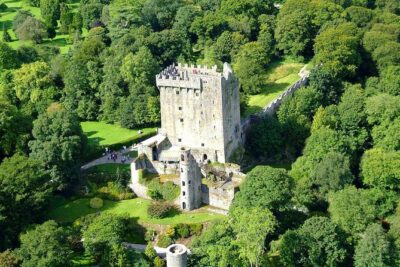 ★ 4.5Dublin to Cork, Blarney Castle & Cóbh Heritage Centre by trainFrom $195510 reviews
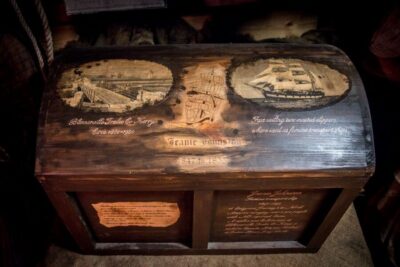 ★ 4.8Dublin: Jeanie Johnston Tall Ship Irish Famine History TourFrom $16431 reviews
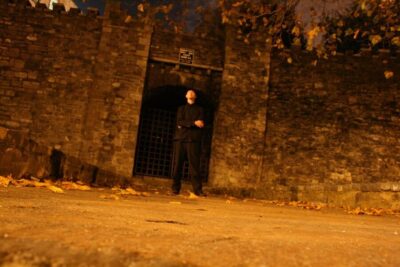 ★ 4.3Dublin’s Haunted History Walking TourFrom $31345 reviews
 ★ 5.0Deliciously Dublin: The Artisan Donut Walking & History TourFrom $70329 reviews
 ★ 4.8Galway: Dark History Guided City Walking TourFrom $23236 reviews
Other lists this one is on