
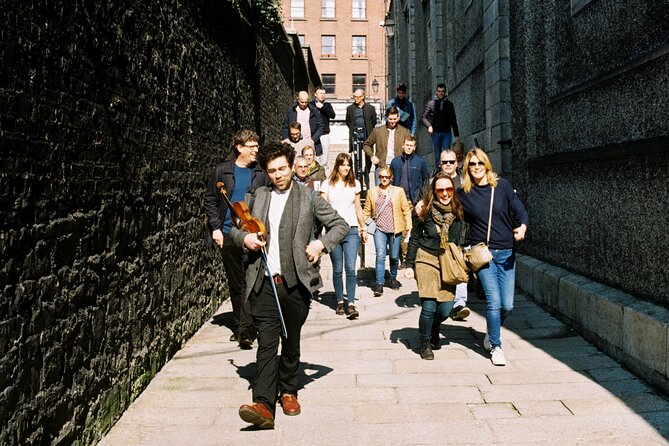
REVIEW · DUBLIN
Dublin Traditional Irish Music Walking Tour with Live Performance
Song, stories, and street corners in Dublin.
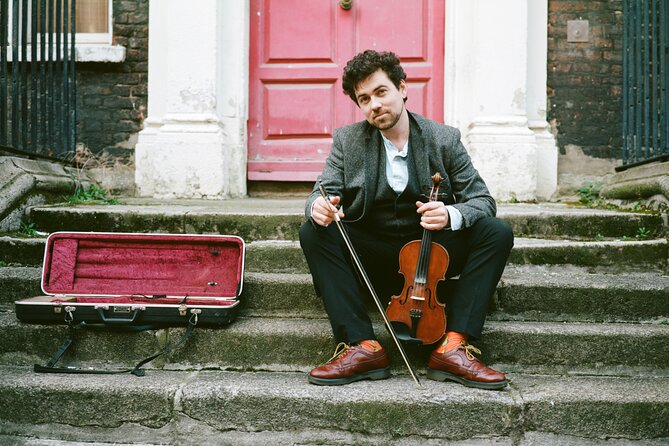
This walking tour pairs traditional Irish music with famous old places, so you hear folk ballads that connect to what you are looking at, from Temple Bar’s laneways to medieval Dublin. Two things I really like: the live performance by an Irish musician guide, and the way each stop gets a themed song that makes the setting stick in your mind. One thing to keep in mind is that outdoor street noise and confusion at Temple Bar can make it harder to hear if you do not find the right group right away.
In practice, I’d treat this as a “pay attention early” tour. One low-star experience noted a guide arriving late at the meeting point, plus another mentioned getting mixed up with a different walk operating at the same time. If you are the type who hates rushing at the start, show up a few minutes early and be ready to ask staff where your exact group is gathering.
In This Review
- Key highlights at a glance
- From Temple Bar to St Patrick’s Cathedral, stop by stop
- Smock Alley Theatre (1662), the arts start point in Temple Bar
- Grattan Bridge, the River Liffey photo pause
- Fishamble Street, Vikings and Handel in the same breath
- Christ Church Cathedral, medieval Dublin with a darker song thread
- Dublin Castle, the ship street gate and famous steps
- St Patrick’s Cathedral, the finish at St Patrick’s Park
- Why the live music format changes how you see Dublin
- Expect some interaction, but keep it optional
- Outdoor sound can affect how much you catch
- Price and value: what $27.81 buys you here
- Group size, timing, and how to avoid the common start-up problems
- Photo stops you will actually use
- Who this walking tour suits best
- Who might want to think twice
- Should you book this traditional Irish music walking tour?
- FAQ
- How long is the Dublin Traditional Irish Music Walking Tour?
- How much does the tour cost?
- Where do I meet the guide, and where does the tour end?
- What size is the group?
- Is a mobile ticket used?
- Is free cancellation available?
Key highlights at a glance
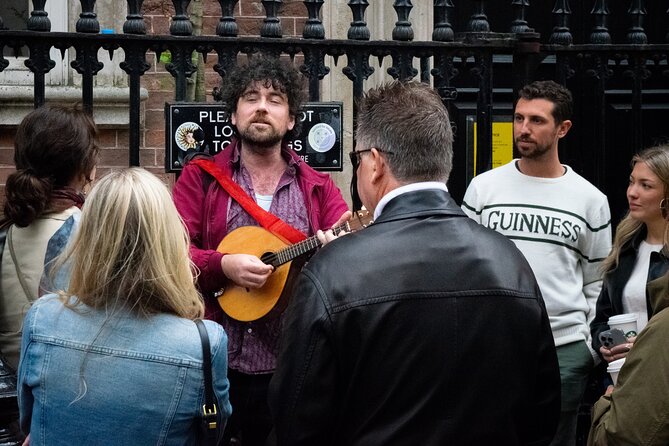
- Live musician guiding the walk: You are not just listening to facts, you are hearing the story sung.
- Temple Bar as the hub: Meeting at 3 Crown Alley keeps you right in the action.
- Smock Alley Theatre stop: A quick stop at Ireland’s oldest theatre area builds the arts-and-music context.
- Medieval Dublin through Christ Church Cathedral: Songs add a darker, older edge to what you see.
- Fishamble Street Viking and Handel links: You get a neat jump from Norse settlement talk to music history.
- Small group feel: It caps at 20, and many reviews call out the comfortable pacing and interaction.
Where else the session starts late
- Dublin: Generation Pub Crawl★ 4.5 · 2,457 reviews
- Dublin Literary Pub Crawl★ 4.5 · 1,607 reviews
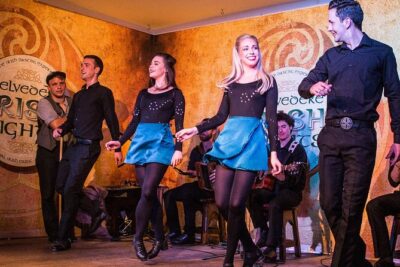
- Belvedere Irish Night Show, Dance and Traditional 3-Course Dinner★ 4.5 · 1,171 reviews
- The Irish Dance Party in Dublin★ 5.0 · 918 reviews
From Temple Bar to St Patrick’s Cathedral, stop by stop
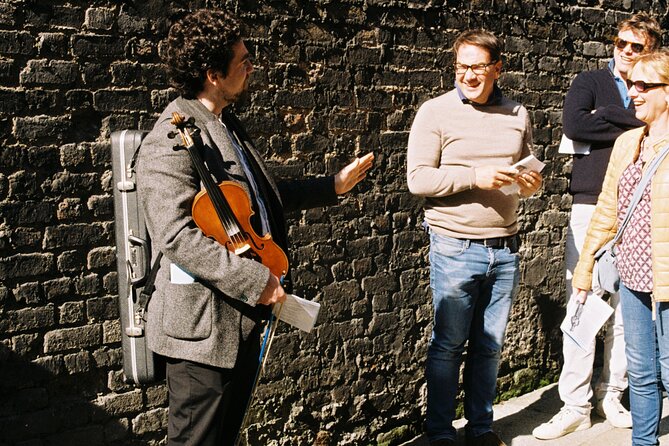
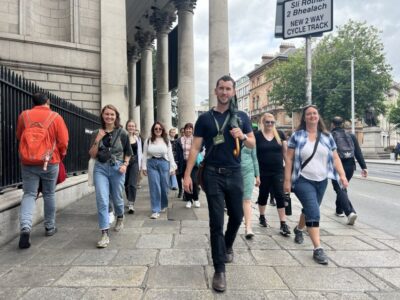
The tour is built as a simple walk with short “pop-in” stops, about 2 hours total. You meet at 3 Crown Alley, Temple Bar, then you wind your way toward St Patrick’s Cathedral. The pacing matters here, because the performance needs a quiet moment long enough for you to catch the lyrics, then it needs motion so the walk still feels like sightseeing.
A helpful mindset: treat each stop as a mini stage. The guide ties the lyrics or theme to the spot, so you are not only looking at old stone. You are learning why people in different centuries cared about that exact corner of Dublin.
Smock Alley Theatre (1662), the arts start point in Temple Bar
Your first stop is Smock Alley Theatre, right in Temple Bar. The theatre dates to 1662, and it is often described as Ireland’s oldest theatre, which is a great opener for a music tour. Even if you just stand outside, you quickly get the sense that Dublin has been producing performances here for a long time.
What makes this stop valuable is the tone it sets. The guide’s songs and stories are not random setlist music, they are meant to feel like part of the city’s stage history, including the way ballads traveled and stuck.
Grattan Bridge, the River Liffey photo pause
Next up is Grattan Bridge, a short stop where you get to look across the River Liffey. The bridge is described as one of Dublin’s most beloved and picturesque crossings, with seahorse lanterns that are made for quick snapshots.
This is a “reset your eyes” moment. You go from one street scene to another, then you break the view with the river. It also helps your brain later when the route shifts toward major landmarks, because you already have a mental map of the river’s line.
Fishamble Street, Vikings and Handel in the same breath
Fishamble Street is one of those locations where Dublin’s layers stack fast. The street is often said to be Dublin’s oldest, tied to the biggest Viking settlement found outside Scandinavia. It is also famed as the site of the first ever performance of Handel’s Messiah.
The best part is how a musician can connect these ideas without turning it into a lecture. You get the sense of Dublin as a meeting point: trade, settlement, religion, and performance all mixing in the same tight footprint of streets. If you love trivia that actually has local roots, this stop delivers.
One practical note: since Fishamble Street is a working city street, keep your focus on your guide. If you drift to the edge for photos, you may miss the song link.
Other Dublin walks with the wind behind you


Christ Church Cathedral, medieval Dublin with a darker song thread
Christ Church Cathedral is the tour’s medieval center of gravity. The plan is to explore part of the cathedral and nearby environs, then use song to approach the darker side of the story behind the stone.
This stop is where the format really earns its keep. Traditional Irish music often carries emotions people could not always say plainly, and hearing those themes while you stand by medieval architecture helps the mood land. It also gives you context that you simply do not get from a normal “look at the building” walkthrough.
A consideration: cathedral areas and church surroundings can feel like any busy tourist zone, so if you want a clear listen, position yourself where you can hear the voice and still respect the space.
Dublin Castle, the ship street gate and famous steps
Then you swing by the Ship Street gate of Dublin Castle. You also get a look at some of the famous steps nearby, which makes sense for a photo-driven break. You are moving from church to state, from spiritual stories to political power, and the guide’s songs can help connect those themes.
This stop is short, so go in expecting “glance and learn,” not a long stop-and-stare. If you want to linger at Dublin Castle beyond the walk, plan a separate time after the tour.
St Patrick’s Cathedral, the finish at St Patrick’s Park
The tour ends in St Patrick’s Cathedral area, specifically at St Patrick’s Close adjoining St Patrick’s Park. You close out with a big Dublin landmark, which is a smart way to end a walk that has been moving through history in smaller pockets.
It also works well for your day plan. After the tour, you are already at one of the most central areas for grabbing food and continuing sightseeing. Think of it as a structured route that drops you where more options live.
Why the live music format changes how you see Dublin
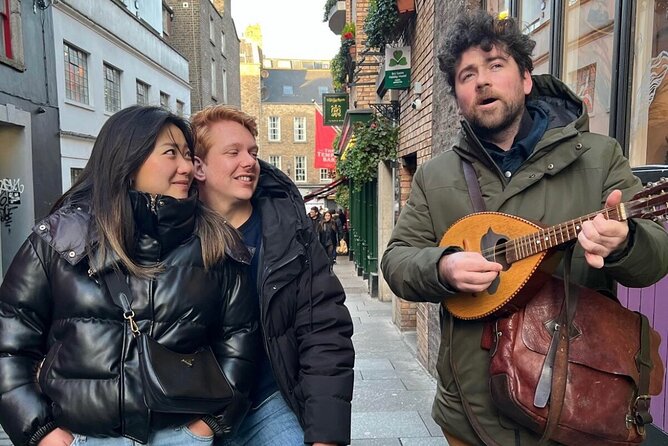
This tour is different because it is not just telling you what happened. The guide is an Irish musician, and in the best experiences, the songs, poems, and even some interactive moments feed directly into the storytelling.
From the strong reviews, you can see the pattern. Guides like Ciarán, Sean, Dylan, and Shaun are praised for mixing music with comedy, history, and social context. People also mention hearing songs tied to specific spots, including a Gaelic song in at least one instance. That matters, because a language snippet or a traditional style can make you remember the place in a more personal way.
Here is the practical takeaway for you: when you hear the performance at each stop, your brain has a cue. You are less likely to forget the location details because the song gives you an emotional anchor.
Expect some interaction, but keep it optional
Several comments highlight sing-alongs and even dancing prompts near the end. That is part of the fun for many people, but it also means you should be comfortable participating if you feel like it.
If you are unsure, you can still enjoy the walk without joining in every moment. The goal is to watch and listen first. Participation tends to grow once the group feels warm and the guide sets the tone.
Outdoor sound can affect how much you catch
One lower rating calls out trouble hearing over street noise, plus another mentions confusion with a second tour at the same time. Dublin streets are lively, so your “hearing score” depends on where you stand in the group and how close you are when the guide sings.
My advice: during the song moments, face your guide, stay near the center of the group, and avoid drifting to the side for photos until the performance ends.
Price and value: what $27.81 buys you here
At $27.81 per person, this is not expensive for a guided experience that lasts about two hours and includes live performance. What makes the pricing feel fair is the way it ties cost to effort: you are paying for a guide who is effectively doing two jobs at once, musician and storyteller.
You are also getting a compact route. You do not have to plan transport or decide which landmark to hit first, because the walk connects major points across central Dublin. And because it is a small group, the guide is not trying to perform to a crowd that cannot hear.
Is it “worth it” if you are not a big music person? You might still enjoy it if you like history, old streets, and the human side of culture. A few reviews even describe it as a first-visit favorite, especially because it adds social and political context through lyrics, not just dates.
Group size, timing, and how to avoid the common start-up problems
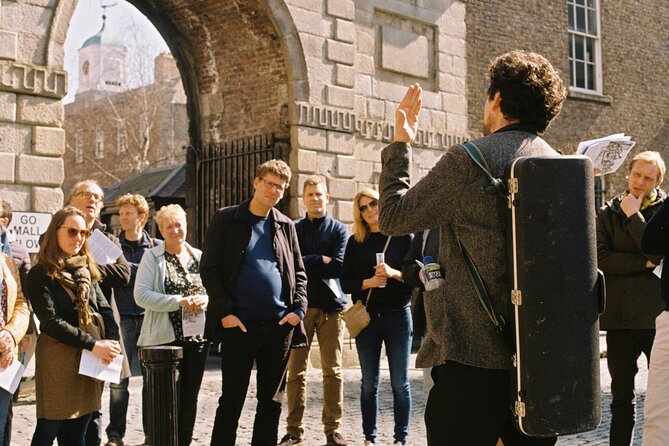
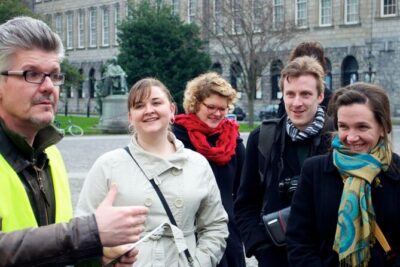
The tour caps at 20 travelers, which is a big plus for listening. Smaller groups make it easier to hear the singing and to move between narrow lanes without feeling like cattle.
Still, two types of problems show up in the feedback:
- Meeting-point confusion at Temple Bar
- Hearing challenges caused by street noise or group spacing
To protect your experience, do this:
- Arrive a bit early at 3 Crown Alley near Temple Bar
- Stand where you can see the guide’s face when music starts
- Take photos fast between stops, not during the performance
Also note the start time: 1:00 pm. If you are late, the tour can feel rushed right at the beginning, and you might end up trying to catch up while the group has already started.
Photo stops you will actually use
This is a sightseeing walk, so you will naturally get photo chances. The tour includes some of the best “quick snap” spots:
- Grattan Bridge with the seahorse lanterns
- Christ Church Cathedral for medieval-and-Victorian contrasts
- Dublin Castle at the Ship Street gate area
- St Patrick’s Cathedral for the finish
The trick is to treat photos like punctuation. Take a quick shot when you arrive, then reset your attention on the guide for the song and story link.
Who this walking tour suits best
This is a strong fit if you:
- Want Dublin history told through traditional Irish music, not just narration
- Like short walks between focused stops rather than one long museum style visit
- Enjoy a lively guide with humor and performance energy
It is also a good choice for a first trip to Dublin. Central spots like Temple Bar, the river area, and the two cathedral finishes give you a fast sense of the city layout.
Who might want to think twice
If you strongly dislike singing or you hate any kind of interaction, the tour may be less comfortable. The same goes for anyone who needs quiet environments to hear clearly, because this is outdoors and you are in a real street setting.
Should you book this traditional Irish music walking tour?
Yes, I’d book it if you want Dublin to feel like a living culture, not a checklist. For the price, you are getting a small-group route, major landmarks, and a guide who uses song as part of the explanation. The standout theme across the best reviews is simple: music plus place equals memory, and the pacing makes it easy to follow even with short stops.
I would hesitate only if you are worried about hearing clearly in open air, or if you know you tend to show up late and get flustered at crowded meeting points. If that is you, arrive early, stand where you can hear, and keep your phone put away until the guide finishes.
FAQ
How long is the Dublin Traditional Irish Music Walking Tour?
It is about 2 hours.
How much does the tour cost?
The price is $27.81 per person.
Where do I meet the guide, and where does the tour end?
You meet at 3 Crown Alley, Temple Bar, Dublin and the tour ends at St Patrick’s Cathedral, St Patrick’s Close.
What size is the group?
The tour has a maximum of 20 travelers.
Is a mobile ticket used?
Yes, the tour uses a mobile ticket.
Is free cancellation available?
Yes. You can cancel for a full refund up to 24 hours before the experience starts, and cancellations within 24 hours are not refunded.
The Wider Dublin Pile
Where the Session Starts
Elsewhere on The Ireland Traveler
Lately added to the Dublin pile
- Waterford Crystal and Kilkenny Full-Day Rail Tour from Dublin
★ 5.0 · 3 reviews - Turtle Bunbury’s Dublin: A Self-Guided Audio Tour from a Celebrated Author
★ 5.0 · 3 reviews - Cliffs of Moher and The Burren Private Tour from Dublin
★ 5.0 · 3 reviews - Dublin Full-Day Tour through Boyne Valley
★ 5.0 · 3 reviews - Rock Of Cashel And Blarney Castle Private Chauffeur Full Day Sightseeing Tour
★ 4.5 · 3 reviews - Private Irish Fusion Meal in a Modern Home in Skerries, Dublin
★ 5.0 · 3 reviews
More Irish Pubs, Trad Music and Dance, side by side.
 ★ 4.5Dublin: Generation Pub CrawlFrom $162,457 reviews
 ★ 4.5Dublin Literary Pub CrawlFrom $271,607 reviews
 ★ 4.5Dublin Irish House Party Live Show, Dinner Option AvailableFrom $421,246 reviews
 ★ 4.5Belvedere Irish Night Show, Dance and Traditional 3-Course DinnerFrom $561,171 reviews
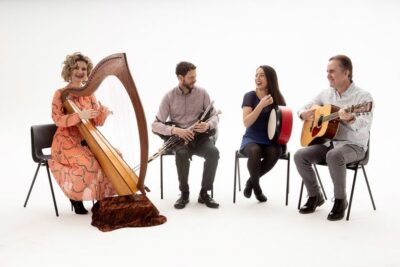 ★ 4.8Dublin: Music and Dance Show at The Irish House PartyFrom $34744 reviews
 ★ 4.7Dublin: Irish Music and Dance Show with Dance LessonFrom $28567 reviews
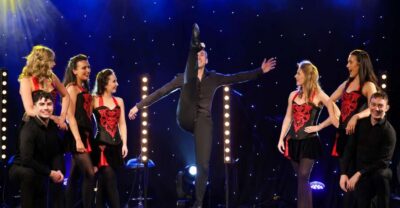 ★ 4.9Galway: Trad on the Prom Ticket with Irish Music and DancingFrom $40482 reviews
 ★ 4.0Generation Pub Crawl DublinFrom $16400 reviews
Other lists this one is on