
REVIEW · IRELAND
A Self Guided Walking Tour of Dublin’s Docklands
Docklands turns into a real story when you walk it. This self-guided audio tour gives you offline maps and audio as you follow the riverfront and learn how the Docklands grew from a working port into today’s city scene, with narration timed to your route. I like that it is self-paced and keeps you moving at a human speed. The main catch is simple: you need to bring your own smartphone and headphones.
What really works here is the way the narration nudges you to look around, not just pass by buildings. The pace feels manageable for a 50 minute to 1 hour 10 minute walk, and the local insider style is easy to follow, so you can actually enjoy the sights as you listen.
In This Review
- Key Highlights You Will Actually Notice
- Entering the Custom House and Getting Your Route Right
- Custom House to Quayside: The Port Area You Can Walk Through
- Labor, Independence, and the Human Side of Docklands
- Transport Power: Busáras and Connolly Train Station
- IFSC: Where the Docklands Became Financial Dublin
- Triumphal Arch to the Scherzer Bridges: Maritime Engineering on Foot
- The Famine Memorial and Seafarer Remembrance Stops
- The Jeanie Johnston Replica and Emigration Story Context
- Seán O’Casey Bridge and Samuel Beckett Bridge: Views From the Waterline
- Convention Centre Dublin and the Writers and Navies Trail
- Admiral Brown to the Diving Bell: When Maintenance Was the Job
- East-Link Crossing: Tom Clarke Bridge and Dock-to-City Connections
- BrewDog Outpost, Sea Lock, and the Canal Basin Finish
- Ending at Red Sticks Dublin on Grand Canal Square
- Price and Time: Is $11.99 Good Value?
- Who This Tour Suits Best
- Should You Book This Docklands Audio Walk?
- FAQ
- Do I need my own smartphone and headphones?
- How long is the Dublin Docklands walking tour?
- What does the tour cost?
- Is the audio available offline?
- Where do I start and where does the tour end?
- What language is the tour in?
- Can I use the tour again after I book?
- Is there an option to listen without walking the route?
- Is this tour private?
- Is it accessible by public transport?
Key Highlights You Will Actually Notice

- Offline access for audio and maps, so you are not hunting for signal every time you turn a corner
- Maritime history told on your route, from trade buildings to dock engineering
- A smooth walk structure, with frequent landmarks along the quays and bridges
- Memorial stops that change the tone, including famine and seafarer remembrance
- Modern Dublin bridges and institutions, from Samuel Beckett Bridge to Convention Centre Dublin
- An art-and-canals finish, ending at Red Sticks Dublin on the Grand Canal
Other Dublin walks with the wind behind you
- Dublin Highlights and Hidden Gems Guided Walking Tour★ 5.0 · 6,020 reviews
- Dublin: Highlights and Hidden Gems Walking Tour★ 4.9 · 2,140 reviews
- 1916 Rebellion Walking Tour★ 5.0 · 1,605 reviews
- 90 Minute Dublin Walking tour and Sightseeing tips★ 5.0 · 916 reviews
Entering the Custom House and Getting Your Route Right
Your tour starts at the Custom House on North Wall, Dublin 1, which is one of those buildings that immediately tells you where you are. It is neoclassical in style and it once acted as a center of Irish trade and commerce. Even if you do not know the Docklands story yet, the scale of the place sets the context fast.
One smart detail for a self-guided walk like this: the tour includes directions to the starting point, so you can get lined up before you begin. That matters because audio GPS tours go much better when you start in the right spot. If you begin at the wrong place, you might end up with the narration feeling out of sync.
From there, you move through the Docklands stretch where you will see the contrast of old and new. The quayside is lined with historic warehouse-style buildings alongside modern development, so you get a visual timeline as you walk. This kind of route is ideal for listening because you can look up at each stop while the narration explains what you are seeing.
Custom House to Quayside: The Port Area You Can Walk Through
After the Custom House, you head along the quayside, where the story of Dublin’s maritime industry is written into the street layout. You are not just looking at scenery. You are tracing where goods moved, where ships connected, and how the waterfront shaped daily life.
As you walk, watch for the mix of architecture. Some buildings feel like they were built for work, not for selfies. Others look like they were added later, reflecting the Docklands shift into offices, venues, and more urban living. That change is the point. It is easier to understand when you experience it by foot instead of reading it later.
There is also a practical rhythm to this section. You get a steady chain of landmarks rather than one long stretch with nothing to register. That is one reason the tour duration feels realistic. You are never left staring at the same block while the audio runs on.
Labor, Independence, and the Human Side of Docklands

The Docklands are about ships, yes, but they are also about people. This is where the tour leans into Ireland’s labor and independence story, and it does not treat it like background noise.
You pass the memorial honoring James Connolly, a key figure associated with Ireland’s fight for independence and workers’ rights. Then you walk past the Liberty Hall Theatre, an important landmark tied to Dublin’s labor movement history. If you only knew Docklands as finance and conferences, these stops reset your understanding. They help you see the port area as a place where workers lived with real risk and real stakes.
A useful way to experience this part is to slow your pace for a minute at each memorial or landmark. The walking time is short enough that you can afford a brief pause, and the audio context makes those moments land harder than if you just read a plaque and move on.
Transport Power: Busáras and Connolly Train Station
Next, the route shifts from maritime memory into modern movement. You pass Busáras, Dublin’s central bus station and a major transportation hub, then Connolly Train Station, one of the city’s main railway stations serving domestic and international routes.
Why this matters on a walking audio tour: transportation hubs often sit right on top of older city logic. Even if you are not studying history formally, these stations help explain how Dublin keeps reinventing its connectivity.
You can also use these segments as checkpoints. If you need a bathroom stop or a quick drink, this is a good area to plan for it. Just keep in mind the tour is designed around time and location, so do not wander too far off-route for too long.
Other guides we rate around Dublin

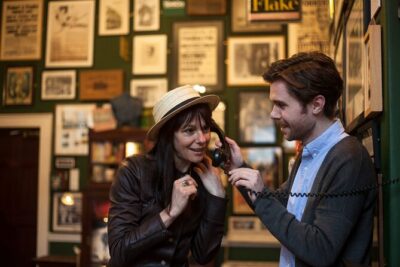


IFSC: Where the Docklands Became Financial Dublin
You then walk by the IFSC, Dublin’s financial hub. This is where you see the Docklands as it is today, with multinational companies and financial institutions calling the area home.
If you like your history practical, this section delivers. The narration ties the financial present back to the idea that the Docklands were always a place of exchange. The goods exchange changed, but the “connect Dublin to the world” theme still shows up in a new form.
It is also a good stretch to keep your audio going without overthinking it. You will get the most value by letting the city visuals do their part, then letting the narration connect the dots.
Triumphal Arch to the Scherzer Bridges: Maritime Engineering on Foot
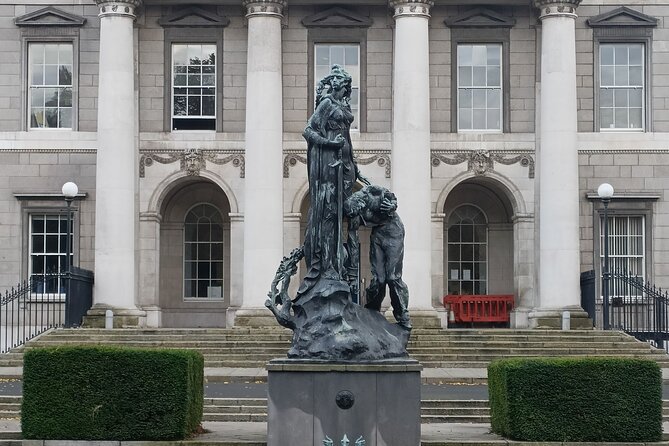
Now you hit the most “wow, that is a detail I would have missed” zone. You pass the Triumphal Arch, a historic monument commemorating Dublin’s maritime heritage and economic prosperity. It is one of those landmarks that feels both celebratory and slightly formal, which fits the tone of a past era when port wealth was a headline.
Soon after, you see the Scherzer Rolling Lift Bridges, engineering marvels built to facilitate maritime traffic. If you are into infrastructure, you will enjoy this section because the bridges are physical reminders that the Docklands were designed around ships moving through waterways.
A tip for this part: keep an eye on how the road and the waterways interact. The engineering makes more sense when you understand why lift bridges existed in the first place. Even if you are not an engineer, you can still appreciate the logic of the design when you are standing close enough to see it.
The Famine Memorial and Seafarer Remembrance Stops
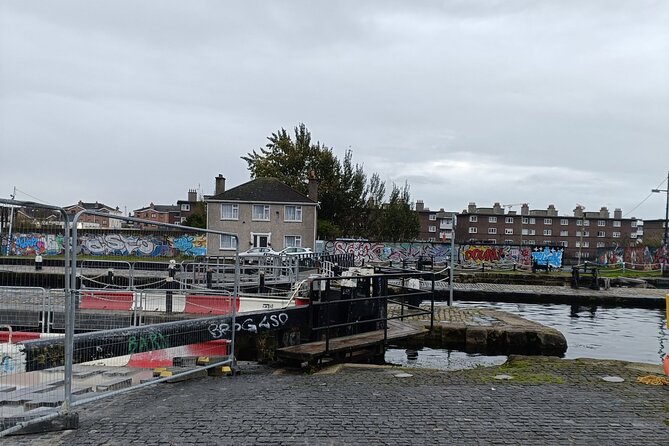
Then the tone shifts. You walk by the Famine Memorial, a poignant tribute to those who suffered during Ireland’s Great Famine in the 19th century. Right after, you see memorials connected to Irish seafarers who lost their lives at sea.
This is not a casual sightseeing beat, and the tour does not pretend it is. It gives you a structured place to process a heavy chapter of Irish history. If you are someone who prefers light travel content only, you might find these moments emotionally heavy. But if you like your travel to mean something, this is one of the tour’s best strengths.
A practical way to handle it: do not rush. Let the audio finish the story, then take a few seconds to look around you. This is one of those locations where the city around you feels different once you understand what the memorials represent.
The Jeanie Johnston Replica and Emigration Story Context
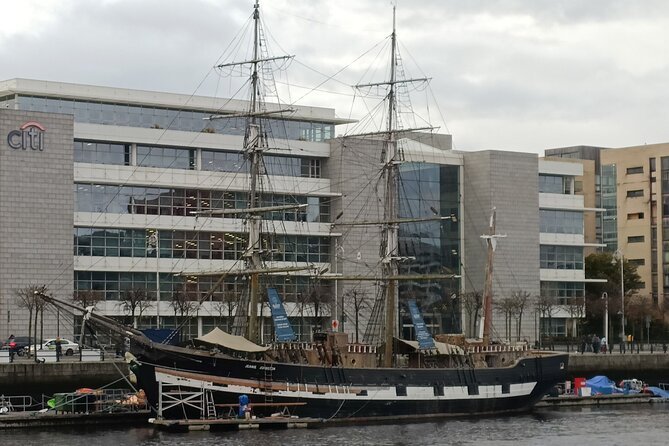
Next, you see a replica of The Jeanie Johnston, a historic ship associated with the transport of Irish emigrants to North America during the Great Famine. Again, it is the kind of landmark you can walk past without absorbing the meaning unless the narration provides the link, and that is exactly what the audio tour is built to do.
This section works well because it connects the memorial tone with a tangible object, a ship you can picture instead of only imagine. If you are traveling with kids, this is also a good place to explain how journeys shaped family stories. The audio format helps keep the pacing steady while you absorb facts.
Seán O’Casey Bridge and Samuel Beckett Bridge: Views From the Waterline
Now you cross the River Liffey via the Seán O’Casey Bridge, which gives you stunning views of the city skyline and waterfront. This is one of those moments where the walking tour turns into a look-at-the-world moment.
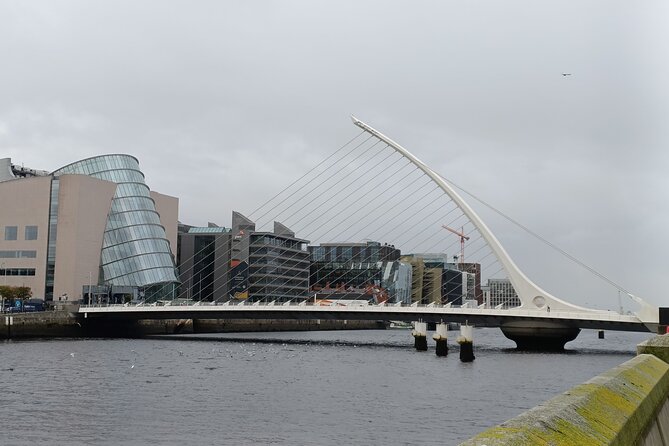
After that, you pass the Samuel Beckett Bridge, an iconic modern bridge named after the writer. The audio context helps you see it as more than just a way across. It becomes part of the Docklands-to-city shift, a visual reminder that Dublin’s waterfront sits right next to modern Dublin culture.
This is also a good stretch for photos, but do not let the camera take over. You will get the most out of the tour if you capture a few images, then keep your eyes on the route.
Convention Centre Dublin and the Writers and Navies Trail
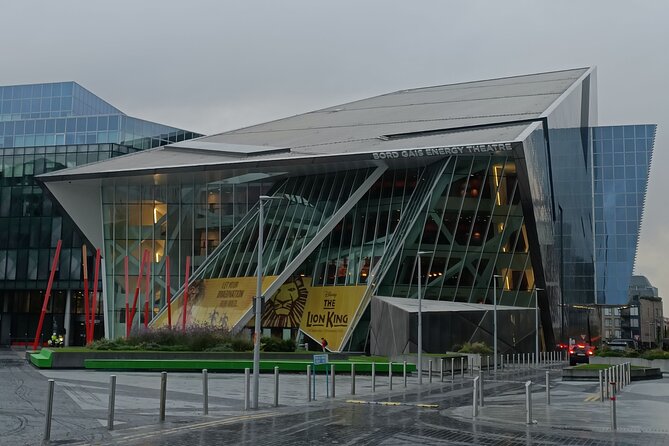
You walk by Convention Centre Dublin, which is a state-of-the-art venue for conferences, events, and exhibitions. It signals how the Docklands function now: big meeting rooms and big audiences instead of shipping schedules.
Then you pass the statue of Admiral William Brown, an Irish-born naval officer who founded the Argentine Navy. That detail is a fun reminder that Irish maritime history did not only stay in Ireland. It traveled.
If you like “wait, what?” facts, keep your volume up here. This kind of historical cross-connection is one of the reasons audio guides can be more satisfying than reading a generic sign.
Admiral Brown to the Diving Bell: When Maintenance Was the Job
You will also see the historic Diving Bell, once used for dock maintenance in Dublin’s port. This stop is pure structure and function, and it is easy to appreciate because the diving bell connects to an actual problem: keeping dock infrastructure working in real water conditions.
Even if you only skim these sections, the key value is that the narration gives you a reason for why you are looking at an industrial artifact. It turns “metal object by a walkway” into a story about how ports kept moving.
East-Link Crossing: Tom Clarke Bridge and Dock-to-City Connections
Next is the Tom Clarke Bridge, also known as the East-Link Bridge. It is described as a vital transportation link connecting Dublin’s north and south.
This is a useful mental reset. You just walked through maritime memory and modern landmarks, and now you are crossing a key urban connection. It helps you picture the Docklands as a hinge point in the city, not a separate world.
BrewDog Outpost, Sea Lock, and the Canal Basin Finish
You pass BrewDog Outpost Dublin, a popular brewery with a lively atmosphere. This is a nice sanity break late in the walk, especially if you want to reward yourself for finishing strong.
After that, you walk by the sea lock, a crucial piece of maritime infrastructure that regulates water levels in the docks. This stop feels practical for the same reason the diving bell does. It explains how the system functioned, not just what the area looked like.
Then you reach the Grand Canal Docks sign, marking the entrance to the historic canal basin. After that you pass Hanover Quay, a waterfront area with a mix of residential and commercial developments, and then Hanover Quay Studios, a recording studio complex frequented by musicians and artists.
That artistic stop is a good way to end the story arc. The Docklands were once built around moving cargo and people. Now they also support creativity, recording, producing, and performing.
Ending at Red Sticks Dublin on Grand Canal Square
Your tour ends at Red Sticks Dublin on the Grand Canal. The landmark sculpture adds a final artistic note to a route that has carried you from trade and labor history to bridges, memorials, and modern Dublin institutions.
If you have a little extra time, linger around Grand Canal Square. The tour description frames it as a vibrant public space with modern architecture and cultural attractions. Even if you are tired, this is a good place to stand, breathe, and let the full arc of the Docklands story settle in.
Price and Time: Is $11.99 Good Value?
For $11.99, you are basically buying three things: a route design, a narration track, and lifetime access. The walk itself is about 50 minutes to 1 hour 10 minutes, so you are not paying for a long half-day slog.
What makes the value stronger is the unlimited, lifetime use. You can use the tour before and after your booking date, plus you get the virtual playback option to listen like an audiobook from anywhere. That means if you want to replay the story later, or if you just want the audio while commuting, you can.
You also get offline access to audio, maps, and geodata. That is a big deal for Dublin, where signal can be fine but roaming costs can be annoying. With offline support, you keep your attention on the street instead of troubleshooting your phone.
The only real downside in the value equation is the same one mentioned earlier: you must supply the smartphone and headphones. If you show up unprepared, the experience ends right away.
Who This Tour Suits Best
This is a great match if you like walking tours that explain what you are seeing without forcing you into a group schedule. It also fits well if you want a quick historical arc, maritime landmarks, and memorial stops in one compact route.
It is especially good for people who prefer an audio pace that they control. The tour design includes a manageable timeline, and the narration style is easy to understand, which helps when you are splitting your attention between walking and listening.
If you hate using your phone on the street or you want a live guide to answer questions on the spot, this one may feel less satisfying. But for most independent walkers, it is a strong way to experience the Docklands with less guesswork.
Finally, check your expectations about the format. This is described as a private self-guided activity, meaning your group is the only one involved, but it is still self-guided. You are the director here.
Should You Book This Docklands Audio Walk?
Book it if you want a compact Docklands education you can do on your own terms, with offline audio and a clear route from the Custom House to Red Sticks on the Grand Canal. The price is modest for the amount of narration, the number of major landmarks, and the lifetime access.
Skip it if you do not want to manage a smartphone outdoors or you prefer a person to do the explaining. Also, remember it is non-refundable, so choose a time window you feel good about.
FAQ
Do I need my own smartphone and headphones?
Yes. The tour does not include a smartphone or headphones, so you will need to bring both.
How long is the Dublin Docklands walking tour?
It runs about 50 minutes to 1 hour 10 minutes.
What does the tour cost?
The price is $11.99 per person.
Is the audio available offline?
Yes. The tour includes offline access to audio, maps, and geodata.
Where do I start and where does the tour end?
You start at the Custom House, North Wall, Dublin 1, and you end at Red Sticks Dublin in the Dublin Docklands on the Grand Canal.
What language is the tour in?
The tour is offered in English.
Can I use the tour again after I book?
Yes. You get unlimited, lifetime use of the tour, including before your booking date and after it.
Is there an option to listen without walking the route?
Yes. There is a virtual playback option, so you can listen like an audiobook from anywhere.
Is this tour private?
Yes. It is listed as a private tour or activity, and only your group will participate.
Is it accessible by public transport?
Yes. It is near public transportation, including access from Busárás (luas and bus stops) and the Tara Street DART station. The start point is about a 10 minute walk from O’Connell Street and about a 15 to 20 minute walk from College Green.
More of Dublin Underfoot
The Wider Dublin Pile
Elsewhere on The Ireland Traveler
Lately added to the Dublin pile
- Waterford Crystal and Kilkenny Full-Day Rail Tour from Dublin
★ 5.0 · 3 reviews - Turtle Bunbury’s Dublin: A Self-Guided Audio Tour from a Celebrated Author
★ 5.0 · 3 reviews - Cliffs of Moher and The Burren Private Tour from Dublin
★ 5.0 · 3 reviews - Dublin Full-Day Tour through Boyne Valley
★ 5.0 · 3 reviews - Rock Of Cashel And Blarney Castle Private Chauffeur Full Day Sightseeing Tour
★ 4.5 · 3 reviews - Private Irish Fusion Meal in a Modern Home in Skerries, Dublin
★ 5.0 · 3 reviews
More Walking Tours, side by side.
 ★ 5.0Dublin Highlights and Hidden Gems Guided Walking TourFrom $296,020 reviews
 ★ 4.9Dublin: Highlights and Hidden Gems Walking TourFrom $272,140 reviews
 ★ 5.01916 Rebellion Walking TourFrom $271,605 reviews
 ★ 5.090 Minute Dublin Walking tour and Sightseeing tipsFrom $21916 reviews
 ★ 5.02-Hour Historical Walking Tour from DublinFrom $22875 reviews
 ★ 4.7Historical 2-Hour Guided Walking Tour of DublinFrom $22865 reviews
 ★ 5.0Dublin Traditional Irish 3 Course Meal Walking Tour with LocalFrom $107755 reviews
 ★ 4.9Dublin: Mythology, Folklore and Legends Walking TourFrom $27703 reviews
Other lists this one is on