
REVIEW · IRELAND
Dublin: Hidden Gem Walking Tour with Local Guide
Tallaght has stories most Dubliners miss. This 2-hour walking tour in Tallaght tracks the area’s big names and turning points, from letters tied to W.B. Yeats to legend-linked mountain views.
I especially like how guide Sophie connects places to people, not just dates. You get stop-by-stop context, plus shared letters and readings, and the whole thing stays conversational even when the material gets deep.
One consideration: it relies on good weather, and with a compact 2 hours, you will be walking steadily and listening in shorter bursts. Also, it is not the classic Dublin city center route, so if you want only the postcard stops, you may prefer something else.
In This Review
- Quick hits
- Why Tallaght Feels Like a Different Dublin in 2 Hours
- Kingswood Heights to Whitehall: Tallaght Through Katharine Tynan’s Circle
- Belgard Road: William Howard Russell and the Times of War
- Myth and Mountain Views at Belgard Road
- Tallaght Aerodrome and Urney Chocolates: Industry, War, and Local Brands
- TU Dublin Tallaght Campus: From Fast Growth to Hard Times
- St Maelruain’s Church: Monastery Roots and the Two Eyes of Ireland
- Alice Furlong at St Maelruain’s Churchyard: Irish Language Through a Local Voice
- Tallaght Village Green: Fenian Rising Plaque, Dickens References, and Local Cottages
- Price and What You Really Get for $18.05
- Who This Walk Suits Best, and Who Might Want to Choose Another Option
- Final call: Should you book this Tallaght walking tour?
- FAQ
- How long is the Dublin Tallaght walking tour?
- What language is the tour offered in?
- How big is the group?
- Is there a mobile ticket?
- Where does the tour start and where does it end?
- Do you learn any Irish during the tour?
- Are service animals allowed?
Quick hits
- A small group cap of 12 means you can ask questions without feeling rushed
- Letters and poems are part of the walk, including Irish-language works with English translations
- Literature meets local landmarks, like Katharine Tynan and her circles in Whitehall
- War correspondence gets a Tallaght spotlight, featuring William Howard Russell and his Times reporting
- You end with basic Irish words, and a nearby bilingual café is waiting
Other Dublin walks with the wind behind you
- Dublin Highlights and Hidden Gems Guided Walking Tour★ 5.0 · 6,020 reviews
- Dublin: Highlights and Hidden Gems Walking Tour★ 4.9 · 2,140 reviews
- 1916 Rebellion Walking Tour★ 5.0 · 1,605 reviews
- 90 Minute Dublin Walking tour and Sightseeing tips★ 5.0 · 916 reviews
Why Tallaght Feels Like a Different Dublin in 2 Hours
This is one of those tours that changes your mental map. Instead of treating Tallaght like a suburb you pass through, the walk frames it as a place where Irish stories, political shifts, and everyday life all overlap.
The value is that you do not need background knowledge first. You start with the local beginnings, then the guide moves you through literature, mythology, monastic roots, and modern urban change. By the end, Tallaght feels like its own chapter of Ireland, not an afterthought to Dublin city.
Timing matters here. With about 2 hours and lots of short stops, you cover many themes without getting stuck in one place too long. That also means some stops are brief, so the guide’s pace is part of the experience.
Kingswood Heights to Whitehall: Tallaght Through Katharine Tynan’s Circle
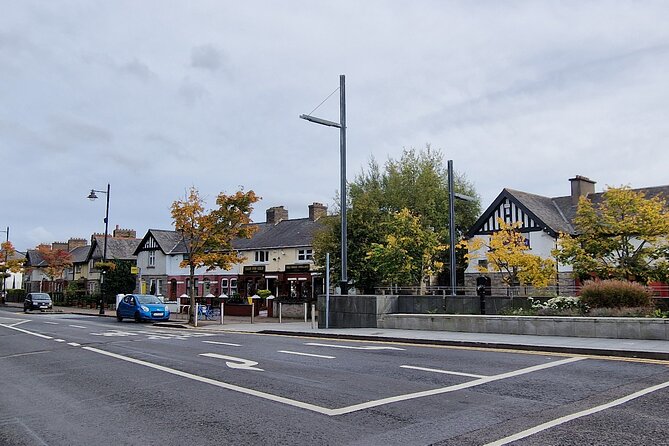
The tour starts in Kingswood Heights, in the KingswoodKilnamanagh area, and you begin with a quick introduction to Tallaght’s beginnings in ancient Irish history. This sets up the tone: you are not just walking, you are building a timeline in your head.
From there, the walk shifts to the former residence of Katharine Tynan, known as Whitehall. Here you hear how Katharine moved through both Irish and English literary circles, and you learn why the Irish Renaissance crowd held her in high regard. The guide also connects her friendships with major figures, including W.B. Yeats and George William Russell, who is often referred to as AE.
What makes this stop work for you is that it is not only biography. You are also given pieces of the story in the form of shared letters from Katharine to Yeats and AE. That kind of source-style moment helps the names feel personal rather than distant, especially if you have ever read Yeats and wondered how these circles actually worked.
A small practical note: the stop itself is only around 15 minutes, so you should expect a focused snapshot rather than a full lecture. The payback is that the walk keeps momentum.
Belgard Road: William Howard Russell and the Times of War
At Belgard Road, the tour turns from poetry circles to press and conflict. You meet William Howard Russell, born in Jobstown, Tallaght, and often recognized as one of the early war correspondents. The guide frames why that matters, because reporting from war zones shaped what the public believed and how nations argued.
You also get a sweep of what his career looked like. The tour highlights his long reporting life, including work connected with The Times. Topics mentioned include meetings associated with Daniel O’Connell, the Great Famine in Ireland, the Crimean War, and the American Civil War.
Then comes a fun cross-connection: his friendship with Charles Dickens. This kind of link is a nice tool for you, because it helps you place Tallaght on the broader map of 19th-century Europe and beyond. You are seeing how one local upbringing fed into international attention.
The stop is around 10 minutes, so again, think “high impact overview.” If you love correspondents and journalism, you will enjoy how the guide keeps connecting the dots between events, writing, and personal networks.
Myth and Mountain Views at Belgard Road
Not every part of the tour is modern history and famous letters. Another Belgard Road stop brings in Irish mythology, and then focuses on one of Ireland’s well-known legends: Oisín I dTír na nÓg, often translated as Oisín in the Land of Youth. You are shared a bilingual version, in Irish and English, which is a useful way to see how the meaning survives across languages.
The tour also connects the legend to the Dublin Mountains. You are given a view at this point, so the scenery is not just a backdrop. It is part of the storytelling.
This stop is around 10 minutes, so you should treat it like a brief legend-break. If the weather is clear, you get a stronger payoff from the mountain view. If clouds roll in, you will still get the story, but you may miss some of that added atmosphere.
Other guides we rate around Dublin

Tallaght Aerodrome and Urney Chocolates: Industry, War, and Local Brands
At Belgard Retail Park, the tour explores the history of the former Tallaght Aerodrome. The guide ties its importance to major 20th-century shifts, mentioning roles across World War I, the Irish War of Independence, and the Irish Civil War. Even though the site you see is now retail-focused, the story reminds you that the ground has changed uses over and over.
There is also a family-and-literature angle. The aerodrome was built on lands belonging to the father of Katharine Tynan, and the guide shares a poem connected to that development. That is a neat trick: you learn about a physical place, and then you see how a literary voice responded to changes around her.
Another highlight is the Gallagher family and Urney Chocolates. You hear how Urney became part of Tallaght’s identity for decades, then closed in 1980. The tour does not stop at the closing date. It also talks about how the Urney Chocolates brand lives on.
To widen the picture, the guide briefly mentions Jacob’s as another well-known brand that operated in Tallaght for a time. For you, the value is understanding how everyday consumption and local industry shaped the feeling of a neighborhood. It is not just political history and big personalities.
This stop runs about 15 minutes. You should leave it with a better sense of why Tallaght’s character was formed by both public events and private routines.
TU Dublin Tallaght Campus: From Fast Growth to Hard Times
Next up is TU Dublin, Tallaght Campus. This is where the tour zooms out, looking at Tallaght’s transformation from the 1970s into the 1980s. The guide emphasizes how quickly Tallaght grew into one of Ireland’s largest urban areas, and you get a sense of how rapid growth changes people’s lives.
The tour also places that growth within a tougher national backdrop, with Ireland experiencing economic difficulties, high unemployment, and high emigration. So the guide is not treating the story as a simple success tale. It is more about what development did to families, communities, and futures.
This stop is around 15 minutes, and that is enough time to understand the big picture. It is also long enough to make you look at today’s Tallaght with different eyes, because you can imagine how different it was during that growth spurt.
If you like modern history or urban change, this is one of the most useful stops. It gives you a framework for why the area feels the way it does now.
St Maelruain’s Church: Monastery Roots and the Two Eyes of Ireland
At St Maelruain’s Church of Ireland, you step into older layers. The church stands on what used to be a monastery of major importance in ancient Ireland. The tour also references the idea of two eyes of Ireland, pairing St Maelruain’s with another monastery at Finglas.
The guide then brings in St Maelruain himself, and how the present-day church came into being. This is the part of the tour that rewards patience, because you are dealing with deep time. The goal here is not to memorize names, it is to understand continuity, how a place keeps getting reused while staying spiritually significant.
This stop is short, about 5 minutes. That means it works best if you are the kind of traveler who enjoys the feeling of place even when the time window is tight.
Alice Furlong at St Maelruain’s Churchyard: Irish Language Through a Local Voice
Right at St Maelruain’s Church, the tour shifts to Alice Furlong, buried on the grounds. The guide shares her story, including that she was a founding member and vice-president figure connected with Inghinidhe na hÉireann, known as the Daughters of Ireland. You also learn she was a talented poet and writer, and an Irish-language advocate.
This stop is especially strong if you like language, because the guide shares poetry in Irish and provides professional translations into English. That matters for you because it helps you appreciate the sound and meaning, not only the plot points. It also makes the Irish language feel like part of local identity, not just a cultural checkbox.
This segment runs around 15 minutes. It is long enough to feel human and close, and short enough that you can keep moving without information fatigue.
Tallaght Village Green: Fenian Rising Plaque, Dickens References, and Local Cottages
At Village Green, you find a plaque commemorating the Fenian Rising of 1867, and the guide explains Tallaght’s role in that event. The tour also includes writings from Charles Dickens connected to this period in Tallaght.
What I like about pairing Fenian-era commemoration with Dickens references is that you get a sense of how history was observed, recorded, and interpreted. It stops the story from being only local. It becomes part of the bigger 19th-century conversation.
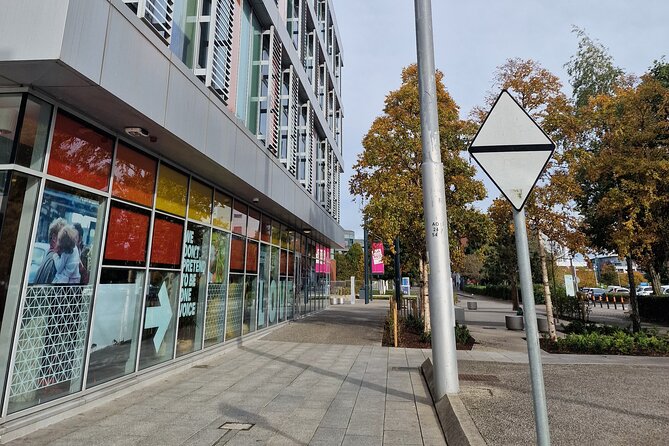
Then you end the tour at Tallaght Village, where you see cottages designed by architect Thomas Joseph Byrne, described in the tour as one of the most influential architects of his day. You also get a quick mention of the Dublin and Blessington Steam Tramway, which ran through the area before closing in 1932.
This is where you also get your practical closer. The guide teaches you some basic Irish. And if you want, you can use those words at a local café right in Tallaght Village that uses Irish and English.
That ending is a big part of the tour’s charm. You leave with something you can actually do in the next five minutes, not just something you heard.
Price and What You Really Get for $18.05
At $18.05 per person for an approximately 2-hour walk, you are paying for expert guidance plus curated storytelling. The stops are free in terms of admissions, and the tour covers a lot of ground through multiple themes, so you are not also buying entry tickets at each stop.
The small group limit, up to 12 people, is also value. It is easier to hear, easier to ask questions, and you are not treated like a number being herded around.
The real question for you is whether this format fits your travel style. If you like guided walking tours that focus on context and connections, this is strong value. If you want big museum stops, you will likely prefer something else, because this is built around conversation, short segments, and sharing materials like letters and poems.
Who This Walk Suits Best, and Who Might Want to Choose Another Option
This tour is a great fit if you:
- Enjoy history but want it tied to actual places you can stand in
- Like literature and the people behind the books
- Want a lesser-seen Dublin area with a local guide voice
It may be less ideal if you:
- Are chasing only central Dublin landmarks
- Prefer long stops in one location instead of quick thematic segments
- Need a completely weather-independent plan, since the experience requires good weather
For families and most adult travelers, the pacing described fits a typical walking tour day. Service animals are allowed too, which helps make it more accessible for more visitors.
Final call: Should you book this Tallaght walking tour?
I think you should book it if you want Dublin with edges. Tallaght is not the default choice, and that is exactly why this works. You get a guided route that connects Irish language, literature, war reporting, mythology, and real neighborhood change, all in a small-group format.
If you plan to visit Dublin and only have a couple hours free, this is a smart way to see a different side of the city. If weather is questionable, watch the forecast, but if conditions look decent, this tour is easy to recommend.
FAQ
How long is the Dublin Tallaght walking tour?
The tour runs about 2 hours.
What language is the tour offered in?
The tour is offered in English.
How big is the group?
The tour has a maximum of 12 travelers.
Is there a mobile ticket?
Yes, the tour uses a mobile ticket.
Where does the tour start and where does it end?
It starts in the KingswoodKilnamanagh, Dublin area and ends in Tallaght Village at R819, beside a bilingual Irish and English café.
Do you learn any Irish during the tour?
Yes, you are taught some basic Irish toward the end of the tour, and you are welcome to use it in the café afterward.
Are service animals allowed?
Yes, service animals are allowed.
More of Dublin Underfoot
The Wider Dublin Pile
Elsewhere on The Ireland Traveler
Lately added to the Dublin pile
- Waterford Crystal and Kilkenny Full-Day Rail Tour from Dublin
★ 5.0 · 3 reviews - Turtle Bunbury’s Dublin: A Self-Guided Audio Tour from a Celebrated Author
★ 5.0 · 3 reviews - Cliffs of Moher and The Burren Private Tour from Dublin
★ 5.0 · 3 reviews - Dublin Full-Day Tour through Boyne Valley
★ 5.0 · 3 reviews - Rock Of Cashel And Blarney Castle Private Chauffeur Full Day Sightseeing Tour
★ 4.5 · 3 reviews - Private Irish Fusion Meal in a Modern Home in Skerries, Dublin
★ 5.0 · 3 reviews
More Walking Tours, side by side.
 ★ 5.0Dublin Highlights and Hidden Gems Guided Walking TourFrom $296,020 reviews
 ★ 4.9Dublin: Highlights and Hidden Gems Walking TourFrom $272,140 reviews
 ★ 5.01916 Rebellion Walking TourFrom $271,605 reviews
 ★ 5.090 Minute Dublin Walking tour and Sightseeing tipsFrom $21916 reviews
 ★ 5.02-Hour Historical Walking Tour from DublinFrom $22875 reviews
 ★ 4.7Historical 2-Hour Guided Walking Tour of DublinFrom $22865 reviews
 ★ 5.0Dublin Traditional Irish 3 Course Meal Walking Tour with LocalFrom $107755 reviews
 ★ 4.9Dublin: Mythology, Folklore and Legends Walking TourFrom $27703 reviews
Other lists this one is on