
REVIEW · DUBLIN
Dublin: Macabre History Walking Tour
Dublin gets darker on this walk. You start at the O’Connell Street Spire, grab onto a bright yellow umbrella, and follow a live guide through eerie, lesser-known streets on both sides of the river. Along the way, you hear chilling tales tied to real places, from mythic violence to 19th-century body-snatching talk.
I really like two things about this tour: first, the focus on specific Dublin locations, not vague stories, like the Statue of Cuchulainn’s Death and stops tied to executions and the city’s mortuary world. Second, the storytelling style seems to land well, with guides like Rob and Peter earning standout marks for pacing, humor, and clear, scene-like delivery that keeps the group moving.
One thing to consider: while the themes are macabre, it is still a walking history tour, not a nonstop horror show. If you’re hoping for maximum gore at every turn, you may find it more spooky story time than blood-and-guts spectacle. Also, it is explicitly not suitable for children under 18.
In This Review
- Key highlights worth marking on your mental map
- Where You Start: The Spire, O’Connell Street, and the Yellow Umbrella
- A Two-Hour Stroll Across Dublin’s Riversides
- Cuchulainn’s Death: Myth Meets Street-Level Dublin
- Grave Robbing Near the City Mortuary: A Dark Business with Real Consequences
- Medieval Quarantines, Mummified Corpses, and the Old City Walls
- Legless Serial Killer Stories and the Rats of Dublin
- Public Executions: Learning How Order Worked
- The Brothel Keeper’s Fire at the Stake by the Cathedral
- Guides You’ll Remember: Rob and Peter’s Storytelling Style
- Price and Value: Is $19 Worth It?
- Who Should Book This Macabre Dublin Walk
- Should You Book Yellow Umbrella Tours’ Macabre History Walking Tour?
- FAQ
- Where do I meet for the Dublin macabre history walking tour?
- How long is the tour?
- How much does the tour cost?
- Is the tour wheelchair accessible?
- Is this tour suitable for children?
- Is hotel pickup and drop-off included?
Key highlights worth marking on your mental map
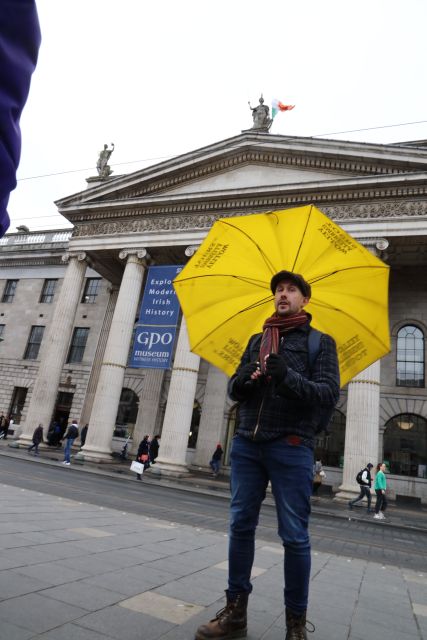
- Meets at the Spire on O’Connell Street, look for the yellow umbrella
- 2 hours of walking that traces Dublin on both sides of the river
- Big set-piece stop: the Statue of Cuchulainn’s Death
- 19th-century grave robbing stories near the city mortuary
- Grim themes across eras: medieval quarantines, public executions, rats
- Rated for adults only, so expect adult themes and darker subject matter
Ghost stories out of Dublin, continued
- Dark Dublin: Torture, Murder & Mystery★ 5.0 · 2,231 reviews
- Dublin Ghost Bus Tour with Professional Actors★ 4.5 · 949 reviews
- The Dublin Ghostbus Tour★ 4.6 · 634 reviews
- Haunted Dublin Walking Tour★ 5.0 · 550 reviews
Where You Start: The Spire, O’Connell Street, and the Yellow Umbrella
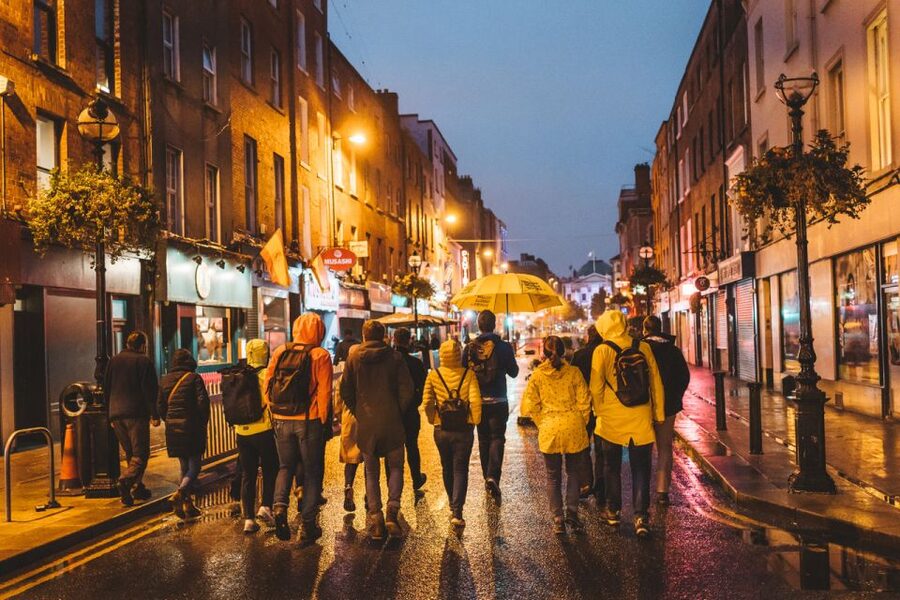
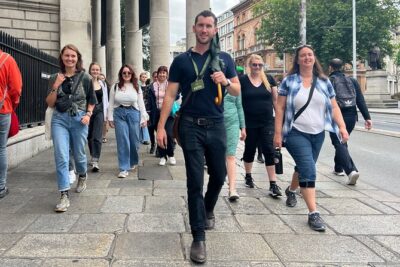
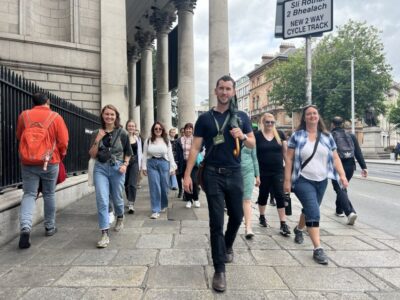
You meet in the middle of O’Connell Street, right by the Spire, the tall needle people use as Dublin shorthand. Your visual cue is simple: look for the yellow umbrella, because that is how the guide will spot you and get the group moving.
This start matters more than you might think. It is a central meetup, so you can plan your day around it easily, and you are not trapped in a long transit slog before the stories start. The tour also ends back at the meeting point, so you’re not stuck figuring out a second location when you’re done.
If you’re trying to time this against other plans, build in a little buffer for finding the group and getting everyone settled. One common practical point: you’ll want to arrive with enough slack to avoid stress, since the guide is leading a sequence and the walk is time-bound.
A Two-Hour Stroll Across Dublin’s Riversides
This is a 2-hour walking tour, and that duration shapes the whole experience. You’re not doing a marathon, but it is long enough to string together multiple eras without feeling rushed in every single moment. The best part is that it stays grounded in place, walking you through the old city center and along the riverside.
The route also aims to cover both sides of the river, which gives you that “two viewpoints” feeling even if you’re staying in one compact area. Dublin can look familiar at street level, but when you start hearing what happened along particular walls, lanes, and corners, the city stops being a postcard and starts being a timeline.
One more practical note: it is a walk. Even though you don’t need athletic gear, you should expect normal city walking pace for the full duration, and you’ll want to be comfortable standing and moving along streets for a couple of hours.
Cuchulainn’s Death: Myth Meets Street-Level Dublin

One of the tour’s headline moments is the story tied to the Statue of Cuchulainn’s Death. This is not just a quick photo stop. The tour frames it as a gateway into Dublin’s macabre mindset, where old legend and city legend share the same dark appetite.
You’ll hear the tale of the mighty warrior and the famous, brutal detail: the eyes pecked out by a raven on his shoulder. Whether you treat this as myth, symbol, or both, the tour uses it to set tone fast. It tells you what kind of stories you’re in for, and why Dublin’s darker lore keeps showing up beside ordinary-looking streets.
What makes this stop valuable for you is that it creates a mental anchor early. After hearing Cuchulainn, later stories feel less random. They start to connect into a pattern of fear, punishment, and survival that shows up again and again across the city.
Grave Robbing Near the City Mortuary: A Dark Business with Real Consequences
The tour also leans into 19th-century Dublin with a topic that is both grim and strangely practical: grave robbing near the city mortuary. This is one of those topics where you can feel the tension between public order and private greed.
The way the story is presented matters here. You’re not just told the concept. You learn the idea of a “thriving business” linked to the mortuary world, which reframes the horror as something organized and repeated, not a one-off scandal. That shift makes the story stick, because it explains how ordinary systems could be used for wrongdoing.
As you walk close to the relevant area, the whole thing clicks into place: the city is full of institutions, and institutions mean people, paperwork, access, and opportunity. That is why these stories feel so unsettling, even when they’re presented as historical tale rather than gore.
Other Dublin walks with the wind behind you


Medieval Quarantines, Mummified Corpses, and the Old City Walls
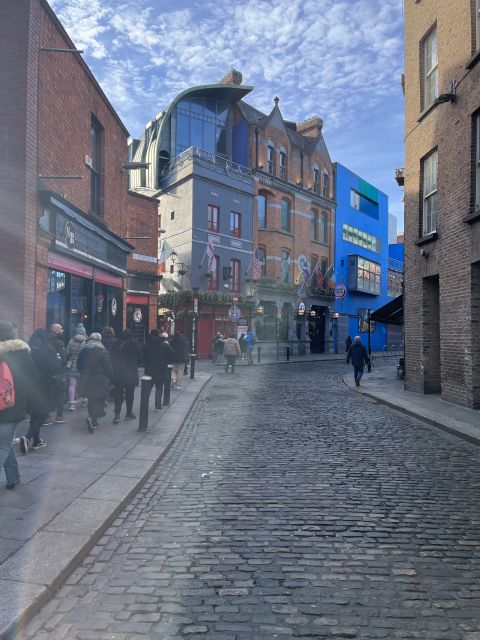
As you move close to the old city walls, the tour introduces darker “medical and social control” history, including medieval quarantines. This is where the tour does something useful for your understanding of the past: it shows fear as policy.
You’ll also hear about mummified corpses, and that detail gives the tour a visual weight. Even when you might not expect it, the combination of physical evidence in the story and the harsh rules of the era makes it feel grounded.
A helpful way to think about this part: you’re seeing how communities handled threat. Quarantines weren’t only about disease. They were about cutting off contact, changing daily life, and enforcing behavior. The tour uses these points to connect macabre events with practical city life.
If you’re sensitive, this is the section where you’ll want to gauge your own comfort. The tour is adult-themed by design, so it doesn’t hide behind euphemisms, but it does keep the focus on the city and its history rather than shock-for-shock’s-sake.
Legless Serial Killer Stories and the Rats of Dublin
Some of the tour’s scariest-sounding highlights include the legless serial killer and man-eating rats. These are the kinds of stories that could go off into pure camp if handled poorly, but the guide approach seems to keep them organized and place-based.
Here’s what I think makes this material work on a walking tour: it’s not delivered like a spooky bedtime story. It’s tied to streets and the city’s reputation for harsh survival conditions. When that context is present, the tales feel like part of a bigger historical pattern.
Still, one consideration: one review noted the tour was not as macabre or bloody as they expected, so the “darkness level” may depend on your personal taste. The storytelling style may blend humor and historical framing, which is great for many people, but if you want nonstop grim spectacle, adjust your expectations.
If you like true crime flavors mixed with city history, you’re in the right place. If you prefer sanitized history, this tour will probably feel too sharp.
Public Executions: Learning How Order Worked

A key theme you’ll hear about is public executions. This part of the tour is where the stories shift from personal horror to civic theater.
Public punishment is one of those things that makes modern people uncomfortable because it shows how communities used fear as public messaging. When you hear these stories in the setting of old streets, it becomes easier to imagine how the city operated, how authority was displayed, and what people learned by watching.
For you, this stop can be a reality check. It turns “history as dates” into history as behavior. You start seeing the logic of punishment, not to excuse it, but to understand it.
This is also a moment where you should listen for the guide’s framing. The best tours in this category don’t just say what happened. They explain why people at the time accepted it, and what it did to daily life.
The Brothel Keeper’s Fire at the Stake by the Cathedral
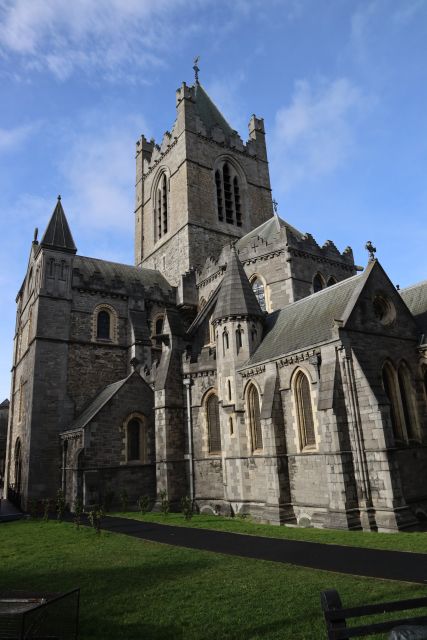
The tour’s ending lands near a cathedral, where you’ll hear about Dublin’s most famous brothel keeper and her untimely death by fire at the stake. Ending with this kind of high-drama story is smart, because it ties together themes of punishment, scandal, and the harsh penalties attached to social “rules.”
Even if you’re not a hardcore history person, these stories often hit because they’re about real human stakes: livelihood, reputation, power, and consequences. And finishing near a cathedral gives you that sense of returning to a major city landmark after a walk through less obvious streets.
If you like your history with characters, this ending is likely to be one of your favorites. It brings the whole tour’s tone full circle, from mythic violence and institutional wrongdoing to public punishment and personal tragedy.
Guides You’ll Remember: Rob and Peter’s Storytelling Style
The guides are a big part of why this tour earns a 4.9 rating from 95 reviews. Across the feedback, one name pops up again and again: Peter. People also mention Rob, and both seem to share the same core strengths.
From the way the stories are described, guides here do well with:
- clear pacing that keeps the group moving
- humor that prevents the tour from becoming grim sludge
- scene-like storytelling that helps you picture what happened
A practical bonus: some groups are small, including experiences described as only a few people, which can make it feel more personal and less like you’re just watching a slideshow of facts while walking past real streets.
If you’re choosing a tour based on vibe, that is a major point. The “macabre history” theme is the hook, but the guide is what determines whether it feels like entertaining street theater or a forgettable lecture.
Price and Value: Is $19 Worth It?
At $19 per person, the value is strong for a couple reasons.
First, you get a full 2-hour live walking tour with a guide. That duration matters because it gives time for multiple stops and multiple story eras, instead of cramming everything into a quick walk.
Second, you’re paying for local storytelling tied to real locations. A lot of tours show up at popular attractions and call it a day. This one centers on lesser-known areas and the city’s darker edges, including myth, mortuary-era crime, quarantines, executions, and the rat stories.
Third, the tour is designed to be easy to plan. The meetup is fixed at a central spot, and you return to the same place. That reduces the hassle factor, which often makes a cheaper tour feel less expensive in real life.
The one price-related tradeoff is that it is adults-only themed content. If that’s not your thing, then any price can feel “not worth it.” But if macabre urban stories and Dublin place names are your kind of history, this price is hard to beat.
Who Should Book This Macabre Dublin Walk
This tour is best for you if:
- you like history with bite, not just museum-level facts
- you enjoy stories tied to real streets and recognizable monuments like the Spire and the Cuchulainn statue
- you want a guided walk that stays on your feet for about two hours and moves through several themes
It is also a good pick if you’re with a friend or partner who likes getting a different side of the city, because the tone makes for memorable conversation afterward.
On the flip side, it may not be your best choice if:
- you’re bringing kids, since it is not suitable for children under 18
- you want a purely “cozy” sightseeing experience with minimal dark content
- you expect extreme gore, since at least one comment suggests the tour leans more into story and humor than nonstop blood
Should You Book Yellow Umbrella Tours’ Macabre History Walking Tour?
If you want Dublin off the standard sightseeing track, I’d say yes. The combination of place-based stops, adult-themed stories, and lively guides like Peter and Rob makes this one of those “you’ll remember the route” tours.
Book it if your idea of fun history includes executions, quarantines, grave robbing, and the kind of grim legends that feel built into the city’s bones. Skip it if you want family-friendly, gentle pacing, or if you need your darkness to be more graphic than narrative.
FAQ
Where do I meet for the Dublin macabre history walking tour?
You meet beside the Spire in the middle of O’Connell Street. Look for the yellow umbrella.
How long is the tour?
The tour lasts 2 hours.
How much does the tour cost?
The price is $19 per person.
Is the tour wheelchair accessible?
Yes, it is listed as wheelchair accessible.
Is this tour suitable for children?
No. It is not suitable for children under 18.
Is hotel pickup and drop-off included?
No. Hotel pickup and drop-off are not included. The tour starts and ends back at the meeting point.
The Wider Dublin Pile
When Dublin Goes Quiet
Elsewhere on The Ireland Traveler
Lately added to the Dublin pile
- Waterford Crystal and Kilkenny Full-Day Rail Tour from Dublin
★ 5.0 · 3 reviews - Turtle Bunbury’s Dublin: A Self-Guided Audio Tour from a Celebrated Author
★ 5.0 · 3 reviews - Cliffs of Moher and The Burren Private Tour from Dublin
★ 5.0 · 3 reviews - Dublin Full-Day Tour through Boyne Valley
★ 5.0 · 3 reviews - Rock Of Cashel And Blarney Castle Private Chauffeur Full Day Sightseeing Tour
★ 4.5 · 3 reviews - Private Irish Fusion Meal in a Modern Home in Skerries, Dublin
★ 5.0 · 3 reviews
More Ghost Tours and Dark History, side by side.
 ★ 5.0Dark Dublin: Torture, Murder & MysteryFrom $232,231 reviews
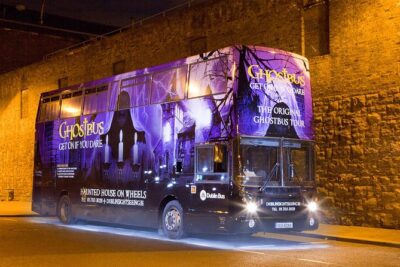 ★ 4.5Dublin Ghost Bus Tour with Professional ActorsFrom $42949 reviews
 ★ 4.6The Dublin Ghostbus TourFrom $40634 reviews
 ★ 5.0Haunted Dublin Walking TourFrom $29550 reviews
 ★ 4.4From Dublin: Gravedigger Ghost Bus TourFrom $34546 reviews
 ★ 4.3Dublin’s Haunted History Walking TourFrom $31345 reviews
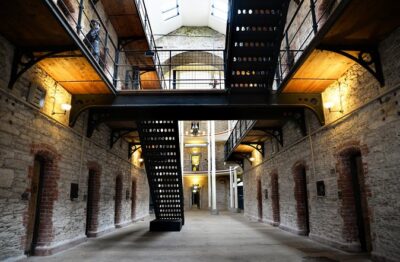 ★ 4.5Cork City Gaol Admission Ticket with GUIDEBOOKFrom $16247 reviews
 ★ 4.8Galway: Dark History Guided City Walking TourFrom $23236 reviews
Other lists this one is on