
REVIEW · IRELAND
Dublin: Sightseeing Walking Tour in German
Dublin turns into a story on foot. I love how this German-speaking walk turns big landmarks into human, easy-to-follow scenes. I also like the small-group feel, plus the extra surprises that keep you paying attention. One consideration: everything is external only, so if you want lots of indoor ticket time, you will need a separate plan.
You start on Dame Street at the Tree of Gold Statue (Crann an Óir), and you cover both sides of the River Liffey in about 2.5 hours. The route threads through civic power, medieval leftovers, and modern city life, with an unhurried pace and a guide who keeps things friendly and understandable in German.
In This Review
- Key things about this German walking tour in Dublin
- Where the walk starts on Dame Street, and how it flows
- Dublin Castle and Christ Church Cathedral, seen at street level
- City Hall and civic Dublin, where the landmarks explain the mindset
- Temple Bar edges, Meeting House Square, and the “church that is not a church”
- Fishamble Street, Smock Alley, and the alleyways that feel alive
- Crossing the River Liffey on Millennium Bridge, with a wobbly-bridge moment
- The Italian Quarter and nearby streets, for a Dublin that’s not trying too hard
- O’Connell Street, the General Post Office, and the 1916 Rising story
- Former Parliament House area (Bank of Ireland) and the Trinity finish
- Price and value: what you get for about $34 per person
- The real “gotchas” to plan around (external only, and that’s it)
- Who this tour suits best, and who should pick another option
- Should you book Pat Liddy’s German Dublin walking tour?
- FAQ
- Is this walking tour guided in German?
- How long is the Dublin sightseeing walking tour?
- Where does the tour start?
- Does the tour include indoor visits?
- What major places will we see during the walk?
- How much does it cost?
- Is the tour wheelchair accessible?
Key things about this German walking tour in Dublin
- Start at Crann an Óir on Dame Street, a clear meeting point that puts you right in the city center
- Small-group vibe that helps you ask questions and stay with the group
- Major landmarks outside like Dublin Castle grounds, City Hall, Christ Church Cathedral, and Trinity College from the street
- Temple Bar and O’Connell Street coverage, so you see both famous Dublin and everyday Dublin
- River Liffey crossing via Millennium Bridge, with a story you can physically feel
- Off-the-route surprises (a defunct cinema, a church-turned-café, a former Lisbon tram now a café, and more)
Other Dublin walks with the wind behind you
- Dublin Highlights and Hidden Gems Guided Walking Tour★ 5.0 · 6,020 reviews
- Dublin: Highlights and Hidden Gems Walking Tour★ 4.9 · 2,140 reviews
- 1916 Rebellion Walking Tour★ 5.0 · 1,605 reviews
- 90 Minute Dublin Walking tour and Sightseeing tips★ 5.0 · 916 reviews
Where the walk starts on Dame Street, and how it flows
The tour begins at the Tree of Gold Statue (Crann an Óir), right in Central Plaza on Dame Street, at the corner with Fownes Street Upper. This matters because you are not hunting across town for a meet-up, and you are dropped into Dublin’s core right away.
From there, the route works like a guided map. You wind through the former Viking and medieval quarter before turning toward Temple Bar and crossing to the north side of the River Liffey. After that, the walk leans into Dublin’s main historic street, O’Connell Street, and then loops back near Trinity.
A lot of walking tours either focus on one side of the Liffey or just skim the surface. Here, the balance is the point. You get the sense of Dublin as one connected city, not two separate postcards.
Dublin Castle and Christ Church Cathedral, seen at street level
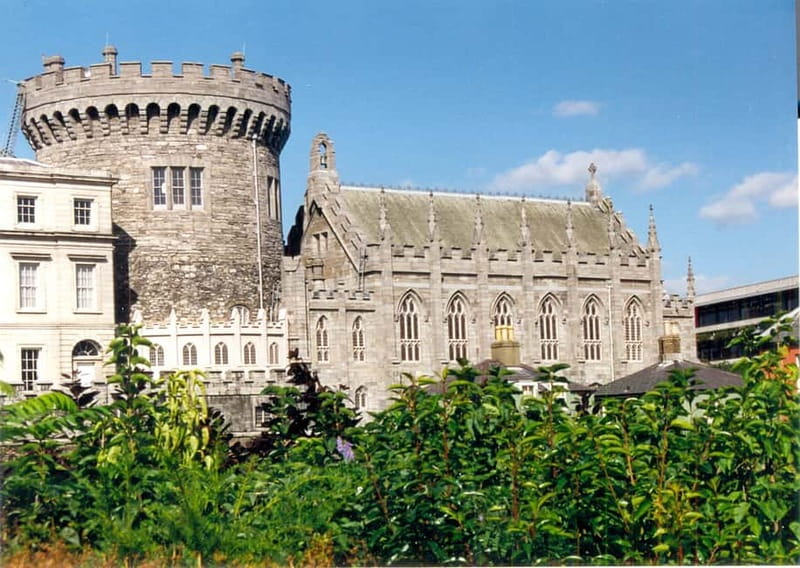
One of the first big anchors is Dublin Castle grounds and gardens. Even though you will only visit externally, the experience still works well. You can look, orient yourself, and understand why this area has stayed central for centuries, without waiting around for an entry ticket or timed admission.
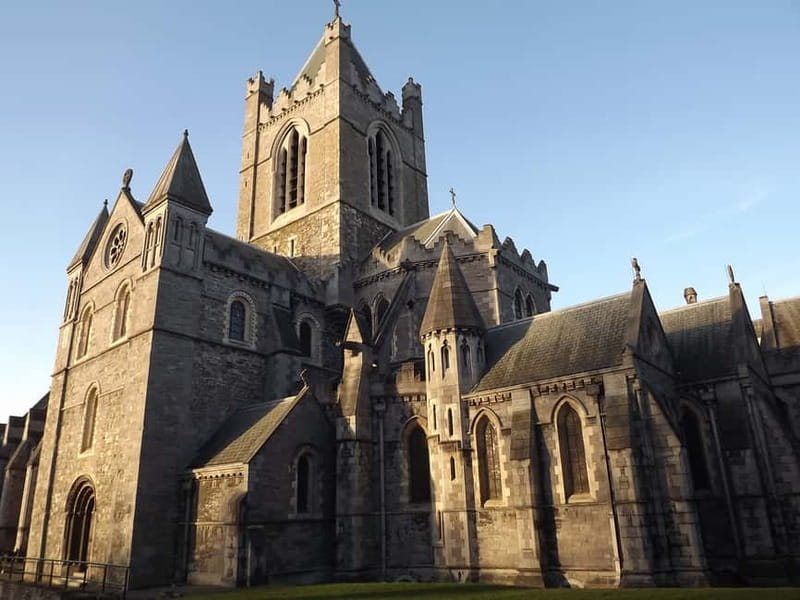
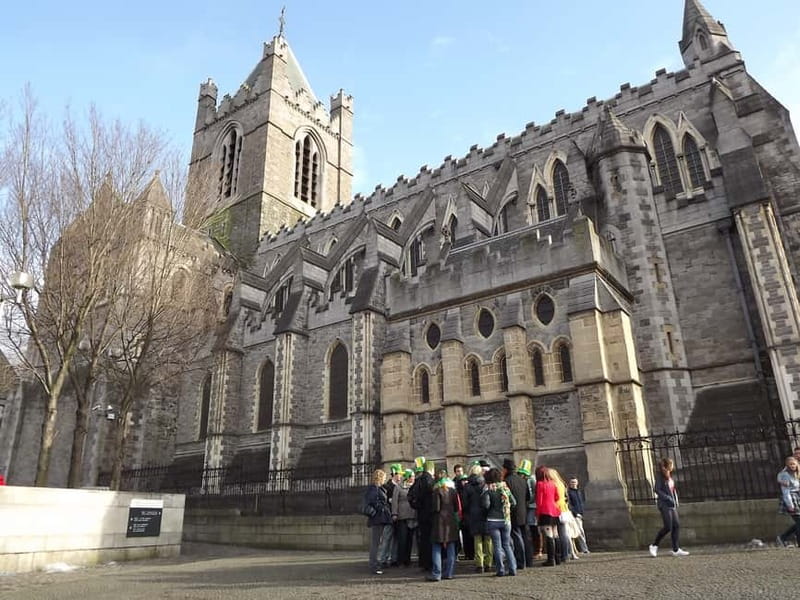
Right after that, the walk brings you toward Christ Church Cathedral. Again, it is an outside stop. What I like about this approach is simple: you still get the visual weight of a landmark, and your guide can place it in the city story without turning the tour into a queue management exercise.
The benefit for you is pacing. In two and a half hours, you can only do so much. External sights let you cover more ground while keeping the energy light and easy-going.
City Hall and civic Dublin, where the landmarks explain the mindset
City Hall is another stop that helps the tour feel more than sightseeing. It gives you the civic Dublin angle, the part of the city where administration, public life, and public-facing spaces meet.
This is where a strong guide makes the biggest difference. The best moments on this tour are not just watching the building. It is connecting what you see to the stories you hear while walking. Your guide keeps the tone professional and friendly, so even if German is not your everyday language, you should still be able to follow the thread.
Temple Bar edges, Meeting House Square, and the “church that is not a church”
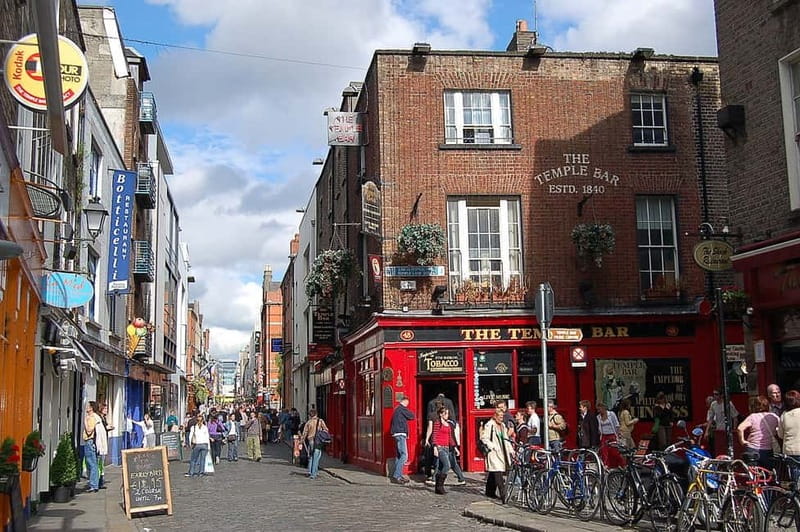
The Temple Bar area is not just about music pubs. The tour uses it as a turning point, where the scene shifts from civic and medieval leftovers toward the lively streets people actually walk every day.
You will reach Meeting House Square in Temple Bar, which is a useful place to pause your brain for a minute. Then the route starts offering the kind of small surprises that make a walking tour worth the money, like learning about a church that is now a famous café or bar. You are also told about St Mary’s Church in that exact spirit, as a site people visit for its modern role, not just its original purpose.
This is a big part of why I think German-language tours can still feel fun and accessible. The guide’s job is to translate the city. When they do that well, you end up understanding what you are looking at even from the sidewalk.



Fishamble Street, Smock Alley, and the alleyways that feel alive
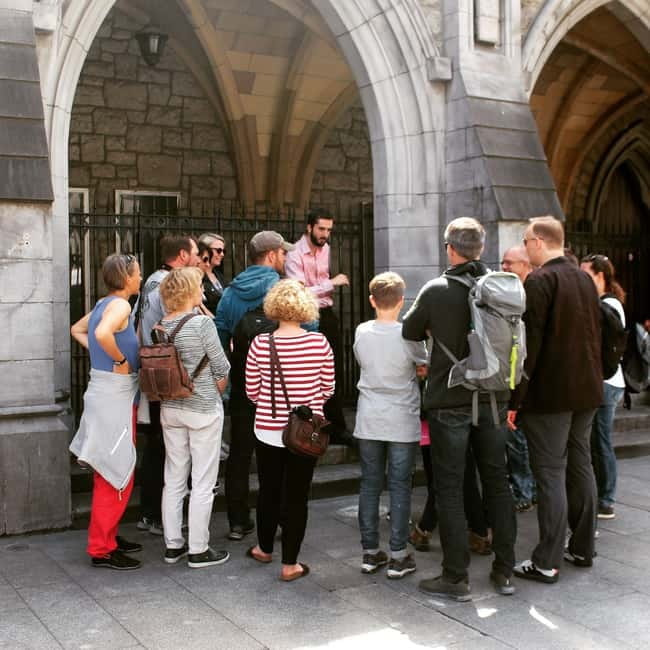
Not every highlight on this tour is a massive, dramatic building. Fishamble Street and Smock Alley add texture. These are the kinds of streets where Dublin’s character shows up through scale, storefront energy, and the way people move through narrow space.
Even without entering anything, these stops help you “read” the city. You start recognizing patterns: where Dublin opens up, where it tightens, and where history left physical marks that still shape foot traffic today.
If you are the type who likes walking tours more like storytelling and less like checklists, these smaller streets are the payoff.
Crossing the River Liffey on Millennium Bridge, with a wobbly-bridge moment
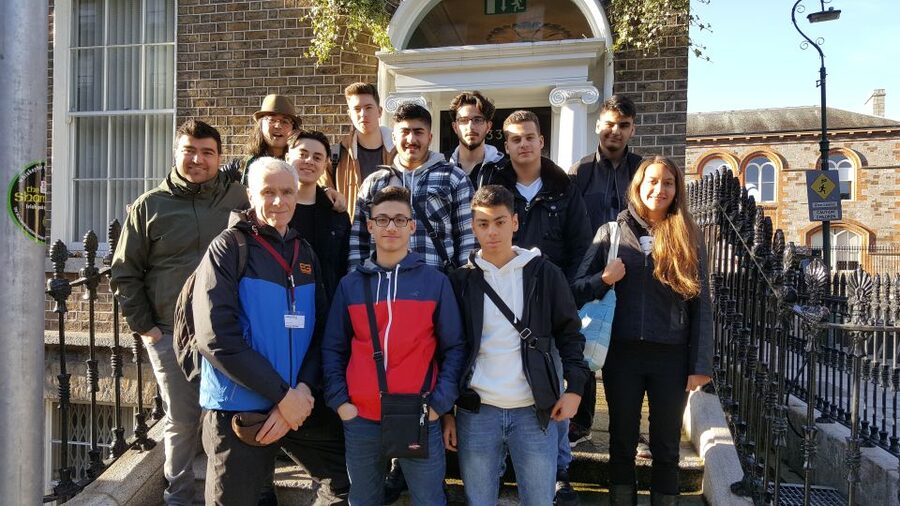
One of the most memorable segments is the River Liffey crossing, using Millennium Bridge. The tour builds in a physical moment here. You get the chance to feel the bounce of a wobbly bridge while your guide shares the related tale.
This is smart touring design. You are not only absorbing information; you are also experiencing it through movement. It makes the bridge more than a photo location and gives you something to remember later when you are back home scrolling through your images.
Practical tip: this stretch is where you want to keep your pace steady. The group is small, but it is still a walking tour, and you will want to stay with your guide for the stories.
The Italian Quarter and nearby streets, for a Dublin that’s not trying too hard
As the walk continues, you reach the Italian Quarter. This stop is valuable because it changes the mood. You go from landmark intensity to neighborhood feel, from formal stone to street-level everyday life.
That shift matters if you are visiting Dublin for the first time. Without it, the city can feel like one big museum exhibit. With it, you see how central Dublin stays functional and current.
You also stop along streets like Henry & Moore Streets and other central blocks. These breaks help you catch your breath, look around, and let the guide’s stories land instead of bouncing off your brain.
O’Connell Street, the General Post Office, and the 1916 Rising story
O’Connell Street is the main historic spine of the city center, and you spend real time near it. This is where the tour becomes very Dublin-specific, not just generally European.
A key stop is the General Post Office. Here, your guide connects the building to the 1916 Rising, including the fact that it housed the rebels’ headquarters and that it was destroyed along with almost the entire street and surrounding area. This is heavy context, but it is delivered in a way that fits a walking pace.
Then you also pass O’Connell Monument, which adds a visual marker to the story. When you pair a monument with the nearby narrative, you stop treating it like background decoration and start understanding it as a signpost in the city’s memory.
Former Parliament House area (Bank of Ireland) and the Trinity finish
You also see the former Parliament House, now associated with Bank of Ireland. This kind of stop is useful because it shows you how Dublin reuses major spaces. You are not just looking at history, you are looking at what history became after changes over time.
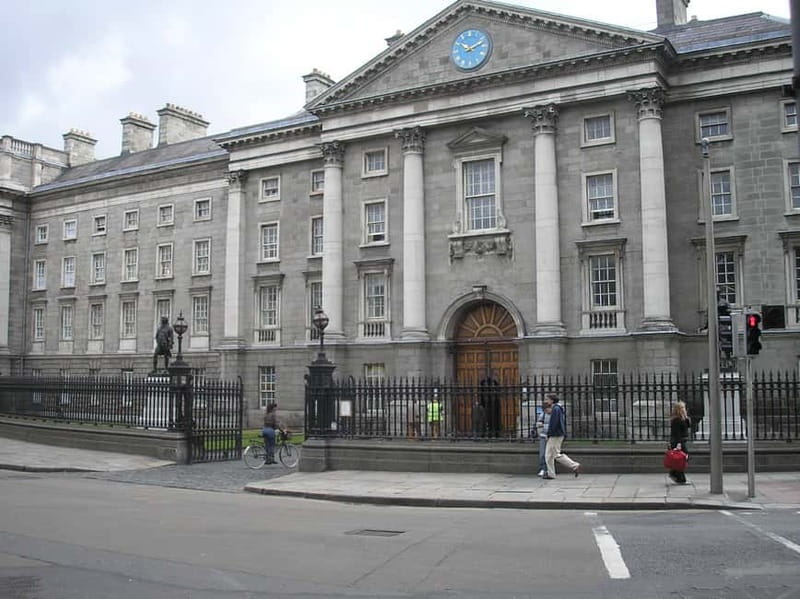
Finally, the tour finishes outside Trinity College, near where you can see the famed Book of Kells from the exterior context. Since all visits are external, you should think of this as orientation and motivation. You are getting the setting so that if you want to do more later, you know exactly where to aim.
One more detail: while the walk brings you near Trinity, the activity ends back at the meeting point on Dame Street. That loop is part of why the tour feels efficient. It also helps you avoid the hassle of figuring out transit at the end of a 2.5-hour walk.
Price and value: what you get for about $34 per person
At $34 per person for a 2.5-hour German-guided walk, the value comes from three things.
First, you get a professional, well-trained guide for the full duration. Many walking tours sell the route, but here the real product is the guided storytelling and the way the guide keeps it easy to follow in German.
Second, you get coverage of major landmarks on both sides of the Liffey in one go. Dublin has a lot to see, and first-time visitors often waste time by picking only one neighborhood. This tour is built to connect the city center.
Third, you get the extra quirky facts that make a city feel like a living place. Along the way, the guide shares stories and surprises such as a defunct full-time cinema, a church that now functions as a café or bar, and a former Lisbon tram that has found a new life as a café. You will also hear about:
- a representation of a da Vinci painting
- the tale of a post-box symbolizing Ireland’s transition to independence
- a stark-naked representation of a famous 18th century composer
Those details do not just add fun. They help you remember places as characters, not as buildings.
The real “gotchas” to plan around (external only, and that’s it)
The main drawback is straightforward: all visits are external. That means you are not going inside Dublin Castle, City Hall, Christ Church Cathedral, or Trinity College as part of this tour.
Also, because this is a walking route with multiple landmarks, it helps to be comfortable on your feet. You will cover a lot of central streets in 2.5 hours, and the tour is designed to keep moving.
On the positive side, the tour notes you can have opportunities for internal visits after the tour. So if you want indoor time, you are not blocked forever. You just need a separate plan.
Who this tour suits best, and who should pick another option
I think this tour is a great fit if you:
- want a fast way to get your bearings in central Dublin
- prefer guided context in German
- like tours that mix big sights with smaller oddities
- enjoy story-heavy walking more than strict museum time
It may not be ideal if you:
- expect lots of interior admissions in a single tour
- want a deep dive into one single attraction
- need long stops for photo ops at every site
If you are somewhere in the middle, you can make it work by doing any ticketed sites you care most about on a second day.
Should you book Pat Liddy’s German Dublin walking tour?
I would book it if your goal is to understand the layout and the stories of central Dublin without spending your whole trip in lines or taxis. The small-group feel, the friendly guide, and the mix of landmarks with off-the-radar surprises make it an efficient and genuinely entertaining way to get oriented.
Skip it only if you know you want inside access to major buildings during the tour window. Otherwise, this is exactly the kind of guided walk that helps a city click.
FAQ
Is this walking tour guided in German?
Yes. The live tour guide language is German.
How long is the Dublin sightseeing walking tour?
The duration is 2.5 hours.
Where does the tour start?
It starts at the Tree of Gold Statue (Crann an Óir), Central Plaza, Dame Street, Dublin 2 (corner of Dame Street & Fownes Street Upper).
Does the tour include indoor visits?
No. All visits are external, though opportunities may be available for such visits after the tour.
What major places will we see during the walk?
You will see several well-known sights externally, including Dublin Castle, City Hall, O’Connell Street, General Post Office, and Trinity College from outside, along with other central stops like Christ Church Cathedral and the River Liffey area.
How much does it cost?
The price is $34 per person.
Is the tour wheelchair accessible?
Yes, the tour is listed as wheelchair accessible.
More of Dublin Underfoot
The Wider Dublin Pile
Elsewhere on The Ireland Traveler
Lately added to the Dublin pile
- Waterford Crystal and Kilkenny Full-Day Rail Tour from Dublin
★ 5.0 · 3 reviews - Turtle Bunbury’s Dublin: A Self-Guided Audio Tour from a Celebrated Author
★ 5.0 · 3 reviews - Cliffs of Moher and The Burren Private Tour from Dublin
★ 5.0 · 3 reviews - Dublin Full-Day Tour through Boyne Valley
★ 5.0 · 3 reviews - Rock Of Cashel And Blarney Castle Private Chauffeur Full Day Sightseeing Tour
★ 4.5 · 3 reviews - Private Irish Fusion Meal in a Modern Home in Skerries, Dublin
★ 5.0 · 3 reviews
More Walking Tours, side by side.
 ★ 5.0Dublin Highlights and Hidden Gems Guided Walking TourFrom $296,020 reviews
 ★ 4.9Dublin: Highlights and Hidden Gems Walking TourFrom $272,140 reviews
 ★ 5.01916 Rebellion Walking TourFrom $271,605 reviews
 ★ 5.090 Minute Dublin Walking tour and Sightseeing tipsFrom $21916 reviews
 ★ 5.02-Hour Historical Walking Tour from DublinFrom $22875 reviews
 ★ 4.7Historical 2-Hour Guided Walking Tour of DublinFrom $22865 reviews
 ★ 5.0Dublin Traditional Irish 3 Course Meal Walking Tour with LocalFrom $107755 reviews
 ★ 4.9Dublin: Mythology, Folklore and Legends Walking TourFrom $27703 reviews
Other lists this one is on