
REVIEW · IRELAND
Dublin : Street Art Walking Tour
Dublin looks different once you follow the murals. This street art walking tour strings together Dublin’s art and real-world history, from Smithfield Square through St. Michan’s Church and Four Courts, then finishing in Temple Bar. I especially like the private guide angle, where the stories feel personal and you can steer what you want to spend time on.
The other big win is the way the guide connects older legends with newer street art culture, the same kind of mix I’ve heard from Paula, who tells Dublin stories with charm and clarity. One thing to plan for: it’s about three hours on foot, and drink or food aren’t included, so you may want a snack before or after.
In This Review
- Key highlights worth your attention
- Why a street art walk is a smart way to see Dublin
- Starting at 57 Smithfield, with the city already in motion
- Smithfield Square murals: where the tour finds its voice
- St. Michan’s Church: legends you can connect to the street outside
- Four Courts: 1916 echoes and architectural context you can picture
- Temple Bar finish: street art and installations in the middle of the action
- How the private, customizable format changes your experience
- Price and value: is $57 per person worth it?
- Getting the most from each stop, without trying too hard
- Who this tour is best for
- Should you book this Dublin Street Art tour?
- FAQ
- How long is the Dublin Street Art Walking Tour?
- Where is the tour starting point?
- Is this tour private?
- What stops are included on the route?
- What languages are available for the live guide?
- Is food or drink included?
Key highlights worth your attention
- Private and customizable route that you can shape around what you care about
- Paula-style storytelling that links Dublin legends to present-day street art influences
- Smithfield Square murals that give you an immediate street-level “why” behind the area
- St. Michan’s Church stop, including infamous Smithfield-linked lore and church history
- Four Courts with 1916 echoes and architectural context you can actually visualize
- Temple Bar ending with street art and installations that show Dublin’s modern creative pulse
Other Dublin walks with the wind behind you
- Dublin Highlights and Hidden Gems Guided Walking Tour★ 5.0 · 6,020 reviews
- Dublin: Highlights and Hidden Gems Walking Tour★ 4.9 · 2,140 reviews
- 1916 Rebellion Walking Tour★ 5.0 · 1,605 reviews
- 90 Minute Dublin Walking tour and Sightseeing tips★ 5.0 · 916 reviews
Why a street art walk is a smart way to see Dublin
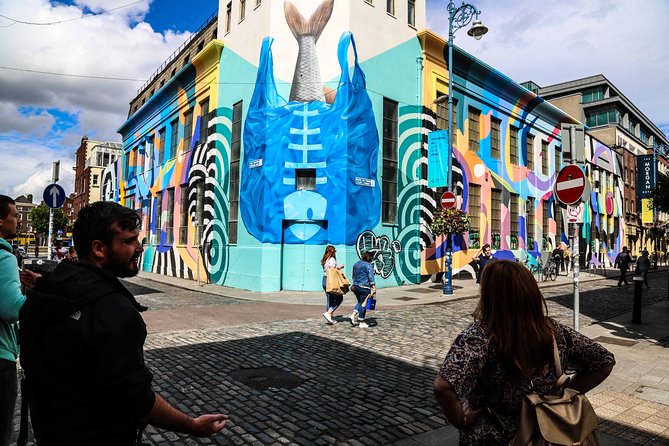
If you only do the big landmarks in Dublin, you get one version of the city. This style of tour gives you another. You’re not looking at art from a distance, in a museum, with rules and ropes. You’re walking among the walls, doors, courtyards, and streets that shaped the city and keep shaping it.
You also get a guide who can connect dots fast. One minute you’re looking at a wall. The next minute, you’re hearing why that wall matters, and how the area’s past feeds into the art you’re seeing now. That’s where the value really sits.
And the tour length is realistic. Three hours is long enough to feel you saw more than the obvious stops, but short enough that you can keep exploring on your own afterward.
Starting at 57 Smithfield, with the city already in motion
The meeting point is 57 Smithfield. It’s a central place, and that matters more than it sounds. You can line up your day so you’re not burning time on transfers, and you can grab a coffee or something quick nearby before you start.
The tour begins near Play Park, then moves into the Smithfield area. That is a nice rhythm because you start with the street-level stuff rather than jumping straight to a single “top sight.” You get to warm up your eyes on murals and textures in the streets, then the history starts stacking up behind what you’re seeing.
Also, because it’s walking plus public transport (depending on the option you choose), the schedule is designed to move you efficiently between stops. You won’t be stuck doing one long, tedious stretch with nothing to look at. The art and the story keep the pace feeling intentional.
Smithfield Square murals: where the tour finds its voice
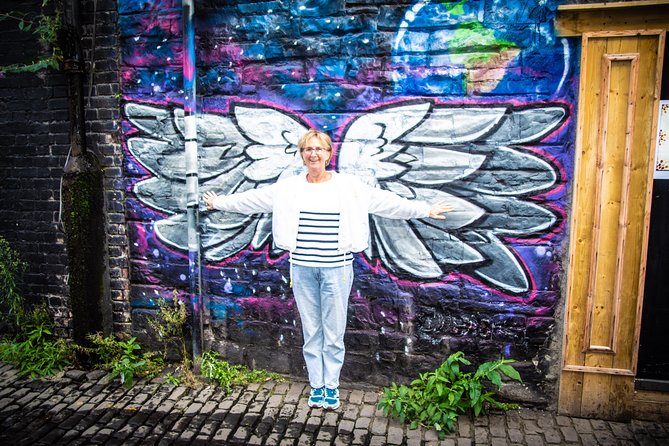
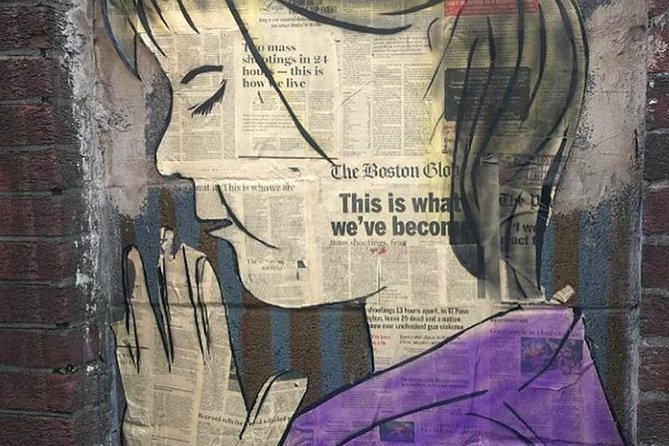
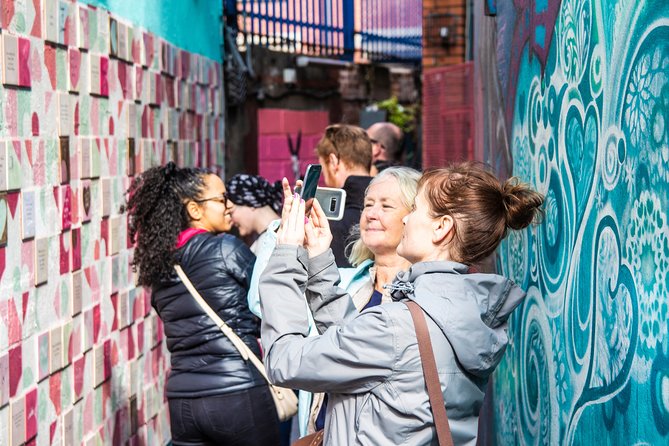
Smithfield Square is your first main stop. This is where the tour makes its promise right away: colorful murals and wall art that tell stories about the area’s past and its artistic energy.
What I like about starting here is that it gives you a visual framework before you hear details. You see the style of the art, the way it’s placed, and the kind of themes that keep showing up around Smithfield. Then, when the guide starts explaining, you’re not learning from scratch. You’re interpreting what you already noticed.
A small practical note: street art is often best seen with time. If you rush photos and don’t look at the details, you miss half the point. Give yourself a moment to stand still and let your eyes adjust. You’ll catch small figures, layers of paint, and references that blend into the surrounding streets.
St. Michan’s Church: legends you can connect to the street outside
Next comes St. Michan’s Church. This stop is more than just a pretty building in the middle of your walk. It’s where the tour leans into Dublin lore and the kind of stories that stick to a place.
You’ll hear about the infamous strangler of Smithfield, plus other legends tied to the area. The church context is important. These aren’t random spooky tales. They give you a way to understand why certain locations carry strong memories, and why artists keep returning to themes like crime, punishment, survival, and urban mythology.
The drawback is also obvious: if you’re hoping for only modern art vibes, the tone shifts here toward legend and historical storytelling. That’s not bad, but it’s different. I’d treat this as the tour’s “story weight” moment, then let the energy rebound at the next stops.
Other Dublin outings that came out well in our notes


Four Courts: 1916 echoes and architectural context you can picture
After St. Michan’s, you move toward the Four Courts. This is an iconic Dublin site with echoes of 1916, and the tour pairs that historical weight with architectural detail.
Here’s what makes this part useful for your day. It’s not just name-checking events. It helps you understand how the setting and the design communicate meaning. You get an explanation of the English architect’s work, and the architectural ingenuity behind the building. Even if you’re not a hardcore architecture person, you’ll walk away with better mental images of how Dublin’s built environment reflects power, law, and public life.
Practical tip for this stop: take your time on the outside edges and corners. Large buildings can feel flat if you only look straight on. Step around a little, and your guide’s explanation will click faster.
Temple Bar finish: street art and installations in the middle of the action
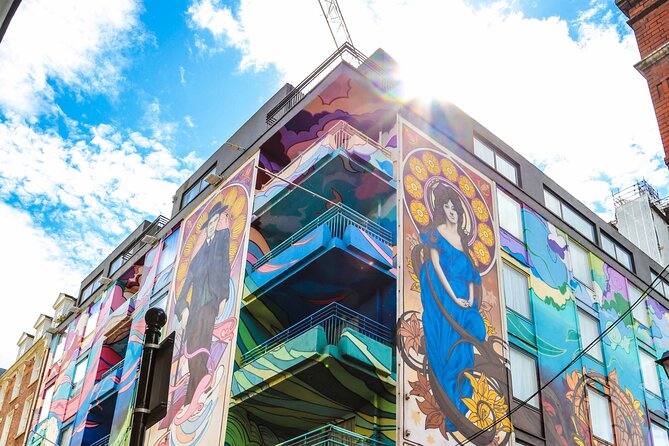
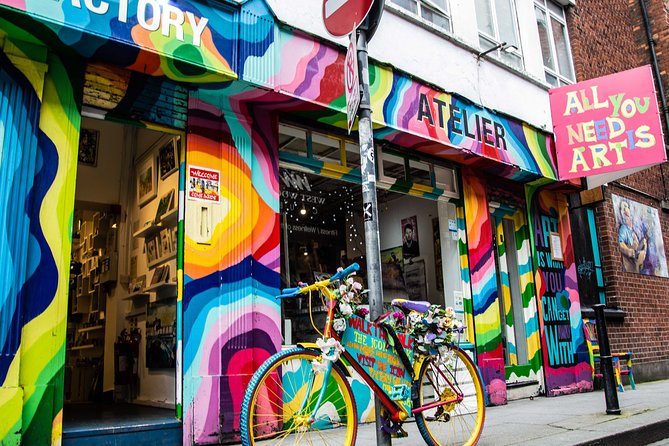
The tour ends in Temple Bar. This is the part of the route that feels like the city speaking in the present tense. The street art and installations you see here aren’t just decorations. They’re Dublin’s ongoing conversation about identity, humor, politics, and community.
Temple Bar can be a busy area, so the final minutes are a good time to use your guide’s pointers. If you want to keep exploring after the tour, ask for a couple of suggestions nearby while everything is fresh in your mind. That way you’re not wandering blind with tired legs.
Also, because the tour activity ends back at the meeting point, you have an easy off-ramp to return to your base or continue your evening. You can treat Temple Bar as your landing spot and then decide what kind of night you want, a quick drink, a late dinner, or just more walking for art.
How the private, customizable format changes your experience
This is a private walking tour, described as private and exclusive, with no one else in your group. That difference matters in two ways.
First, the guide can match the pace. If you want more time at murals, you can slow down. If you want the history explained faster, the guide can do that. It’s not a rigid “see it, move on” setup.
Second, customization helps you avoid the classic mistake on walking tours: getting dragged into parts you don’t care about. Here, the route still follows key stops, but the experience is shaped by what interests you about Dublin’s street art, legends, and modern influences.
Language options are also a real advantage. The tour is available with an English-speaking guide, and live guidance is offered in English, French, Spanish, and Italian. That means you can actually understand the connections, not just see the sights.
Price and value: is $57 per person worth it?
At $57 per person, this tour sits in a “pay for quality guide time” category. You’re not just paying for walking and photos. You’re paying for interpretation, and for the fact that you get a guide who ties the art to the places and the stories.
So what are you getting for the price?
- A full three-hour guided route that covers major art-and-history junctions across Dublin
- A private, exclusive format, so you aren’t squeezed into a group pace
- Customization, so you can spend time where you want it
- Walking plus public transport (unless your option changes that), so you’re not doing everything on foot
- Help from the team to book tickets for visits that fit the stop plan
- An English-speaking guide, plus live options in other languages
Is it cheap? No. But it doesn’t feel overpriced if you value context. Street art without a guide can turn into a photo scavenger hunt. With a guide, you start noticing references and meaning, and you leave with a sharper understanding of how Dublin talks to itself through walls.
If you’re the type who likes local stories and you plan to visit Temple Bar anyway, the pricing feels more reasonable because you’re bundling the best of your time into one focused outing.
Getting the most from each stop, without trying too hard
This tour rewards attention more than endurance. Here’s how I’d approach it so you get your money’s worth.
Start with your mindset: don’t treat murals as backgrounds. Treat them like clues. When your guide explains a legend or a historical link, look for visual hints in what’s around you, symbols, faces, styles, or themes that repeat.
At St. Michan’s, be ready for story-heavy content. This part can be intense in tone because it deals with infamous lore. If you want a smoother, lighter emotional arc, balance it by taking photos and looking at the architecture details after the explanations.
At Four Courts, don’t just take a wide shot. Listen to what the guide says about the design and then look for it in the building’s forms. It’s one of those moments where comprehension makes the landmark more interesting.
At Temple Bar, use the ending strategically. Ask one question about where to go next for art or drinks, then decide. The point is to keep the creative momentum going without letting the tour run your whole evening.
Who this tour is best for
This is a strong fit for you if you want Dublin in layers, art plus legend plus key landmarks. It’s also ideal if you prefer private guiding, where you can ask questions and stay focused on what you care about.
It works especially well for:
- First-time visitors who already know the big sights but want the city’s street-side personality
- People who enjoy stories tied to real places, not just dates on a timeline
- Anyone planning to spend time around Temple Bar later, and wants a guided path there
It might feel less ideal if you want a strict museum-style experience with mostly inside stops, or if you dislike walking. You will be walking for about three hours, and the tour is designed for feet-first sightseeing.
Should you book this Dublin Street Art tour?
I’d book it if you want more than photos, and you like the idea of street art explained through Dublin’s legends and landmarks. The private format is a big plus, and Paula’s kind of story delivery is exactly what makes this sort of tour work. If you care about how past and present mix on street corners, this route makes that connection clearly.
Skip it if you’re short on time or you want food included, because drink or food aren’t part of the tour plan. Also, if you only want modern street art with no historical lore, the St. Michan’s and Four Courts portions will shift the tone.
FAQ
How long is the Dublin Street Art Walking Tour?
The tour lasts 3 hours.
Where is the tour starting point?
The tour starts at 57 Smithfield, with the journey commencing near Play Park.
Is this tour private?
Yes. It is offered as a private and exclusive walking tour, and there is a private group available.
What stops are included on the route?
The tour includes Smithfield Square, St. Michan’s Church, the Four Courts, and it finishes in Temple Bar.
What languages are available for the live guide?
The tour is available in English, French, Spanish, and Italian.
Is food or drink included?
No. Drink or food is not included.
More of Dublin Underfoot
The Wider Dublin Pile
Elsewhere on The Ireland Traveler
Lately added to the Dublin pile
- Waterford Crystal and Kilkenny Full-Day Rail Tour from Dublin
★ 5.0 · 3 reviews - Turtle Bunbury’s Dublin: A Self-Guided Audio Tour from a Celebrated Author
★ 5.0 · 3 reviews - Cliffs of Moher and The Burren Private Tour from Dublin
★ 5.0 · 3 reviews - Dublin Full-Day Tour through Boyne Valley
★ 5.0 · 3 reviews - Rock Of Cashel And Blarney Castle Private Chauffeur Full Day Sightseeing Tour
★ 4.5 · 3 reviews - Private Irish Fusion Meal in a Modern Home in Skerries, Dublin
★ 5.0 · 3 reviews
More Walking Tours, side by side.
 ★ 5.0Dublin Highlights and Hidden Gems Guided Walking TourFrom $296,020 reviews
 ★ 4.9Dublin: Highlights and Hidden Gems Walking TourFrom $272,140 reviews
 ★ 5.01916 Rebellion Walking TourFrom $271,605 reviews
 ★ 5.090 Minute Dublin Walking tour and Sightseeing tipsFrom $21916 reviews
 ★ 5.02-Hour Historical Walking Tour from DublinFrom $22875 reviews
 ★ 4.7Historical 2-Hour Guided Walking Tour of DublinFrom $22865 reviews
 ★ 5.0Dublin Traditional Irish 3 Course Meal Walking Tour with LocalFrom $107755 reviews
 ★ 4.9Dublin: Mythology, Folklore and Legends Walking TourFrom $27703 reviews
Other lists this one is on