
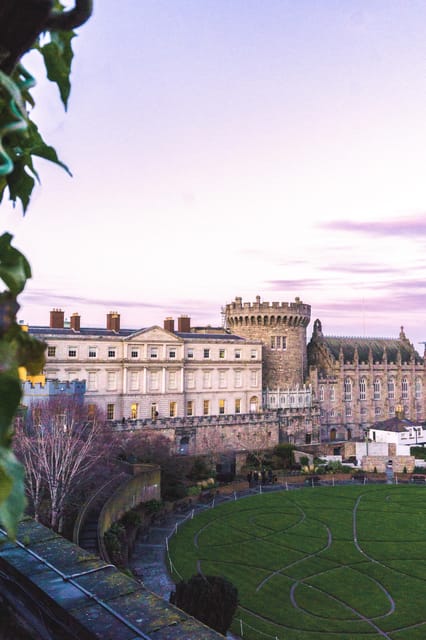
REVIEW · IRELAND
Dublin Walking Tour: Top 10 highlights
Dublin turns into a story when you walk it. This 2-hour highlights tour strings together the city’s best-known landmarks and a few quieter moments, all with a guide who explains what you’re looking at as you go. It is built for first-time visitors who want fast orientation, without spending the whole day in transit.
I love how the route mixes big names like Trinity College and St Patrick’s Cathedral with practical city context, so the sights feel connected instead of random. I also like that everything stays outside the buildings, which keeps the pace steady and makes it easier to enjoy the street-level atmosphere. One possible drawback: it is a walking tour with a tight time window, so if you prefer slow museum-style stops, you may feel a bit rushed.
This is a very good fit if you want a structured overview of Dublin’s major “great hits,” with clear explanations and time to ask questions, all for $54 per person.
In This Review
- Key Highlights You Should Care About
- What You Get in This Dublin Top 10 Walking Tour
- Meeting at the Spire, Then Building a Simple Dublin Map
- GPO Museum and O’Connell Street, The City’s Main Stage
- Ha’penny Bridge and Temple Bar, Riverside Views With Irish Spirit
- Christchurch Cathedral and Dublin Castle, Power and Tradition From the Outside
- St Patrick’s Cathedral and Trinity College, Quiet Majesty Meets Practical Sightseeing
- Where Guinness Heritage and the River Liffey Fit In
- Price and Logistics, and Why $54 Can Be Good Value
- Who This Tour Suits Best, and Who Should Skip It
- Should You Book This Dublin Highlights Walk?
- FAQ
- How long is the Dublin walking tour?
- How much does the tour cost?
- Where is the meeting point?
- Where does the tour end?
- Do you visit inside buildings?
- Who leads the tour and what language is used?
- Is the tour wheelchair accessible?
- What places are covered during the tour?
- What should I bring?
- Can I cancel for a refund, and is reserve and pay later available?
Key Highlights You Should Care About

- Top 10 landmarks in one loop, covering classic Dublin on foot
- Outside-only viewing, so you keep momentum and avoid long indoor waits
- French live guide, with explanations that connect buildings to city life
- Central sights on the River Liffey, plus bridges that shape how Dublin moves
- A guide-led pace with question time, not a silent self-walk
Other Dublin walks with the wind behind you
- Dublin Highlights and Hidden Gems Guided Walking Tour★ 5.0 · 6,020 reviews
- Dublin: Highlights and Hidden Gems Walking Tour★ 4.9 · 2,140 reviews
- 1916 Rebellion Walking Tour★ 5.0 · 1,605 reviews
- 90 Minute Dublin Walking tour and Sightseeing tips★ 5.0 · 916 reviews
What You Get in This Dublin Top 10 Walking Tour
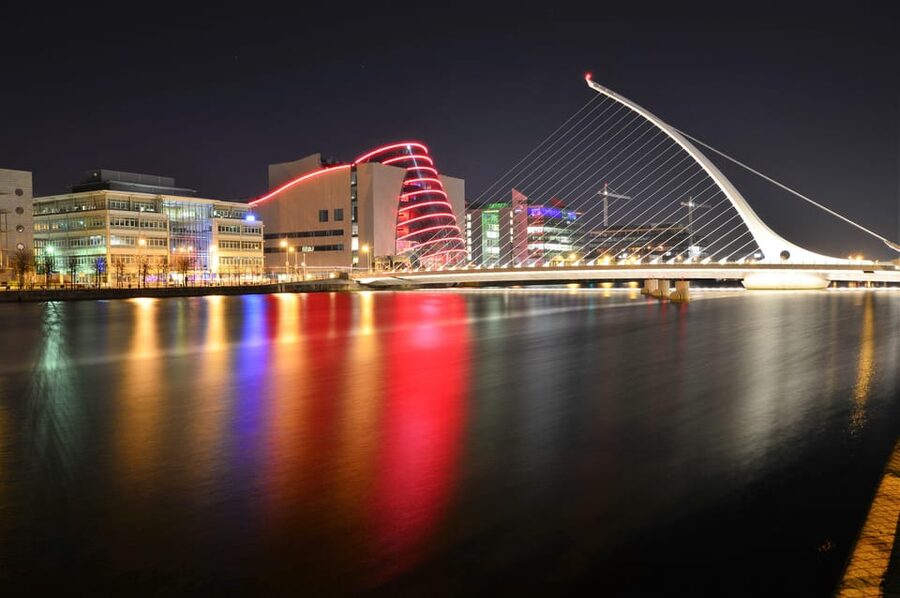
This tour is designed as a compact Dublin orientation. In two hours, you cover a full set of major stops, from the Spire area through central streets and on to Trinity College. The emphasis is on seeing the city’s big landmarks from the outside, then getting the meaning behind them through the guide’s explanations.
You should expect a walking route that is structured but not rushed into a sprint. The schedule includes multiple guided segments, so you get more than photo stops. You also get a “why it matters” thread for each building or landmark, including history and significance as you move.
The price, at $54 per person, is reasonable for what you receive: a live guide, a time-efficient route, and explanations tied directly to what you are looking at in Dublin’s center. In other words, you are not just paying for steps, you are paying for interpretation.
Meeting at the Spire, Then Building a Simple Dublin Map
Your starting point is the foot of the Spire (GPO side). That matters more than you might think. The Spire is a natural “anchor” landmark in central Dublin, so it makes it easier to build a mental map quickly. Once you have that anchor, the rest of the route starts to click.
From the start, you move through a mix of major streets and landmark clusters. There are also a few short stops where the guide adds extra context, which helps you connect what you see with what you hear. You are also in the right area for the next stretch toward O’Connell Street and the River Liffey.
One practical tip: wear comfortable shoes from the first minute. Two hours in the center of Dublin means you will spend more time on your feet than you expect, even if the guide pauses regularly to explain.
GPO Museum and O’Connell Street, The City’s Main Stage
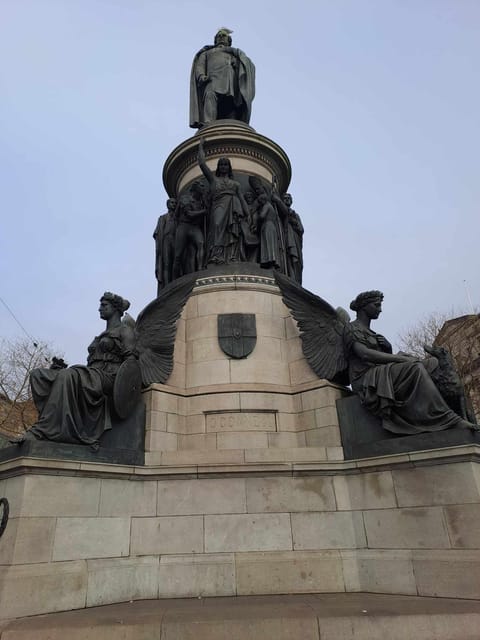
One of your early structured stops is the GPO Museum, Dublin, with a guided visit as part of the walking plan. Even though you are not going inside for everything, this stop is built into the route as a key point, so it gives the tour a “context hub” early on.
Then you head to O’Connell Street, another central Dublin landmark that helps you understand how the city’s public spaces function. This is where the tour’s street-level storytelling becomes useful. You get explanations tied to the buildings and the street itself, not just facts in isolation.
Why I like this part of the route: it makes Dublin feel readable. You see how the main avenues connect to landmark zones, and you understand why certain intersections and public buildings matter to the city’s identity.
A small consideration: O’Connell Street is busy and can feel crowded, especially at peak times. If you prefer quiet, this is the part where you might want to focus on the guide’s commentary and stay close to the group.
Ha’penny Bridge and Temple Bar, Riverside Views With Irish Spirit
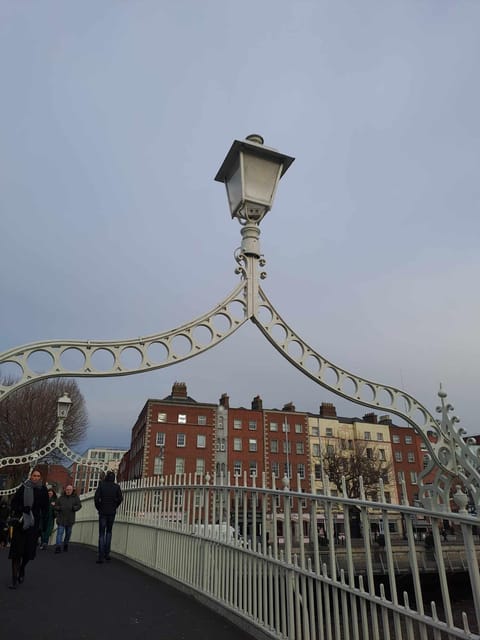
The next major step is the Ha’penny Bridge. Bridges are more than crossings on a highlights tour. They show you how Dublin’s layout uses the River Liffey as a backbone. When you hear about Liffey and its bridges as part of the tour content, it helps you see the city as a connected system rather than a list of attractions.
From there, you move toward Temple Bar District. The tour explicitly aims to capture Dublin’s Irish spirit and culture, and Temple Bar is one of the best places for that theme. You are guided through the area so you can connect the look of the streets to the stories the guide is sharing.
This section is also a good “photo and reality check” stretch. You will see how Dublin blends classic landmark scale with everyday street life. That street-level perspective is exactly why an outside walking tour works better than a purely indoor one, especially when you only have a short time.
Just be ready for the fact that Temple Bar can be popular. If you want photos without people in every frame, keep an eye on timing and let the guide’s pauses do the work for you.




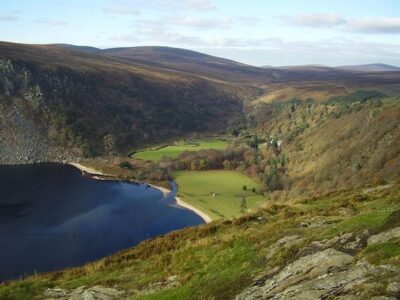
Christchurch Cathedral and Dublin Castle, Power and Tradition From the Outside
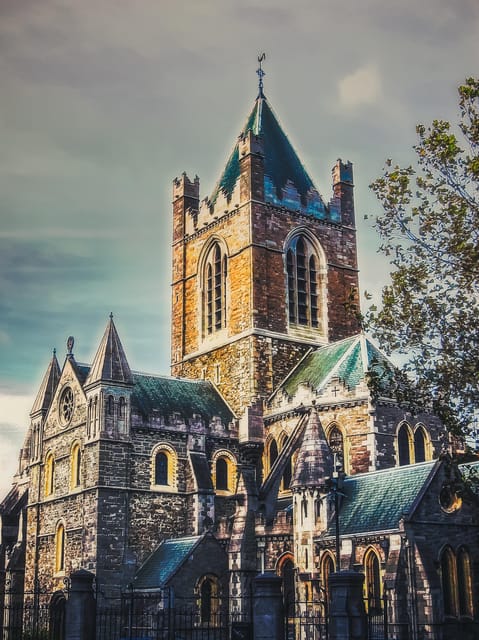
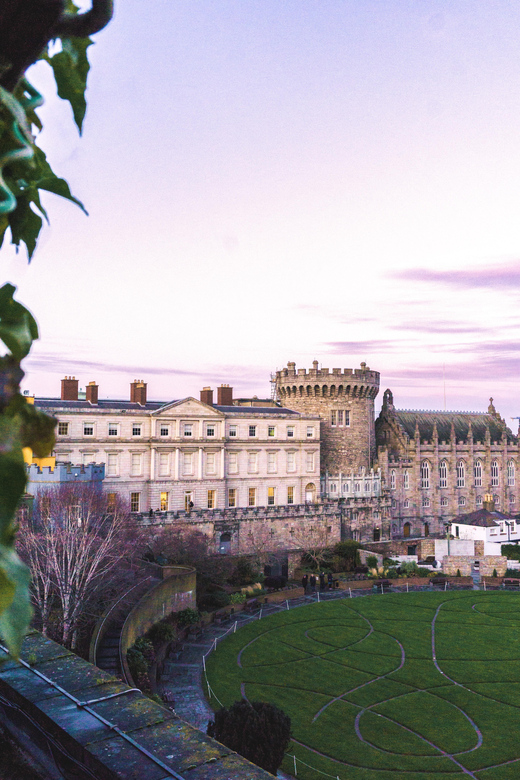
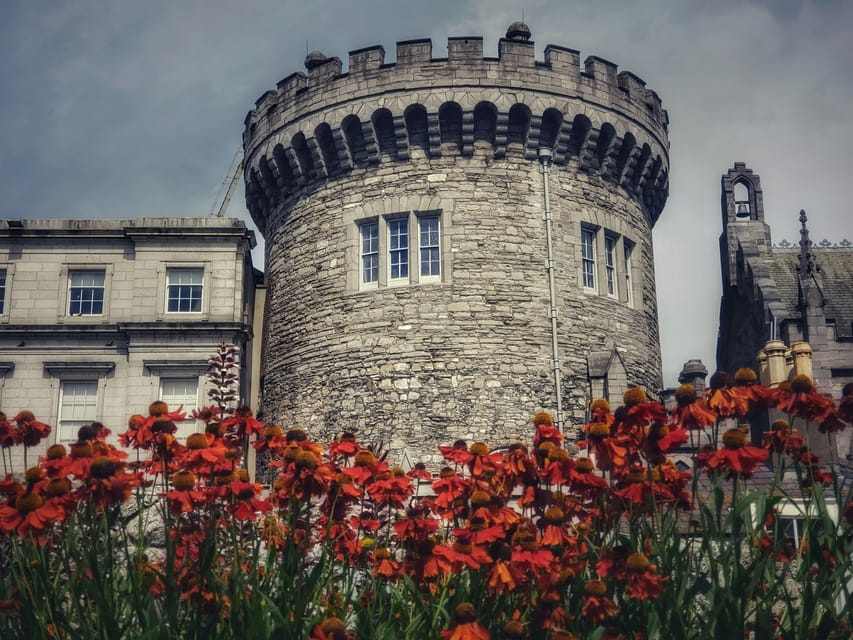
Two big names come up in the middle of the tour: Christchurch Cathedral, Dublin and Dublin Castle. The tour’s emphasis here is on history and significance, including Dublin Castle / Medieval Dublin as part of what the guide explains.
Both stops are important because they show how Dublin has kept religious and civic authority close to the center. Even from the outside, cathedrals and castle walls shape the street experience. They create a sense of scale and continuity that you do not get from modern buildings alone.
What makes this section especially valuable is the outside-only design. Since you are not getting bogged down by interior logistics, you keep a steady rhythm. You can compare how the guide frames medieval civic power at Dublin Castle and how the cathedral’s presence contributes to the city’s identity.
The main drawback here is also the advantage of short stops: you may leave wanting more. The guide will likely give a solid overview, but these are major landmarks, and no two-hour walk can replace a longer, in-depth visit if you are a history-focused traveler.
St Patrick’s Cathedral and Trinity College, Quiet Majesty Meets Practical Sightseeing
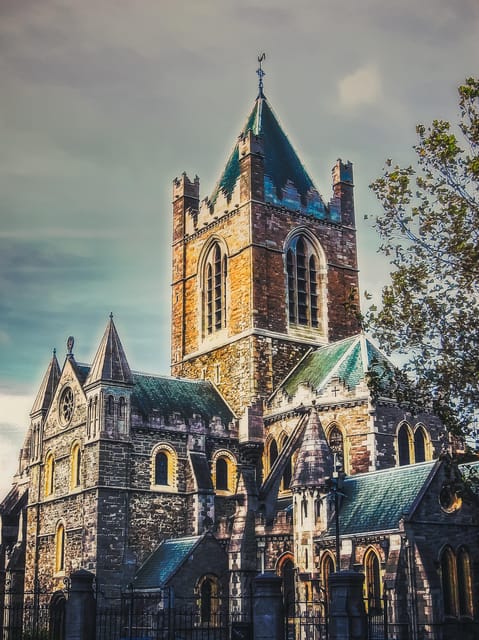
As you continue, you reach St Patrick’s Cathedral and later Trinity College Dublin. The tour includes both, with the intention that you understand their roles in Dublin’s story. It specifically calls out the contrast between major landmarks and moments of tranquility, and St Patrick’s Cathedral fits that vibe.
Then you shift toward Trinity College, described in the tour overview as part of the city’s historic charm. This stop helps you understand why Trinity is more than a campus name. It is also a key part of the central Dublin landscape, which is exactly what you want when you are trying to place landmarks on a map.
Timing-wise, Trinity College being your finish point is a great practical choice. After two hours, you still have a major attraction zone nearby, so it is easier to extend your day on your own. You can also use Trinity as a natural location to grab a drink or plan your next walk.
One note based on the tour information you may see: the meeting point section states the activity ends back at the meeting point, while the itinerary lists a finish at Trinity College. Treat this as a sign that the walk stays in the center and that the route loops around near your starting area. In practice, expect to finish close to the Trinity area or back near the Spire zone.
Where Guinness Heritage and the River Liffey Fit In
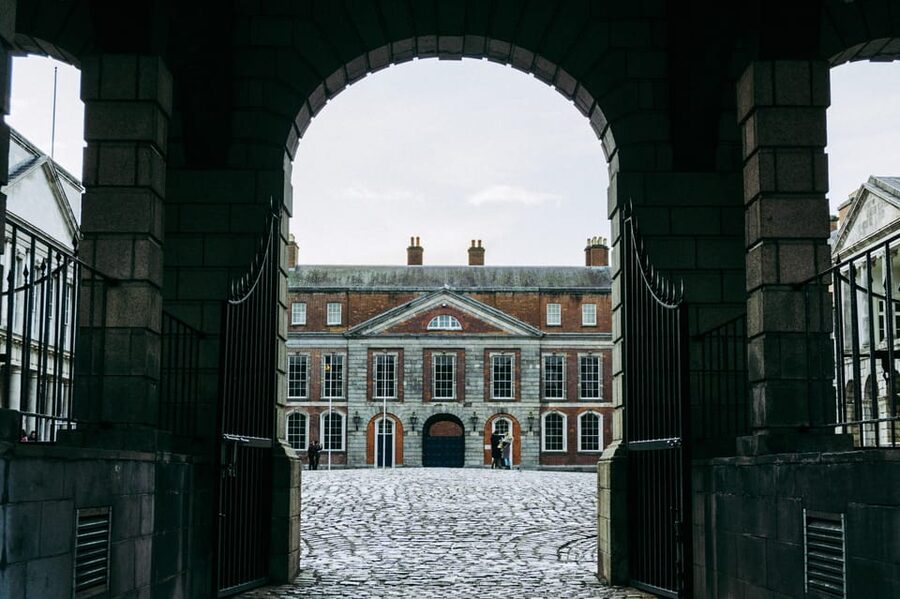
Not every stop is labeled in your itinerary as a “Guinness” moment, but the tour clearly includes Guinness Heritage as a topic the guide covers. This is a smart addition because it reminds you that Dublin is not only about castles and cathedrals. It also has modern cultural identity, and Guinness is one of the most recognizable parts of that.
The other thread is the Liffey and its bridges. Even if you only walk over one or two bridge crossings during the route, the guide uses them to explain how Dublin’s river geography shapes movement and neighborhoods. That helps you understand why certain streets connect the way they do, and why so many landmarks cluster near the river.
I like the way these elements make the tour feel balanced. You get both the classic “Dublin postcard” sights and the story of Dublin as a living city with modern culture layered on top.
Price and Logistics, and Why $54 Can Be Good Value
At $54 per person for a 2-hour guided walk, the value comes from three places.
First, you get a live guide who explains the history and significance of major buildings as you see them. Second, the route hits a lot of high-demand central landmarks quickly, without you having to plan a complicated multi-stop route. Third, because the tour is outside-focused, you avoid a common problem with highlights tours: time loss from waiting or entering places you did not plan to spend time in.
Language is French, which is worth checking if you plan to ask questions. If you speak French comfortably, this tour can be a great way to build stronger connections between what you see and what you understand.
Wheelchair accessibility is listed, which is a plus if you need a route designed with access in mind. Just keep in mind that any city walking tour still includes street surfaces, curbs, and crowd movement, so your personal comfort level matters.
Who This Tour Suits Best, and Who Should Skip It
I think this tour is ideal if you:
- Want a fast, guided overview of central Dublin
- Like history that is explained in context while you walk
- Prefer outside viewing and short, structured stops
- Travel with limited time and want to “get oriented” quickly
You might want to look at a different option if:
- You want deep, long-form visits inside museums and major interiors
- You dislike walking for the full two hours
- You prefer your sightseeing spread across more time with fewer stops
For couples, solo travelers, and small groups, this kind of route tends to work well because it gives structure without turning your day into a rigid schedule.
Should You Book This Dublin Highlights Walk?
If you have only a short visit to Dublin or you want to understand the center fast, I would book this. The route covers the core set of iconic Dublin sights, it keeps the format simple with outside viewing, and you have a guide who provides explanations tied to what you are seeing.
The biggest reason to choose it is practical: it helps you build a mental map quickly. Once you know where the Spire, O’Connell Street, the bridge area, Temple Bar, and the cathedral zones fit together, your next day of wandering becomes easier and more satisfying.
If you are the type who enjoys asking lots of questions, this is also a good match. The best tours are the ones where your curiosity gets answered, and this one is built around guided explanation at each stop.
FAQ
How long is the Dublin walking tour?
It lasts 2 hours.
How much does the tour cost?
The price is $54 per person.
Where is the meeting point?
You meet at the foot of the Spire (GPO side).
Where does the tour end?
The activity ends back at the meeting point.
Do you visit inside buildings?
No. Explanations and information are provided outside, and the tour does not include visiting inside buildings.
Who leads the tour and what language is used?
A live tour guide leads the walking tour in French.
Is the tour wheelchair accessible?
Yes, wheelchair accessibility is listed.
What places are covered during the tour?
The tour includes stops and explanations at Christchurch Cathedral, St Patrick’s Cathedral, Dublin Castle / Medieval Dublin, GPO, Guinness Heritage, Trinity College, Temple Bar District, O’Connell Street / BridgePortal / Spire, and the Liffey and its bridges.
What should I bring?
Wear comfortable shoes and bring weather-appropriate clothing.
Can I cancel for a refund, and is reserve and pay later available?
Yes. You can cancel up to 24 hours in advance for a full refund. Reserve now & pay later is also available, so you can book your spot and pay nothing today.
More of Dublin Underfoot
The Wider Dublin Pile
Elsewhere on The Ireland Traveler
Lately added to the Dublin pile
- Waterford Crystal and Kilkenny Full-Day Rail Tour from Dublin
★ 5.0 · 3 reviews - Turtle Bunbury’s Dublin: A Self-Guided Audio Tour from a Celebrated Author
★ 5.0 · 3 reviews - Cliffs of Moher and The Burren Private Tour from Dublin
★ 5.0 · 3 reviews - Dublin Full-Day Tour through Boyne Valley
★ 5.0 · 3 reviews - Rock Of Cashel And Blarney Castle Private Chauffeur Full Day Sightseeing Tour
★ 4.5 · 3 reviews - Private Irish Fusion Meal in a Modern Home in Skerries, Dublin
★ 5.0 · 3 reviews
More Walking Tours, side by side.
 ★ 5.0Dublin Highlights and Hidden Gems Guided Walking TourFrom $296,020 reviews
 ★ 4.9Dublin: Highlights and Hidden Gems Walking TourFrom $272,140 reviews
 ★ 5.01916 Rebellion Walking TourFrom $271,605 reviews
 ★ 5.090 Minute Dublin Walking tour and Sightseeing tipsFrom $21916 reviews
 ★ 5.02-Hour Historical Walking Tour from DublinFrom $22875 reviews
 ★ 4.7Historical 2-Hour Guided Walking Tour of DublinFrom $22865 reviews
 ★ 5.0Dublin Traditional Irish 3 Course Meal Walking Tour with LocalFrom $107755 reviews
 ★ 4.9Dublin: Mythology, Folklore and Legends Walking TourFrom $27703 reviews
Other lists this one is on