
REVIEW · IRELAND
Private Walking Tour in Dublin
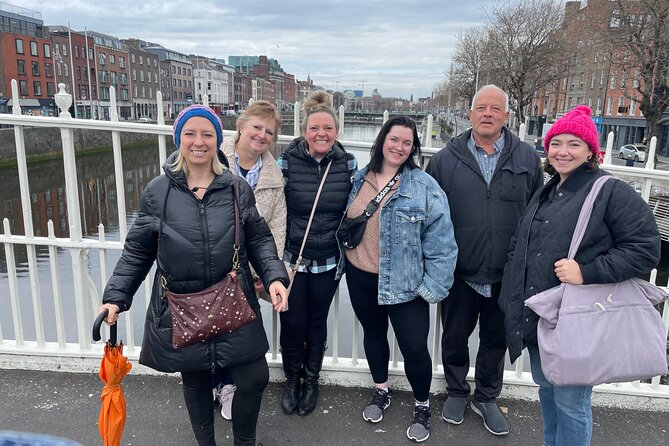
Dublin starts fast on foot. This private walking tour stitches together major landmarks and the stories behind them in about 2 to 3 hours, starting at Trinity College Green and ending at the Molly Malone statue. I like that it feels focused, not frantic, and you get a mobile ticket with an English-speaking guide.
I love the mix of eras, from a 1592 university to the 1916 Easter Rising, plus modern Dublin moments like the Spire. I also like that the guide adjusts to your group and questions, and families with kids have done well here by keeping the pace human.
One thing to plan for: several of the headline sites have admission tickets not included, so if you want to go inside everything, you should budget extra. It also depends on good weather since most of the experience is walking outdoors.
In This Review
- Key highlights you will feel right away
- A 2 to 3 hour private walk that sets your Dublin baseline
- Trinity College Dublin: 1592 roots and a city inside a city
- GPO Museum: the Easter Rising story you can see on the pillars
- The Spire (Monument of Light) and Ha’penny Bridge: skyline, river, and nicknames
- Temple Bar: famous nightlife, with the right kind of story
- Wood Quay Amphitheatre: where Viking Dublin was found
- Christ Church Cathedral: medieval layers, Strongbow, and a Magna Carta copy
- Saint Patrick’s Cathedral: Gothic style in the Liberties
- Dublin Castle: 700 years of rule and the Record Tower’s survival
- George’s Street Arcade and the Molly Malone finish
- Pacing, tickets, and how to avoid time stress
- Who should book this private walking tour, and who might want more time elsewhere
- Should you book this tour?
- FAQ
- How long is the Private Walking Tour in Dublin?
- Where does the tour start and end?
- How much does the tour cost?
- Is the tour private?
- Is the tour in English?
- Do I need to print anything?
- Are admission tickets included for the stops?
- Is good weather required?
- Are service animals allowed?
- What is the cancellation policy?
Key highlights you will feel right away
- A private route with only your group, so the pace stays comfortable
- Classic Dublin landmarks grouped into one easy arc, perfect for your first day
- Big historical moments at street level, including the 1916 Easter Rising at the GPO
- Free stops for photos and quick looks, with paid interiors available where you want them
- Guides who tailor and recommend, so you leave with a plan for later
- An efficient 2 to 3 hour format, ideal if you hate wandering without direction
Other Dublin walks with the wind behind you
- Dublin Highlights and Hidden Gems Guided Walking Tour★ 5.0 · 6,020 reviews
- Dublin: Highlights and Hidden Gems Walking Tour★ 4.9 · 2,140 reviews
- 1916 Rebellion Walking Tour★ 5.0 · 1,605 reviews
- 90 Minute Dublin Walking tour and Sightseeing tips★ 5.0 · 916 reviews
A 2 to 3 hour private walk that sets your Dublin baseline
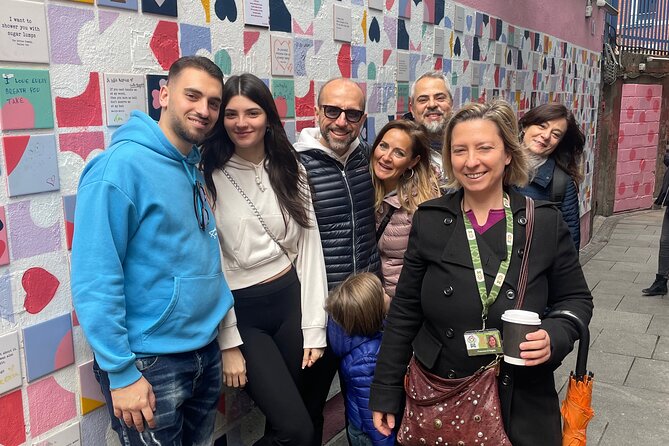
This is a true private walking tour, so it is just your group moving through central Dublin, with time to ask questions as you go. At roughly 90 USD per person, it is not a cheap souvenir-style tour. It is paying for guided time, smart sequencing, and less guesswork on where to spend your limited energy.
The route is built for orientation. You start in the Trinity area, then move through key places along the city center, the River Liffey zone, and the medieval core, before finishing by the Molly Malone statue near Suffolk Street. In practice, that means you will see what is near what, and you will better understand how Dublin sections itself by history and geography.
The tour also has a practical rhythm: some stops are quick photo-and-story moments, and others are longer enough to decide whether you want an entrance ticket. If you come with comfy shoes and a willingness to walk, you will get a lot of value from the time.
Trinity College Dublin: 1592 roots and a city inside a city
Your first stop is Trinity College Dublin at College Green. It is one of Ireland’s most prestigious universities, founded in 1592 by Queen Elizabeth I, and it has grown into a kind of city-within-a-city. With more than 20,000 people working and studying there, the grounds feel like a living hub, not just a historic backdrop.
Even if you do not enter (admission ticket is not included), you still get the point of Trinity fast. The guide can connect the campus to major Irish literary figures like Oscar Wilde, Bram Stoker, and Jonathan Swift, so you start seeing Dublin’s culture through the people it produced.
Time is about 20 minutes at this stop. That is great for orientation and for spotting the mood of the campus. If you want longer interior time, plan to add it later on your own, since this tour gives you a guided overview rather than a full campus visit.
GPO Museum: the Easter Rising story you can see on the pillars
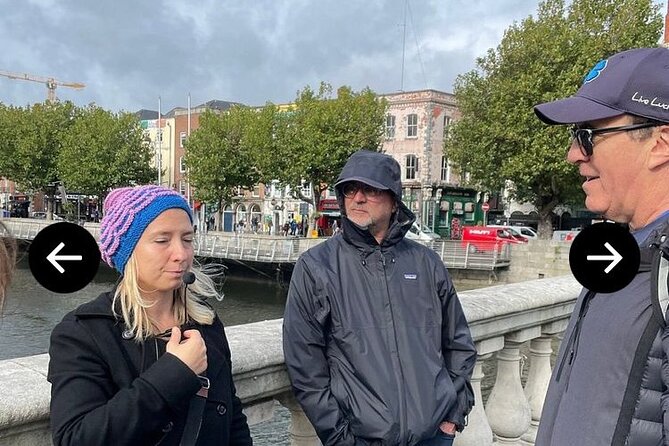
Next up is the GPO Museum in a Georgian building that became a symbol of resistance to British rule. On Easter Monday in 1916, members of the Irish Volunteers and the Irish Citizen Army seized the building during the Easter Rising.
This stop is powerful because it is not only about what happened, it is also about physical reminders. Bullet marks are visible on the front pillars, so the story lands in a very concrete way.
Your guided time here is about 15 minutes, and admission is not included. That means you can still get the main story from the street view and context, then decide later whether the museum interior is worth your extra time and ticket cost.
The Spire (Monument of Light) and Ha’penny Bridge: skyline, river, and nicknames
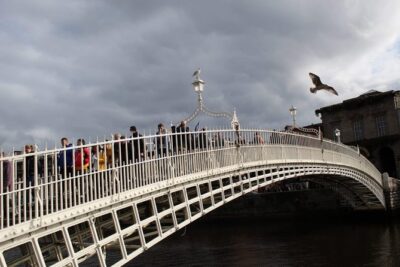
From the GPO area, you move to two iconic landmarks that help you understand modern Dublin and its relationship to the river.
The Spire is officially called The Monument of Light, and it is the tallest modern art monument in the world at 120 metres tall. It was built to celebrate the new millennium, and at only 3 metres in diameter at the base, it feels slender and dramatic against the city’s older lines. Your time here is short, about 5 minutes, which works well as a quick reset point after history-heavy stops.
Then you hit Ha’penny Bridge, officially named the Liffey Bridge. It is Dublin’s first pedestrian bridge, built in 1816, and the nickname Ha’penny comes from the idea of a half-penny toll. It also famously stayed higher for more than 100 years, which is part of why the name stuck.
Both of these are free stops, so you can spend your money where you want it. Treat them as photo breaks, yes, but also as wayfinding markers, because they help you map Dublin’s riverfront to the rest of the city.
Other trips where the minibus is yours alone


Temple Bar: famous nightlife, with the right kind of story
Temple Bar is Dublin’s most famous cultural and nightlife district, and this part of the walk is more than bar-hopping. You explore the old neighbourhood with its secrets, and you get pointed at the kinds of pubs where traditional Irish music is played every night.
This stop is around 15 minutes, and it is free. That means you are not paying to “see Temple Bar,” you are paying (through the guide) to understand why the area became the symbol it is today, and how to avoid turning your evening into a random walk with bad timing.
If you plan to come back after dark, this is a smart early stop. You learn what is where, then later you can choose a pub or a restaurant with a little more confidence.
Wood Quay Amphitheatre: where Viking Dublin was found
Next is Wood Quay Amphitheatre, set at the feet of the hill that leads up toward Christchurch. This is where archaeologists discovered the biggest Viking settlements outside Scandinavia. The Vikings were marauders at first, but they also became traders and eventually settled permanently in Dublin in 841 AD.
This is a small stop in time, about 15 minutes, and it is free. The value here is not just the ruins, it is the connection between Dublin’s medieval story and its Viking roots. If you have only seen Dublin as a medieval city, this stop corrects that picture.
It is also the kind of place where a good guide helps you look with better eyes. You leave understanding why this part of the city matters even if you never walk into a museum.
Christ Church Cathedral: medieval layers, Strongbow, and a Magna Carta copy
Christ Church Cathedral sits in the heart of Dublin’s medieval district. The site originally began as a Viking church, and it has welcomed pilgrims and visitors for almost 1,000 years.
The cathedral’s treasures are part of the appeal, and you can hear the names as you walk toward them. The guide points out details like Strongbow’s tomb and a copy of the Magna Carta. Those are big, recognizable anchors that help you connect Dublin to wider European history.
Your time here is about 15 minutes, and admission ticket is not included. That is ideal if you want a guided orientation inside the cathedral but do not have the time or budget to go fully slow. If you love architecture and want to linger longer, you can always return later when you have more breathing room.
Saint Patrick’s Cathedral: Gothic style in the Liberties
Saint Patrick’s Cathedral is in the heart of the Liberties. The current building was completed between 1225 and 1270, made in honour of Ireland’s patron saint, St. Patrick.
This stop adds a specific religious origin story: it is associated with St. Patrick’s baptism of the Irish Gaelic people, a tradition tied to early Christian conversion in Ireland. You also get pointed toward other treasures, including the Jonathan Swift tomb.
Time is about 15 minutes and admission is not included. Like Christ Church, it is enough time to set context and decide whether you want a deeper interior visit on your own. If you are trying to keep your total day efficient, the guided stop is a good fit.
Dublin Castle: 700 years of rule and the Record Tower’s survival
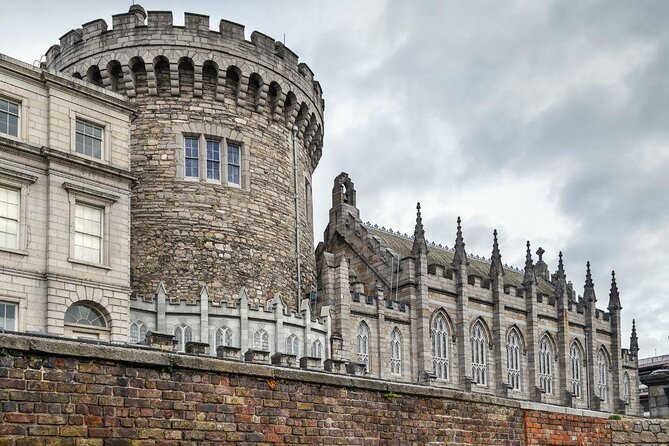
Your next major landmark is Dublin Castle. The castle served as the seat of the viceroy, the representative of the English monarch, and it was central to English rule over Ireland for more than 700 years.
The Record Tower is the only remaining piece of the original medieval castle. The rest of the architecture you see is tied to later State Apartments built in the 18th century. That mix matters because it shows how power changes over time, but the site keeps its political role.
You will spend about 20 minutes here, and admission tickets are not included. If your goal is to see the outside and get the story, you can do that efficiently. If you want to go inside, bring extra time and budget so you are not rushing through the most meaningful rooms.
George’s Street Arcade and the Molly Malone finish
You end with two spots that feel different in tone, but both help you round out the map of the city.
George’s Street Arcade is Dublin’s oldest shopping centre, and it is housed in Victorian-era architecture. It has been open for almost 140 years as part of the South city market buildings, and it is free to stop by and look around. This is a nice change of pace after cathedrals and castles, especially if you want a quick break without sitting down for hours.
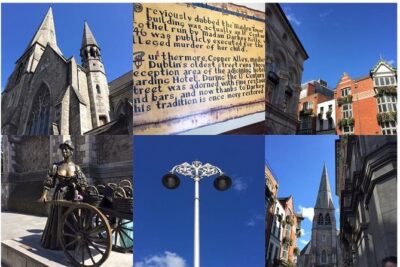
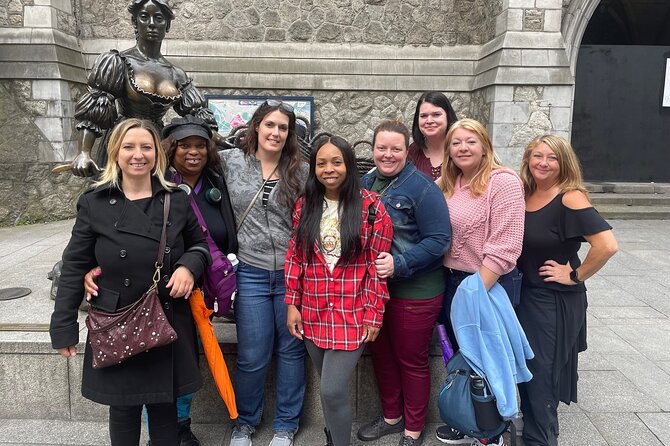
Then the tour finishes at the Molly Malone statue on Suffolk Street. Molly Malone was unveiled in 1988 to celebrate Dublin’s first millennium. The figure inspired the famous song Molly Malone, which became an unofficial Dublin anthem.
Your last stop is about 5 minutes and free. It works well as a finishing point because it is easy to spot and it puts you near the city’s lively streets, where you can transition into dinner or an evening stroll.
Pacing, tickets, and how to avoid time stress
This tour is efficient, which is the point. But it also means you will see a lot of famous spots in short windows, especially at places like the Spire, Ha’penny Bridge, Temple Bar, and Molly Malone where the stop times are about 5 minutes. That is great for orientation, but it is not a slow museum day.
Some of the biggest names require planning because admission is not included at several stops. You will likely want to decide in advance what you truly care about entering. If your top priority is history context and photo points, you can spend money only where it feels worth it.
The tour also depends on good weather. When conditions are decent, the whole experience flows naturally. When weather is rough, expect more walking time to feel less fun, even if the guide keeps things moving.
One practical tip: wear shoes you can walk in for a couple of hours, and keep your day flexible. This route is built to help you structure the rest of your stay, so you do not want sore feet cutting into your evening plans.
Who should book this private walking tour, and who might want more time elsewhere
This tour is a strong match if you are visiting Dublin for the first time, or if you want a guided backbone for a day you otherwise might fumble. It is also a good fit for families, since guides have adjusted for children around 6 and 8 and still kept the experience engaging.
It suits people who like a clear route and like getting recommendations for what to do next. Past experiences with guides like John and Sinead highlight how they can tailor the walk to what you want, then point you toward places you will actually enjoy after the tour ends.
If you are the type who needs long interior time, you might find the stop durations a bit tight. The guided visit is designed for efficiency and context, not for spending half your day inside multiple major sites. In that case, consider doing this tour first, then returning later to your two or three top priorities.
Should you book this tour?
Book it if you want a focused, private introduction to Dublin that links landmarks to real events, like the Easter Rising at the GPO and the Viking presence around Wood Quay. The value improves if you treat it as the start of your city plan, not the whole city plan.
Skip it or adjust your expectations if you are hoping for long museum time at each stop. Admission is not included for major interiors, and the stops at several photo points are brief by design.
If you book, come ready to walk, ask questions, and decide ahead of time where you want to pay for entry. You will leave with a better mental map and a list of next steps that make the rest of Dublin feel less random.
FAQ
How long is the Private Walking Tour in Dublin?
It lasts about 2 to 3 hours.
Where does the tour start and end?
It starts at Trinity College Dublin, College Green, Dublin 2, and ends in front of the Molly Malone statue on Suffolk St, Dublin 2.
How much does the tour cost?
The price is $90.11 per person.
Is the tour private?
Yes. It is a private tour/activity, so only your group participates.
Is the tour in English?
Yes, it is offered in English.
Do I need to print anything?
No. You get a mobile ticket.
Are admission tickets included for the stops?
No. Some stops list admission ticket not included, including Trinity College Dublin, GPO Museum, Christ Church Cathedral, Saint Patrick’s Cathedral, and Dublin Castle. Other stops are free, like the Spire, Ha’penny Bridge, Temple Bar area, Wood Quay Amphitheatre, George’s Street Arcade, and the Molly Malone statue.
Is good weather required?
Yes. The experience requires good weather, and if it is canceled due to poor weather you will be offered a different date or a full refund.
Are service animals allowed?
Yes, service animals are allowed.
What is the cancellation policy?
You can cancel for a full refund up to 24 hours in advance of the start time. If you cancel less than 24 hours before, the amount paid is not refunded.
More of Dublin Underfoot
The Wider Dublin Pile
Elsewhere on The Ireland Traveler
Lately added to the Dublin pile
- Waterford Crystal and Kilkenny Full-Day Rail Tour from Dublin
★ 5.0 · 3 reviews - Turtle Bunbury’s Dublin: A Self-Guided Audio Tour from a Celebrated Author
★ 5.0 · 3 reviews - Cliffs of Moher and The Burren Private Tour from Dublin
★ 5.0 · 3 reviews - Dublin Full-Day Tour through Boyne Valley
★ 5.0 · 3 reviews - Rock Of Cashel And Blarney Castle Private Chauffeur Full Day Sightseeing Tour
★ 4.5 · 3 reviews - Private Irish Fusion Meal in a Modern Home in Skerries, Dublin
★ 5.0 · 3 reviews
More Walking Tours, side by side.
 ★ 5.0Dublin Highlights and Hidden Gems Guided Walking TourFrom $296,020 reviews
 ★ 4.9Dublin: Highlights and Hidden Gems Walking TourFrom $272,140 reviews
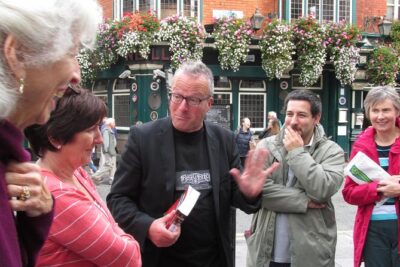 ★ 5.01916 Rebellion Walking TourFrom $271,605 reviews
 ★ 5.090 Minute Dublin Walking tour and Sightseeing tipsFrom $21916 reviews
 ★ 5.02-Hour Historical Walking Tour from DublinFrom $22875 reviews
 ★ 4.7Historical 2-Hour Guided Walking Tour of DublinFrom $22865 reviews
 ★ 5.0Dublin Traditional Irish 3 Course Meal Walking Tour with LocalFrom $107755 reviews
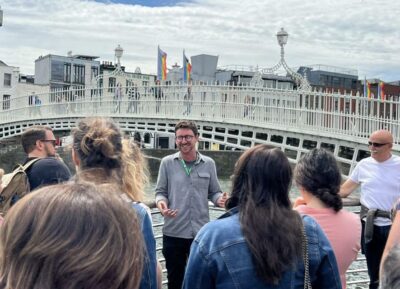 ★ 4.9Dublin: Mythology, Folklore and Legends Walking TourFrom $27703 reviews
Other lists this one is on