
REVIEW · IRELAND
Small Group-Dublin Walking Tours
Two hours, and Dublin clicks. This small-group walk through central Dublin links Dublin Castle, Christ Church Cathedral, Temple Bar, and Trinity College in one tidy loop. I really like the limited group size (max 8) and the way Damian keeps things fun with music and short performances while you learn.
One heads-up: it is a walking tour on cobblestones, and the pace can feel fast if you want to linger at every corner. Plan for comfy shoes, and you’ll be fine.
In This Review
- Key Highlights Worth Planning For
- Getting Your Bearings on a Dublin City-Center Loop
- Start at Chester Beatty and Dubh Linn Garden Behind Dublin Castle
- Dublin Castle Gardens: Small Time, Big Context
- Christ Church Cathedral: Vikings, Religion, and Handel’s Messiah
- Temple Bar and Ha’penny Bridge: Nightlife Quarter With Trade Stories
- O’Connell Bridge: 1916 Easter Rising and Daniel O’Connell’s Statue
- Trinity College Dublin Courtyard and Parliament House Views
- Bram Stoker Sites on Dawson Street and Kildare Street, Plus Leinster House
- St Stephen’s Green, Grafton Street, and Georgian-Era Views
- Powerscourt Townhouse Centre: An Architectural Atrium to Close the Loop
- Price and Value for a Guided Dublin Walk at About $60
- Who This Dublin Walk Fits Best
- Should You Book This Small-Group Dublin Walking Tour?
- FAQ
- How long is the Small Group-Dublin Walking Tours experience?
- What is the maximum group size?
- Where does the tour start and where does it end?
- Is the tour offered in English?
- Are there admission tickets needed for the listed stops?
- What is the cancellation policy for a full refund?
Key Highlights Worth Planning For
- Small group cap of 8 keeps questions flowing and the pace human.
- Music and skits make the stories easier to remember, not just recited.
- A smooth city-center route ties major sights together without wasting time.
- Free entry listed at stops means you are not building a budget for museums during the walk.
- A guide who adjusts to real needs has been praised for being considerate with guests who need a slower tempo.
Other Dublin walks with the wind behind you
- Dublin Highlights and Hidden Gems Guided Walking Tour★ 5.0 · 6,020 reviews
- Dublin: Highlights and Hidden Gems Walking Tour★ 4.9 · 2,140 reviews
- 1916 Rebellion Walking Tour★ 5.0 · 1,605 reviews
- 90 Minute Dublin Walking tour and Sightseeing tips★ 5.0 · 916 reviews
Getting Your Bearings on a Dublin City-Center Loop
This is the kind of tour that helps you stop guessing and start navigating. In roughly two hours, you cover the core Dublin sights that most first-time visits revolve around, but you do it in a way that feels connected instead of rushed sightseeing.
You’ll walk through classic neighborhoods and landmarks, while the guide stitches the themes together, like how Dublin’s name and early development link to later centuries, how religion and politics shaped streets and buildings, and how trade and travel changed the city center over time. The stops are mostly outside views or quick courtyard moments, so it works best if you want a strong orientation and a map in your head for the rest of your trip.
The group is capped at 8, and that matters more than it sounds. With fewer people, the guide can keep control of the timing, ask what you’re most interested in, and bring you back to the thread when you get curious and start hopping off-topic. You also get more chances for questions, which is how these walks turn from facts into understanding.
If you hate walking, this one may not be your favorite style. But if you’re comfortable moving for about two hours, and you want a guided “story route” rather than a list of photo spots, you’ll likely love it.
Start at Chester Beatty and Dubh Linn Garden Behind Dublin Castle
Your tour begins at Dublin Castle, at the Chester Beatty Library area in the Dubh Linn Garden (meeting point at Castle St, Dublin 2). This is a smart way to kick things off because you start where Dublin’s “early story” starts to become visible. You’re not immediately thrown into a random street with no context. You’re placed right beside Dublin Castle grounds and guided into the meaning behind what you’re seeing.
At the Chester Beatty Library stop, you get an outline of the walk, then you explore the surrounding castle-area grounds briefly. The focus here is on Dublin’s beginnings and even the name of Dublin, so the guide sets up the big idea: why this spot became important, and how the landscape and setting shaped the city from the earliest days.
This portion is usually short, around ten minutes, with no pressure to move slowly through a building you may or may not want to tour. Instead, the guide uses the setting to explain the origins that later places reference. If you’re arriving in Dublin for the first time and everything feels like it should be connected, this first stop helps you connect it.
Dublin Castle Gardens: Small Time, Big Context
Right after that, the tour keeps you in the Dublin Castle area and moves into the gardens for another short segment. This is another ten-minute block, and it’s designed for visual understanding. You get to see the gardens and the general feel of the grounds while learning about the early narrative of Dublin’s name and earliest terrain.
Here’s the value for you: Dublin Castle can look like just another impressive historic site from a distance. But in a short guided stop, you learn what it means in the city’s timeline. You’re not trying to master every detail. You’re getting the “why that matters” pieces.
Also, this part keeps the walk easy to start. You’re not immediately climbing or sprinting for the next stop. You’re settling into the rhythm, which helps later when the pace picks up a bit.
Christ Church Cathedral: Vikings, Religion, and Handel’s Messiah

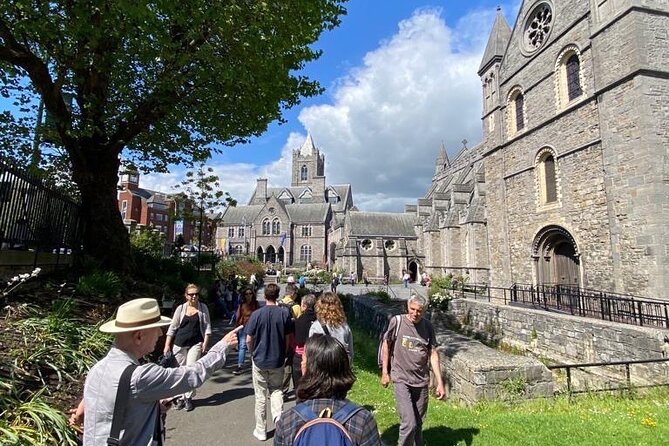
Then you move toward Christ Church Cathedral, passing by as part of the route. This section is built around three linked themes.
First, you learn about the Catholic Church in Ireland and how it influenced public life and identity. Second, the guide points out a performance detail that gives you an immediate cultural hook: Christ Church Cathedral is associated with the view of the venue where Handel’s Messiah was first performed. Third, you zoom back further in time to the origins of Dublin, including Viking invasions from the north and the legacy that left behind.
Even if you only see portions of the exterior, this stop changes how you look at the cathedral area. You start seeing it as a crossroads: religion, power, performance, and older settlement patterns all stacked in one place.
Because your time here is brief, you won’t get a long lecture. Instead, you get the key story threads so that later, when you pass similar buildings on your own, you recognize the pattern.




Temple Bar and Ha’penny Bridge: Nightlife Quarter With Trade Stories
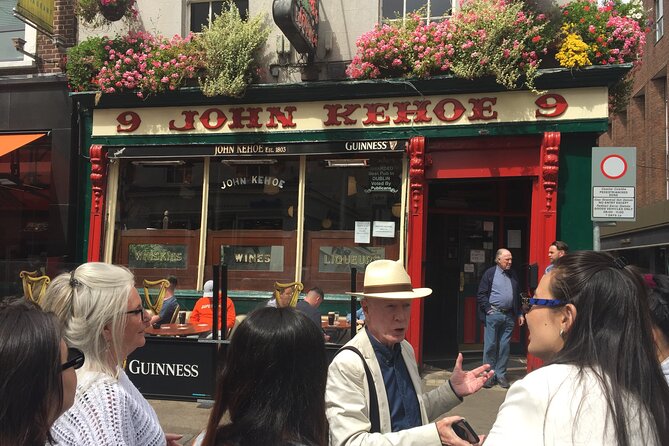
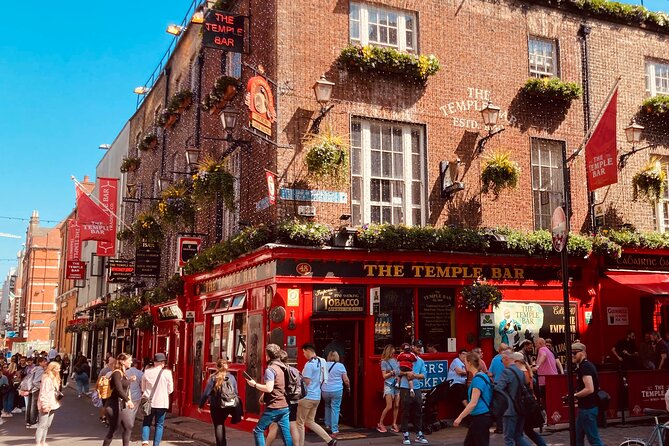
One of the most memorable parts of this route is the walk through Temple Bar. The tour frames it as Dublin’s lively nightlife quarter, and yes, it’s a zone where people tend to linger, share pints, and look for live music. The key is that the guide doesn’t let it stay at the level of nightlife vibes.
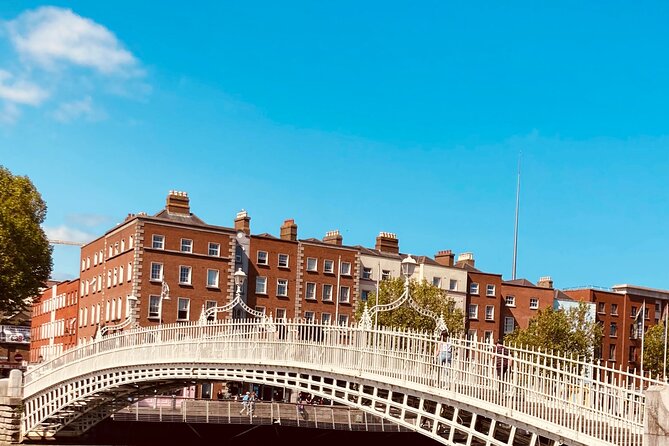
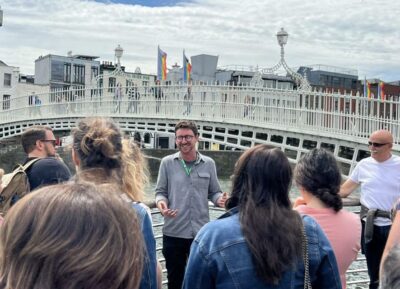
You also cross Ha’penny Bridge, and the guide uses that moment to talk about the foundations of the city and the evolution of trade and travel around the town center. So while you’re physically moving across the river link, you’re mentally moving through how people and goods got around, why the city center developed where it did, and how that shaped street life.
This segment takes about fifteen minutes, which feels like the right amount of time. You get a taste of the atmosphere without being trapped in a crowd all afternoon. You also get the benefit of context, so Temple Bar becomes more than a photo stop.
If you’re the type who plans to come back later for a drink, this is an excellent primer. It helps you decide what kind of Temple Bar night you actually want, later, with clearer eyes.
O’Connell Bridge: 1916 Easter Rising and Daniel O’Connell’s Statue
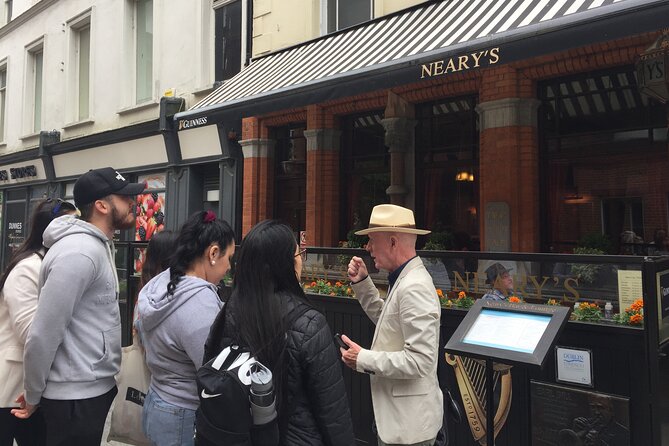
Next up is O’Connell Bridge. This part of the walk turns attention to the 1916 Easter Rising and its center area. You’ll cross over and view the statue of Irish parliamentarian Daniel O’Connell, which anchors the story in a real public figure you can point to while the guide explains how politics shaped Dublin.
You’ll also talk about the River Liffey, including the famous Liffey Swim. That detail does two things for you. It ties a mythic-sounding event to a real city feature you are physically standing over, and it gives the guide an everyday hook to explain why the river matters.
This is about ten minutes, and it’s timed well in the itinerary. By now, you’ve built enough background that you’ll actually understand what the guide means when discussing the city’s political turning points. Without that setup, 1916 can feel like a distant headline. With this route, it becomes a street-level story.
Trinity College Dublin Courtyard and Parliament House Views
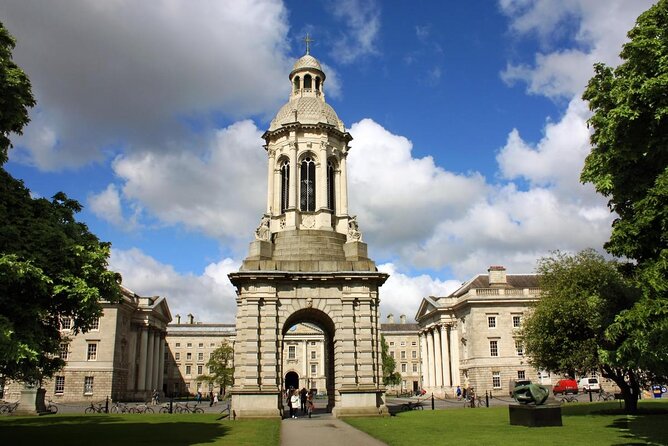
Now you reach Trinity College Dublin, another major anchor for first-time visitors. The stop is brief, around ten minutes, and it’s geared toward giving you a quick sense of what makes Trinity special without forcing you into a full visit plan.
The guide focuses on the university as one of the world’s most famous institutions and points out historical figures associated with studying there. You can usually enter the courtyard of the university grounds for a few minutes to see the original architecture up close.
You’ll also catch a view of House of Lords, known locally here as Parliament House, on Dame Street. This pairing is clever: it ties education and governance to the same city blocks, showing how Dublin’s intellectual reputation and political life overlap in space.
For you, the value is in how you leave this stop. After a short guided peek, you’ll know if Trinity is a “must enter” place for you or if a quick courtyard moment is enough. Either way, the tour gives you a better decision than guesswork.
Bram Stoker Sites on Dawson Street and Kildare Street, Plus Leinster House
The walk continues through the literary Dublin layers. Near Saint Anne’s Church on Dawson Street, you speak about the wedding of writer Bram Stoker, tying his personal life to a very specific Dublin location. This is one of those details that makes a city feel personal, because it’s not just Stoker as a name. It’s Stoker as a person who stood in this place.
Then you move toward Bewley’s Café on Grafton Street as part of the route. After that, you shift to Leinster House on Kildare Street. Here the guide connects two identities for Stoker too, linking his home area and the broader Dublin setting to the Irish houses of parliament housed at Leinster House.
You’ll also learn about Leinster House’s relation to the White House in Washington, DC. And as you walk, you pass along the National Museum of Archaeology, getting a brief look at another cultural stop without committing time away from the main route.
This segment is around forty minutes total across a couple of areas, with short stops each time. That structure works for the kind of travel most people do: a tight schedule, limited daylight, and the desire to fit Dublin into a half-day plan.
St Stephen’s Green, Grafton Street, and Georgian-Era Views
After Leinster House, the tour heads toward St Stephen’s Green. The route weaves past Grafton Street, which is Dublin’s high-end shopping district, and also includes a passing glance at the Royal College of Surgeons. You’ll see Georgian-era architecture along the way, then end up at the park itself.
St Stephen’s Green is a valuable change of pace. It gives you a break from the intensities of the city center and adds a calmer backdrop to the guide’s stories. This stop lasts about fifteen minutes, so you can actually look around and feel the shift in atmosphere.
In a guided walk, parks can either feel like filler or like breathing room. Here, it functions as breathing room that also keeps the city’s layers visible. You’re not just walking through buildings. You’re seeing how Dublin creates contrast, busy streets beside open public space.
If you plan to shop or snack later, this timing helps. You’ll be oriented to where Grafton Street starts to feel like your kind of street, and you’ll know exactly where to head next after the tour.
Powerscourt Townhouse Centre: An Architectural Atrium to Close the Loop
To wrap up, the tour visits Powerscourt Townhouse Centre on South William Street. This is about ten minutes and is built around the building’s architecture, described as an impressive town center feature with a stunning atrium.
It’s also a practical ending point. The center has upscale and boutique shopping outlets, plus cafés or restaurants in the atrium, so it’s a natural place to continue your afternoon after the walk.
The tour ends at Powerscourt Townhouse Centre, located between South William Street and Clarendon Street (59 William St S, Centre, Dublin 2, D02 HF95). This matters because you finish in an area that’s easy to reach on foot and also easy to navigate afterward, whether you want another coffee, a bite to eat, or to explore nearby streets on your own.
Price and Value for a Guided Dublin Walk at About $60
At $60.47 per person for about two hours, the value depends on what you want from Dublin. If your goal is photo snapshots with zero context, this could feel like money you could spend elsewhere. But if your goal is quick orientation plus guided stories that tie together buildings, people, and political shifts, this price can make sense fast.
Here’s why it may be good value for you:
- The group size is small, max 8, which often means less time standing around and more time learning.
- The tour includes multiple famous and historically important stops across the city center, without forcing you into long travel segments.
- The itinerary lists free admission at each stop, so you’re not layering in entry fees for what you’re seeing during the walk.
- Damian’s style is reported as entertaining, with music and performances that help the facts stick.
Two hours is also a smart time window. It lets you get a feel for Dublin early in your trip, then decide what deserves your next time block.
Who This Dublin Walk Fits Best
This tour is a strong match if you want an introduction to Dublin that you can build on. It works well for first-time visitors because it hits the major districts in a logical loop, from Dublin Castle through Trinity, and down toward the river crossings.
It also suits families who want learning without turning it into a long school-style lecture. One family with kids ages 11 and 13 kept energy up and stayed engaged during the walk. That’s a good sign you won’t need to be an Irish history expert to enjoy it.
On the other hand, if you want long interior time, detailed museum access, or a slow stroll where you hang out at every stop for an hour, you might find this format too time-boxed. It’s designed for movement and storytelling, not for lingering.
It’s also a cobblestone walking route. You’ll get the most out of it if you arrive with comfortable shoes and a willingness to keep moving.
Should You Book This Small-Group Dublin Walking Tour?
Book it if you want a fast, guided city-center orientation with clear stories and a small-group feel. You’ll likely appreciate the combination of major landmarks, lesser-known details, and the way Damian mixes history with music and light performances to keep the walk lively and memorable.
Skip it or adjust expectations if you need lots of time inside buildings, hate cobblestones, or prefer a self-guided route where you control every minute. This is a structured walk, and the payoff comes when you treat it as your “get your bearings first” Dublin plan.
If it’s your first day in Dublin or you only have a short window before dinner plans, this tour is an efficient way to start smart and explore next with confidence.
FAQ
How long is the Small Group-Dublin Walking Tours experience?
It lasts about 2 hours.
What is the maximum group size?
The tour has a maximum of 8 travelers.
Where does the tour start and where does it end?
It starts at Dublin Castle, Chester Beatty Library area (Castle St, Dublin 2, D02 AD92). It ends at Powerscourt Townhouse Centre (59 William St S, Dublin 2, D02 HF95), between South William Street and Clarendon Street.
Is the tour offered in English?
Yes, it is offered in English.
Are there admission tickets needed for the listed stops?
The tour’s stop details indicate admission ticket free at each of the listed locations.
What is the cancellation policy for a full refund?
You can cancel for free up to 24 hours in advance for a full refund. Changes made less than 24 hours before the start time are not accepted.
More of Dublin Underfoot
The Wider Dublin Pile
Elsewhere on The Ireland Traveler
Lately added to the Dublin pile
- Waterford Crystal and Kilkenny Full-Day Rail Tour from Dublin
★ 5.0 · 3 reviews - Turtle Bunbury’s Dublin: A Self-Guided Audio Tour from a Celebrated Author
★ 5.0 · 3 reviews - Cliffs of Moher and The Burren Private Tour from Dublin
★ 5.0 · 3 reviews - Dublin Full-Day Tour through Boyne Valley
★ 5.0 · 3 reviews - Rock Of Cashel And Blarney Castle Private Chauffeur Full Day Sightseeing Tour
★ 4.5 · 3 reviews - Private Irish Fusion Meal in a Modern Home in Skerries, Dublin
★ 5.0 · 3 reviews
More Walking Tours, side by side.
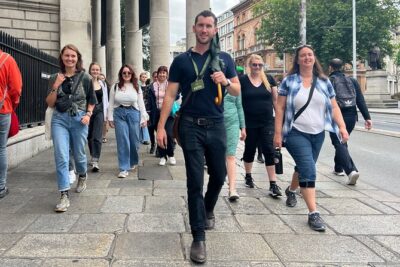 ★ 5.0Dublin Highlights and Hidden Gems Guided Walking TourFrom $296,020 reviews
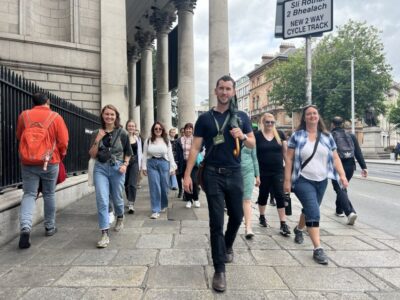 ★ 4.9Dublin: Highlights and Hidden Gems Walking TourFrom $272,140 reviews
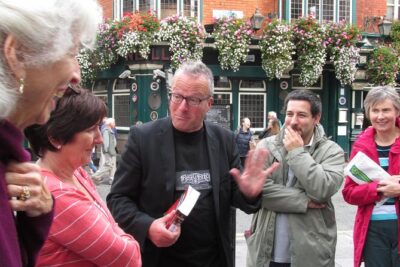 ★ 5.01916 Rebellion Walking TourFrom $271,605 reviews
 ★ 5.090 Minute Dublin Walking tour and Sightseeing tipsFrom $21916 reviews
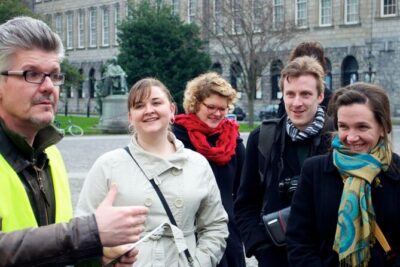 ★ 5.02-Hour Historical Walking Tour from DublinFrom $22875 reviews
 ★ 4.7Historical 2-Hour Guided Walking Tour of DublinFrom $22865 reviews
 ★ 5.0Dublin Traditional Irish 3 Course Meal Walking Tour with LocalFrom $107755 reviews
 ★ 4.9Dublin: Mythology, Folklore and Legends Walking TourFrom $27703 reviews
Other lists this one is on