
REVIEW · IRELAND
Dublin LGBTQ Pride Historical and Cultural Walking Tour
Queer Dublin, on foot. This 2-hour LGBTQ Pride historical and cultural walk connects famous city sights to the people who fought, performed, and organized for visibility. I especially like how it mixes the big-name landmarks with specific queer stories tied to each stop, so you leave with more than photos.
My other favorite part is the way the route lands at places that still feel alive today, from Temple Bar’s old gathering spots to the oldest operating gay bar. One caution: this history includes hard moments, like discrimination and the tragic context behind early Pride events, so it is not only a feel-good stroll.
In This Review
- Key takeaways before you go
- Why this 2-hour walking tour makes sense in Dublin
- Meeting point and what to expect at Temple Bar
- Temple Bar to the queer HQ area: more than a photo stop
- The GPO Museum stop and why 1916 matters here
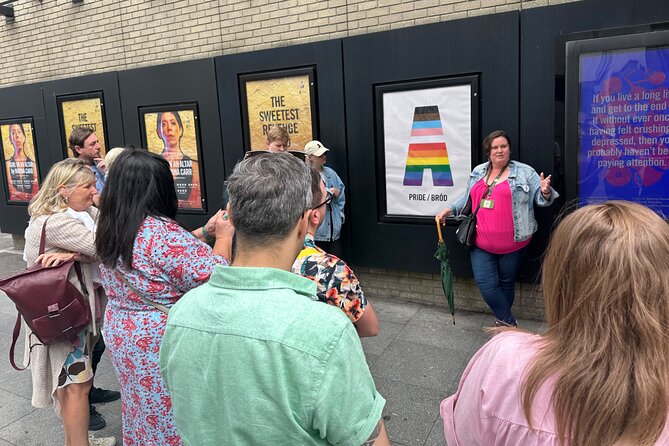
- Abbey Theatre: where LGBTQ icons meet Irish stage culture
- Liberty Hall: the first Pride parade and trans activism
- Trinity College Dublin and what is not included
- Meeting House Square to the George Bar: 1980s hope and community institutions
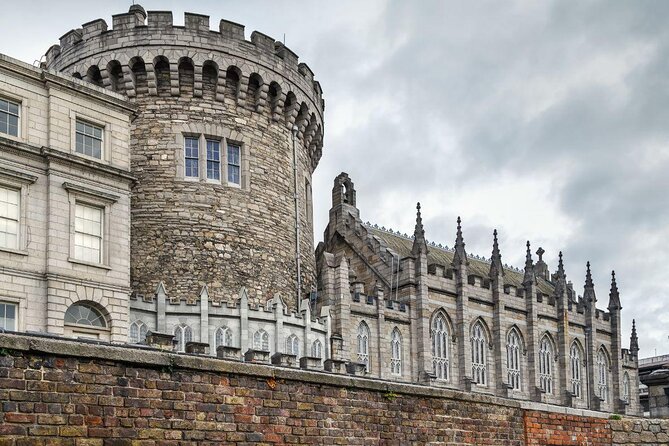
- Finishing at Dublin Castle, why the ending works
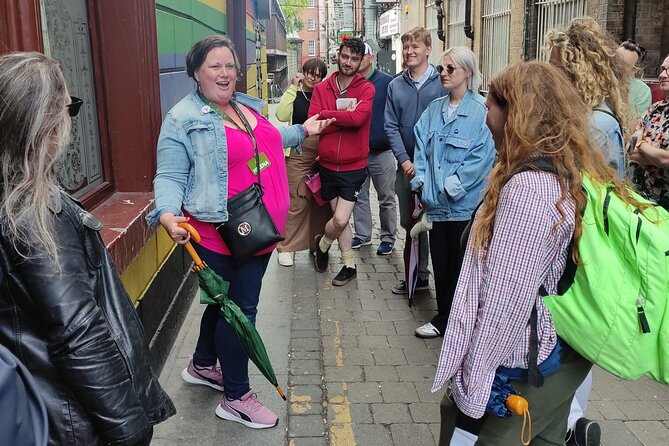
- Guides make the difference: Deidre and Helena’s impact
- Price and value: what you really pay for
- Who this tour is best for
- Should you book Dublin’s LGBTQ Pride historical and cultural walk?
- FAQ
- FAQ
- How long is the Dublin LGBTQ Pride Historical and Cultural Walking Tour?
- Where do I meet the tour guide, and where does the tour end?
- What language is the tour offered in?
- Is admission included for all stops?
- Do I need a certain physical fitness level?
- Is there a limit on group size?
- Are service animals allowed?
- What if my plans change, can I cancel for a refund?
Key takeaways before you go
- Temple Bar focus with context: you start in the district, then return later to the area tied to early LGBTQ headquarters life.
- Most admissions are free: many stops are listed with free entry, which makes the price feel fairer than many “paid attraction” tours.
- Art and activism on the same route: the Abbey Theatre, major civic buildings, and community spaces all show up.
- A guide who brings names to the story: the tour highlights LGBTQ+ icons, plus specific references to activists and community figures.
- Includes Trinity College, with a note on cost: that one site is marked as admission not included.
- Ends at Dublin Castle: you finish in the center of centuries of layered city history.
Other Dublin walks with the wind behind you
- Dublin Highlights and Hidden Gems Guided Walking Tour★ 5.0 · 6,020 reviews
- Dublin: Highlights and Hidden Gems Walking Tour★ 4.9 · 2,140 reviews
- 1916 Rebellion Walking Tour★ 5.0 · 1,605 reviews
- 90 Minute Dublin Walking tour and Sightseeing tips★ 5.0 · 916 reviews
Why this 2-hour walking tour makes sense in Dublin
Dublin is compact enough that a walking tour can feel efficient, not exhausting. This one is timed at about two hours, and it is planned as a city-center loop that links together places you would otherwise see separately, each with a queer lens attached.
The value is that the tour is built around recognizable stops, but the stories aim at the “missing pages.” Instead of only pointing at plaques or famous buildings, you get human details about Irish LGBTQ+ life across different eras and how people used public spaces, theater, and activism to push for change.
At $29.02 per person, the pricing becomes easier to swallow because multiple stops are listed with free admission tickets. You still get a walking tour experience with guided interpretation, not just a set of locations. If you plan to add attractions on your own, you will likely find this route helps you avoid paying for many separate entries.
Finally, the group size is capped at 100. That does not automatically mean it feels tiny, but it helps explain why it is not a chaotic crush. A few guides are specifically praised for energy and clarity, including Deidre and Helena.
Meeting point and what to expect at Temple Bar
You meet at 3 Crown Alley, Temple Bar, Dublin (near the heart of the Temple Bar district). It is a good starting point because it is central, easy to find, and already tourist-friendly, so you can walk there without a complicated commute.
The tour is offered in English, and you get a mobile ticket. That matters in a city where paper tickets are easy to misplace. You also know what you are signing up for: a guided walking route with timed stops, around ten minutes each, plus a bit of movement between them.
Also, this tour is marked for moderate physical fitness. In practice, that usually means comfortable walking on city sidewalks for about two hours. Dublin streets are walkable, but you should still wear shoes you trust. You will be outdoors for most of the experience, so plan your outfit around the weather.
And because it is near public transportation, you can easily pair it with other plans before or after. You are not forced into a weird schedule just to make the meeting time work.
Temple Bar to the queer HQ area: more than a photo stop
Temple Bar shows up twice in the story. First, it is your departure point, and later you come back to explore the other end of the district, including the site tied to Ireland’s first bona fide gay headquarters.
That matters because Temple Bar is often treated like a single “party zone” by visitors. This tour treats it more like a changing social hub where community life gathered, expressed itself through culture, and built space for people who needed support. You will hear about the kinds of places that were part of this area’s LGBTQ life, including spaces described with a café, disco, cinema, and more.
You also cross Dublin’s famous bridge as you move off through queer history. The guide uses the walk itself as a storytelling device, which is one of the smartest parts of this style of tour. Instead of only stopping at buildings, you are oriented through the city’s movement.
There is also a section where you straddle the river area described as Anna Livia. That bridge and river moment is useful, even if you are not a river person. It breaks up the day, gives your legs a moment to reset, and provides a natural marker for the next set of themes.
If you like your tours to include lively places but with deeper context, Temple Bar is a strong fit for this route.
The GPO Museum stop and why 1916 matters here
One of the tour’s most compelling stops is the GPO Museum, a major landmark tied to the 1916 Easter Rising. The building is culturally and historically important, so it is already worth a visit on its own.
What the tour adds is the link between that major event and “gay figures” connected to the events and how they are remembered. In other words, you are not just learning about politics and rebellion as separate from LGBTQ life. You are seeing how queer people were present in major national moments and how those stories can be easy to overlook.
The stop is short, about ten minutes, so the guide has to choose what fits. That is a good thing. Short stops keep the pace moving, and it pushes the guide to focus on specific takeaways, not a lecture you would forget halfway through.
The admission ticket at this stop is listed as free. For a first-time visitor, that can make the GPO feel like a high-impact choice without extra cost.
If you are the type of traveler who enjoys history but gets bored when it turns into dates and names only, this is a good way to keep your attention. The tour uses a “big event building” as a doorway into people-focused storytelling.
Other pieces of the past in Dublin
Abbey Theatre: where LGBTQ icons meet Irish stage culture
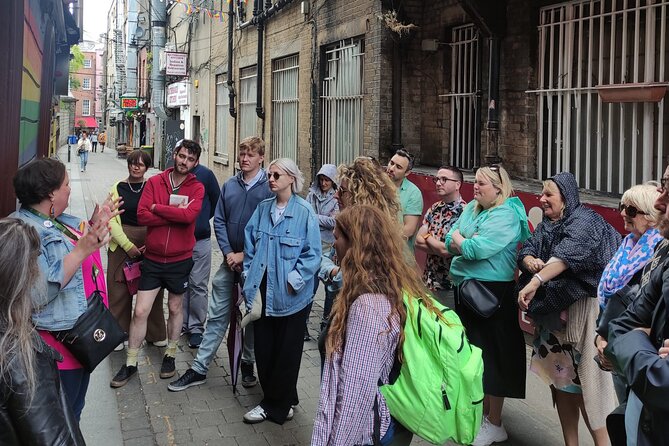
Next up is the Abbey Theatre, described as Ireland’s national stage. That is your clue that this stop is about more than architecture. It is about performance, public storytelling, and how cultural institutions can help shape acceptance.
The tour frames the Abbey Theatre as a place to learn about an inspirational contemporary gay icon and the icon’s role in shaping Ireland’s modern landscape. Even if you are not deeply familiar with the Abbey already, you will recognize why a national stage matters in a queer history tour. Theater can make ideas visible and normalize characters audiences might never meet in real life.
Again, the stop is about ten minutes. You are not expected to “do” the entire museum or theater program. Instead, you are getting a guided snapshot tied to the guide’s themes. That keeps the tour efficient and helps you avoid the common problem of spending a long time inside, then rushing the rest of the day.
Admission at this stop is listed as free. For your planning, it means you can treat the Abbey Theatre stop as part of the tour without adding extra tickets.
If you are an arts fan, this is one of the stops that will likely stick with you, because it connects public culture to social change.
Liberty Hall: the first Pride parade and trans activism
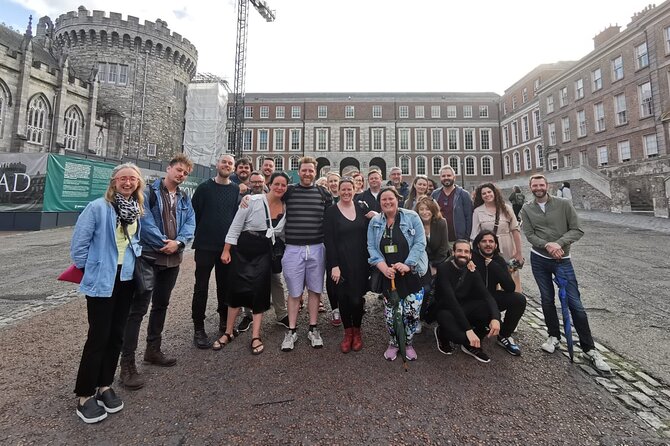
At Liberty Hall, the mood shifts toward the difficult side of history. This stop is where the tour addresses the tragic and tumultuous circumstances surrounding the first ever gay pride parade in Ireland.
It is also where the guide discusses an inspirational trans activist. The combination is important. You get the sense that early Pride was not only a celebration. It could include real risk, hostility, and the kind of struggle that shaped how later Pride events grew and survived.
This is the one area of the tour where you should mentally prepare. If you came looking for a purely upbeat walking tour, you may feel the contrast. But if you want a more honest understanding of how LGBTQ rights became part of public life, this stop is one of the most meaningful.
The admission ticket at Liberty Hall is listed as free, and the stop runs around ten minutes. That tight timing can feel like a lot to cover, but it is also why a guide’s focus matters. You get a coherent arc, rather than scattered facts.
Trinity College Dublin and what is not included
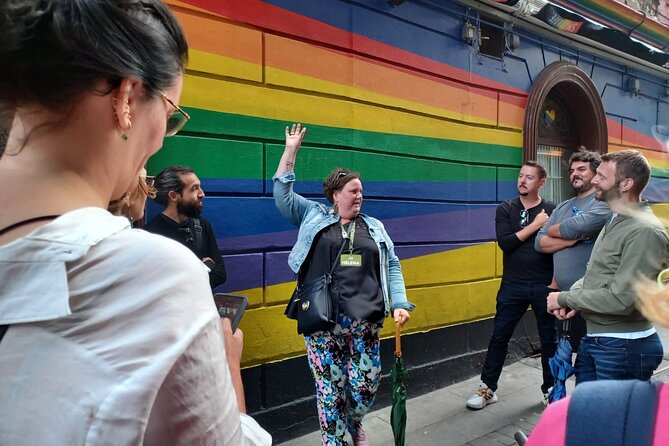
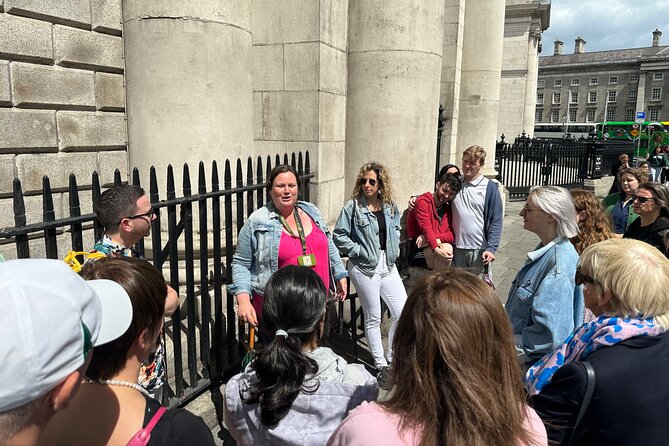
The tour then heads to Trinity College Dublin, framed as the oldest and most famous college in Ireland. This is not just a campus pass-through. The focus is on LGBTQI+ alumni who passed beneath the famous old arch, plus exploration of the wider College Green area.
This stop is also around ten minutes, so you will mostly be on the surface level, meaning views, positioning, and guided storytelling tied to the landmarks you can see. It is a good fit if you want the context without taking on a full self-guided campus visit.
Here is the key logistics note: admission at this stop is not included. The tour description signals that you may need to pay separately if you want any ticketed entry or campus access beyond what the guided walk covers. The practical move is to check what you want to do with your time when the tour ends, and whether you plan to stay around for extra exploring.
If you love university history, this stop adds a different angle. You are not only tracing protests and bars, you are also tracing how queer life and queer achievement can fit inside major institutions.
Meeting House Square to the George Bar: 1980s hope and community institutions
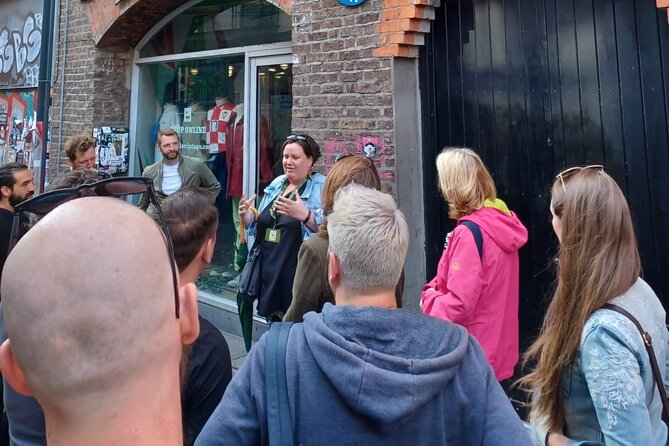
After Trinity, you loop back toward Temple Bar via Meeting House Square by Sean Harrington Architects. This segment focuses on the changing streetscene of queer Dublin in the 1980s.
The guide talks about people who brought hope and light to the community, including thinkers and change makers of the time. That phrase matters because the 1980s in LGBTQ history often includes major public pressure. A tour that highlights “hope and light” alongside political reality gives you a fuller emotional picture, not just a timeline of conflict.
Then the tour continues to The George Bar, described as Dublin’s oldest operating gay bar and treated as a cultural institution. This is one of the most practical stops because it answers a question many first-time visitors have: where do people go, day after day, when activism moves from the street into everyday life?
The George Bar stop is short, about ten minutes, but it is framed as a centerpiece of the LGBTQ+ community. Even if you are not planning to drink, it is worth seeing the place as an ongoing meeting point in city life.
If you want a tour that blends history and real-world community anchors, this mid-to-late section is where that balance shows up.
Finishing at Dublin Castle, why the ending works
The tour wraps up at Dublin Castle, described as home to 1,200 years of history. You finish in the upper courtyard of the 18th century complex, right in the center of the old city.
That ending is smart. Temple Bar starts the story with community energy and cultural spaces. Dublin Castle ends the story with state power and the physical heart of official history. The contrast helps you feel why visibility and rights matter. It also helps you connect personal community stories to the wider national narrative.
Most stops are designed for about ten minutes, and then you arrive at the finish point. That means you are not stuck with a long “last stop” that eats your schedule.
Also, Dublin Castle is a strong base for your next move. If you want food, shopping, or more sightseeing nearby, finishing here gives you options.
Guides make the difference: Deidre and Helena’s impact
A walking tour lives or dies by the guide, and this one gets praised for energy and passion. Names that come up in the strongest way include Deidre and Helena.
What I like about this guiding style, based on the notes you get from different people, is that the focus stays on people and on history that can get forgotten. Instead of turning the story into abstract ideas, the guides bring names, context, and a sense of why these events affected real lives.
You also get stories that connect LGBTQ history with women’s rights movements, plus Irish history more broadly. That is useful because it shows up how change often works through alliances and shared pressure, not only through one isolated cause.
If you are picky about tours, here is your “green flag” checklist:
- You want a guide who speaks with energy.
- You want a route that uses famous Dublin places but adds meaning.
- You want the history to be human, not just dates.
This tour seems built to fit that.
Price and value: what you really pay for
Let’s talk value in normal terms. The price is $29.02 per person for about two hours. Many stops are listed with free admission tickets, including Temple Bar meeting areas, the GPO Museum, Abbey Theatre, Liberty Hall, Meeting House Square, and the George Bar, plus Dublin Castle.
Only Trinity College Dublin is noted as admission not included. That one detail matters because it can shift your total cost if you plan to go inside or add other paid experiences. Still, compared to tours where you pay for multiple attractions, the “mostly free entries” structure makes the price feel more reasonable.
Also remember, you are paying for guided storytelling. You are not just walking from one photo to the next. The guide’s job is to connect the dots between the places you pass and the people who shaped LGBTQ life in Ireland.
If you are doing a tight itinerary, this is a good way to cover a lot of important sites in a short time. And if you have limited time to plan ahead, the central meeting point and the mobile ticket are practical advantages.
Who this tour is best for
This is a great match if you fall into one of these categories:
- You want queer Dublin history that uses real places, not only background reading.
- You care about arts and activism, since the Abbey Theatre and community spaces are both on the route.
- You want a guided overview that helps you understand how different eras connect.
It is also a smart choice for allies. The tour frames the story as part of a larger human fight for rights, and it does so without turning it into a one-note lecture.
If you should consider a different option:
- If you only want celebration and you do not want to hear about discrimination and tragic circumstances, this route may feel heavy at times.
- If you struggle with two hours of walking in city conditions, it might be better to choose a shorter, more stop-and-sit style tour.
Should you book Dublin’s LGBTQ Pride historical and cultural walk?
Yes, if your goal is to understand queer Dublin through the places that shaped daily life, politics, and culture. The route is built around recognizable landmarks, but the stories focus on specific people and moments that help the city make more sense.
I would especially recommend it if:
- You are visiting for the first time and want a fast orientation through key areas like Temple Bar.
- You want a guide-led overview rather than a self-guided hop.
- You like tours that connect history to the city you can still walk into today, including the George Bar.
Book it with confidence if you are open to hearing both the difficult parts and the hopeful parts. That mix is what makes this kind of walk feel real.
FAQ
FAQ
How long is the Dublin LGBTQ Pride Historical and Cultural Walking Tour?
The tour lasts about 2 hours.
Where do I meet the tour guide, and where does the tour end?
You start at 3 Crown Alley, Temple Bar, Dublin, D02 CX67, Ireland. The tour ends at the upper courtyard of historic Dublin Castle, in Dublin 8.
What language is the tour offered in?
The tour is offered in English.
Is admission included for all stops?
Many stops are marked as admission ticket free, but Trinity College Dublin is listed as admission ticket not included.
Do I need a certain physical fitness level?
The tour notes a moderate physical fitness level. It is a walking tour with time at multiple stops.
Is there a limit on group size?
Yes. The tour has a maximum of 100 travelers.
Are service animals allowed?
Yes, service animals are allowed.
What if my plans change, can I cancel for a refund?
Free cancellation is available up to 24 hours in advance for a full refund.
More of Dublin Underfoot
The Wider Dublin Pile
Elsewhere on The Ireland Traveler
Lately added to the Dublin pile
- Waterford Crystal and Kilkenny Full-Day Rail Tour from Dublin
★ 5.0 · 3 reviews - Turtle Bunbury’s Dublin: A Self-Guided Audio Tour from a Celebrated Author
★ 5.0 · 3 reviews - Cliffs of Moher and The Burren Private Tour from Dublin
★ 5.0 · 3 reviews - Dublin Full-Day Tour through Boyne Valley
★ 5.0 · 3 reviews - Rock Of Cashel And Blarney Castle Private Chauffeur Full Day Sightseeing Tour
★ 4.5 · 3 reviews - Private Irish Fusion Meal in a Modern Home in Skerries, Dublin
★ 5.0 · 3 reviews
More Historical Tours, side by side.
 ★ 5.0Dublin Historical Centre Food Tour with 8 Food Tastings & DrinksFrom $1251,718 reviews
 ★ 5.02-Hour Historical Walking Tour from DublinFrom $22875 reviews
 ★ 4.7Historical 2-Hour Guided Walking Tour of DublinFrom $22865 reviews
 ★ 4.5Dublin to Cork, Blarney Castle & Cóbh Heritage Centre by trainFrom $195510 reviews
 ★ 4.8Dublin: Jeanie Johnston Tall Ship Irish Famine History TourFrom $16431 reviews
 ★ 4.3Dublin’s Haunted History Walking TourFrom $31345 reviews
 ★ 5.0Deliciously Dublin: The Artisan Donut Walking & History TourFrom $70329 reviews
 ★ 4.7Cork: Guided Historical Walking TourFrom $26310 reviews
Other lists this one is on