

REVIEW · DUBLIN
Dublin: Medieval History Walking Tour
Medieval Dublin, made walkable. This guided 3-hour walk turns familiar streets into a clear timeline, with stops at Dublin Castle and St Patrick’s Cathedral. I love how the route connects Vikings, church power, and city defenses in a way that stays easy to follow, and I like that you can go private or shared. One consideration: entry tickets and food or drinks are not included, so if you want interiors every stop, budget extra.
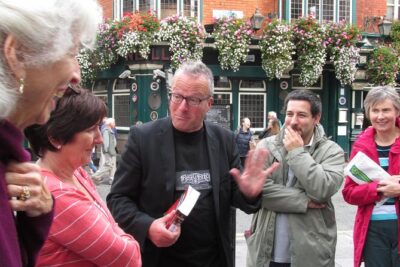
I also like that the experience is built around major landmarks you can actually orient around, starting outside the Forbidden Planet comic book store at 5 Crampton Quay. Based on past guides, like Paula and Catherine, you can expect a friendly guide style that blends facts with Dublin stories, and if you need extra flexibility, you’ll have a better chance with a private group.
In This Review
- Key things that make this tour worth your time
- Why Dublin’s medieval center works so well on foot
- Finding your guide at 5 Crampton Quay
- Dubh Linn Gardens and Dublin Castle: medieval power in plain sight
- Chester Beatty Library: a calm stop with big cultural weight
- St Patrick’s Cathedral: the holy centerpiece and its setting
- Christ Church Cathedral: the next layer of Dublin’s church power
- St Audoen’s Church and the sound of the old bells
- Cook Street and medieval fortifications with Viking traces
- Isolde’s Tower to close the loop with Dublin lore
- Guides you might meet, and why the guide style matters
- Price and value: is $62 a fair deal?
- Who should book this Dublin medieval walk
- Should you book the Dublin Medieval History Walking Tour?
- FAQ
- How long is the Dublin Medieval History Walking Tour?
- How much does the tour cost?
- Where do I meet the guide?
- Where does the tour end?
- What are the main stops on the tour?
- Is there a private tour option?
- What languages are the live guides available in?
- Is the tour wheelchair accessible?
- What is included in the price, and what is not?
- Can I cancel and can I pay later?
Key things that make this tour worth your time
- A tight 3-hour loop through the city center, built around Dublin’s medieval landmarks
- Viking origins and medieval fortifications explained as you walk past them
- St Patrick’s Cathedral and Christ Church Cathedral on the same historical thread
- Dublin Castle, Dubh Linn Gardens, and Chester Beatty Library for a strong medieval-to-pretty-modern contrast
- St Audoen’s Church and its old bells for a stop that feels specific and memorable
- Isolde’s Tower, a classic Dublin legend stop to tie the whole story together
More Irish history taken at walking pace
- Dublin EPIC Museum Admission Ticket★ 4.5 · 1,729 reviews
- Dublin Literary Pub Crawl★ 4.5 · 1,607 reviews
- 1916 Rebellion Walking Tour★ 5.0 · 1,605 reviews
- Dublin: EPIC Museum Entrance Ticket★ 4.6 · 816 reviews
Why Dublin’s medieval center works so well on foot
Dublin’s medieval past is not spread out evenly. It clumps around the same city-center streets and landmarks, which is exactly why a walking tour here makes sense. In about 3 hours, you get the big sights in the right order, so the city stops feeling like a blur of buildings.
This tour is also practical for first-timers. Instead of trying to read maps and guess connections, you follow a guide who helps you see how Dublin’s early story evolved, from Viking influence to medieval power centers and church life. And because you’re walking through the same compact area, you can keep your bearings fast.
If you like a clear timeline, you’ll enjoy this. If you prefer to roam on your own and linger in one place for hours, you might find the pace a bit structured. Still, it’s a solid length for seeing key landmarks without burning a whole day.
Finding your guide at 5 Crampton Quay
The tour meets outside Forbidden Planet (a comic book store) at 5 Crampton Quay. That’s a nice starting point because it’s easy to spot and it puts you right in the heart of the medieval area. The tour also ends back at the meeting point, so you do not need a complicated transportation plan at the end.
If you’re coming from a hotel in the city center, plan to arrive a few minutes early. Walking tours move at street level, and Dublin sidewalks can vary in width, so you’ll want a buffer.
Also, if you’re doing this on a day with a lot of other plans, treat this like your anchor activity. Once your tour gives you the medieval storyline, you’ll find it easier to choose what to do after, whether that means more church interiors, museum time, or just more time in the streets.
Dubh Linn Gardens and Dublin Castle: medieval power in plain sight
Your morning or afternoon starts with Dubh Linn Gardens, tucked behind Dublin Castle. This is the kind of opening that works because it’s not just “look at a castle.” You hear the story of why the site matters, including the medieval fortress feel and the long arc of Dublin’s development.
The castle is tied to the bigger “why Dublin here” question. You’ll also hear about origins of the city and the early Viking conquests, which helps explain why the area became such a focal point. And since this is a walk, the explanation lands better than it would from a single viewpoint.
A smart tip here: take a few moments to look around before you keep moving. Castle grounds and nearby streets have multiple sightlines. Even if you don’t go deep into buildings, you can still understand the layout if you let your eyes adjust for a minute.
Chester Beatty Library: a calm stop with big cultural weight
Next up is the Chester Beatty Library area, featuring Alfred Chester Beatty’s collection. What I like about this stop is the contrast. You’re moving from military and church power into a cultural space that feels quieter and more reflective, even though it’s still part of the medieval-era setting.
The library is described as one of Europe’s finest, and that reputation matters because it signals quality. Since entry fees are not included, you’ll want to decide how far inside you want to go if ticketed areas are involved during your visit. On a walking tour, sometimes you get the guided look and context, and sometimes you have choices.
If you enjoy museums but hate turning a city day into a checklist, this stop is a good balance. You get meaning, plus a break from the nonstop “look left, look right” tempo.
Other Dublin walks with the wind behind you





St Patrick’s Cathedral: the holy centerpiece and its setting
Then you reach St Patrick’s Cathedral, a major stop for obvious reasons. The tour frames it as Ireland’s patron saint connected landmark, and you’ll hear about its splendor echoing through the cathedral gardens and façade.
This is one of those moments where the guide’s story makes your photos better. The building can feel like just another landmark until someone tells you what to notice, like the way the setting supports the cathedral’s role in the city. Even if you mostly keep to the exterior views, you’ll walk away with a clearer sense of why this place became so significant.
Consider timing too. Cathedrals can be crowded, and walking tours keep moving. If you want slower time inside, a private tour may help you spend an extra minute where you care most.
Christ Church Cathedral: the next layer of Dublin’s church power
After St Patrick’s, you head to Christ Church Cathedral, in the nearby city center area. This stop is valuable because it builds on what you learned moments earlier. Instead of hearing about one church and moving on, you see how Dublin’s religious landmarks sit close enough to feel like competing centers of influence, even across different eras.
Because entry fees are not included, you’ll want to check how your guide handles inside time. You might get guided access to certain areas or you may focus more on context outside. Either way, you’ll leave with a stronger “map in your head” of where church sites fit in the medieval city.
If your interest is specifically medieval, focus on the relationship between the sites. If your interest is architecture or spiritual art, you’ll still get something out of hearing how the story connects across both cathedrals.
St Audoen’s Church and the sound of the old bells
St Audoen’s Church is a standout because it’s described as a bastion of both Catholic and Protestant heritage, and you’ll also hear that Ireland’s oldest bells toll there. That combination makes the stop feel less like a history lecture and more like a living clue to how Dublin’s identity formed over time.
This is also one of the few stops where you can sense the “continuity” factor. A lot of medieval sites you see today are famous because they survived and look old. St Audoen’s is interesting because the story includes religious overlap, not just stone and windows.
Again, since entry fees are not included, if you want to go inside fully or for any ticketed access, you’ll need to be ready to pay separately. Even without a deep ticketed visit, the guide’s emphasis on the bells and heritage context can make the stop memorable.
Cook Street and medieval fortifications with Viking traces
From there, you trace remnants of medieval fortifications along Cook Street. This segment matters because it shifts from big monuments to the smaller clues in urban space. If you want to understand Viking influence beyond legend, looking at fortification remnants while hearing the connections is one of the best ways to do it.
Cook Street can feel like a normal street if you’re just passing through. That’s why a guide is helpful here. They point out what to look for and help you connect those details to the medieval defensive mindset that shaped how the city developed.
Practical tip: wear shoes that can handle walking. This is still a city walk, and older streets often come with uneven pavement. If you have any mobility needs, the tour is listed as wheelchair accessible, which is a big plus. If you’re worried about route comfort, consider choosing the private option so your guide can pace around your needs.
Isolde’s Tower to close the loop with Dublin lore
The tour concludes at Isolde’s Tower, described as an iconic medieval building steeped in Dublin’s lore. This kind of ending is smart because it gives you a story “handle” you can remember after the walk. By the time you reach the tower, you’ve learned the medieval city basics, the Viking backdrop, and the church center importance.
When a tour ends with lore, it helps people recall details. You might forget the exact date someone mentioned at St Patrick’s, but you’ll remember the feeling of reaching an iconic tower linked to local stories. That’s the point. It turns facts into something sticky.
After you finish back at the meeting point, you’ll be in a position to keep exploring on your own. You’ll know which streets and landmarks matter, and you’ll be less reliant on constant map checking.
Guides you might meet, and why the guide style matters
The tour’s quality often comes down to the guide. Past experiences highlight guides like Paula and Catherine for having a friendly, story-forward approach. That matters because medieval Dublin can get dense quickly. A good guide turns it into a clear line you can follow.
One reason I respect the flexibility here is that some groups have needed small adjustments. For example, Paula’s style has included planning around group needs, including time for a short cup of coffee and accommodating a stroller while still keeping the tour moving. If your group has kids, mobility needs, or specific interests, that kind of flexibility is real value.
You may also find that your guide adapts your interests as you go. In one experience, Paula encouraged adding time for the Book of Kells exhibit after learning about religious background and heritage interests. That’s not something you should expect on every tour, but it’s a good reminder: if you tell your guide what you care about, you might get ideas for how to extend your day.
Price and value: is $62 a fair deal?
At $62 per person for about 3 hours, you’re paying for a guided walking route through major landmarks, plus interpretation from a live guide. Food, drinks, and entry fees are not included.
So how do you judge value? I look at three things:
- You get a guide, not just a self-walk map. For medieval Dublin, that’s the main value driver.
- You see multiple top-tier landmarks in one connected sequence, which saves time versus planning each stop separately.
- You avoid entry-fee costs unless you choose to add them on your own.
If you’re the type who enjoys walking with context and wants to hit key sites without spending your energy figuring out the order, this price can feel fair. If you’re very ticket-focused and want to guarantee full indoor access everywhere, you might spend extra anyway since entry fees are not included.
Who should book this Dublin medieval walk
This tour fits best if you want:
- A city-center overview of medieval Dublin with an organized narrative
- Church-and-medieval architecture stops in a single outing
- A guide who can handle interest differences and keep the group on track
It can also work well for families, especially if you choose a private option and your guide is willing to adjust pacing. If you’re traveling with a stroller, that flexibility can be a deciding factor.
If you already know the medieval history well and you prefer solitary exploration, you might not need a guided route. But for most first or early visits, the guided structure and landmark sequence are exactly what make the time count.
Should you book the Dublin Medieval History Walking Tour?
I’d book this if you want a guided, efficient way to understand medieval Dublin without turning your day into homework. You’ll cover big anchors like Dublin Castle and St Patrick’s Cathedral, plus supporting stops such as Chester Beatty Library, St Audoen’s Church, and Isolde’s Tower. The guide quality seems to be the real differentiator, with Paula and Catherine standing out for story clarity and flexibility.
I wouldn’t book it if you already have a tight schedule that leaves no room for walking, or if you only care about ticketed interior time and expect entry fees to be included. Since food and entry tickets are not included, plan to handle those separately.
If your goal is to leave with a readable medieval map in your head, this is a strong pick.
FAQ
How long is the Dublin Medieval History Walking Tour?
The tour duration is listed as 3 hours.
How much does the tour cost?
The price is $62 per person.
Where do I meet the guide?
Meet outside the Forbidden Planet comic book store at 5 Crampton Quay.
Where does the tour end?
The activity ends back at the meeting point.
What are the main stops on the tour?
You’ll visit Dubh Linn Gardens behind Dublin Castle, Chester Beatty Library, St Patrick’s Cathedral, Christ Church Cathedral, St Audoen’s Church, medieval remnants along Cook Street, and Isolde’s Tower.
Is there a private tour option?
Yes, a private group is available, in addition to shared group options.
What languages are the live guides available in?
The live tour guide languages listed are English, French, Spanish, and Italian.
Is the tour wheelchair accessible?
Yes, the tour is listed as wheelchair accessible.
What is included in the price, and what is not?
Included: the walking tour and a guide. Not included: food or drinks and entry fees.
Can I cancel and can I pay later?
You can cancel up to 24 hours in advance for a full refund. You can also reserve now and pay later.
The Wider Dublin Pile
The Story, Told on Foot
Elsewhere on The Ireland Traveler
Lately added to the Dublin pile
- Waterford Crystal and Kilkenny Full-Day Rail Tour from Dublin
★ 5.0 · 3 reviews - Turtle Bunbury’s Dublin: A Self-Guided Audio Tour from a Celebrated Author
★ 5.0 · 3 reviews - Cliffs of Moher and The Burren Private Tour from Dublin
★ 5.0 · 3 reviews - Dublin Full-Day Tour through Boyne Valley
★ 5.0 · 3 reviews - Rock Of Cashel And Blarney Castle Private Chauffeur Full Day Sightseeing Tour
★ 4.5 · 3 reviews - Private Irish Fusion Meal in a Modern Home in Skerries, Dublin
★ 5.0 · 3 reviews
More Irish History and Heritage Walks, side by side.
 ★ 4.5Dublin EPIC Museum Admission TicketFrom $251,729 reviews
 ★ 4.5Dublin Literary Pub CrawlFrom $271,607 reviews
 ★ 5.01916 Rebellion Walking TourFrom $271,605 reviews
 ★ 4.6Dublin: EPIC Museum Entrance TicketFrom $24816 reviews
 ★ 4.8Dublin: Jeanie Johnston Tall Ship Irish Famine History TourFrom $16431 reviews
 ★ 4.5Irish Famine Museum / Exhibition DublinFrom $18247 reviews
 ★ 4.5The Queenstown Story @ Cobh Heritage Centre , Great Stories of Emigration.From $18181 reviews
 ★ 5.0Walking Tour of Dublin’s Viking/Medieval Quarter with a VikingFrom $36171 reviews
Other lists this one is on